RJ Rushmore has been involved in contemporary art as a writer, curator, photographer, arts administrator, and fan since 2008. With a focus on street art, graffiti, and public art, RJ facilitates and promotes catalytic and ambitious art outdoors, in galleries, and online. He founded the street art blog Vandalog and has worked at The L.I.S.A. Project NYC, Mural Arts Philadelphia, and Creative Time. Currently, RJ is Co-Curator of Art in Ad Places.
So I’ve been working a lot lately on Re:Humanities, a symposium of undergraduate work in the digital humanities. It’s taking place next week at Swarthmore College, just outside of Philadelphia. I hope you’ll come check it out if you’re nearby. I’ll be speaking about how the internet has changed street art, and there are a bunch of other great topics up for discussion for anyone interested in the digital humanities. Okay, that’s my personal announcement for the week, now onto the news:
Okay so this video of a piece by Verbo isn’t the best quality, but the piece is pretty awesome and very different from a lot of what is out there. I wish I could have seen the animation in the flesh and I hope he continues to work with this combination of mural and digital projection.
2 Many Printers is a cool little clothing brand with t-shirts by Husk Mit Navn, Ian Stevenson and others.
This mural is probably my absolute favorite piece of public art that I’ve seen related to the Egyptian Revolution.
Glad to see I’m not the only one who thinks Anthony Lister’s “Planet of the Apes” mural was problematic and a disservice to the art community.
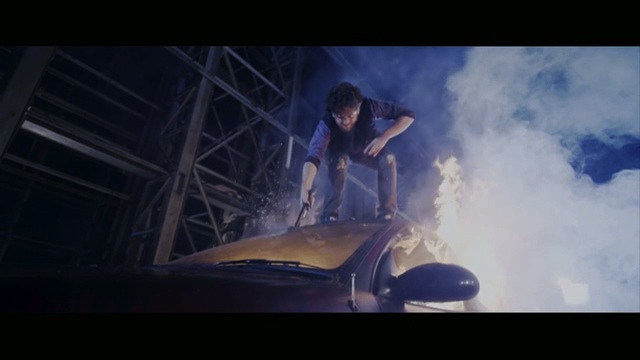
Ian Strange aka Kid Zoom‘s installation, Home, at last year’s Outpost Festival in Sydney was, from what I heard, the highlight of the festival. We covered Home last year, but now the video aspect of that installation is available online. It boils down to 5 minutes of explosions and destruction of property, which is always fun to watch. Strange explains the installation as “a work reflecting on my origins in the Australian suburbs I felt that I needed to escape when I was younger,” so I’m thinking of the video as a high-definition expression of teen angst and the dream of running completely wild in the boring suburbs. Anyone have other thoughts? Here’s the video:
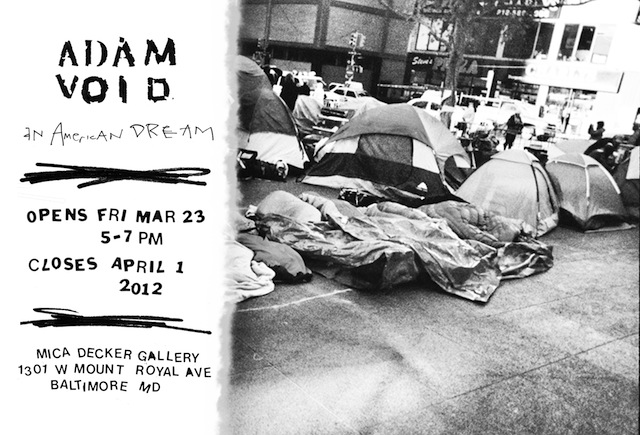
Avoid pi aka Adam Void‘s latest solo show, an American Dream, opens this week at the MICA Decker Gallery at MICA in Baltimore. It’s always difficult to predict just what you’ll see at an Avoid pi show, but he says that the show includes work on themes including homelessness, evangelical religion, freight hopping, protest culture, surveillance and urbanization.
an American Dream opens on Friday from 5-7pm and run through April 1st.
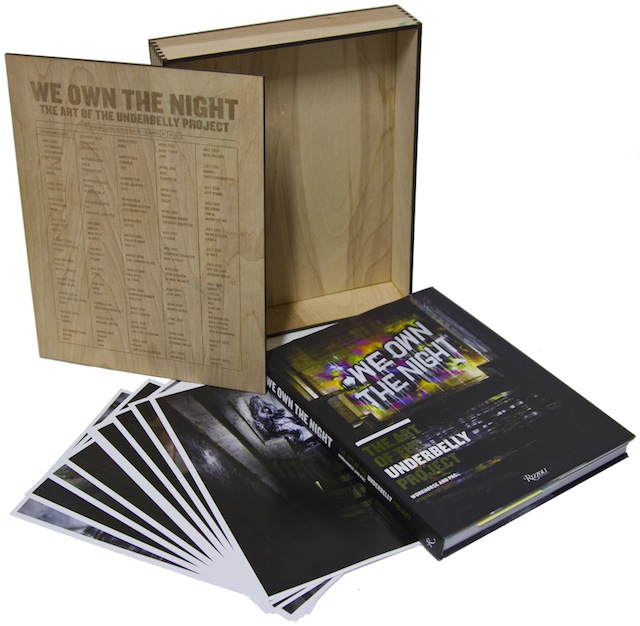
Rizzoli recently published the official book documenting The Underbelly Project, We Own the Night: The Art of The Underbelly Project. If you haven’t heard of The Underbelly Project, check out my firsthand account. Basically, over 100 artists were taken down to an abandoned subway station beneath New York City to put up artwork and explore hidden depths of the city. Artists involved in the project include Revok, Roa, Anthony Lister, Faile, Ron English, Dan Witz, Gaia, Know Hope, Haze and many others.
In December, a collector’s edition of the book was sold at The Underbelly Project’s show in Miami. Until now, that show was the only place to pick up a copy of this special edition of We Own the Night. The collector’s edition version includes a hardcover copy of the book, nine photographic prints from the project, and comes in a handcrafted and laser-engraved oak box. This package is an edition of 100, plus 10 APs, and a handful were held back in Miami to be sold later. Now, the remaining collector’s editions are available online for the first time exclusively at The Vandalog Shop.
The Underbelly Project is one of the most fascinating projects to ever happen in the street art or graffiti worlds. While there are photos all over the web showing what the project looked liked, reading We Own the Night is just about the only way to get a sense of what it was actually like to participate in The Underbelly Project. I saw The Underbelly Project in the flesh, but hearing other people’s stories shed new light on it even for me. I’m extremely pleased that The Vandalog Shop will be selling the collector’s edition of We Own the Night, giving people who couldn’t make it to Basel Miami a chance to pick up a copy. My copy of We Own the Night was the best thing I’ve received under a Christmas tree in years, and I hope other people will enjoy the book and the photographs as much as I do.
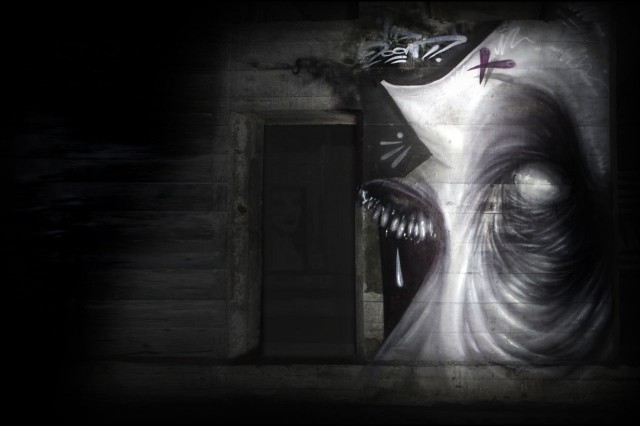
Here are a just a couple of the photographs included in the set:
Photo by Emile SourisKid Zoom. Photo by Ian Cox
Other images include work by Roa, Anthony Lister, Skullphone, Kid Zoom, Revok, Ceaze and Jeff Soto.
Only a few of these collector’s editions are remain, and The Vandalog Shop is the only place you’ll find them online. They are available for $250.
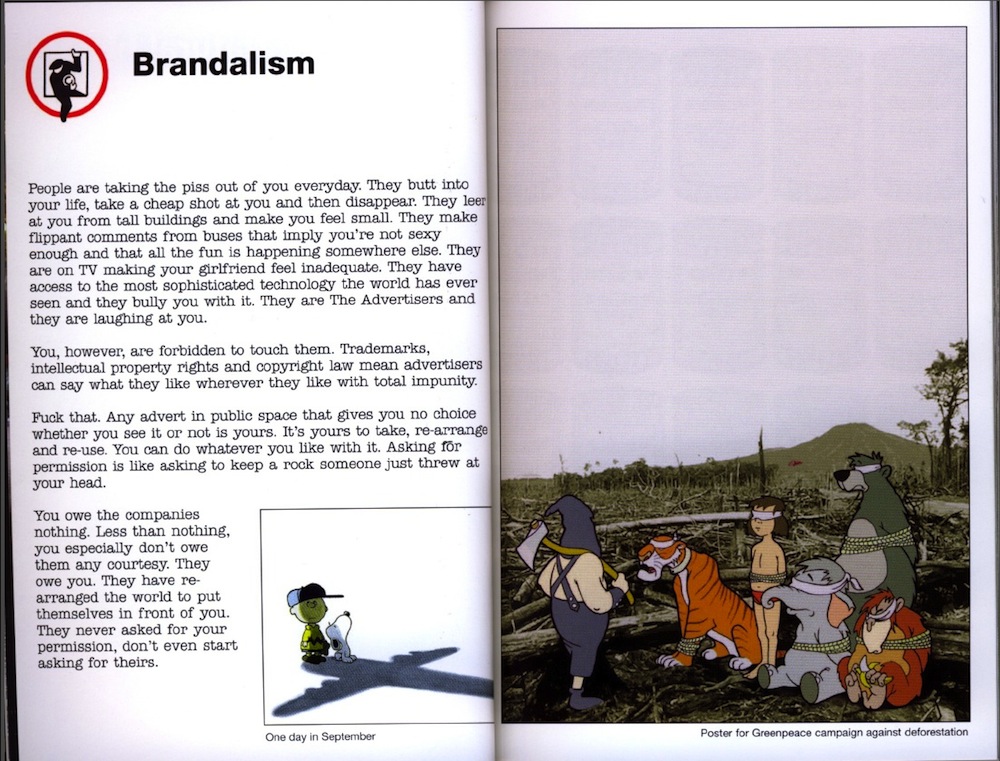
A scan from Banksy's book "Cut It Out," click image to view large
You know what’s awesome? When things work out nicely and people don’t freak out. Last week, Hurt You Bad ran a post called “Banksy Plagiarism” claiming, as usual, something along the lines that most Banksy fans are idiots and that Banksy himself is a scumbag. And perhaps they are right, but at least this time they took their evidence entirely out of context and neglected to tell the full story.
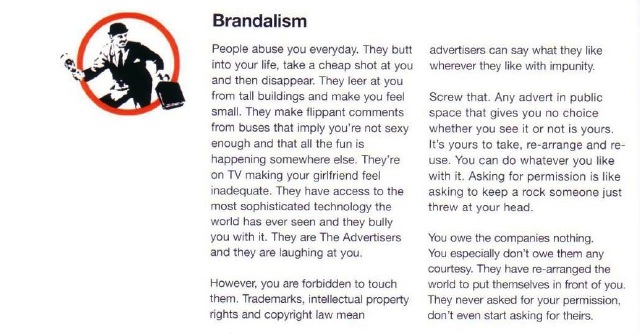
Hurt You Bad pointed out that Banksy’s well-circulated “Brandalism” quote is largely based on a piece that Sean Tejaratchi wrote in 1999 for Crap Hound, a zine. Version of the “Brandalism” piece appeared in two books by Banksy: Cut It Out and Wall and Piece (which is essentially bits of Banksy’s previous three books mashed together). Both times, it is fair to say that most people reading “Brandalism” would assume that Banksy is the author of the text. There is no attribution in Cut It Out or Wall and Piece directly linking “Brandalism” to the original essay, Crap Hound or Tejaratchi. The only things pointing to Tejaratchi at all are the thank-yous toward the end of Cut It Out and Wall and Piece. In both books, Banksy vaguely credits a number of people for either assisting him the book or for inspiring some of the content and Crap Hound is mentioned in that list. Certainly, Banksy could have done a better job citing Tejaratchi and this has led to people quoting Banksy when they probably should have been quoting Tejaratchi, but I’m not sure that this incident makes Banksy an outright plagiarist (something I’m sure my professors would hate to hear me say).
A scan from Banksy's book "Wall and Piece"
Recently, Tejaratchi noticed that “Brandalism” was attributed to Banksy but based on his own work, so he blogged about it. In the post, he lays out exactly what Banksy borrowed from his text and explains his feelings on the incident. Basically, Tejaratchi’s issue was not that his words had been used, but that his words were essentially attributed to Banksy without any heads up from Banksy. Here’s some of what Tejaratchi wrote:
It’s hard to know how to feel about this. My first thought was, “Hey, Banksy reads Crap Hound!” Then, “What the fuck is going on?” Then, “Am I a real person? Am I actually happening?” And finally, “Am I a beautiful flower angel sent from heaven to inspire Banksy?”
As problems go, it’s a pretty nice one to have. I like Banksy’s art and ideas. I’m flattered he liked my writing and my sentiments, and I’m happy others liked the quote enough to post and forward. I’ve seen forums where people are debating the passage, including rebuttals from ad-agency twats. It’s on wikiquotes and a hundred blogs. My essay never would have had that impact on its own.
The downside is that Banksy’s name is always on it. Seeing my writing credited to someone else makes it a little less magical. Same with knowing that one day (maybe soon, since the issue in question is being reprinted), I’ll get to hear how I ripped off Banksy.
Tejaratchi used the post and a few connections to reach out to Banksy without anger or ill-will, just a desire to get to the bottom of things and set the record straight. Within a few days, Tejaratchi heard from man himself and things have been resolved. The details of the resolution can be found here. Basically, it came down to two guys (Banksy and Tejaratchi) who both made some careless choices and now the truth is out and future reprints of Wall and Piece will have the words attributed correctly. Here’s Tejaratchi’s conclusion of his dealings with Banksy:
I realize “Banksy stole the quote!” is much more dramatic and satisfying than “Banksy made a poor stylistic choice in his book layout, causing confusion years later! He attempted to inform me but had the wrong address!” The man’s not an imbecile. This would have been an absurdly clumsy and doomed attempt at plagiarism. I will also say that in my recent, limited contact with Banksy, he’s gone out of his way to be clear, kind, and genuine, in every way the exact opposite of a twat.
I’m very grateful to everyone who wrote, posted, and tweeted about this. The quote will remain out there with Banksy’s name on it, but the source is now established online (and in future reprints) for anyone who looks deeper. Likewise, no matter what your opinion of Banksy, it’s important and fair to establish that this was not a case of plagiarism. Lack of foresight, yes. Fraud, no.
Basically, Banksy might have screwed up but Hurt You Bad jumped the gun in attacking him. Can Banksy be attacked for using Tejaratchi’s essay? Maybe. But Tejaratchi doesn’t mind. Should you? For once, it seems that a potentially explosive case of copyright violations has ended rationally and reasonably. If only all copyright holders had a more liberal view of things, maybe artists wouldn’t have to resort to doctoring evidence in court when they have done nothing wrong.
Images taken from scans Banksy’s books “Cut It Out” and “Wall and Piece” that I found online somewhere
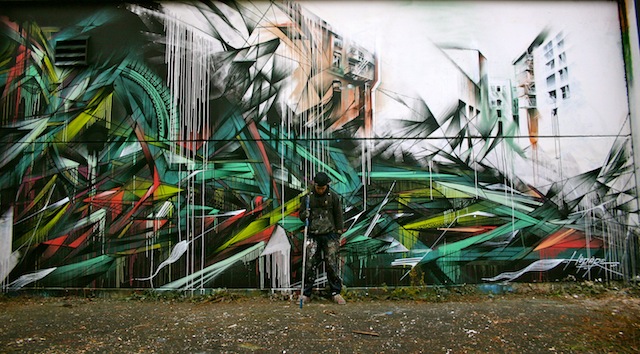
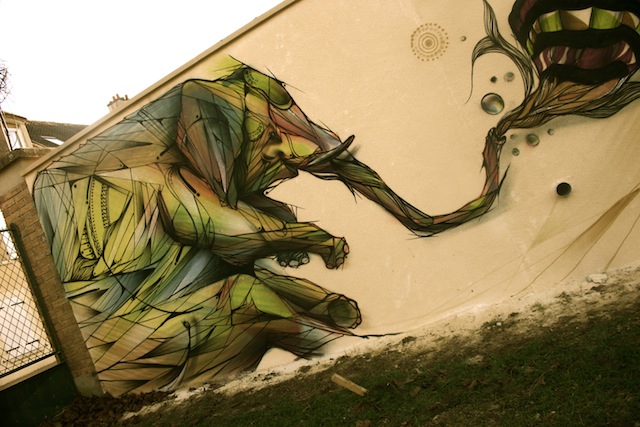
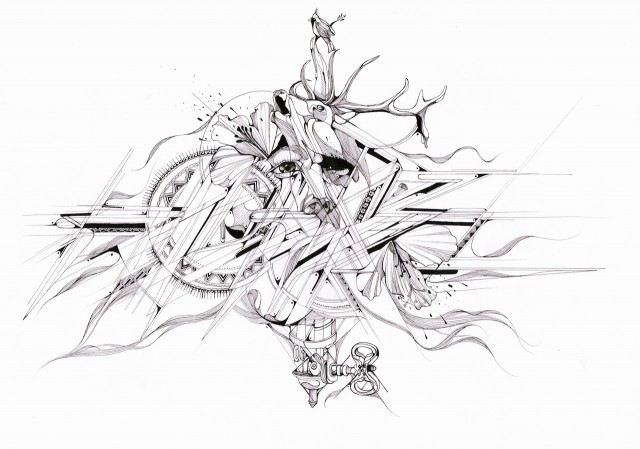
This work is by Hopare, a French artist. I can’t quite figure out what I think of his work. At first glance I loved it. He is definitely technically skilled, beyond competent. But then I began to question that initial reaction. Is Hopare doing anything all that distinctive or stylistically progressive? I’m not sure. But that’s why I’m asking: What do you think?
Okay, one thing I'm sure of is that I love this piece
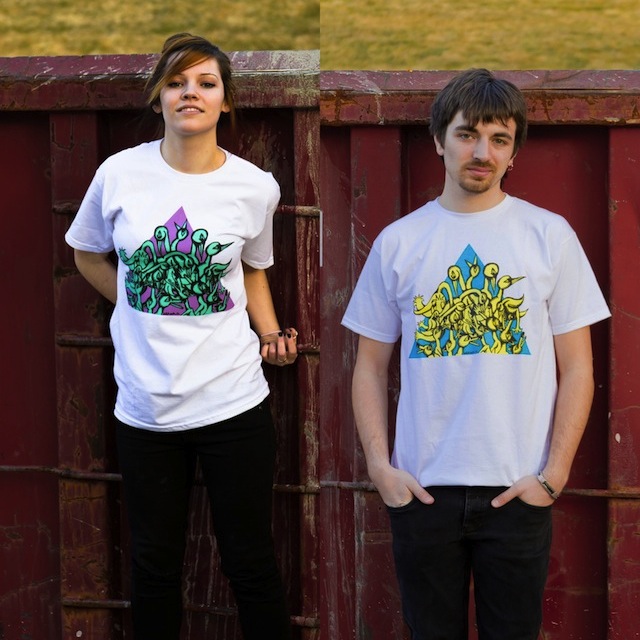
Last month, we relaunched The Vandalog Shop with two new t-shirts by Labrona. Initially they were priced at $30 each. But I screwed up. I’m not a math guy. Turns out, we didn’t really need to sell the shirts for as much as $30. Actually, we can happily sell them for just $20. Whenever possible, we will try to price items in the The Vandalog Shop at something reasonable and affordable. We said that last month. So why would we sell shirts for $30 that we could afford to sell for $20? We’re not trying to be greedy, so we’re not going to do that anymore. From today on, Labrona’s shirts will be available at The Vandalog Shop for just $20. And if you purchased one over the last few weeks for $30, you’ll find a $10 refund in your PayPal account.
Gaia and Nanook were just in Atlanta for their turn at the new Living Walls Concepts series of mini-conferences that are an extention of Living Walls. Here’s what Joshua Rackliffe, Living Walls’ director of programming, has to say about their visit:
Living Walls Concepts, a year-long extension of the conference’s programming, hosted its first collaboration of 2012 with seasoned Living Walls artists Gaia and Nanook. Over the course of their 4-day visit, they produced an original work in Atlanta’s Old Fourth Ward neighborhood. The creation spans the western wall of a structure on Edgewood Avenue, located on the opposite side of a building that displays another Living Wall by Tel-Aviv artist Know Hope. In addition to their mural, Gaia and Nanook hosted an open conversation and lecture pertaining to their experiences in street art and how it engages community, activates space, and conveys messages about the state of the urban environment. These two have been consistent representations of the Living Walls mission, and are enthusiastic about continuing their participation with the organization.
While I spend my day at my other job explaining to people how a skee-ball tournament is art (seriously), I hope you’ll enjoy these newsbites from the past two weeks:
You can listen to this conversation between Retna and his friend Med if you want a bit of insight into the Bowery/Houston mural, although it may just confuse things further in a good way.
GrafRank is an attempt to graph the popularity of street artists and graffiti writers online using data from flickr. Interesting idea, but they need your feedback to make sure they are getting things right.