It’s back to school in a few days for the college-aged Vandalog bloggers. Caroline moving to New York City tomorrow, so say hello if you see her around.
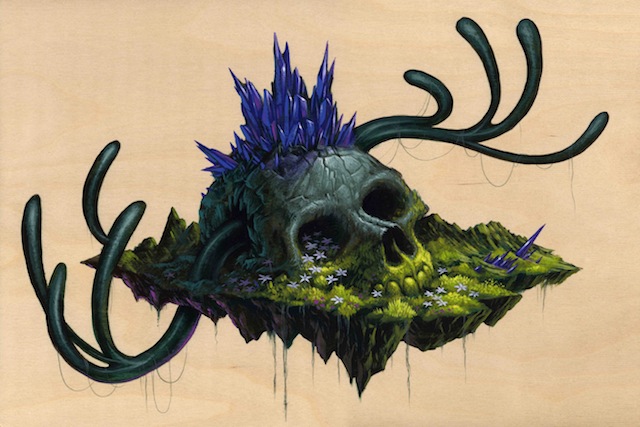
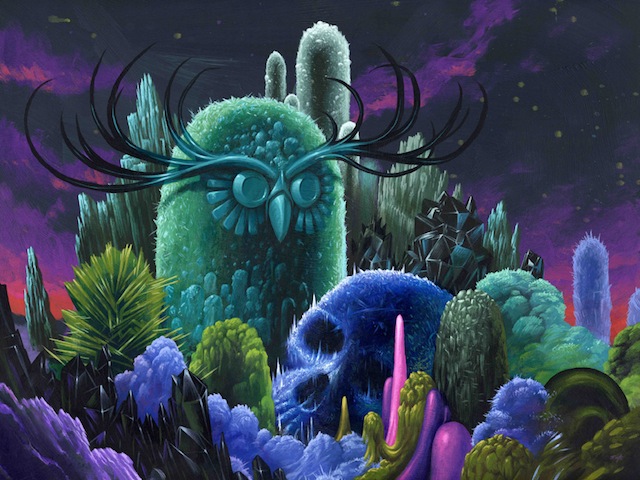
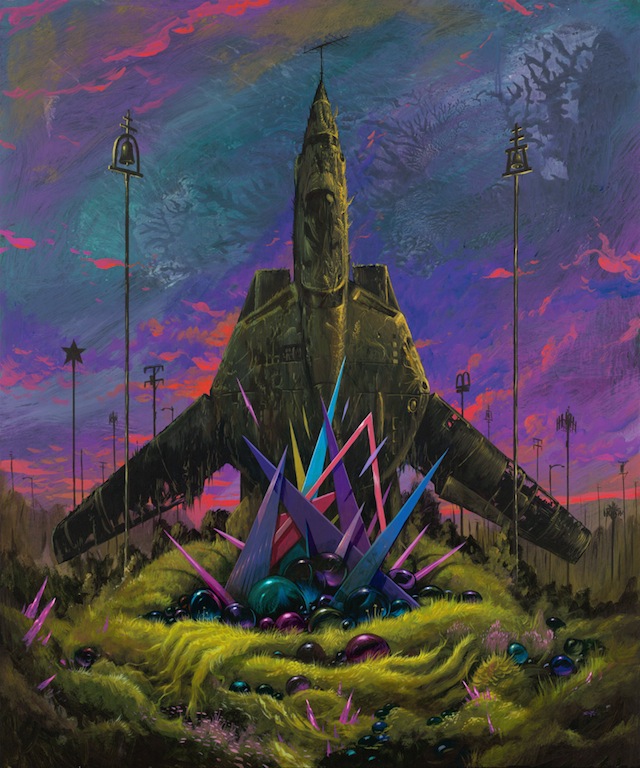
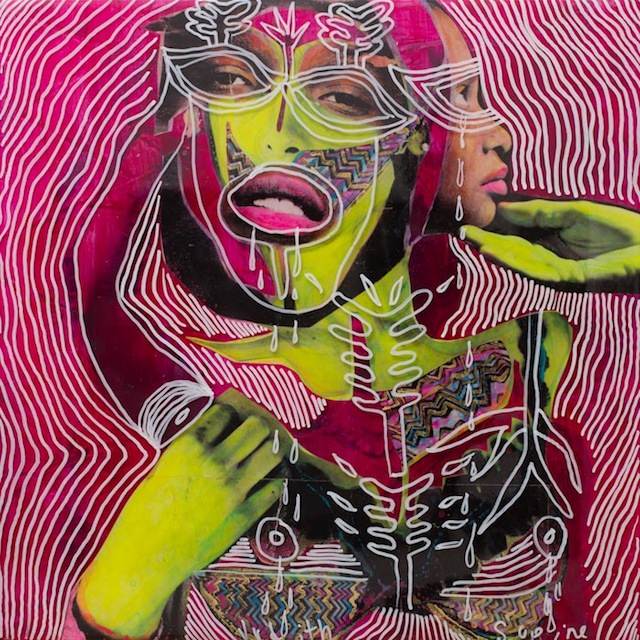
Jeff Soto will be opening his fourth solo show at Jonathan LeVine Gallery on September 8th, alongside the simultaneous solo shows of Audrey Kawasaki and Judith Supine. The show, entitled Decay and Overgrowth, explores life, death and the passage of time. In this interview, Soto tells Vandalog about the emotional journey this past year has taken him on, including the death of two of his grandparents, and how these events provoked his consideration of mortality; which would become a central theme of this show.
V: In your own words, can you tell us about the underlying themes of Decay and Overgrowth? JS: I started researching my ancestry about seven years ago, well, even before that really. As a kid I knew my grandparents fought in WWII and my grandma would list off all the things we had in us- Irish, Italian, Sioux, Dutch, etc.. These stories were interesting to me. So from an early age I was aware that there is some history there, and at some point a teacher I had showed us family trees. When I was a teenager I saw Norman Rockwell’s family tree painting where the kid’s ancestors were pirates and Native Americans and cowboys. It got me interested in who my ancestors were, and how all my living relatives were related.
The last few years I have researched and got deeper into who these people were. Decay and Overgrowth comes out of this research. Finding all these relatives really drove home the point that we are born, we have kids, get married, live our life and die. And then the kids repeat the same pattern. Our offspring who come into the world like new flowers, growing and flourishing, eventually meet the same fate as any other living thing. We start aging, and at some point we all will die. We turn to dust, go back into the Earth to nourish it, and then the cycle repeats. I don’t see it as morbid at all, and I hope the paintings don’t seem too death obsessed! Even though I’ve unofficially titled my show “The Skull Show”.
V: This is a solo show, but you’re showing at the same time as Audrey Kawasaki’s and Judith Supine’s solo shows. How do you feel like this combination of works either compliment or juxtapose one another? JS: I respect both of them. I know Audrey a bit but have never met Judith. I think as a whole our work is very different but individually we’re each very strong in what we do. Should be a fun show with something for everyone. I am predicting a large turnout.
V: Was this exploration of mortality more of a catharsis for you or a way of explaining death to your children? JS: It’s more for me I guess. They’re too young to fully understand death. We do not hide it from them at all, you know, like if one of our fish dies or we find a dead rabbit on a walk, we talk about it. Two of my grandparents passed away in the last year, and they went to the funerals even though they’re young. I never really thought about death because it was not around me. Or maybe it’s an age thing- now that I’m in my mid/late 30’s and I have two kids that depend on me, it’s on my mind. Seeing my little brothers grow up and my parents age has been a trip.
V: What do you think your generation adds to the collective human experience? JS: I think it’s too early to say. There’s good and bad things we’re going to add. I know that my generation seems more open to cultural differences among people. In the United States, overall we’re less racist than 40 years ago, and I think the next generation will be better than us. There’s still a long way to go but the situation is improving from the Baby Boomers and previous generations.
And of course the internet has made huge changes. For the first time in human history information is easily accessible to most people. It is empowering. Maybe it’s homogenizing us as well. It’s that whole globalization thing, we all buy the same products, listen to the same music and watch the same movies- are cultural differences starting to die out? Technology is good and bad I think. I’m 37, so I grew up with Atari which was fun, but only for about 30 minutes then we’d go outside and build a fort, climb a tree, make up a game… we used our imagination! I think that’s lacking in many kids and I wonder how it will change things. Maybe it already has. I graduated high school right as the internet was going mainstream- 1993. Our school had one computer that was online and the only thing we could access was college libraries in town. We had to search and hunt for our info, we had to go downtown and pour through a ton of books and along the way we would find other interesting books and much more thoroughly researched information. Now all the info is easily and quickly accessed in a nice little five paragraph web page. I do love Wikipedia, but 20 years ago you’d read a 300 page book on say, Cortés, now a kid in high school will read a concise web page on the iPad. Maybe that’s not so bad, I guess the Wiki entry would have much more up to date info… see, technology that this generation is bringing is both good and bad.
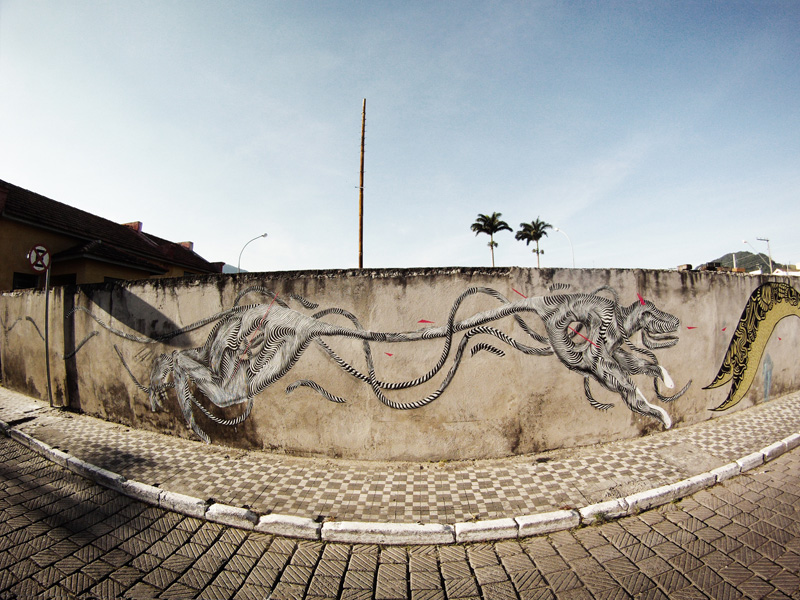
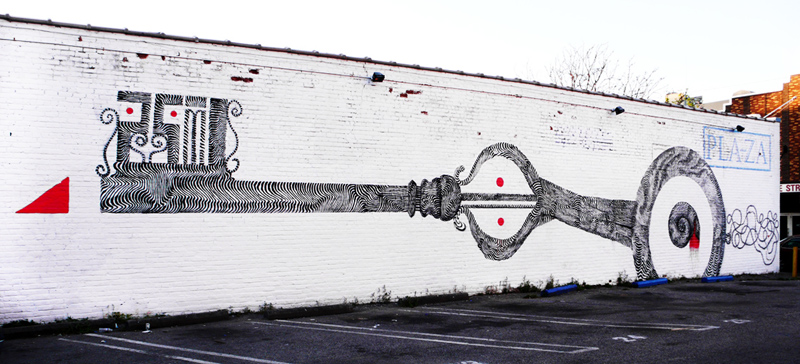
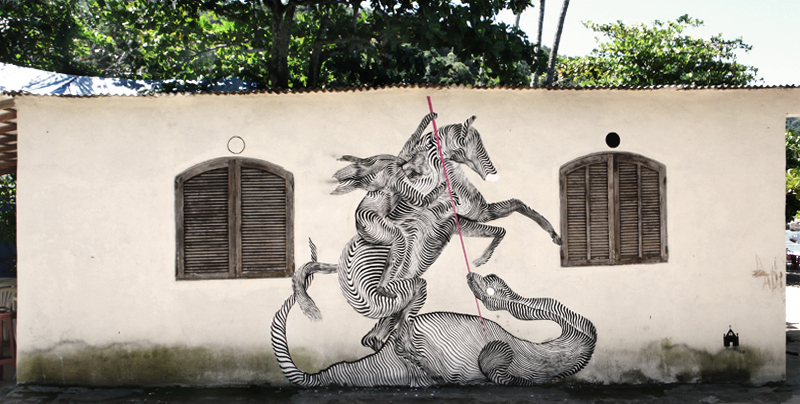
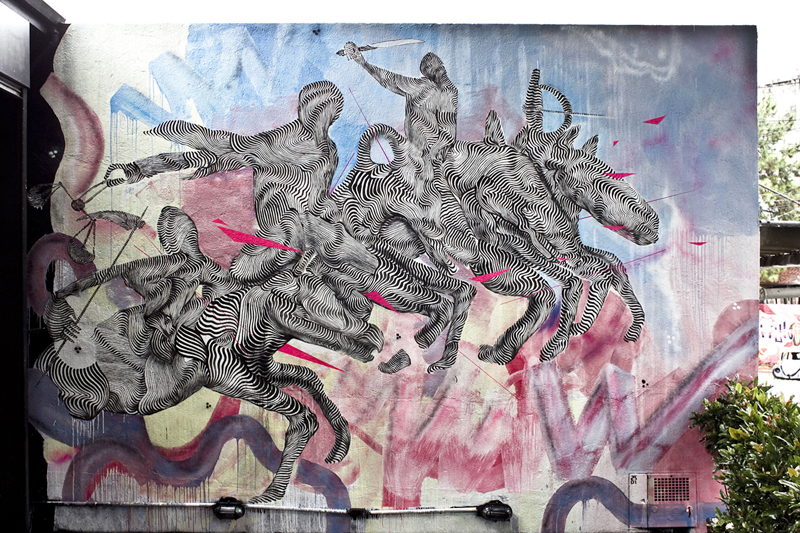
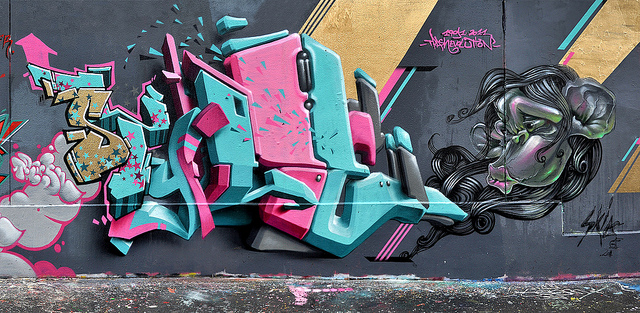
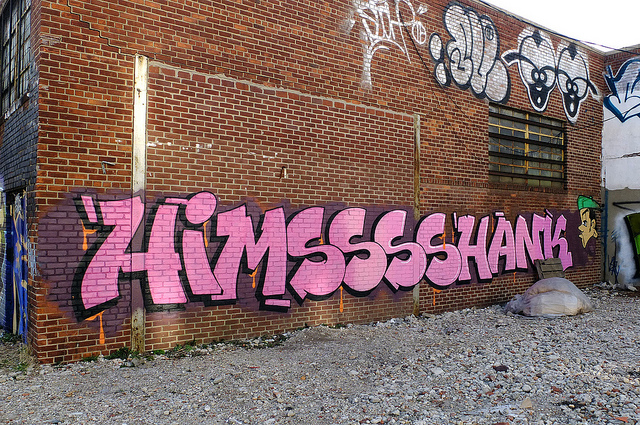
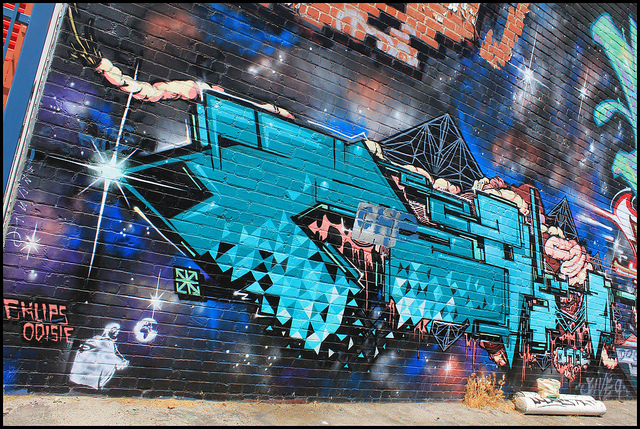
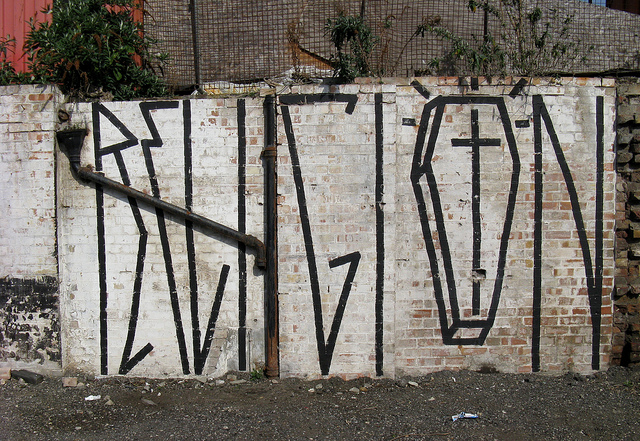
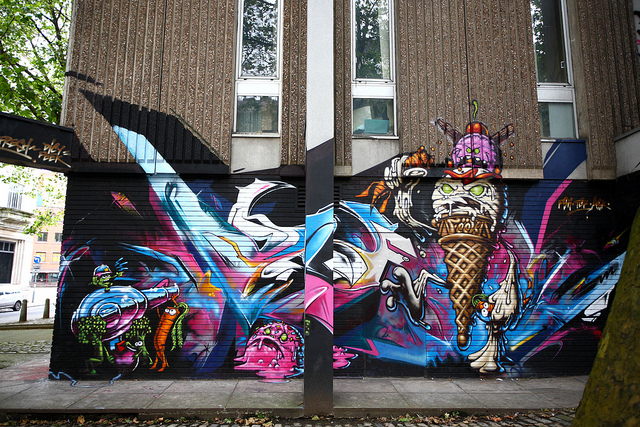
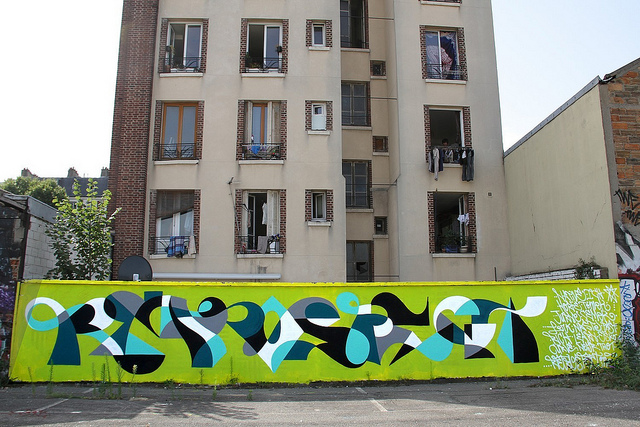
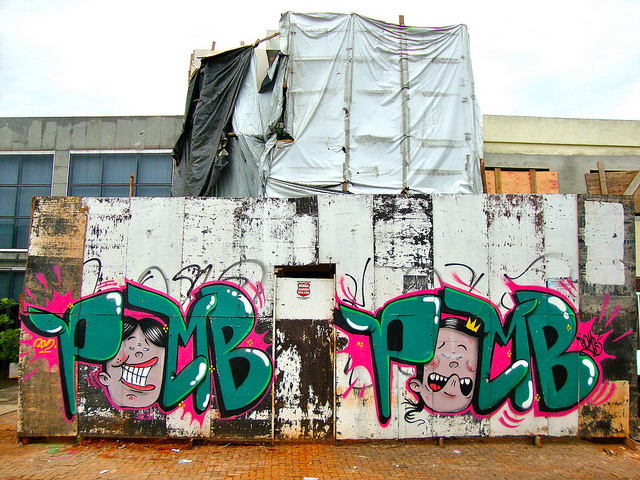
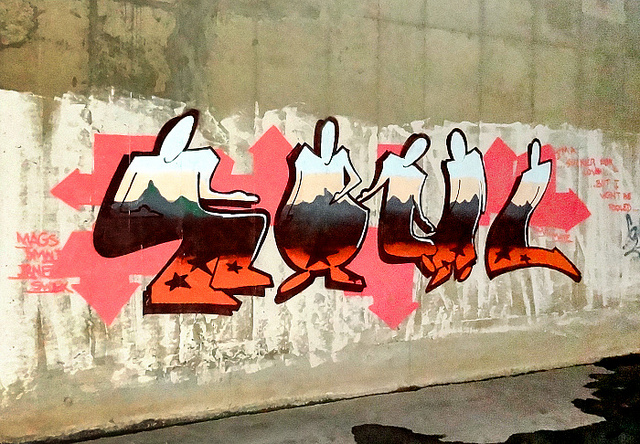
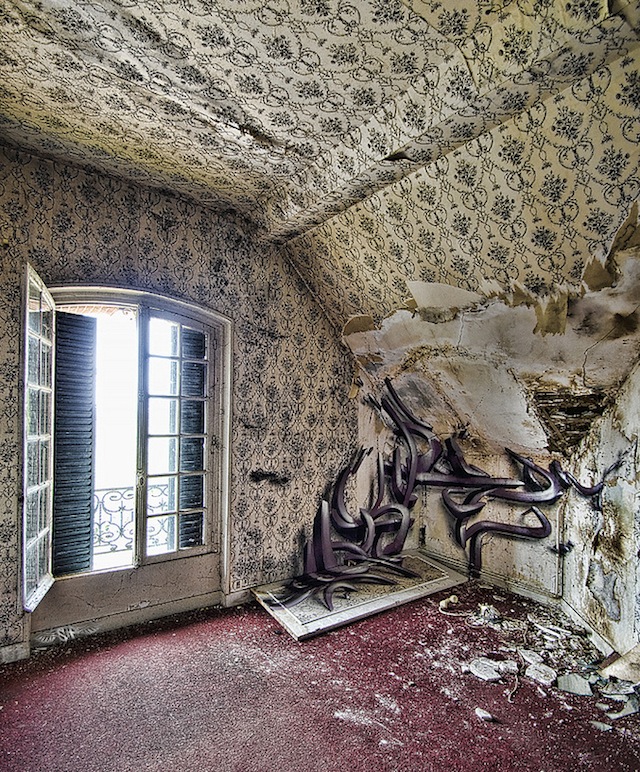
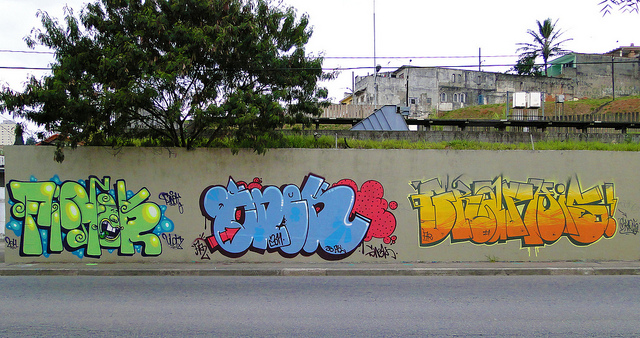
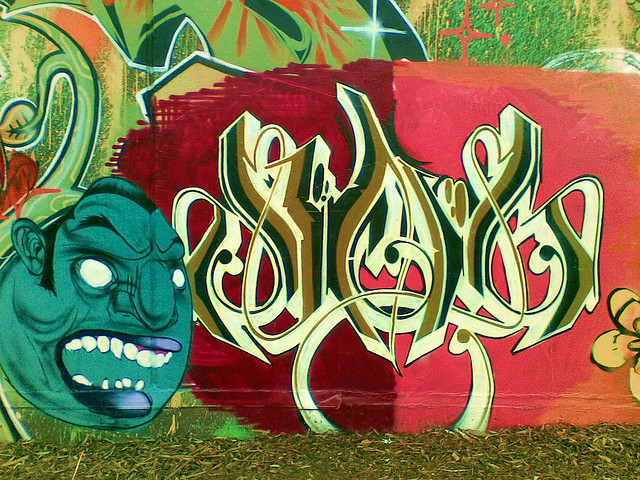
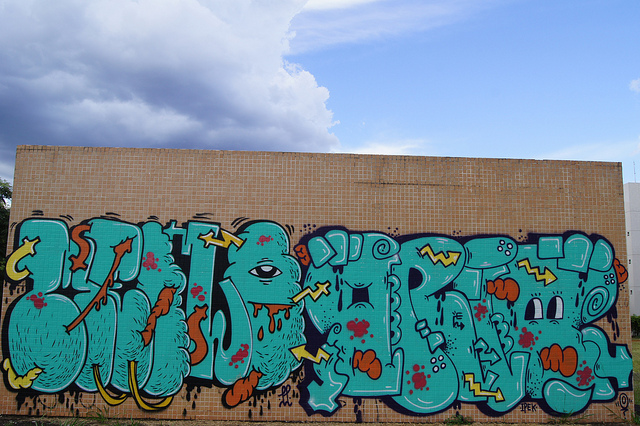
2501 is one of those very talented artists who have been, for whatever reason, somewhat neglected on Vandalog. Here are four of the walls he has painted so far this year.
Trash and Skio in Paris. Photo by Startape Photographe.
Make your mother proud.
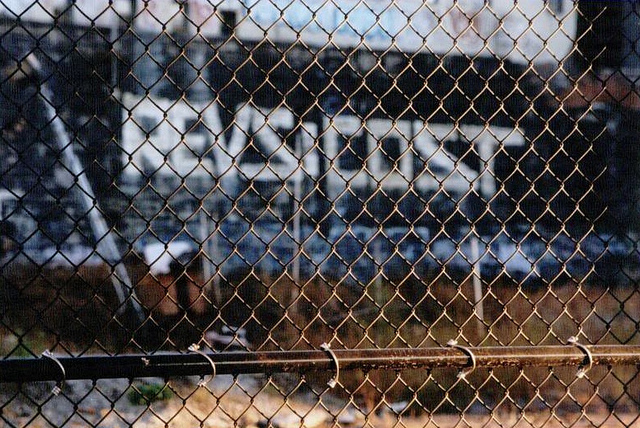
HIMSSSANK in Williamsburg, NY. Photo by Damonabnormal.Roid in LA. Photo by SOKE.Religion in London. Photo by Big Bozo.Feek in Bristol. Photo by 4foot2.Reone in Paris. Photo by Morac19.Pomb in Argentina. Photo by ThalesFernando.Josf in San Francisco. Photo by FunkandJazz.“Soul” by Mags. Photo by TheSaltrDjalouz in France. Photo by Startape Photographe.Finok, Snek and Graphis in Brazil. Photo by Graphis.Tha Sieg MonsterrrMello and Onio in Brazil. Photo by P. Matheus Lacerda.
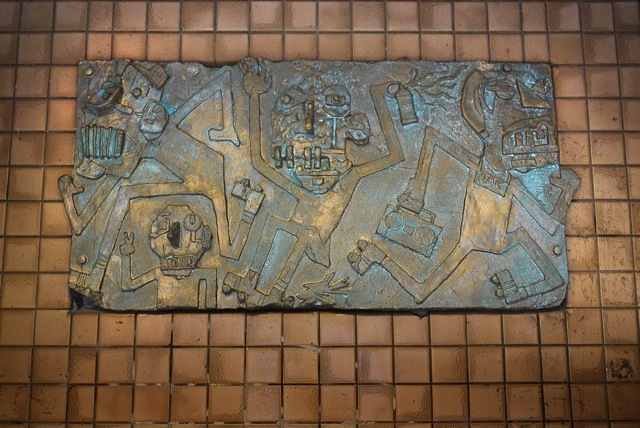
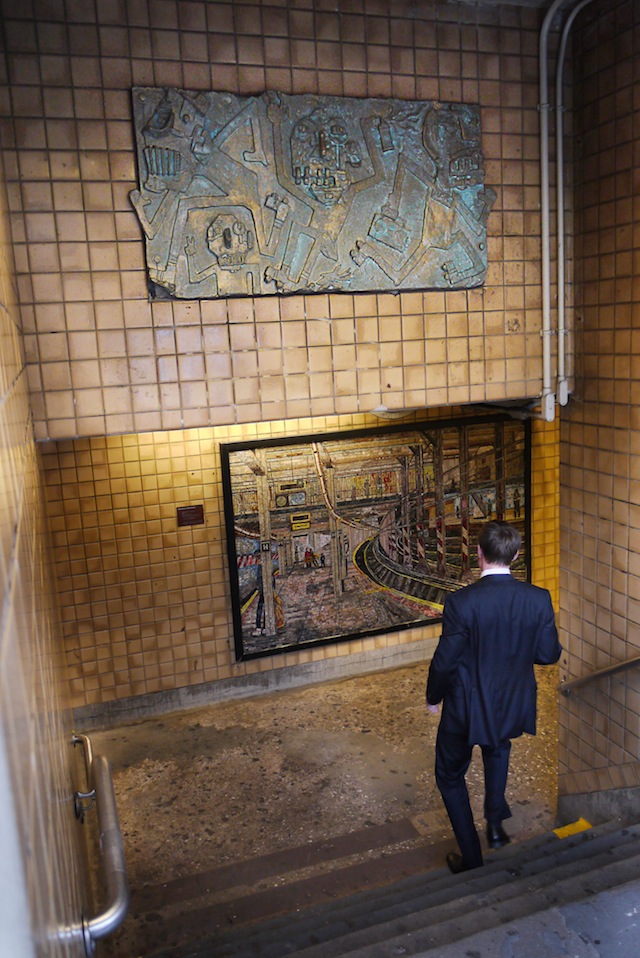
RAE recently installed the above piece in a New York City subway station where there had previously been a random blank spot in the wall. Maybe a sign that had been removed and never replaced? Well now he spot has been filled with some great art. I love how this piece looks like an official installation, but really RAE just saw something wrong and fixed it.
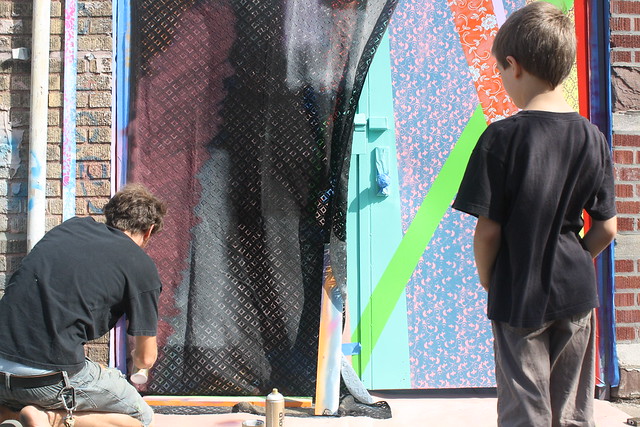
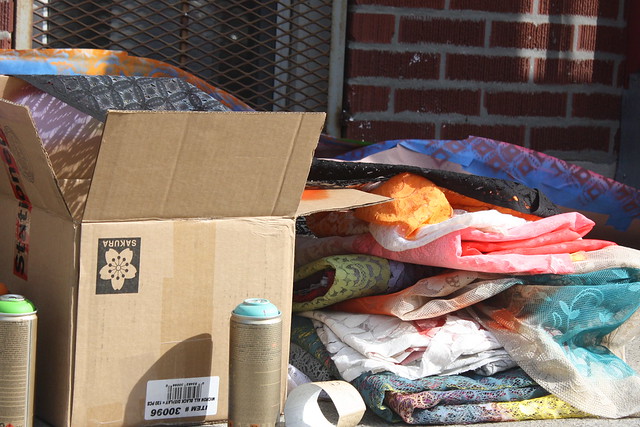
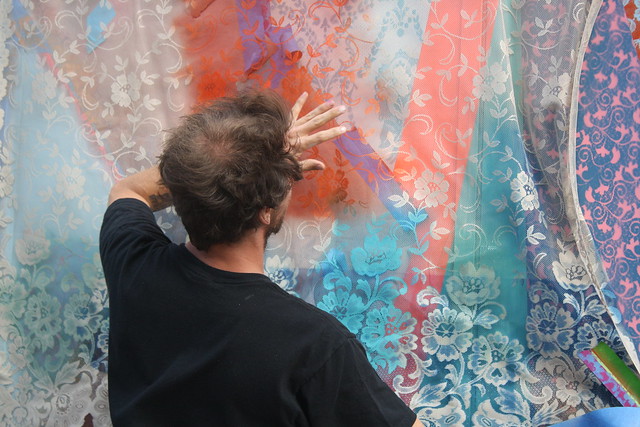
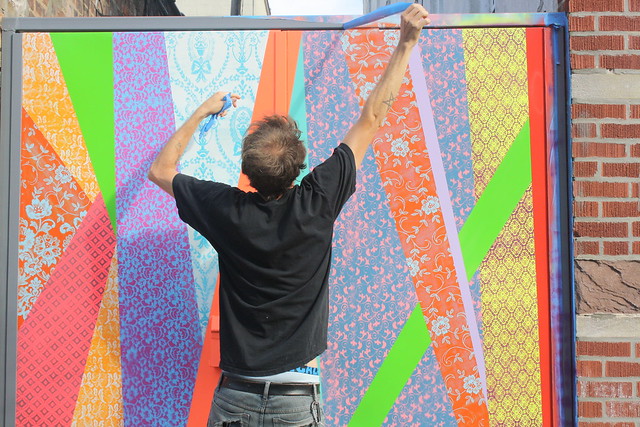
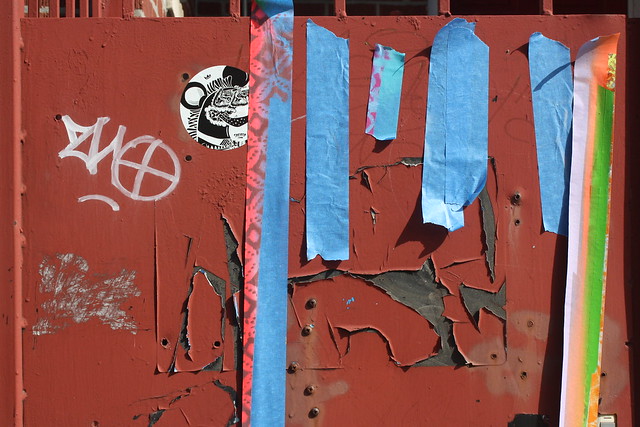
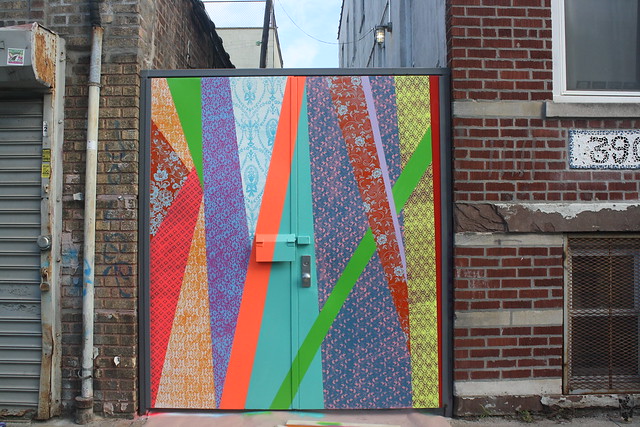
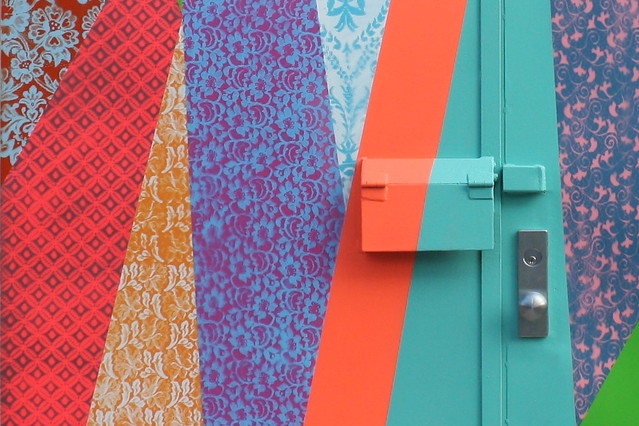
With a name like Hellbent and the detail-oriented nature of his stencils, there isn’t a more fitting phrase to capture his work than “the devil’s in the details.” Hellbent on perfection, the artist taped down layer upon layer of paint, paper, and lace to create his geometric patterns. The intricate designs coupled with the florescent colors combine to form work that is both visually and technically complicated.
By incorporating various colors, fabrics, and shapes, Hellbent has given a gate to Bushwick that can be enjoyed by any viewer with imagination. While creating the work, one woman stopped by to share what kinds of clothes she imagine the fabric to be. Others simply fixed their gaze upon the colors, even as they continued their walk down the street.
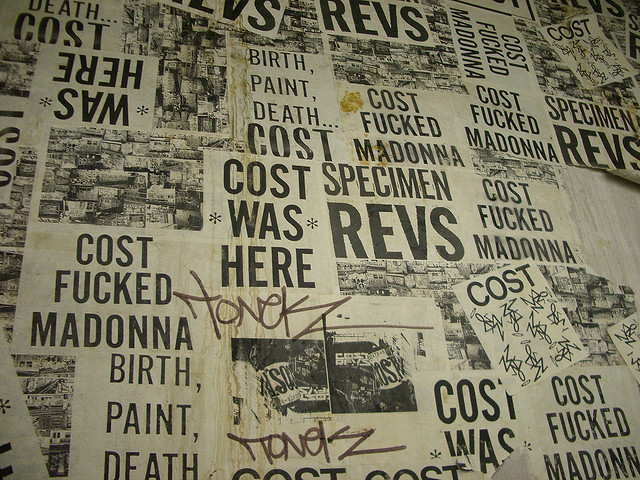
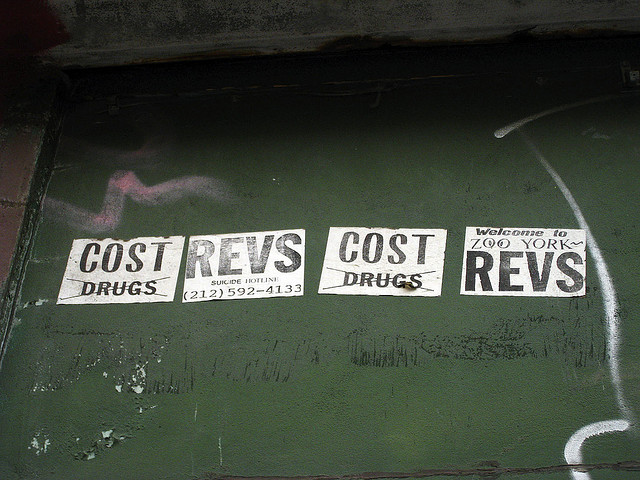
You know him. Rudy Giuliani knows him. At one point, half of the city thought Madonna knew him biblically (for more on that subject, hold your breath for Part two). COST has been ubiquitous in New York City since the late 80’s. He and his counterpart REVS are two of the most widely recognized characters in graffiti and have produced some of the longest running pieces in New York. Nothing captured COST and REVS’ domination of New York in the 90’s better than this Videograff video which asks “Is this art or dangerous propaganda?”
After working under the radar for a number of years after his 1994 arrest, COST has participated in a select few projects with brands such as Brooklynite, Showpaper and Supreme since the fall of 2010. Within the last few months, you may have seen the name COST appearing around New York City again. Despite this, he’s let the work speak for itself and shied away from the spotlight. Vandalog is pleased to publish the first major interview with this reclusive graffiti legend since his 1994 interview with Art Forum. In part one of this interview, COST discusses getting arrested, his hiatus that followed, doing graffiti against the grain and his resurgence among the latest generation of street artists.
V: Why haven’t you tried to make yourself a presence on the internet?
COST: I stay off the internet. The internet is like poison. It really is. I don’t want my face on the internet. There’s a lot of misinterpretation. Anyone can be anyone, say anything. On Facebook there are two people who are posing as me. Things like that make me, I guess, bitter toward the internet.
It’s a good way to connect, that’s true. But I think true graffiti artists have a disconnect with a lot of things in this world. At least I do. I stay disconnected- try to stay disconnected from a lot of stuff and that’s part of why I try to stay off the internet as much as I can. I mean, I’m on a little bit, but there are people out there creating a whole graffiti world on the internet; websites and storylines, bios, all that. They’re selling themselves on the internet and I don’t want to do that.
V: During your wheatpasting campaign the posters that had a phone number received a lot of attention. To be general, why did you do this? And do you think that was the 1993 version of putting, say, “www.COST.com” up like graffiti artists are frequently doing today?
COST: During that time period nobody was doing it. That was a way for the public to contact us. You know, get a little feedback on the shenanigans we pulled around the city. We were having fun, trying to keep it pure and doing what we wanted to do if it felt right at the time and hopefully – maybe not now, but then it was a different thing than what everybody was doing. We were speaking out to the public. So the phone number was kind of like an opportunity for the public to respond or reach back to us and say things. And they had a lot to say.
V: I mean, it is kind of intimidating to see a phone number on a wheatpaste. You don’t know why or why not to call it, or what to be ready for. I dialed it but got nothing. COST: Well it’s nothing now, but we used to change it up about once a week. Rudy Giuliani was the mayor and he was trying to clean up New York, and obviously if you look around New York now it’s a different town. He cleaned it up. But on the voicemail we went on political rants, spoke about art, philosophy, whatever was on our minds. We spit it out onto the voicemail and it was freedom of speech. That was the beauty of it. We were saying what we wanted, when we wanted and anyone could dial in – for what? ten cents? – Whatever a payphone cost at the time. You never knew what you were gonna hear on it. If I had a bitter day and I was a bitter guy that day and I had something to say about it, I would say it. We didn’t hold back. We said what we felt and what was true to us, REVS and myself. Initially a few people called and before you knew it, thousands of people were calling a day. It kind of got a little out of hand. Checking in on the voicemail, we got everything from death threats to marriage proposals to people telling us to just get a life.
V: What did you think of that?
COST: Some of it was inspiring. Some of it was… some of it would make us go out and do more, you know? It added fuel to the fire. We were young, in our mid twenties – a very rebellious age. I’m 43 now, you get older and mellow out a little bit. We were young and rebellious so we wanted to vent and to tell the city that we didn’t like how it was being run and wanted to switch it up a little bit. We wanted to mix things up, add a little flavor, switch things around. I’m glad people recognize that now.
The funny thing is that now that there’s an international street art boom, it’s like people are remembering it a little more, but at the time it was almost looked down upon. During that time period a lot of people didn’t like what we were doing. They didn’t consider it art because it was very um… neanderthal.
Graffiti at one point got so perfect where everybody was doing perfect lines and the art was so over-perfected. If somebody did a perfect line, we painted a drippy line that dripped everywhere.
Photo by shoehorn99
V: Intentionally?
COST: Yeah. We were doing everything against the grain. We just went against the grain of every graffiti and street art standard of the time. A lot of people were very angry that we were prolific. We were out there every night almost. I would say we were putting pressure on the graffiti scene and the street art scene to question what we were doing. And some of them were upset, you know? Because we were changing the rulebook. I don’t know if we were trying to, we were just doing what felt right. Now there’s a whole new rulebook and now people look back say (I’m not here to toot my own horn) but they say “Oh, you guys did good things and helped influence all the street artists now.” And I’ll take it as a compliment.
V: What kept bringing you back? Every night you kept doing this. What was attractive to you about it?
COST: I can speak for REVS on this as well: Neither of us did graffiti for the love of graffiti. It was more like we actually didn’t like it. We probably hated it. It was just self-expression and it was pure. We were just pouring our heart and soul into the streets, and people can take it or leave it. A lot of people didn’t appreciate it then. But now a lot of people look back and -you’re interviewing me so at least Vandalog, or somebody, recognizes that what we meant was true. I hope you can print that. What we did was true, was being true to ourselves. I’m not sure all the street artists are being true to themselves. They see one mural and someone does a mural just like it. I don’t mean to be critical, there are a lot of talented artists out there. Much more talented than me. But do they have something to say? And that’s really what I question. When I look at art, it has to speak to me. If it doesn’t speak to me than what is it? A beautiful portrait? If you said, “Paint me a portrait,” our waitress will paint a better portrait of you than I can. You know what I mean? It’s about the art. The art needs to speak to you, it needs to move you.
Photo by Press Pause
V: How did the release of your identity after you were arrested affect your personal life as well as your graffiti life, which had before been separate?
COST: It made me go deeper undercover I guess. I crawled into a shell and laid lower than the outlaw Jessie James. All of a sudden people who didn’t know that that was me put two and two together. You don’t want people knowing who you are. The idea was to do graffiti, and the idea behind graffiti was to get your name out there but for others to wonder who the heck was doing it. I never did it for a social purpose. Or a financial purpose. I did graffiti for myself and my cohorts and my crew and that was about it. And once my name got out there, it was exploitation in a sense. That’s how I looked at it. It was pretty harmful. But now that the street art/graffiti culture is so accepted, there’s been less hate and more embrace. So I’m not complaining.
V: There were plenty of ways to keep getting your work up legally. Why did you turn down so many of those opportunities?
COST: After I got caught it just derailed me, like a train. I just went right off track and I got into other things in my life. I was getting a little older, I was in my late twenties. I got into different ventures. I found some success in other areas of my life. I’m trying to figure out how to explain this properly.
It was like I was pushed out of graffiti and street art out by Giuliani and the city with this punishment. They put the cuffs on me and when I was free to roam, I still felt like I had the cuffs on me all the time. I had to make a living so I started a business and I guess I got somewhat successful and I realized that there’s no money in art anyway. There are a few people who make a lot of money off art and then there are the rest; it’s like a pool, a starving pool chasing that dollar. That’s what it seemed like to me. So I got successful in other areas of my life with business and the more successful I got, the more street art and graffiti got away from me. I have my regrets about that because everything I did was very unfulfilling, but I was earning a good living. It left a very empty feeling within because I wasn’t doing what I really wanted to do.
V: Had you done any painting at all during that time?
COST: For the first 5 years after being arrested, I was on hiatus. After that, I painted off and on but it subsided. It felt like I lost my way, like they pushed me out. It’s almost like you choose paths in this life and I wound up going down a different path, and now I really regret it. I feel like I only have about 20 or 25 years to live, I figure 65 years old, anything past that is a blessing. People live longer, but you know what I mean. So I figure with 25 years left to live, anything that I’ve done up to this point since my heavy street art days have been so unfulfilling that I’m going back to street art. I’m willing to sacrifice everything in my life otherwise, at this point. That’s why I’m going back to painting and producing work, because all the money in the world doesn’t give you uh…. what’s the word.. I forgot the word. Shit. You gotta do what feels right in this world and I gotta get back to my painting.
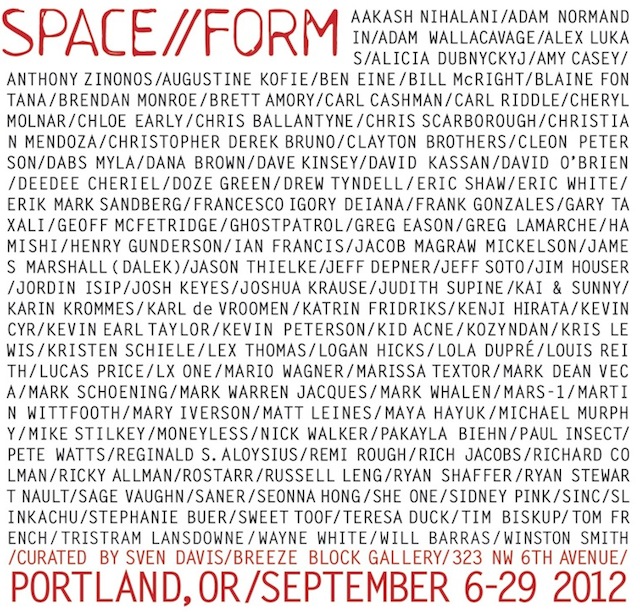
Sven Davis, probably best-known for being Arrested Motion‘s UK Director, has curated a show that will be taking place next month in Portland, Oregon. SPACE//FORM is a massive group show involving over 100 artists who were each given a 10×10 inch panel on which to work. The results are looking good. Plus, the show will include installations by Mark Dean Veca and Michael Murphy. Here’s the full list of artists:
Aakash Nihalani, Adam Normandin, Adam Wallacavage, Alex Lukas, Alicia Dubnyckyj, Amy Casey, Anthony Zinonos, Augustine Kofie, Ben Eine, Bill McRight, Blaine Fontana, Brendan Monroe, Brett Amory, Carl Cashman, Carl Riddle. Cheryl Molnar, Chloe Early, Chris Ballantyne, Chris Scarborough, Christian Mendoza, Christopher Derek Bruno, Clayton Brothers, Cleon Peterson, Dabs Myla, Dana Brown, Dave Kinsey, David Kassan, David O’Brien, Deedee Cheriel, Doze Green, Drew Tyndall, Eric Shaw, Eric White, Erik Mark Sandberg, Francesco Igory Deiana, Frank Gonzales, Gary Taxali, Geoff McFetridge, Ghostpatrol, Greg Eason, Greg Lamarche, Hamishi, Henry Gunderson, Ian Francis, Jacob Magraw Mickelson, James Marshall (Dalek), Jason Thielke, Jeff Depner, Jeff Soto, Jim Houser, Jordin Isip, Josh Keyes, Joshua Krause, Judith Supine, Kai & Sunny, Karin Krommes, Karl de Vroomen, Katrin Fridriks, Kenji Hirata, Kevin Cyr, Kevin Earl Taylor, Kevin Peterson, Kid Acne, Kozyndan, Kris Lewis, Kristen Schiele, Lex Thomas, Logan Hicks, Lola Dupré, Louis Reith, Lucas Price, LX One, Mario Wagner, Marissa Textor, Mark Dean Veca, Mark Schoening, Mark Warren Jacques, Mark Whalen, Mars-1, Martin Wittfooth, Mary Iverson, Matt Leines, Maya Hayuk, Michael Murphy, Mike Stilkey, Moneyless, Nick Walker, Pakayla Biehn, Paul Insect, Pete Watts, Reginald S. Aloysius, Remi Rough, Rich Jacobs, Richard Colman, Ricky Allman, Rostarr, Russell Leng, Ryan Shaffer, Ryan Stewart Nault, Sage Vaughn, Saner, Seonna Hong, She One, Sidney Pink, Sinc, Slinkachu, Stephanie Buer, Sweet Toof, Teresa Duck, Tim Biskup, Tom French, Tristram Lansdowne, Wayne White, Will Barras, Winston Smith
SPACE//FORM opens September 6th from 6-10pm at Breeze Block Gallery in Portland and runs through September 29th.
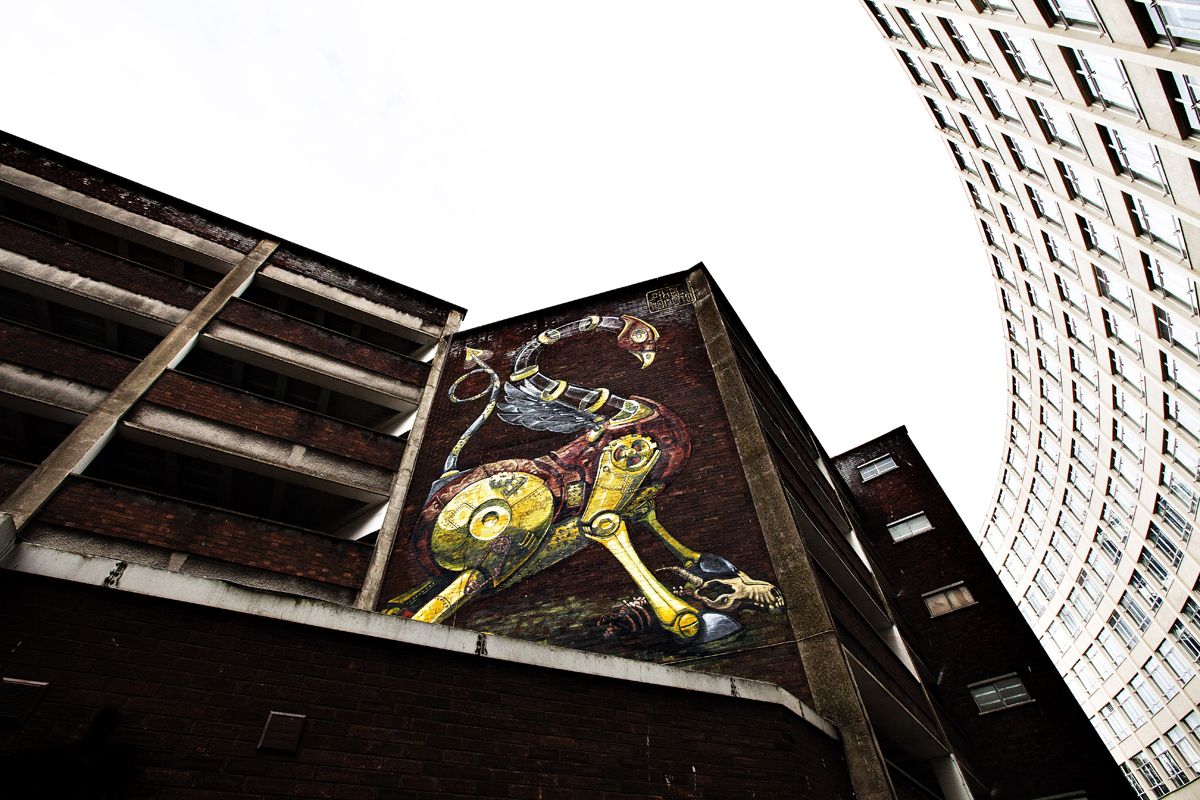
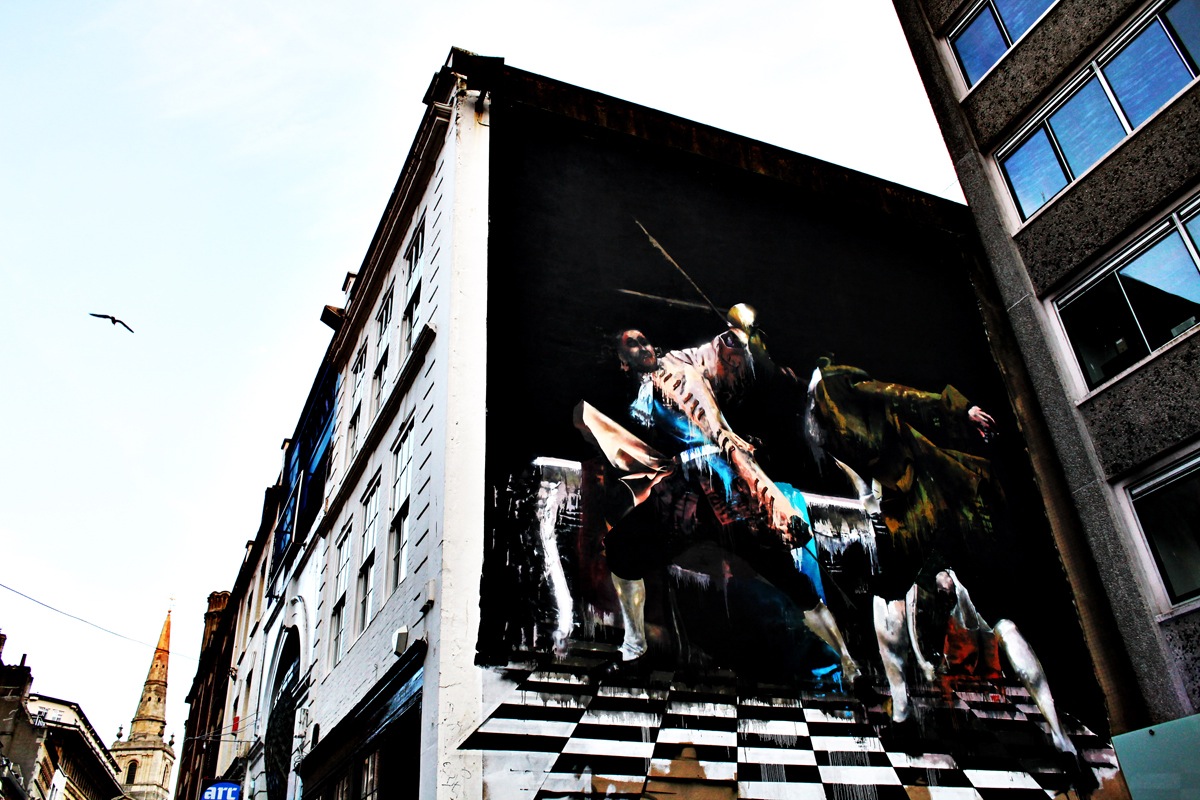
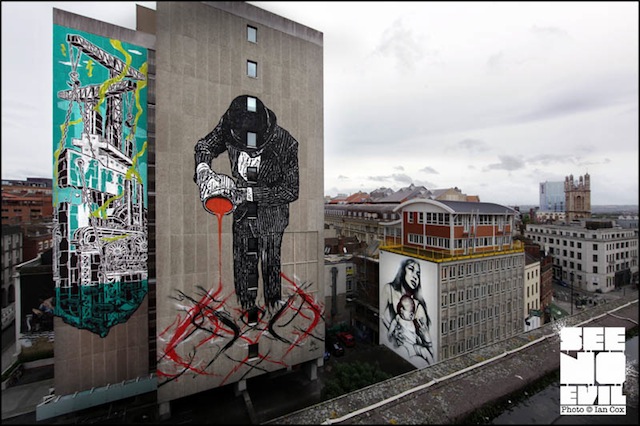
First of all, the frustrations in this post are pretty much the same that Caroline voiced in a post earlier this year about the All City Canvas festival. This year’s edition of the major Bristol mural festival See No Evil finished up recently, and I’m thinking that some great walls were painted. But how the hell can I tell? Other than Nychos’ wall, all the walls I’ve seen are in photos that have been filtered to hell because (I guess) that makes them more bloggable or tumblrable or whatever. Too often now, it seems like street art is more about the photo that will be sent to sites like this than the actual mural which should be meant to be appreciated by thousands of people every day. Photos are important, but rarely should the photo be more important than the actual work. I don’t think that the internet has to be the death of street art, but it damn sure could be when walls get painted for the purpose of taking filtered-to-hell photos of the finished product.
There were some talented artists painting at See No Evil, and the photos looks great if you think of them as photos untied to an actual mural that should be documented, but I’d like someone in Bristol to tell me how the murals actually turned out in-the-flesh. Here are some more photos that I was given from the event:
Conor Harrington. Click to view large (but still not unfiltered). Photo courtesy of See No Evil.M-City and SheOne from this year and Nick Walker and El Mac from last year. Actually, I like this photo as an overview of the city, but unfortunately it’s the only one available of M-City’s finished wall. Photo by Ian Cox.Nychos. This pic was not messed with, thank God. Click to view large. Photo courtesy of See No Evil.
I’m sorry to pick on See No Evil about this issue. It’s not something that they started and it’s not something unique to them. They seem like a cool festival, but this is an issue which they are contributing to.