RJ Rushmore has been involved in contemporary art as a writer, curator, photographer, arts administrator, and fan since 2008. With a focus on street art, graffiti, and public art, RJ facilitates and promotes catalytic and ambitious art outdoors, in galleries, and online. He founded the street art blog Vandalog and has worked at The L.I.S.A. Project NYC, Mural Arts Philadelphia, and Creative Time. Currently, RJ is Co-Curator of Art in Ad Places.
For pretty much as long as Vandalog has existed, I’ve heard rumors that Shepard Fairey would be coming back to show at D*Face’s StolenSpace Gallery in London. He had a solo show there in 2007, Nineteeneightyfouria, which closed early for some reason, prohibiting me from seeing it in the flesh. But supposedly it was pretty fantastic. Rumor has it (seriously, this is a rumor that I heard a few times, pure speculation/hope, not something that I can say with any certainty is grounded in fact, please don’t take it as such) that, at the time, Shepard signed a contract with StolenSpace Gallery promising that he would do two shows there. But the show never seemed to materialize, and everyone just awaited his returned.
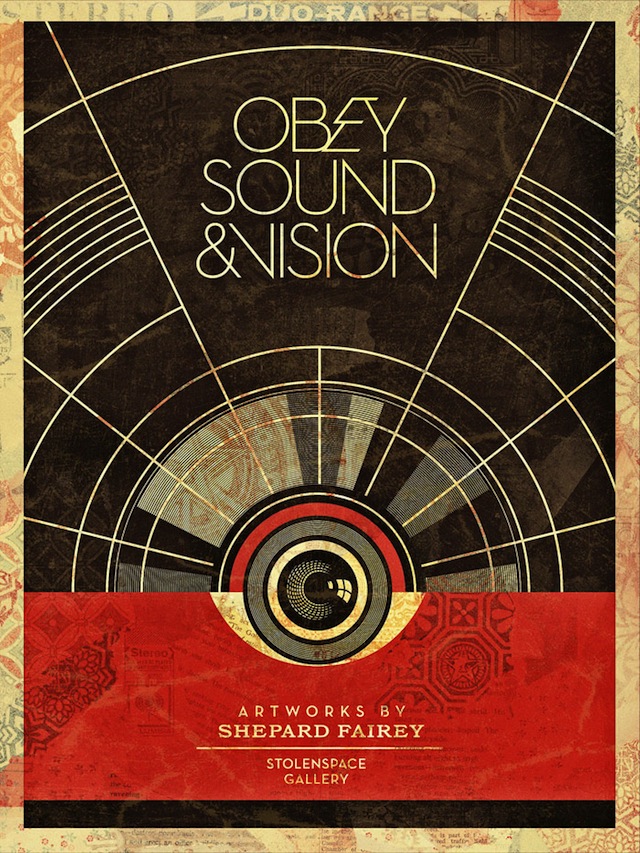
Now, five years later, Shepard Fairey will return to London and StolenSpace Gallery for Sound & Vision, a show highlighting many of the musical influences on Fairey’s work. The show will include an installation of a temporary record shop featuring both records from Fairey’s personal collection available for listening and scores of Fairey’s LP-sleeve-sized artworks. Here’s more of what Shepard has to say about the show.
Sound & Vision opens October 19th and runs through November 4th. And yes, it’s pretty much guaranteed to be packed the entire time, but it’s also not a show to miss.
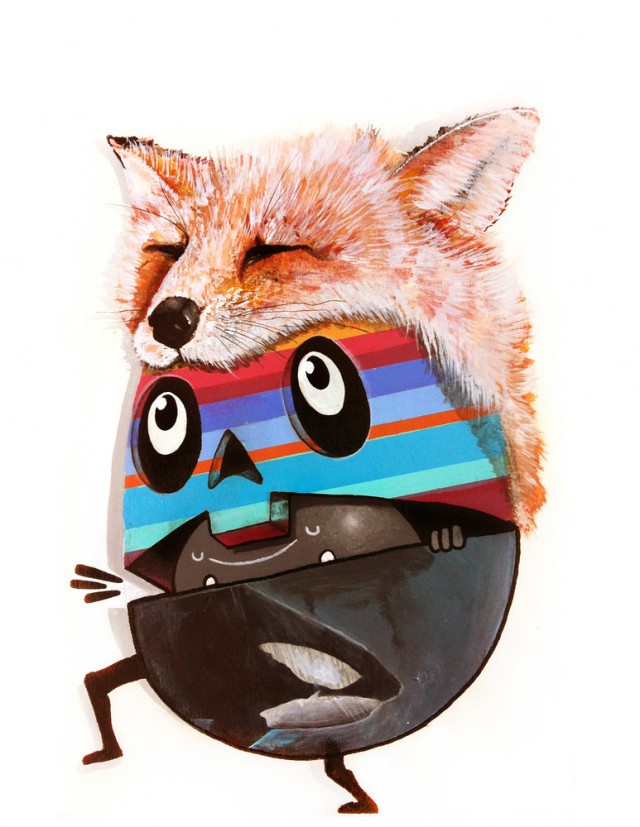
Longtime readers of Vandalog may know that I have a pretty strong dislike of giclée prints. Typically, they are not all that well printed, and they are extremely overpriced. I don’t know anything as high-margin for artists as a giclée print. But NoseGo recently came out with three giclées that prove my point about pricing and buck the trend. These three 8.5″ x 11″ prints, editions of 50 each, are on sale on NoseGo’s website for just $10 each. Not a bad deal, and NoseGo still shouldn’t have much trouble making a buck or two for himself off of these. I can’t speak to the quality of the printing, but the images certainly are cute and I don’t know NoseGo as the type of artist to put out sub-par work just to make a buck off his fans. You can pick up the prints here.
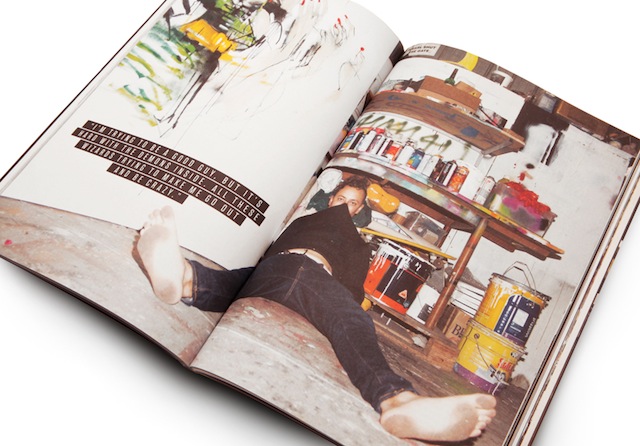
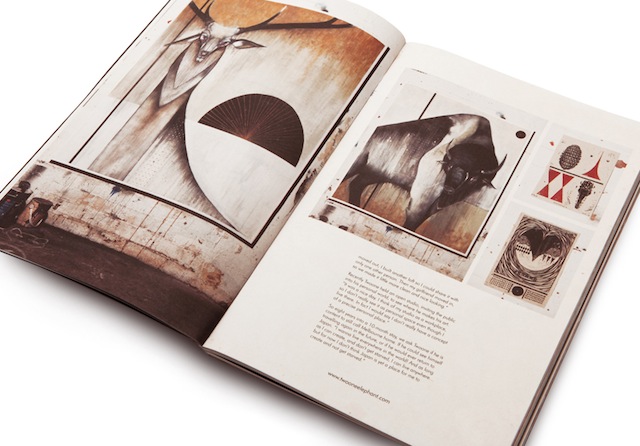
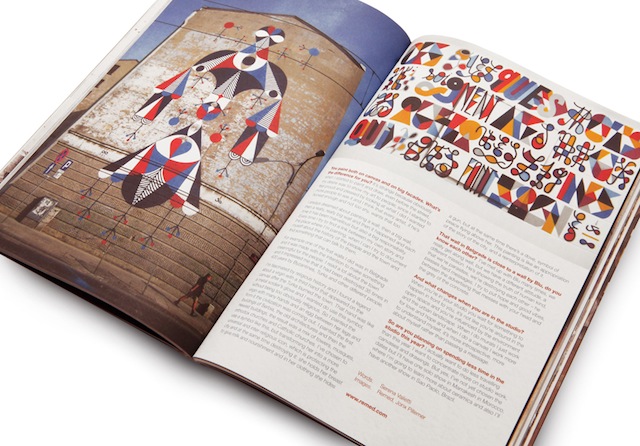
We’ve got 5 issues of Very Nearly Almost magazine’s latest issue to send off to Vandalog readers. I’ve been a fan of VNA since around the time I started Vandalog, and it’s a magazine that I always recommend as an alternative to Hi-Fructose and Juxtapoz.
For issue 19, they’ve got a great cover article on Anthony Lister, as well as interviews with Twoone, Remed and others. As it tends to be with VNA, my personal favorite part of this issue is not what you might expect (the interviews) but their photos of graffiti and street art in Newcastle. Of course the interviews are great too, particularly Lister’s.
We’ve got 5 copies of VNA issue 19 up for grabs, just answer this question in the comments: What country is Anthony Lister from? Out of those who answer correctly, 5 will be selected at random and sent a copy of the magazine. Answer by noon East Coast time on Saturday, September 8th. We’ll notify the winners via email shortly after that.
This is an essay I wrote a couple of years ago for a book that was to be a collection of essays by a number of different people in the street art world, but the final product has not yet materialized, so I’m posting the piece here instead.
I don’t want to see the plan succeed/There won’t be room for people like me/My life is their disease/It feels good/And I’m gonna go wild/Spray paint the walls – Black Flag
Good subcultures get co-opted by the mainstream. That’s what happens. Punks and preps, hippies and hipsters, gangsters and geeks have all had parts of their cultures brought into the mainstream, and that attention usually harms the actual subculture.
Sometimes it can feel like street art is getting taken over the mainstream more and more every day. Plenty of people have told me that Vandalog contributes to that co-opting of the culture. The most obvious examples naturally also tend to be the most popular names in street art: Banksy and Shepard Fairey. These guys used to be the torchbearers of street art, but their newfound fame as household names has come at a price: they certainly aren’t the revolutionary artists they once were, and I would go so far as to say that in their outdoor work they are as much guerrilla marketers as they are artists. There’s plenty to say on that topic alone, but I won’t get into too much detail about the negative aspects of street art. I still have faith in the general movement of street art: Even as some artists “sell out,” it’s inevitable that street art as a whole will remain authentic, powerful and revolutionary for a long time to come.
Anyone who has read Norman Mailer’s 1973 essay The Faith of Graffiti has probably had a good laugh at Mailer’s suggestion that graffiti was already dying out. Street Art, a book by Allan Schwartzman and published in 1985, makes a similar suggestion about street art. Looking through Street Art, you’ll see the work of early street artists like Jenny Holzer, John Fekner and Richard Hambleton as well as many other names that have mostly faded from the history of street art. Most of those artists no longer make street art. Of course, street art didn’t die out, and Schwartzman was far from the last person to write a book about it, but something special is definitely captured in Street Art: The first generation of modern street art.
While most of that first generation has now moved on from street art into other mediums, they inspired future artists to start working outdoors. In the early to mid-90’s, artists like Phil Frost and Reminisce were members of a new generation doing work on the street. Frost doesn’t work outdoors anymore, and Reminisce only very rarely does. They and many (but of course not all) of their contemporaries have more or less moved on from their roots.Then in the 2000’s, new artists like Swoon and Leon Reid IV became involved in the movement with as much passion as previous generations. While both Swoon and Leon Reid IV are both still actively making work outdoors, they have somewhat moved away from street art’s anti-establishment roots: a good portion of their outdoor work is being done with permission and in cooperation with galleries, museums or arts organizations. Over the last few years, the internet has allowed street art to grow even further, and talented new artists from around the world are coming to light all the time. Artists like Roa and Escif were already well known among street art fans before they first painted outside of their home countries because people had seen their artwork online.That’s an oversimplified history, but hopefully it shows in a very general way that street art is always evolving.
Since the 1970’s, the media has lost and gained interest in street art numerous times. Naysayers often suggest that the interest of media and the injection of money can only serve to destroy street art culture, but each time this cycle repeats, street art is reborn and brought back to its core values by a new generation of revolutionary artists. Even as the most world-famous street artists stop making street art, there’s always a talented and idealistic artist just starting out with a can of spray paint or a bucket of wheatpaste, working their way up from the bottom.
Artists and even people who don’t consider themselves artists are interested in the opportunities that only street art can provide. Once the idea that street art exists is in somebody’s head, it can’t be taken away. Now that the idea of street art has become part of the collective mainstream public consciousness, it can’t be taken away from there either. Even as its general popularity may fluctuate, the idea of street art is always going to be resonating with somebody around the world, and that’s all it takes. People want to express themselves and communicate with the public, and there are few better ways to reach the public than street art.
Street art doesn’t discriminate. A trained artist in a studio with dozens of brilliant assistants can make street art, but so can a teenager with nothing more than a permanent marker and an idea. Practically any wall is an equally valid place for a piece of work for drunken men to piss on or for kids to be inspired by.
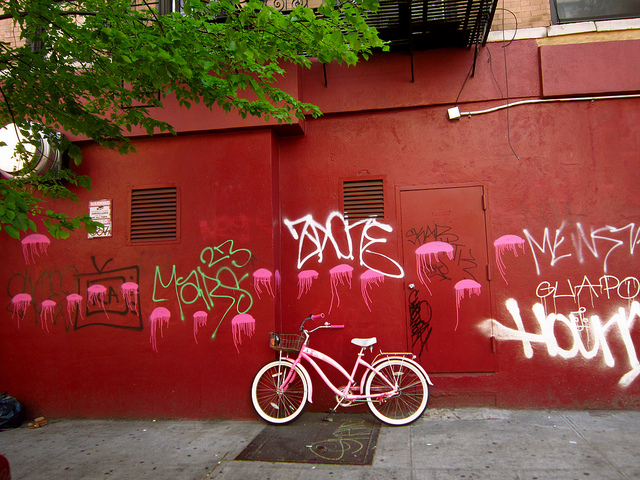
Tags by The Jellyfish. Photo by bitchcakesny.
The combination of almost no barrier to entry and the fantastic power wielded by street artists, a combination unrivaled by any other art form, is why the underground nature of street art will always triumph over any push to make the genre truly mainstream. It just takes one person with a crazy idea to shift the culture in a new direction, and there are thousands of those people out there trying out crazy ideas every day. You can’t make a culture mainstream if the thing is constantly changing, you can only make out-of-date segments of the culture mainstream.
And does it really matter if one segment of street art becomes mainstream? The fact that you can buy an OBEY shirt in a department store doesn’t diminish the power that street art has in giving a voice to any person who has something to say, and it doesn’t make it any harder to pick up a can of spray paint for the first time. Street art is a great way to buck the system, especially if that system is the street art establishment itself.
For the last three decades in particular, working outdoors without permission has fascinated artists, and they keep finding ways to do it differently. During that time, stars have been born and many have faded away. Media and art-world interest has waxed and waned. In the end though, the mainstream popularity of street art doesn’t make much of a difference. Artists will always have the drive make street art and the public will always notice street art. That’s not going away. Even if it’s just one artist reaching one other person, street art can change the world. Of course, it’s never going to be just one artist. From here on out, it won’t be less than an ever-evolving army.
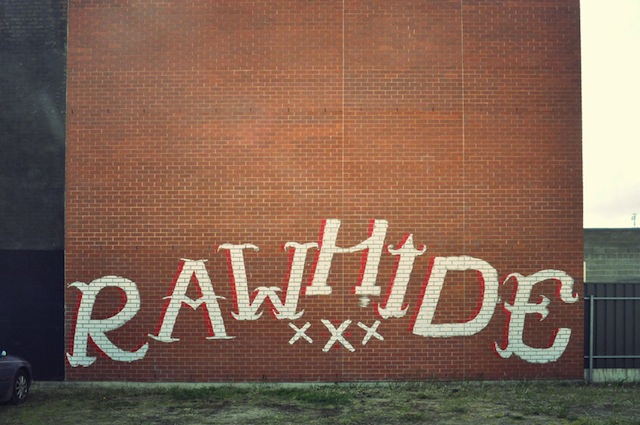
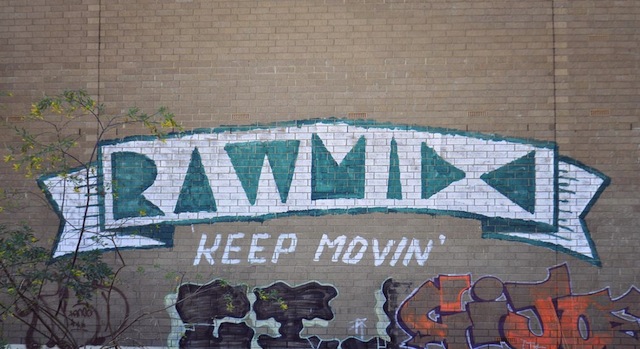
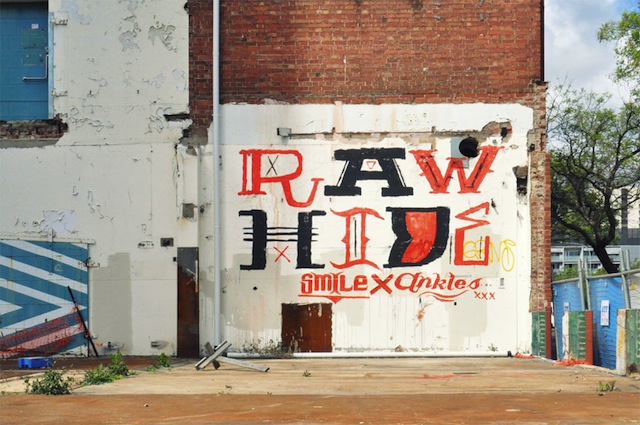
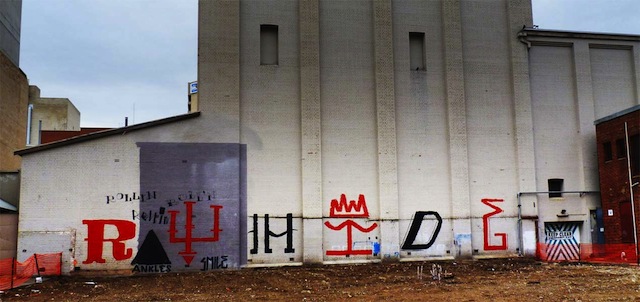
There’s something about these RAWHIDE rollers by Ankles and Smile that I really like. Obviously they’re influenced by ReadMoreBooks, Steve Powers and maybe AvoidPi, but that’s alright by me. These guys are doing some rollers that are a step above what you’re likely to see day-to-day. And they are (or at least Ankles is) based in Adelaide, Australia, so it’s cool to see something so nice coming out of a city that isn’t internationally known for their street art or graffiti.
Oakland has some of the most exciting and slightly underground graffiti and street art going on the USA right now, and GATS (which stands for Graffiti Against The System) is one of the most exciting guys in that already exciting city. iamOTHER is making some videos about what’s going on in Oakland, with a particular focus on GATS. The first part of that series is above.
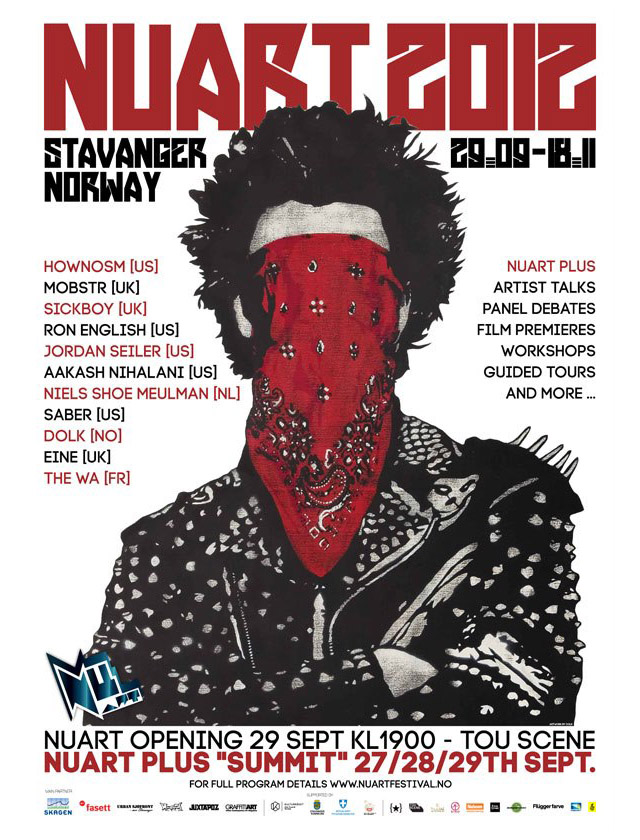
I’ll be participating in three events at Nuart Plus, a 3-day international summit on street art taking place during the festival. Evan Pricco, Tristan Manco, Carlo McCormick and others will be speaking there too. Here’s what I’m involved in: On the 27th, Jordan Seiler and I will be giving a tour of some of the art (and ads) in Stavanger; On the 28th, Carlo McCormick and I will be at Martinique, a cafe and pub, to debate about whether or not one can truly appreciate street art on the internet; On the 29th, Evan Pricco, Tristan Manco and I will be on a panel about street art and the internet moderated by Eirik Sjåholm Knudsen. Sorry if I’m focusing a bit too much on my own stuff, but I’m really excited to be going to Nuart, especially since I’ll be speaking alongside so many of my friends and idols.
There will of course also be an indoor art component to the festival.
Nuart’s street work begins September 20th, the indoor show opens on the 29th at Tuo Scene and the panels and talks will take place on the 27th-29th.
We would like to take a brief moment to thank this month’s sponsors. These are the organizations and companies that keep us publishing, so be sure to check them out!
Brooklyn Museum–GO is a community – curated open studio project. Artists across Brooklyn will open their studio doors, so that you can decide who will be featured in a group show at the Brooklyn Museum. Voter Registration: July 17–September 9, 2012
School of Visual Arts – The NYC art and design school is offering continuing education courses to meet the diverse educational needs of the city’s professional art and design community.
If you are interested in advertising on Vandalog, please get in touch with Nectar Ads, the Art Ad Network.
It’s back to school in a few days for the college-aged Vandalog bloggers. Caroline moving to New York City tomorrow, so say hello if you see her around.
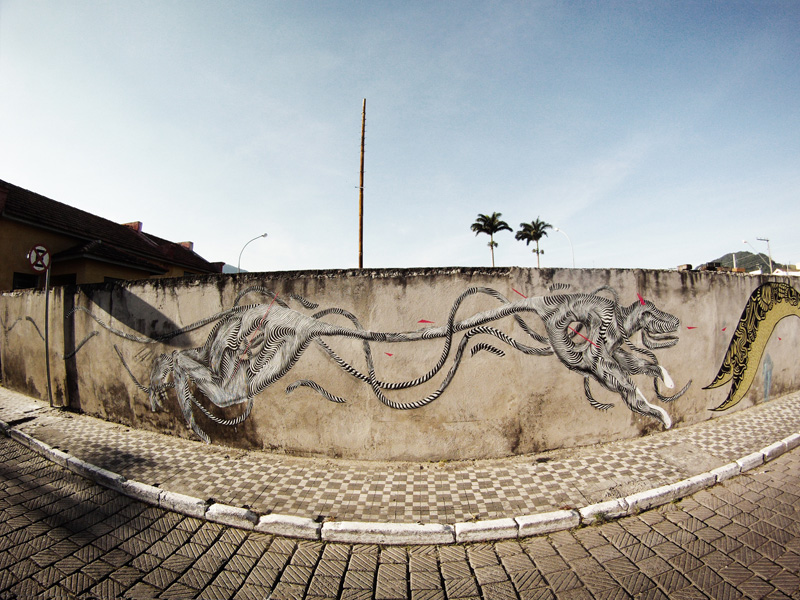
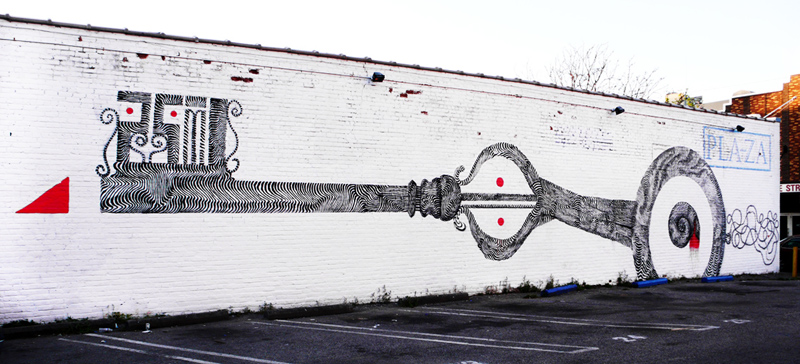
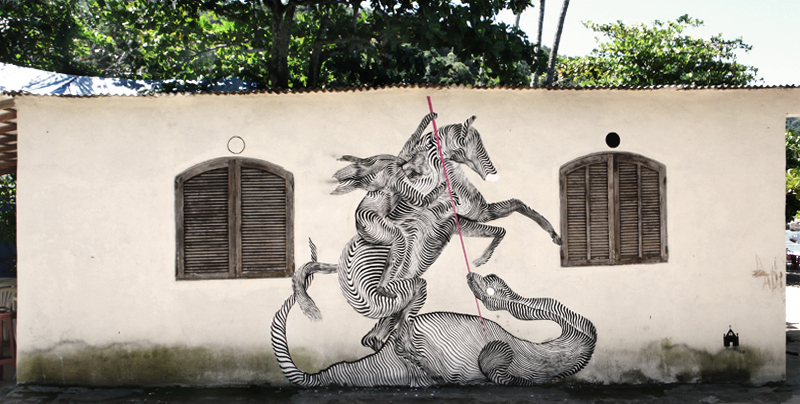
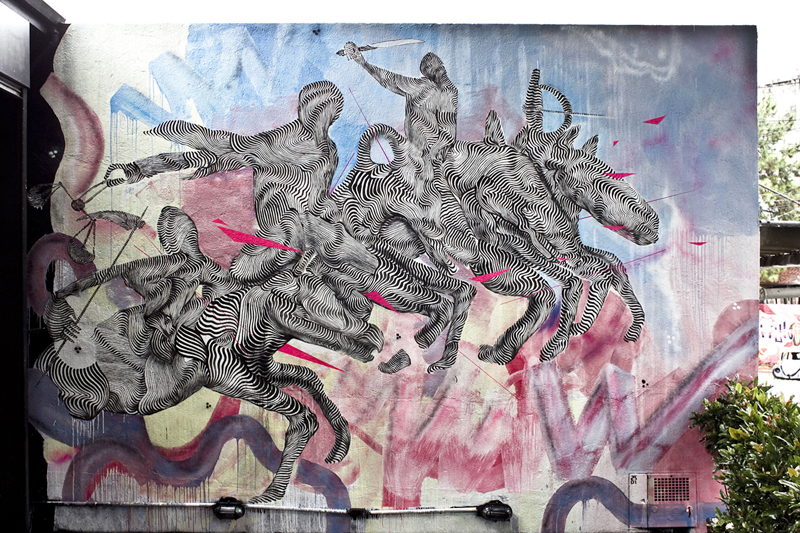
2501 is one of those very talented artists who have been, for whatever reason, somewhat neglected on Vandalog. Here are four of the walls he has painted so far this year.