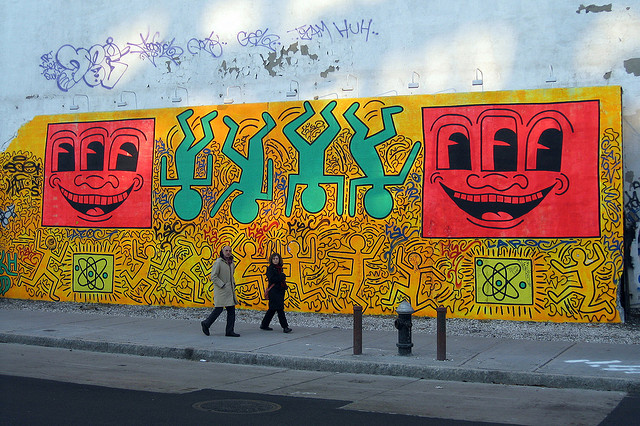
If Keith Haring were still alive today, he would be turning 55 years old. Happy birthday Keith.
Photo by wallyg
If Keith Haring were still alive today, he would be turning 55 years old. Happy birthday Keith.
Photo by wallyg
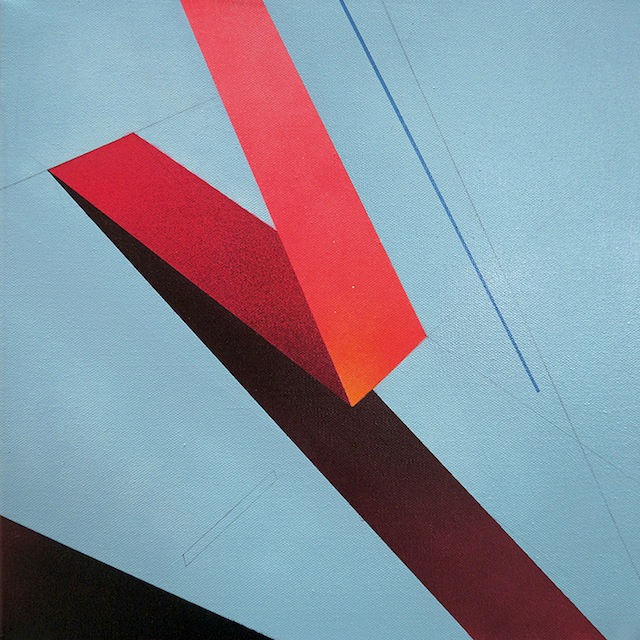
David Bloch Gallery in Marrakech, Morocco has a show opening up this month with a group of really interesting artists. Unfolding includes work from Carlos Mare, Derm, Jaybo Monk, LX One, Remi/Rough and Steve More. These artists form part of the Agents of Change collective, and they all come from a graffiti background. Rather than resting on those laurels, the Agents of Change are now bringing the same intensity and drive for constant improvement to their fine art and murals that they brought to graffiti.
Unfolding openings May 10th and runs through June 8th.
Photo courtesy of Remi/Rough
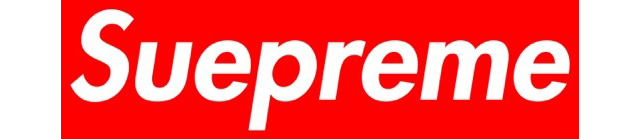
Update: gilf! sent me this screenshot from a post on Instagram by @willnyc. @13thwitness is Tim McGurr, the son of Leonard McGurr aka Futura. Futura designed the original Supreme logo. Futura’s daughter Tabatha McGurr blogged for years on the Married to the MOB website. @willnyc’s post went up before Kidult’s image. A case of “it’s a small small streetwear world” and “Suepreme” was an inevitable and obvious gag for people to pick up on, or (and this is a total conspiracy theory) a case of collaboration between Supreme and Kidult, facilitated by Tim McGurr? Thoughts? This isn’t the first time Kidult has been suspected of working for the brand he is supposedly skewering. And of course, even if Supreme didn’t hire Kidult, there’s the argument that even a “Suepreme” parody t-shirt is still a great advertisement for the real Supreme.
Supreme is suing Married to the MOB’s Leah McSweeney for the Supreme Bitch t-shirts that she’s been making for the last decade or so. In response, Barbara Kruger (the obvious inspiration for Supreme’s logo and an artist who many people do not realize got her start on the street) commented on the lawsuit with this Word document.
Other artists have taken to commenting on the ridiculousness of this suit as well, most notably Kidult. The artist known for painting his name on storefronts (including Supreme’s NYC shop) who have appropriated graffiti aesthetics for fashion or advertising purposes is going to be giving away free t-shirts on his website today with the above “Suepreme” graphic.
Kidult’s Suepreme shirts will be available for free at 3pm east coast time from his web “store”.
Last class of the school year yesterday. Now for finals. Can’t wait… Here are some distractions in case you’re in a similar boat:
Photo by Hrag Vartanian
Young New Yorkers is a restorative justice, arts program for 16 -17 year olds who have open criminal cases. The criminal court gives eligible defendants the option to participate in Young New Yorkers rather than do jail time, community service and have a lifelong criminal record. After our successful pilot program last year we continue to finance the project by hosting a silent art auction this summer – which would not be possible without the very generous donations of our artists, friends and collaborators – This year we are also publishing a catalog which contains critical essays on Youth Justice, Art as Social Practice and Street Art in order to make connections between these projects and our youth at risk.
The following is one of those essays and we’ll be publishing more of them on Vandalog as we approach the auction – so feel free to join the developing discourse…
We are a self-organized and grassroots effort. If you’ll like to help us find a locale for the auction, donate your time, partner with us or just be more informed please visit our website or Facebook page or write to Rachel@youngnewyorkers.org.
– LNY
A couple years ago I was doing a wheat paste installation on a friend’s outhouse at his rodeo arena. A team roping competition was to start several hours later. I woke up around 5 a.m., drove an hour to the site and started working before sunrise. An 18 wheeler loaded with calves was parked nearby. A white cowboy emerged from the cab and groggily made his way to the outhouse. Upon seeing me he mumbled to himself “…Where else would you find on old black man wallpapering the outside of an outhouse at dawn at a rodeo event on an Indian reservation? Only in America.” We both laughed. In retrospect, it was an improbable moment but in the words of Spaulding Gray, it was also a perfect moment in that it captured the bridge building potential of public art.
That’s the question I get asked most frequently – what the fuck is an old black doctor doing making street art along the roadside on the Navajo reservation? Admittedly, it’s an unlikely journey which upon further inspection it makes perfect sense.
I came to work at a small clinic on the Navajo nation 26 years ago bright eyed and full of idealism and misconceptions. My first misconception was that as an African-American I’d be accepted by the Navajo who I thought would share a sense of solidarity with me as a member of a historically oppressed group like themselves. Wrong. I learned quickly that people here are focused on addressing their daily needs such as herding sheep, hauling water, firewood and/or coal and taking care of family. Acceptance into the community is hard won. There’s an expression amongst people here that unless you’ve walked amongst the Navajo for 2 years, they don’t take you into their trust. They’ve grown weary of outsiders coming to take from them leaving little in return.
My first year here I set up a black and white darkroom. After work I’d go out into the community to spend time with people as they were doing chores around their homesteads or hanging out with their families often getting to photograph these experiences. I’d started shooting black and white film in junior high school. My junior high school experience was unique and in retrospect, was instrumental in influencing my efforts to contribute fully to my adopted community.
I attended a small, alternative school in the mountains of North Carolina called The Arthur Morgan School. The school had 24 students, aged 12 – 15 in grades 7, 8 and 9. Being an actively engaged community member was demonstrated to us in practical terms every day. Each student had work assignments that we’d rotate weekly. The projects involved everything from preparing meals to working in the garden to repairing bridges on the dirt roads around the school. Once a week we’d have community meetings where students and staff would sit around in a large circle to discuss issues affecting our lives at the school. Coming from a traditional, all black public school, I remember being impressed that my opinion in these meetings mattered just as much as anyone else’s including our principal.
During my family practice residency in West Virginia during the early 80s, I’d make frequent trips to NYC hoping to see break dancing on street corners + burners on trains. My dream was to become a member of the Zulu Nation and it was during this time I started experimenting with graffiti.
Public Health Meets Public Art
The Navajo nation is located in the Four Corners region of the U.S. The land area of the rez is 27,500 square miles in size which is larger than the state of West Virginia. It’s home to roughly 160,000 people. Coal, natural gas, oil, uranium are found in abundance here. The Navajo should be one of the wealthiest groups of people living in the U. S. However, because of the way the contracts were written to exploit those natural resources, the Navajo people are amongst the poorest people in the U. S. Health problems on the reservation reflect those of other impoverished communities. Rates of diabetes, heart disease, hypertension, alcohol and drug abuse, domestic violence, teen pregnancy, interpersonal violence are all higher than the national average. The unemployment rate is close to 60%. Yet in the midst of what many from outside the reservation characterize as overwhelmingly dire circumstances, there are people living lives of dignity, celebrating the joys of family, farming and community.
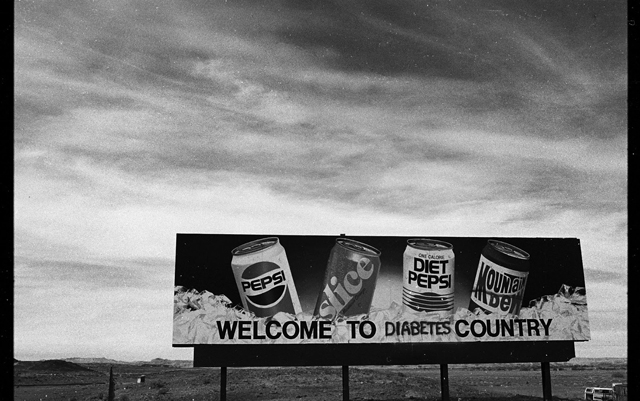
My first intersection of public art and public health occurred shortly after I arrived on the reservation. Concerned with what we considered irresponsible advertising in that it was promoting cheap, sugary drinks in a population plagued with Type 2 Diabetes, a community health nurse and I went out one night to correct a billboard on the reservation.
Building Community
Wikipedia defines community as a social unit that shares common values. It goes on to say that “in human communities intent, belief, resources, preferences, needs, risks and a number of other conditions may be present and common, affecting the identity of the participants and their degree of cohesiveness.”
What does it mean then to build community and what are the implications of such an undertaking for someone from another community whose belief system differs from the host community? I didn’t consider any of these questions before I started placing photographs along the roadside.
During my time on the reservation I’d been following street art from a distance. Any time I’d go to a big city with graffiti or street art, I’d seek it out. In the mid 90s I did a project called the Urban Guerrilla Art Assault where I’d place black and white photos on community bulletin boards and in store windows in Flagstaff. In 2004 I traveled to Brazil for the first time and was blown away by the abundance, diversity and caliber of the street art there. I returned to Brazil for 3 months in 2009. The first day of my return the feeling of being alive and intrigued by art on the street made by the people and for the people consumed me again.
There was one guy whose work I saw and liked as I moved around Bahia. His name is Limpo. It turned out that during my last 3 weeks there I rented a flat immediately above his studio. I spent everyday in his studio talking with him and street artists from around the world who’d stop by to share ideas in sketch books, videos online and street art books. The highlight was getting to go out on the street with one of the artists as he did a piece. These guys loved what they were doing. Their energy and enthusiasm were infectious. As I left Brazil, the street art community that had embraced me and stirred my soul said “keep it going!”
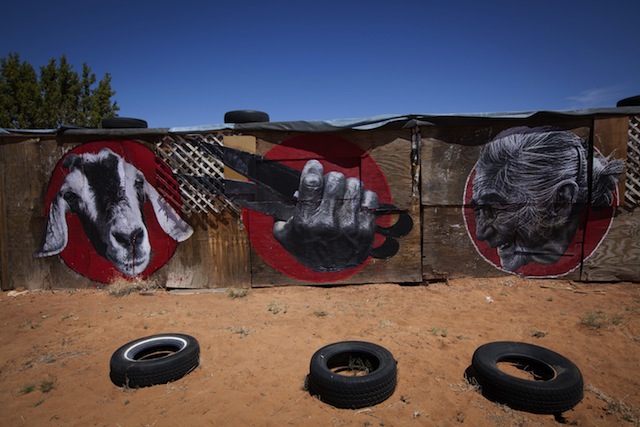
When I returned to the States I decided to enlarge and start wheat pasting images from my 22 year archive of negatives along the roadside. I got a recipe for boiling wheat paste off the internet, talked with people at Kinko’s about how to make enlargements and away I went. My first forays were at night. I pasted onto roadside stands where people sell jewelry to tourists venturing to the Grand Canyon, Monument Valley and Lake Powell. As I contemplated doing this, I had to consider how to introduce a new art form into a traditional culture. What imagery is acceptable? After stumbling a couple times, I settled on what I considered universally beloved Navajo themes – Code Talkers, sheep and elders.
One of my first pastings was of Navajo Code Talkers that I pasted onto an abandoned, deteriorating jewelry stand along the highway to Flagstaff.
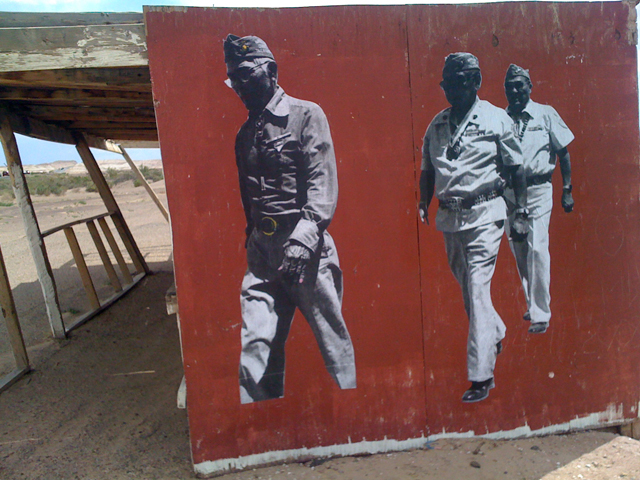
I was shocked a week later as I drove by the stand to find people repairing it. Curious, I stopped to find out what was up. The guys working on the stand didn’t know I’d placed the Code Talker photo there. They said that so many tourists were stopping to photograph the stand, they decided to repair it and start using it again. I asked if I could take a photo as well and told them that I placed the image there. They responded by asking me to put something at the other end to stop traffic coming from that direction. This was my first validation from the community to continue pasting and it was my first insight into the potential of art to promote economic independence for the roadside vendors. More importantly, I appreciated the potential of this work serving as a tool to bridge cultures and races of people.
It is through these types of interactions with people as I’m installing art that I get to better know my community apart from the constrained interactions I have in the clinic. Installing art in communities on the reservation where people don’t know I’m a doctor who has been here for 26 years and that I have a sixteen year old 1/2 Navajo son, I defend what I’m doing by telling people that my project is a mirror reflecting back to the community the beauty they’ve shared with me over the past quarter century. It’s my hope that a stronger sense of self and collective identity is nurtured through the images which thereby strengthens the community.
Last summer I decided to pursue a dream suggested by a fellow street artist to invite some of my favorite artists out to the reservation to paint murals and to work with local youth. I called this experience The Painted Desert Project.
The Painted Desert Project
The Painted Desert Project hates stereotypes, respects the unique culture in which it operates and spreads love.
Before the first group of artists came out last summer to paint murals (which included Gaia, Labrona, Overunder, Doodles, Tom Greyeyes and Thomas “Breeze” Marcus), I sent to the non Native American artists copies of a book chapter on the Navajo creation story, a book of images and observations about the land and the people, a beaded item from one of the roadside stands and a film (“Broken Rainbow”), in an effort to sensitize the artists to the different world view here. I attempted to pair artists with various roadside stand owners and arranged for sweats with tribal elders to bless our efforts and to give the artists an idea of acceptable imagery and Navajo taboos.
It’s important to me that artists come to the project without preconceived ideas of what they’re going to paint. It’s important that they have enough time to interact with community members and spend time in this land of enormous skies and stunning landscapes then create work that reflects this interplay of cultures and landscape. In this way, the art is responsive to the moment like jazz. My hope is that the artist leaves enlightened and that the community feels enriched or vice versa.
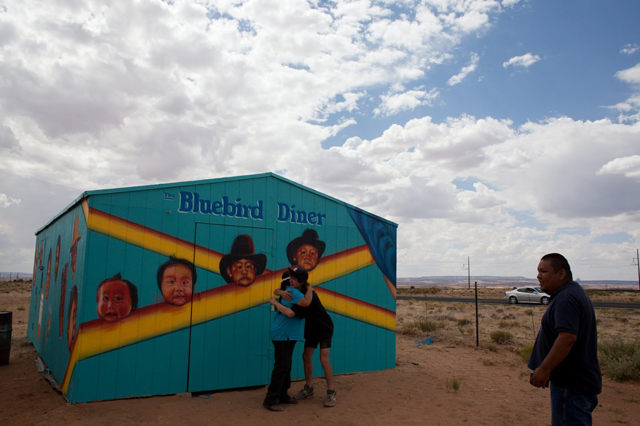
Last summer as the first group of artists was preparing to leave, we did something I’d never done in my long tenure here. We invited members from the community to my house to share a dinner with the artists. It was a simple meal shared around a candlelight lit table outdoors under the stars. How can this type of rich exchange not inform my medical practice which like my art practice attempts to heal and spread love?
My hope for the project this year is to not only share art but to do community service projects. For example, last summer Doodles painted a killer mural on a nearby food stand which burned down last fall. I’d very much like to get him back this summer to help the vendor rebuild the stand and then repaint it.
So when mofos ask me what’s up? What’s an old black doctor man doing wheat pasting on the Navajo nation? I tell them like the brothers told me in Brazil. I’m just trying to keep a good feeling going round and around.
Photos by Jetsonorama
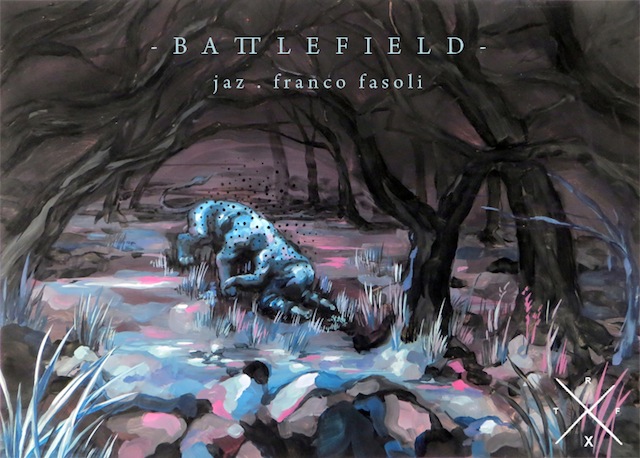
Artifex Gallery in Antwerp, Belgium has a solo show from Franco Fasoli aka Jaz coming up on Friday. Jaz is one of my favorite muralists, and I think I like his indoor work even more. Dude can paint. Battlefield will include new paintings as well as studies on paper. Those works on paper sure to be great as well. His sketch in my blackbook, done in just a few minutes, is one of my favorite pieces in my collection.
Battlefield opens this Friday, May 3rd, at 6pm, and runs until May 26th.
Photo courtesy of Suben
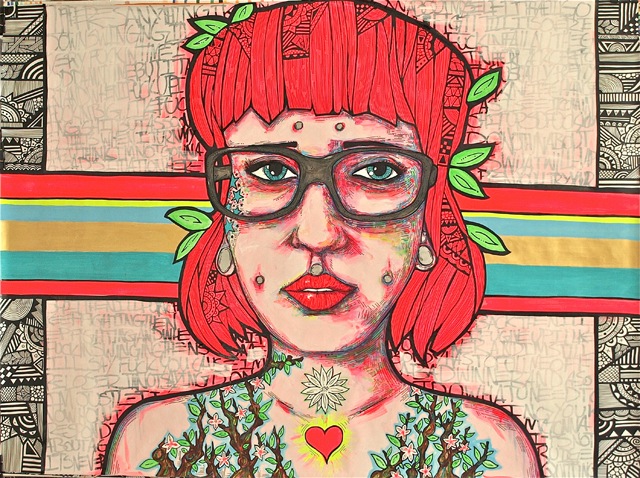
Astrotwitch – whose playful, colorful paste-ups and stickers have graced Washington DC’s visual landscape for a while now – has been busy at work curating an exhibit. “With Love and Care,” opening this Saturday evening, May 4 from 7-11pm at the Fridge, brings together seven international artists who have shared their one-of-a-kind hand painted posters in public spaces. On exhibit will be select posters and original paintings by these artists — mounted by Astrotwitch on painted and tagged frames fashioned from found wood. In addition to Astrotwitch and Decoy from DC, featured artists include: the Berlin-based Argentinian artist, Alanzacion; Portland, Oregon’s N.O. Bonzo and Circleface; MAR! from LA and Galo from Sao Paulo. As you can see from this sampling, their work is quite diverse; what binds them together is their commitment to sharing unsanctioned original artwork on the streets of their cities.
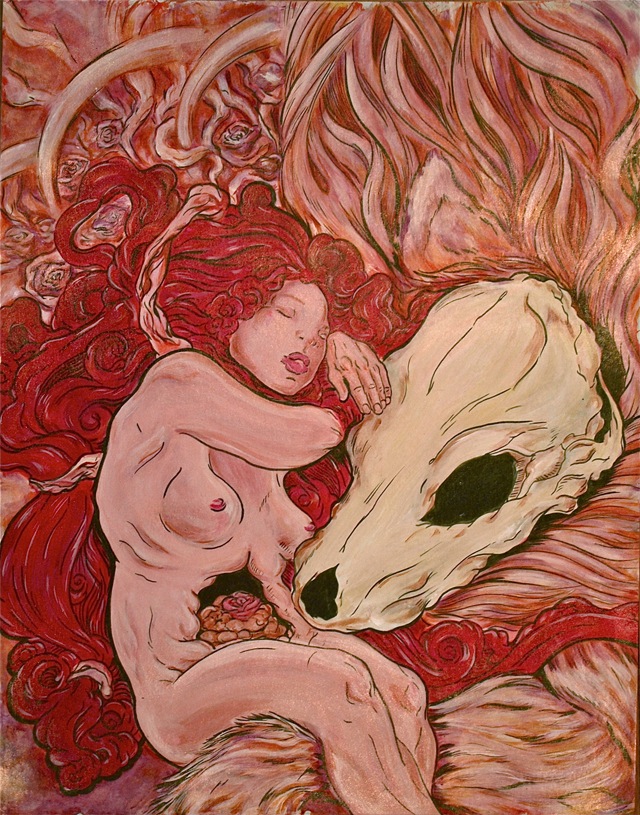
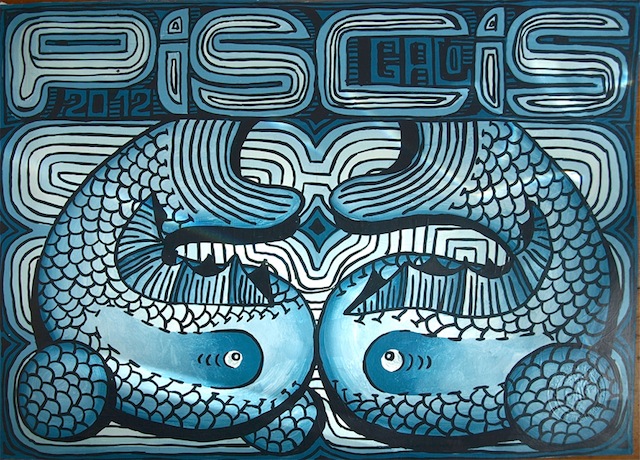
The exhibit continues through May 26 at 516 1/2 8th Street, SE in Washington DC.
Photos courtesy Astrotwitch
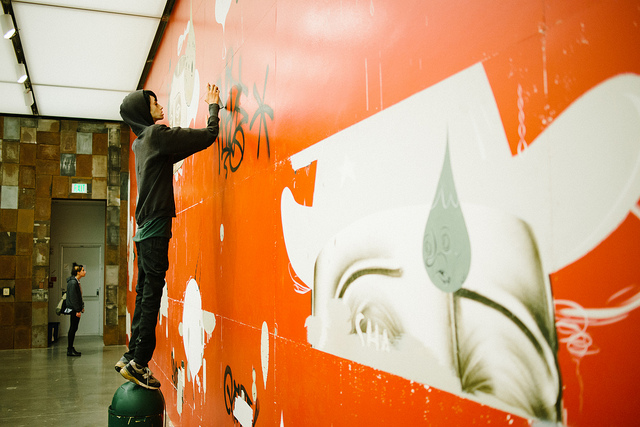
Earlier this month, I visited the Institute of Contemporary Art/Boston for the opening of Barry McGee, a retrospective of McGee’s work that had come to Boston after first being shown last summer in Berkley, California at the Berkeley Art Museum and Pacific Film Archive.
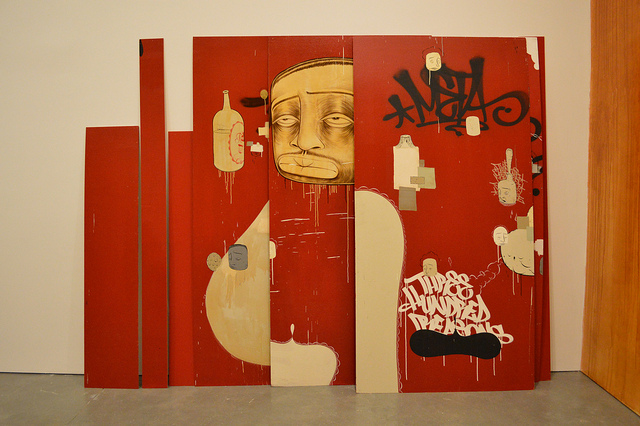
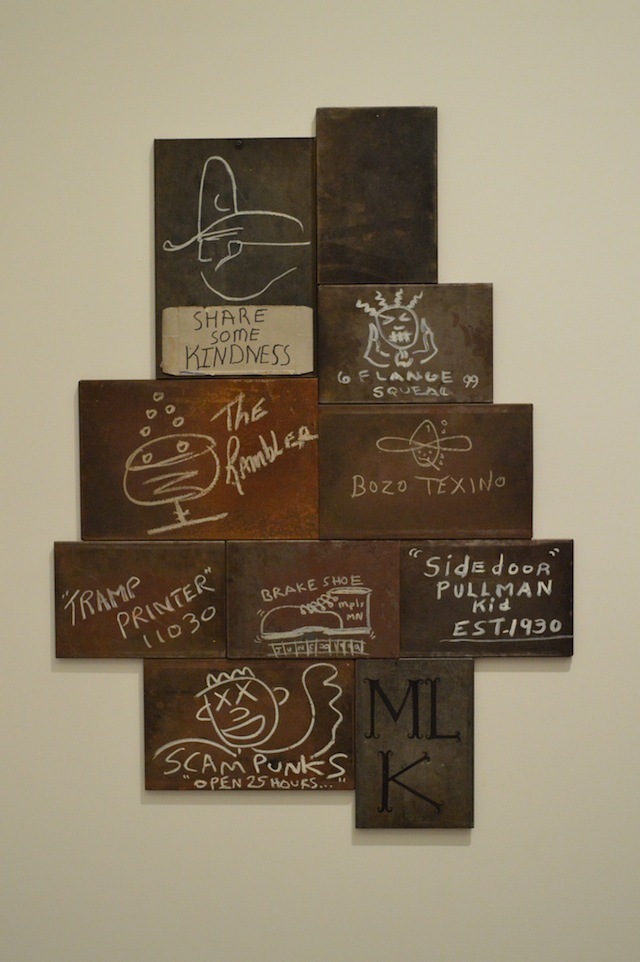
Barry McGee is a mid-career retrospective and the most extensive museum exhibition of McGee’s career to date. This version of Barry McGee is somewhat smaller than the version in Berkley, and so a few large works are not included, but this version also included a few pieces that were not seen at Berkley, more specifically work by Boston artists and graffiti writers and a bit of new work by McGee. Since the exhibition is a retrospective, Barry McGee includes sculptures, paintings, drawings, zines, ephemera, etchings and video works by McGee from the early 1990’s all the way through to 2012, although even the old work is not quite the same as it once was because McGee likes to rearrange his old work into new configurations and shapes whenever possible. In addition to work by McGee, there were artworks and ephemera by about a dozen other artists whom McGee included in the show. It is not quite an official part of the show, ICA adjunct curator Pedro Alonzo also arranged for McGee to paint a mural on the back of Boston’s House of Blues theater. Despite the title, the show seems to be an effort by McGee to take advantage of his position as a “museum-ready artist” by bringing the work of his friends into the museum galleries too and to highlight the significance of the kind of graffiti that many people find ugly and undesirable.
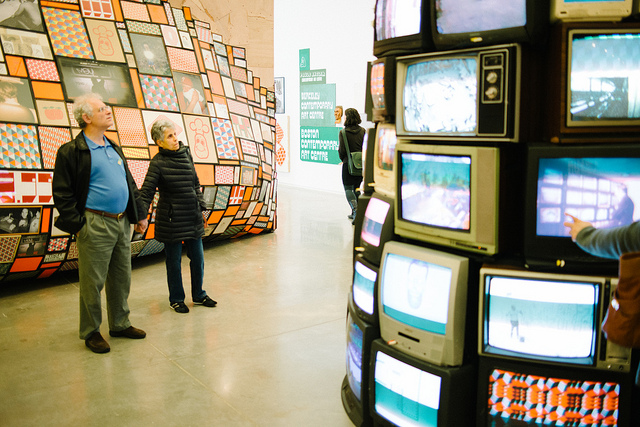
In Ben Valentine’s review on Hyperallergic of the Berkley version of Barry McGee, Valentine completely missed the mark and misunderstood McGee’s work and what was going on in the show. Valentine repeatedly refers to McGee as a “street artist” or his work as “street art”, a mistake that was made in some of the Boston press as well, perhaps because street artist is a more institutionally acceptable term than the much more accurate “graffiti artist” or “graffiti writer”. Valentine also claimed that there were sculptures all around the show of McGee tagging walls, and suggested that this might be some sort of mid-life crisis/street-cred proving move by McGee to show that he is still authentic. In fact, practically the opposite is true. Those sculptures actually depict McGee’s assistant Josh Lozcano and help to point out that McGee is older and that he is not longer as directly as involved in the culture he grew up in as he might like to be, whereas Lozcano is from a slightly younger generation and continued on as an active and accomplished writer long after McGee went into his current stage of semi-retirement.
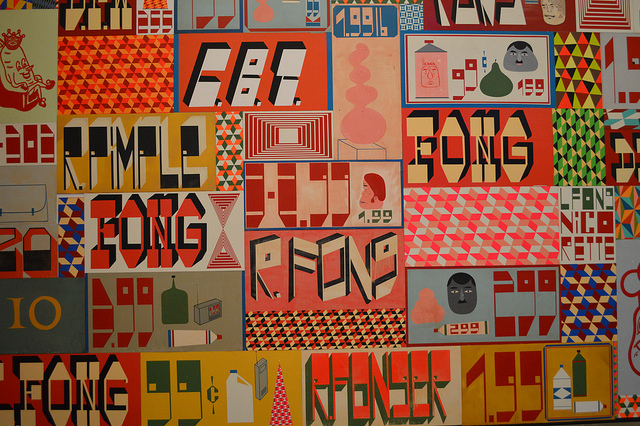
Similarly, at the opening at the ICA I heard multiple people asking docents what the letters “THR,” “CBT,” or “DFW” stood for or meant (the letters appear throughout much of the work in the show). The docents were either unable to answer or radioed in to their superiors and then explained that the letters were acronyms for “The Human Race” and “Down For Whatever,” but the significance of the letters is much more important than the meaning. DFW, CBT, and THR are graffiti crews that McGee is affiliated with. McGee is repping his crews in his own way, now that he has the attention of museum-goes and does not have the freedom to go out writing graffiti as much as he once did. Of course volunteer docents cannot be expected to know everything about every exhibition, but if McGee’s show has meaning beyond “these are some cool drawings I did,” it has to do with graffiti’s relationship to the museum and the community spirit of graffiti versus the one-man genius model of the museum.
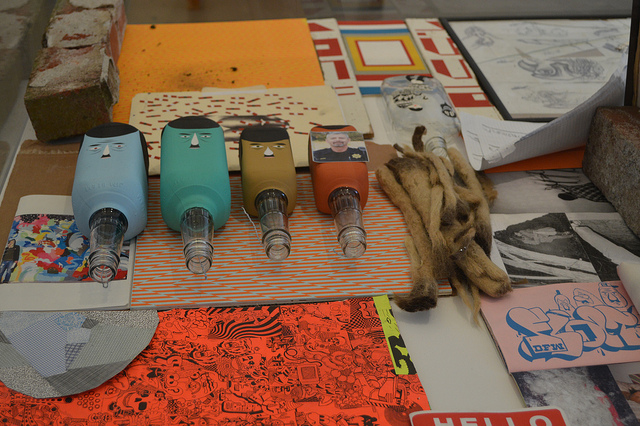
McGee is subversive to a point that he probably gets in his own way sometimes. He is clearly uncomfortable in galleries and museums, even though he has exhibited his work indoors for about two decades. This discomfort about and subversion of museum norms is the hidden theme of the show, which McGee successfully sneaks into the museum.
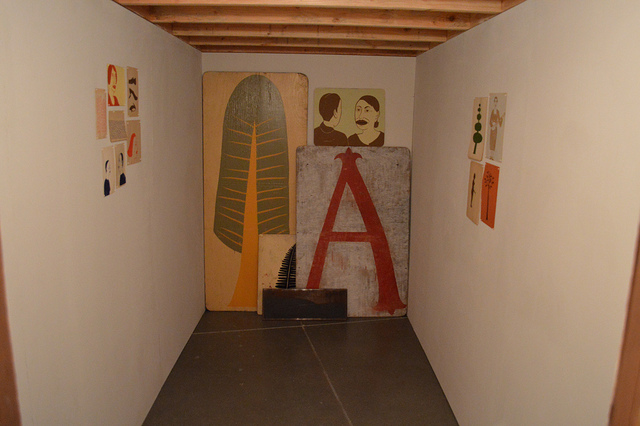
The elements of Barry McGee that McGee himself made sure were included, and a few pieces that may have been added by curators but which it seems likely McGee had a good amount of say in including, point towards his attempts to subvert the museum and their model of a one-man retrospective even when it is about his own work. The show includes the work of at least a dozen other artists, and, in a video tour of the exhibition by curator Jenelle Porter, Porter points out that McGee’s video installation is made up of animations and video clips created and organized by McGee’s assistant Lozcano. Some of the other artists whose work can be found in the show include McGee’s late wife Margaret Kilgallen, his father Jon McGee, Craig “KR” Costello, more than half a dozen freight train moniker writers, and Rize (a prominent Boston-based graffiti writer in the early to mid 1990’s and the subject of a photograph which has appeared repeatedly in McGee’s work since the mid-1990’s). McGee even devoted an entire room of the exhibition to showing his work alongside the work his friends and legendary Boston graffiti writers who would otherwise not have had the opportunity to show inside the ICA. Lozcano’s chaotic tower videos and animations also include clips of other graffiti writers at work next to animations of McGee’s drawings, and at this point it becomes hard to say anymore exactly how many of McGee’s colleagues are represented in the show because there are dozens of video clips with fast cuts that all seem to melt together in the massive installation. Some would say that graffiti is about ego, and that can certainly be said of the upper-echelons of the art world, but McGee broke the stereotypes to subvert the museum and turn his supposed one-man retrospective into a celebration of many artists and mark-makers.
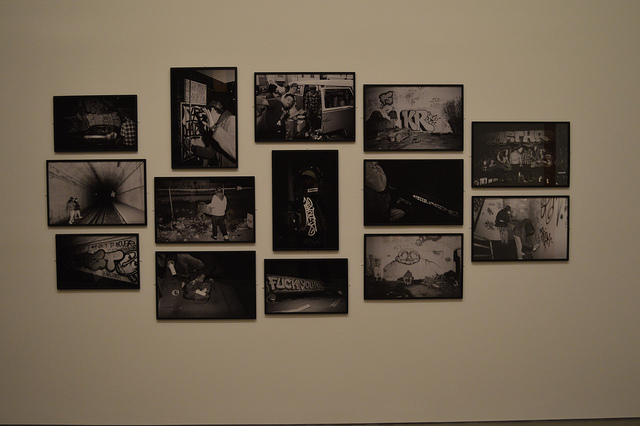
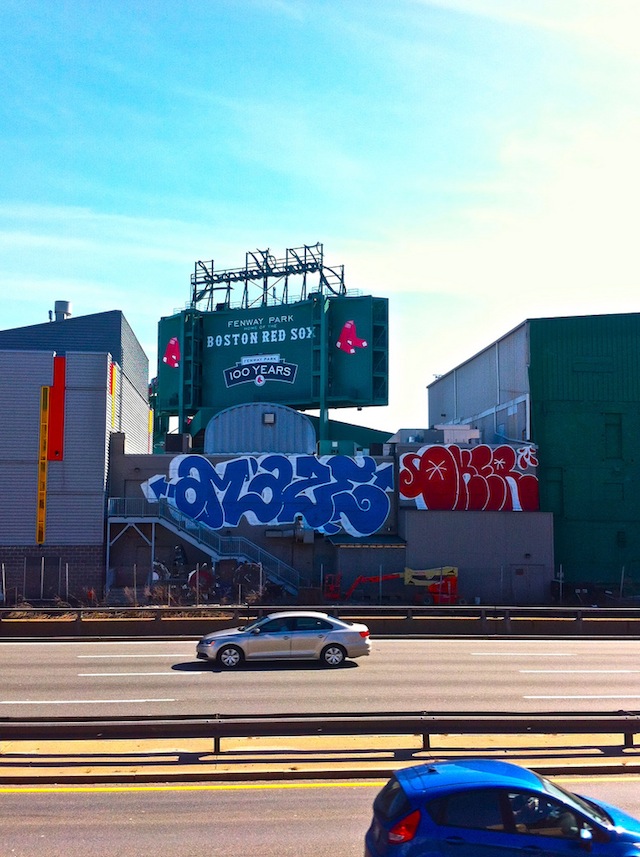
Outdoors, the trend of subversion of norms and inclusion/celebration of graffiti culture and community continues. Rather than putting his name (TWIST) on the wall on behind Boston’s House of Blues, we get Lozcano’s name (AMAZE) in huge letters next to an almost equally massive OKER tribute piece (OKER is currently serving time in prison in the UK for graffiti, and has painted with Lozcano and McGee before). McGee put up the names of people who would better fit the wall, since the wall can be seen from the highway coming into Boston, and there is plenty of illegal graffiti to see nearby along the highway. And the names were put up so that they resembled graffiti except on a massive scale and with permission, subverting the traditional expectation that a mural should look nothing like graffiti, or even cover it up. Murals like this are nothing new for McGee, but I am still explaining it in detail because it was one more subversive move to highlight more authentic graffiti and shine a light on a couple of the deserving artists whom the ICA would otherwise ignore or not be aware of at all.
So is McGee successful in his efforts? Yes and no. He is successful in bringing those close to him into the museum along with him, but what is less clear is whether or not anyone has noticed. Given Valentine’s review of Barry McGee in Berkley and questions by visitors that went unanswered or poorly answered, it seems that McGee has only succeeded half way. Has anyone who was not already in on it has noticed his subversion? If you do not already know what DFW and THR mean, you probably are not going to discover their meaning by staring at one of McGee’s paintings. On the other hand, those who have been included seem happy, and the irony of OKER’s name being included in such a respectful way on a legal wall while he sits in prison for illegal graffiti is likely to be appreciated by the graffiti community. So maybe McGee’s subversion is a sort of secret subversion. For those who know, the show is bit of a coup. For those who do not know, things are business as usual, and that’s fine.
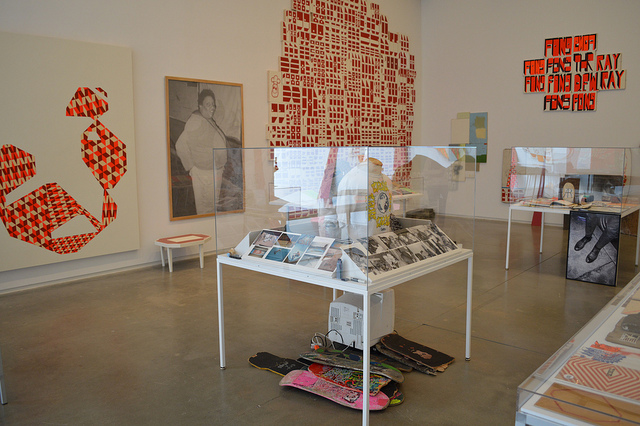
Barry McGee is the ICA/Boston’s fourth time bringing someone from the street art or graffiti world into their museum, and of the other attempts I have seen (with the work of Os Gemeos and Swoon) it is the most successful. Barry McGee is full of strong work, it provides a good introduction to McGee without being repetitive, and McGee still manages to let his true self shine through by subverting the museum’s goals somewhat and turning the show into a show about real graffiti and community, if you are in the know. At the same time, I fear that the ICA has missed the point of their own show and failed to see McGee’s true brilliance, so the success seems somewhat accidental.
For more photographs of the show, check out Brooklyn Street Art (who seem to agree that this show is really about community) and Arrested Motion.
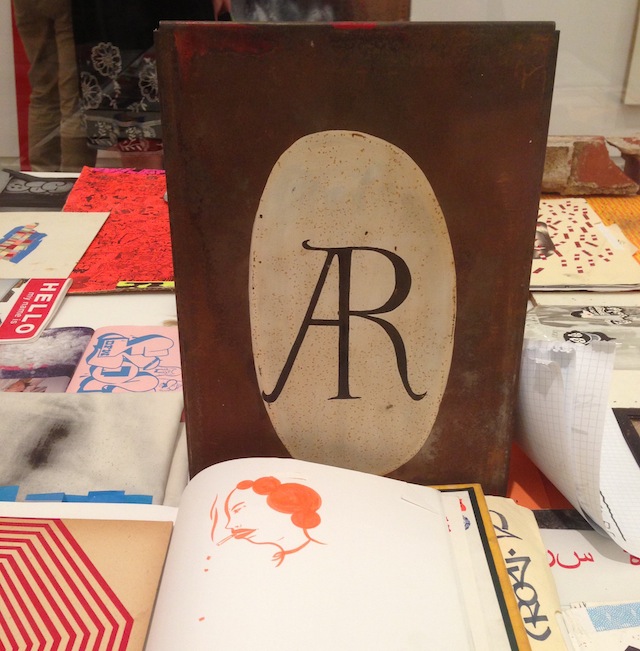
Photos by Pat Falco, Chase Elliot Clark, SRIMA, and RJ Rushmore
Damn. It’s almost May! Sorry this is so late but it’s worth the wait. March was another action packed month in Melbourne.
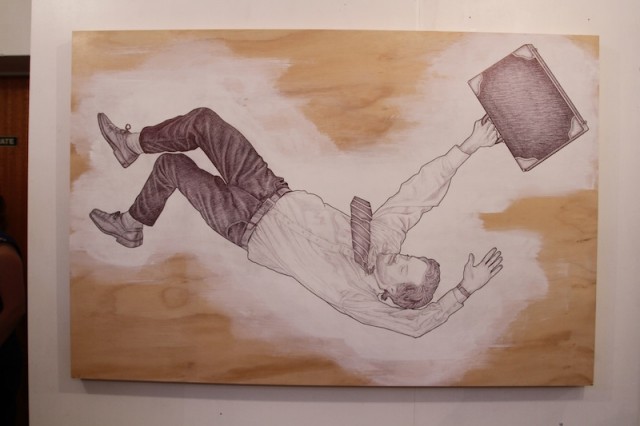
Starting off with Baby Guerrilla‘s show in Footscray. Baby Guerrilla’s paste ups have been adorning Melbourne’s walls for a few years now, and they are some of my favourites, her gallery work was new for me and I loved seeing a different side of the artist.
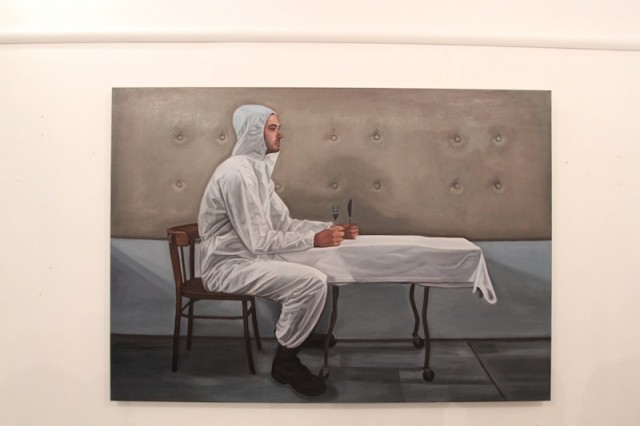
Adnate was 1 of 3 Melbourne graffiti/street artists that entered the renowned Archibald prize. From the Archibald website “The Archibald Prize is awarded annually to the best portrait, ‘preferentially of some man or woman distinguished in art, letters, science or politics, painted by any artist resident in Australasia’.” It’s great to see some more modern painting techniques making it into this more conventional competition. Adnate painted a portrait of Samantha Harris; an Australian indigenous model. Also make sure you check out the video by Michael Danischewski below.
Continue reading “Melbourne Monthly Madness – March”
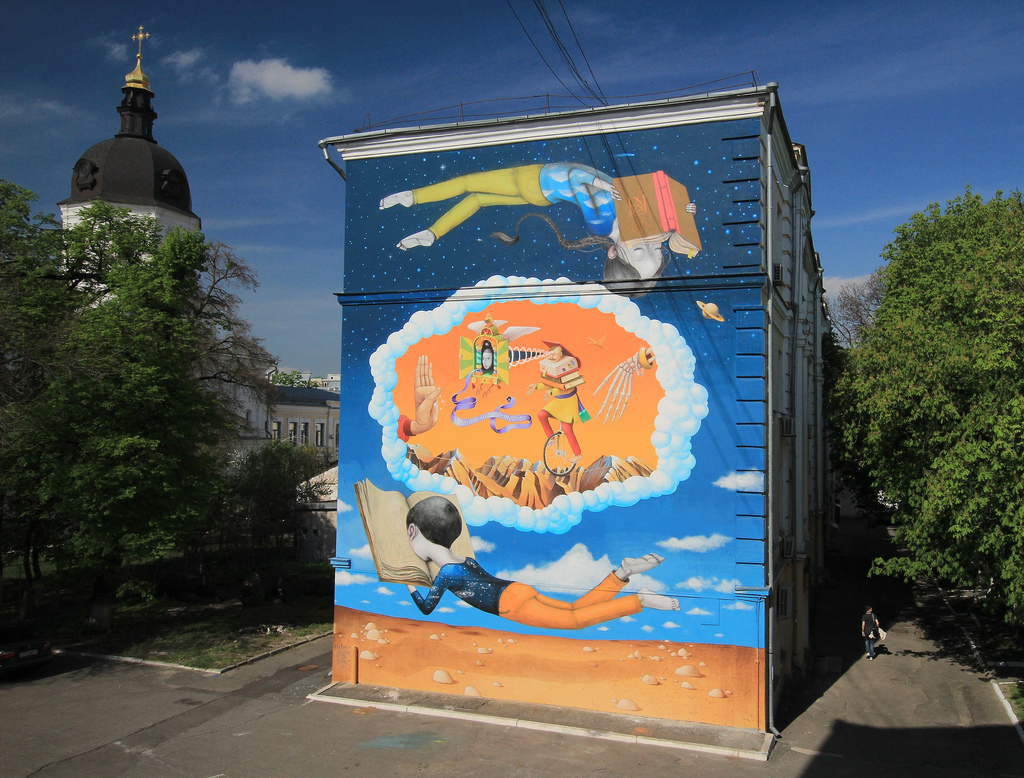
Waone and Seth Globepainter recently collaborated on a knowledge-inspired mural in Kiev, Ukraine at Kyiv Mohyla Academy.
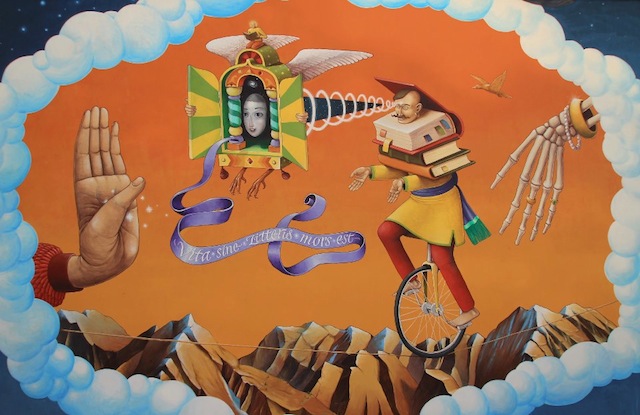
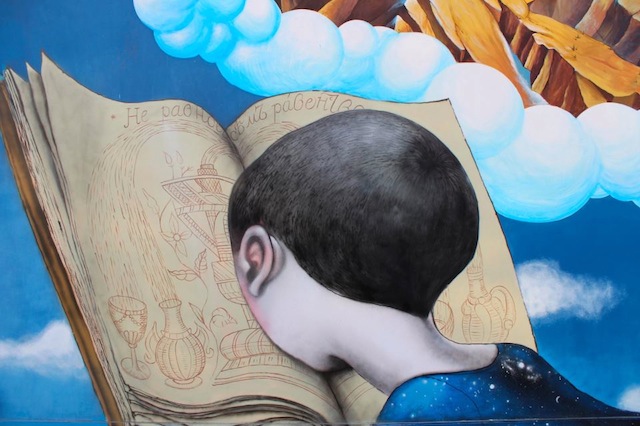
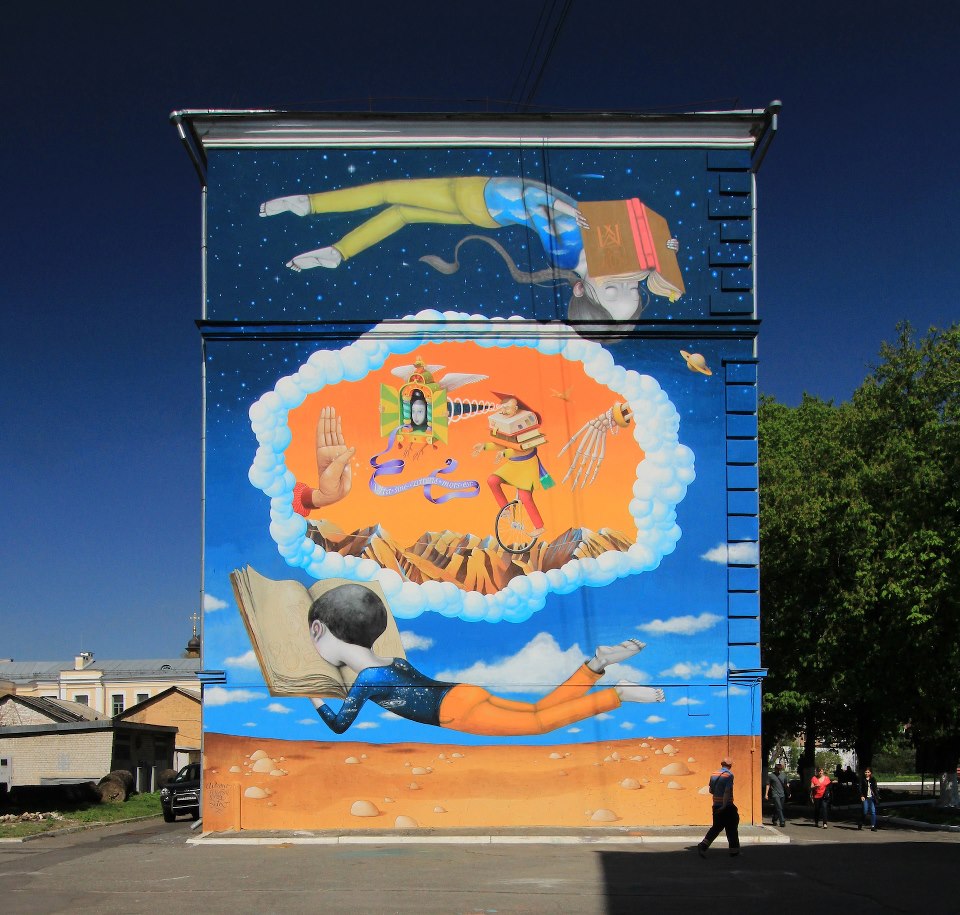
Photos courtesy of Waone