Weekend link-o-rama

8329983957_59611f61ba_z

Okay Christmas and new years are over. Let’s get back to real life.

Photo by Jake Dobkin

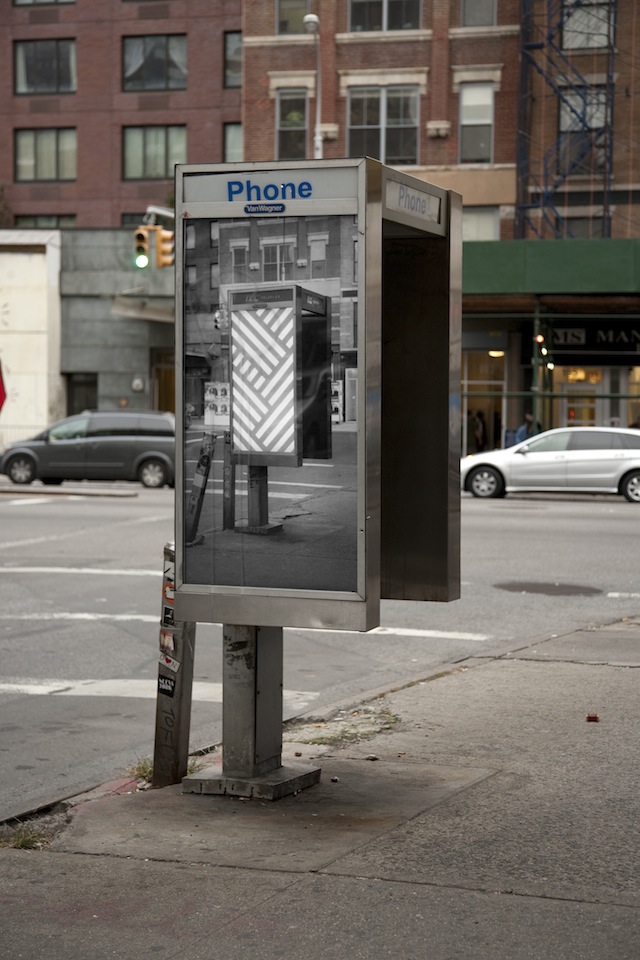
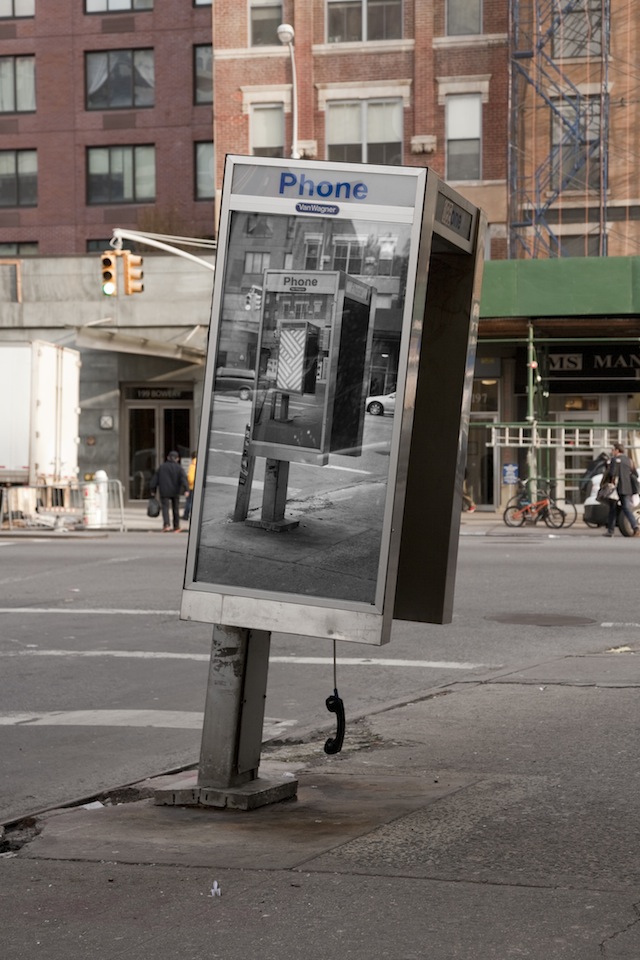
An ad disruption inside an ad disruption inside an ad disruption

0

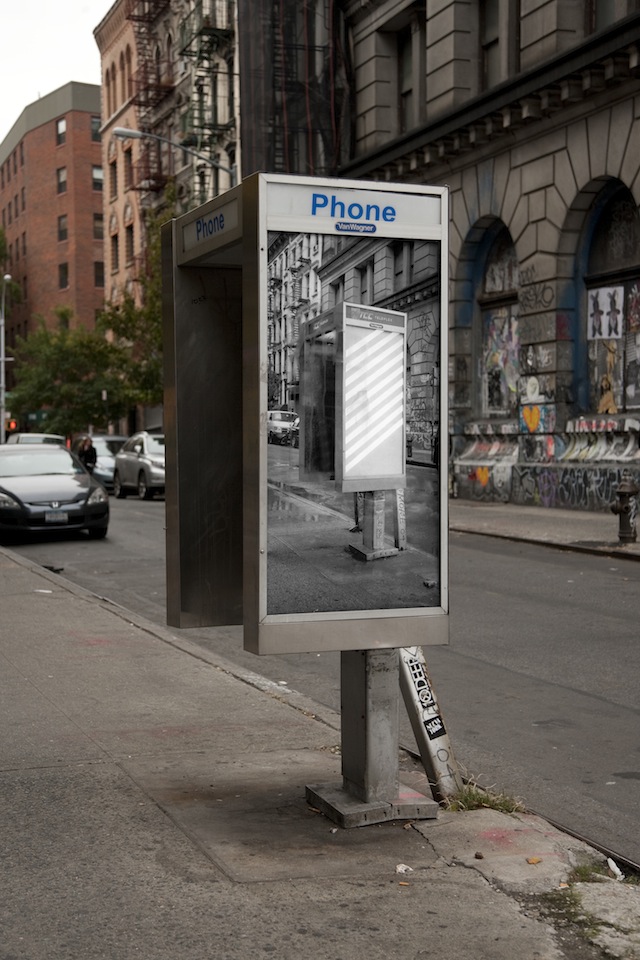
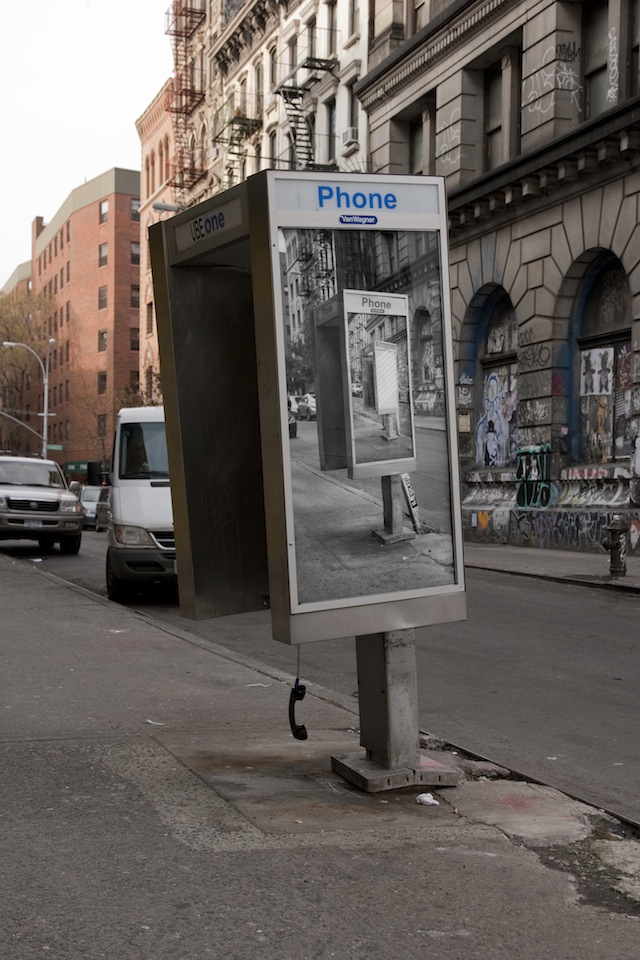
Jordan Seiler of Public Ad Campaign is a one man powerhouse challenging the ubiquitous presence of outdoor advertisements. For a bit of context on Jordan’s relationship with the city’s advertisers, here’s an interesting short story: two years ago, Jordan took over three billboards in Philadelphia during an exhibition of his in the city for a project he called “Let me handle this”. Rather than leave it at that, he asked the ad companies to allow the works to remain for the duration of his show and explained that if any one of the works were to be taken down, he would put two up in New York City. All three pieces were removed and Jordan, a man of his word, put up 6 new takeovers in New York, posing the same threat against the New York ad companies so that if any of these takeovers were to be removed two would go up in Philadelphia. The show ended before any of those 6 were taken down, though Seiler hoped that they would be removed so he could continue to put up work. The moral of the story is that Jordan is a force to be reckoned with when it comes to advertisements in public space. You can read more about the “Let me handle this” project here.

In more recent news, Jordan revisited a phone booth which he had taken over twice before: The first time he hit it with his signature weave pattern. When that got taken down, he took the space over again with a photo of that last takeover. Recently, Jordan took over the ad space again with a photo of the last takeover, and thus leaving a photo of a photo of an ad disruption. Or more appropriately, an ad disruption within an ad disruption within an ad disruption. The work here is probably one of my favorite ad takeovers Jordan has done to date, and I’d say in my top 5 favorites of all time.

We can see through Jordan’s documentation that the phone booth is getting a bit beat up over time but the leaning of the phone booth gives the image a sort of Twilight Zone effect. It’s like an echo of a single act. I’d love to see Jordan keep going with this.

02

01

04

Photos by Jordan Seiler 

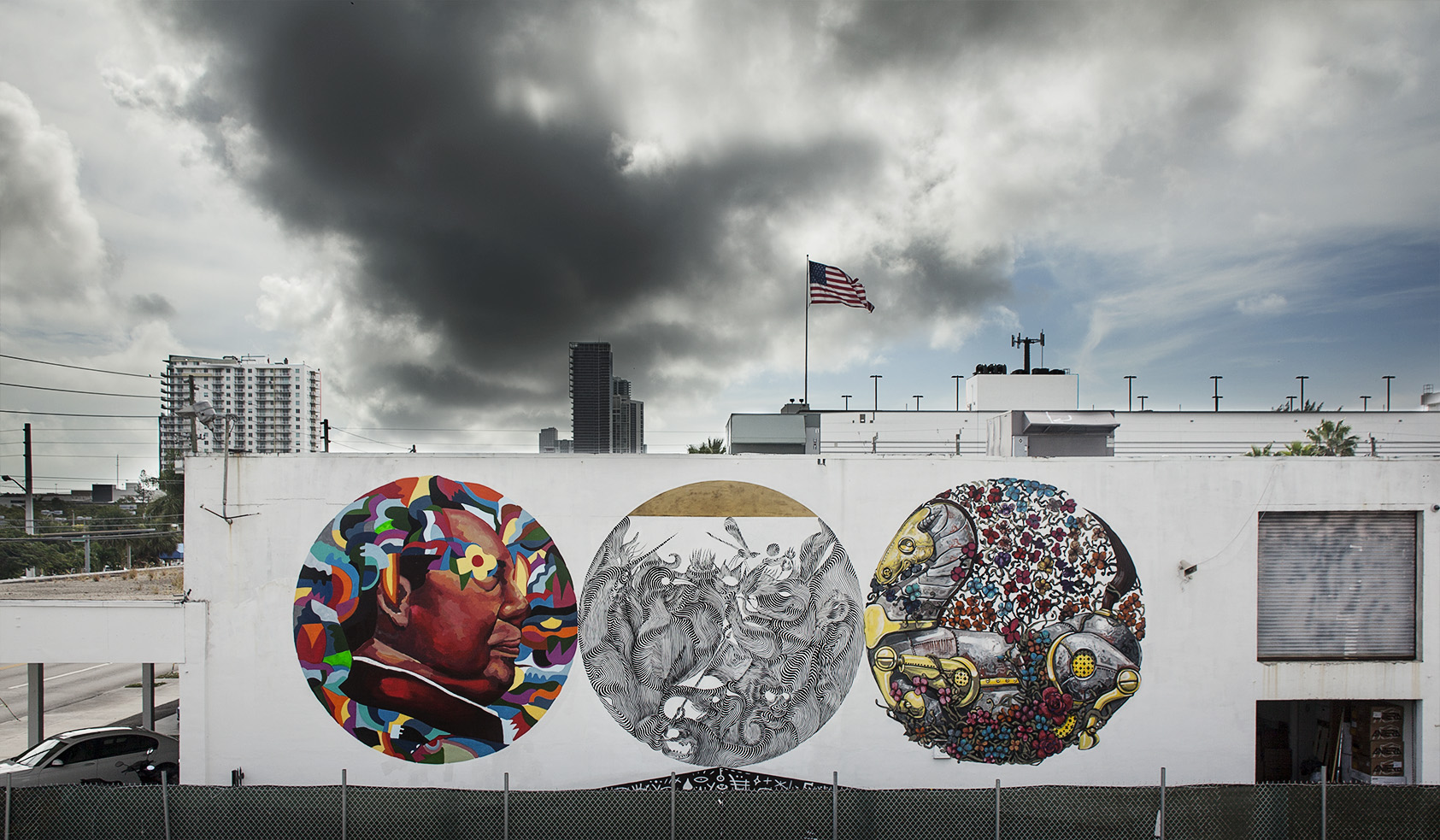
Ever, 2501, and Pixelpancho side by side

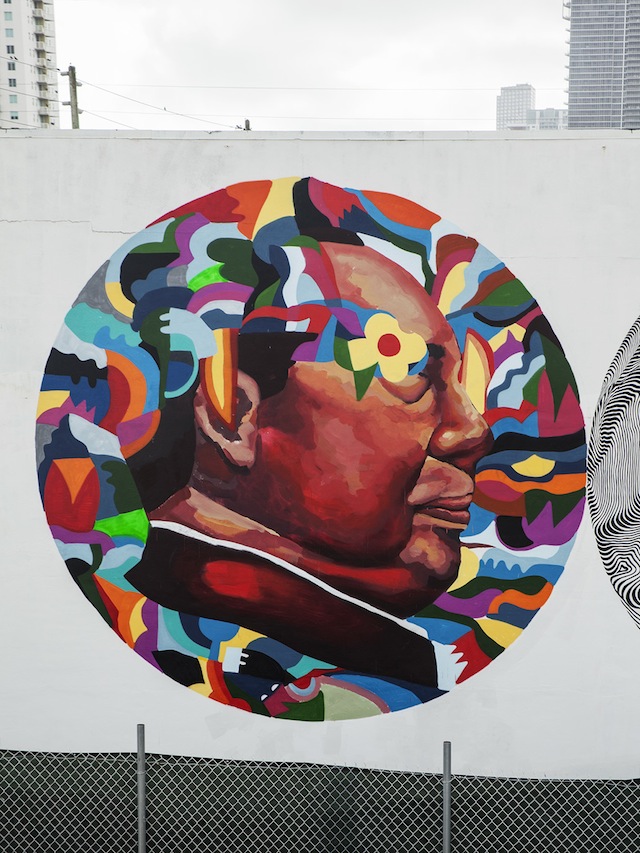
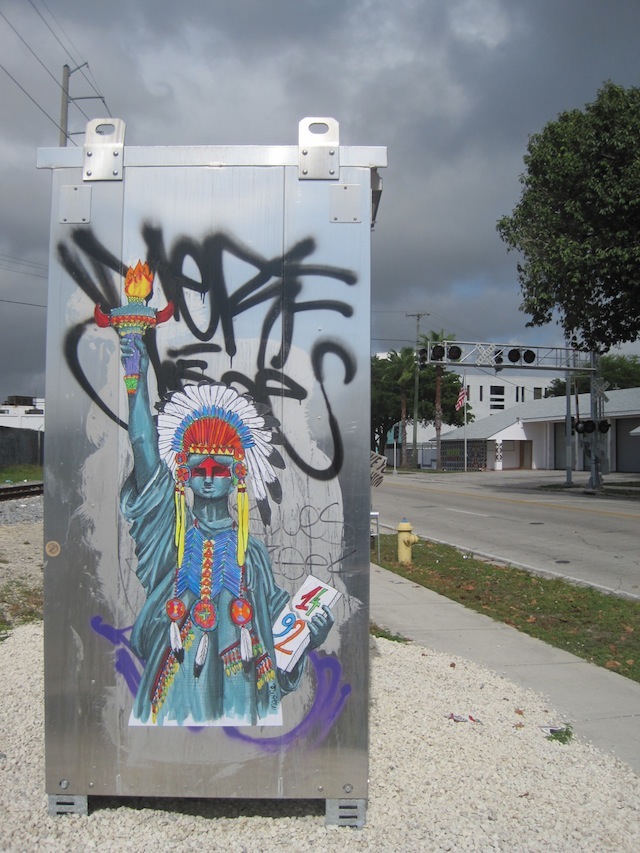
Ever
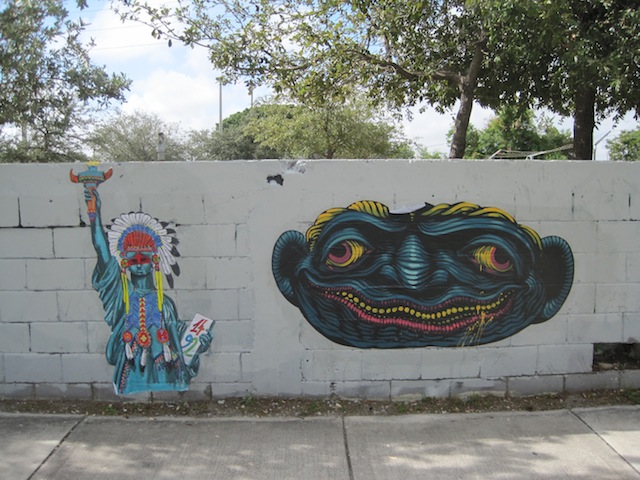
Ever, 2501, Pixelpancho and (below) El Topo. Photo courtesy of Ever. Click to view large.

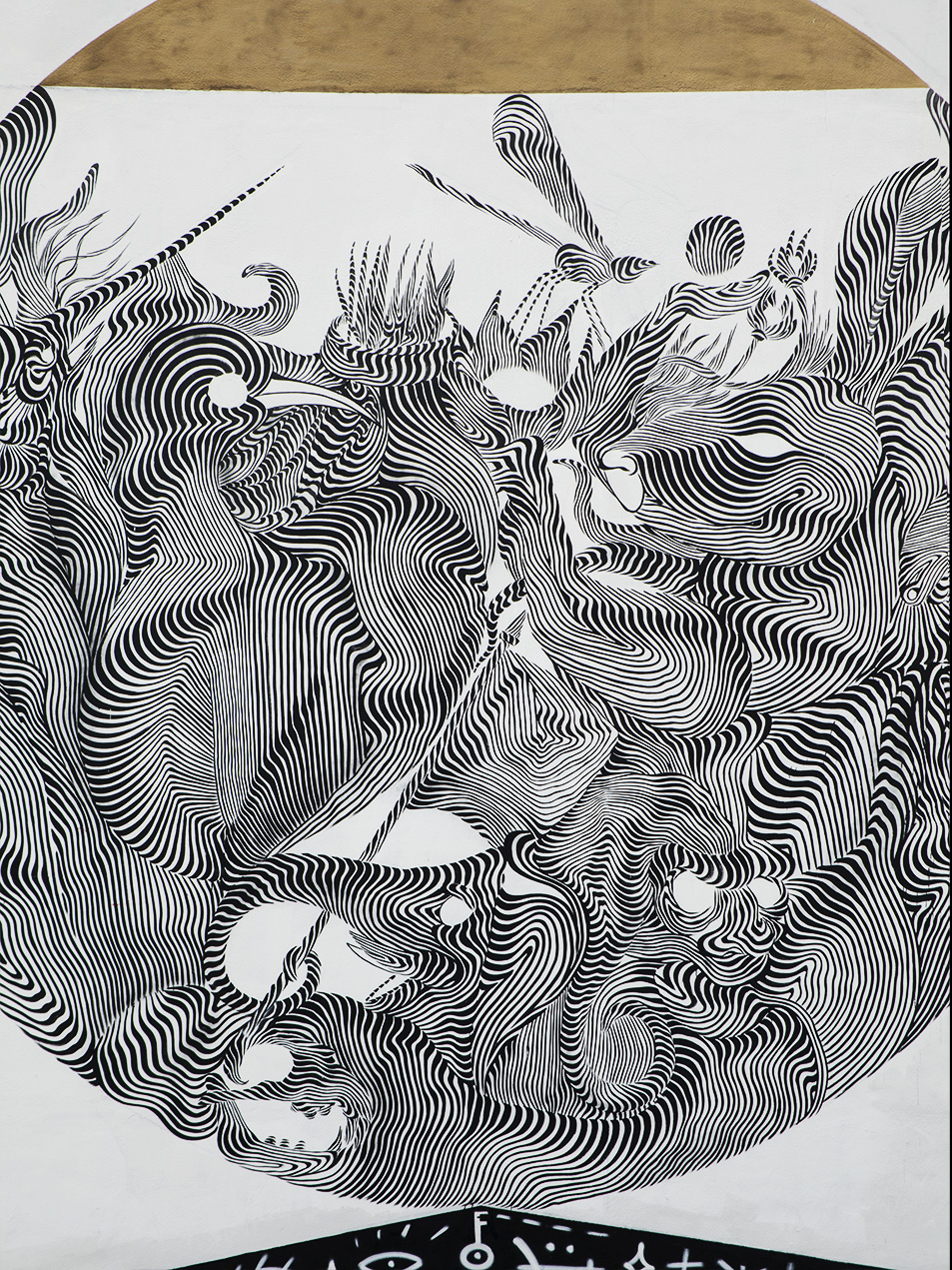
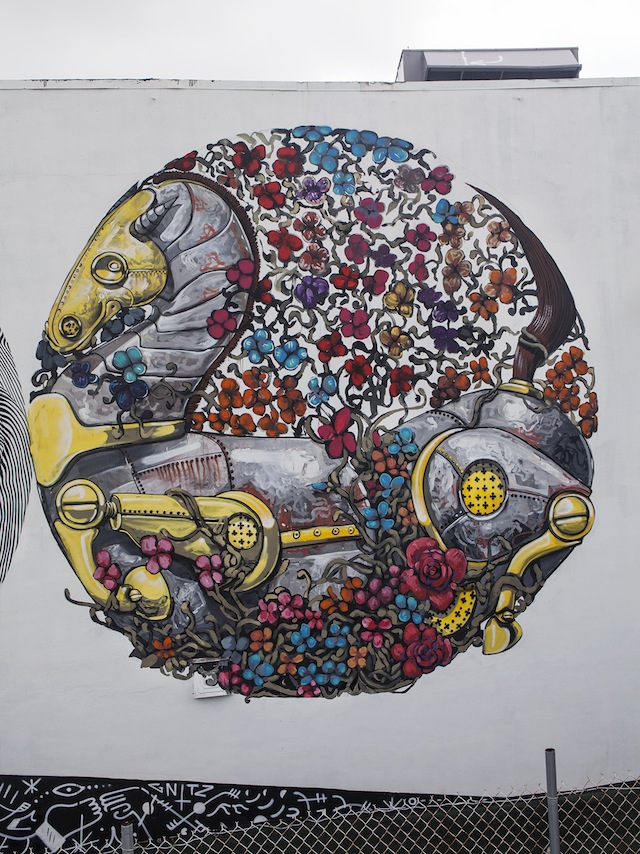
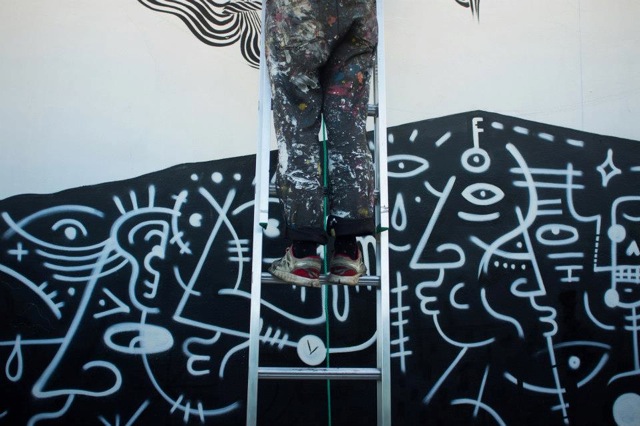
This recent collaboration in Miami includes some of 2012’s breakthrough street artists sharing a wall: Ever, 2501, and Pixelpancho, plus a base (although I don’t have a good photo of this part of the wall unfortunately) by El Topo.

-3 2
Ever. Photo courtesy of Ever.
2501
2501. Photo courtesy of Ever. Click to view large.
Pixelpancho
Pixelpancho. Photo courtesy of Ever.
El Topo
El Topo with 2501 at work. Photo by Wil Hughes.

Photos courtesy of Ever and by Wil Hughes

Waone in India

IMG_1021+

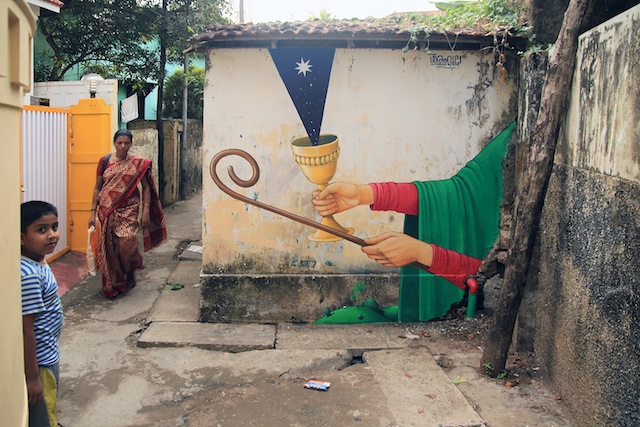
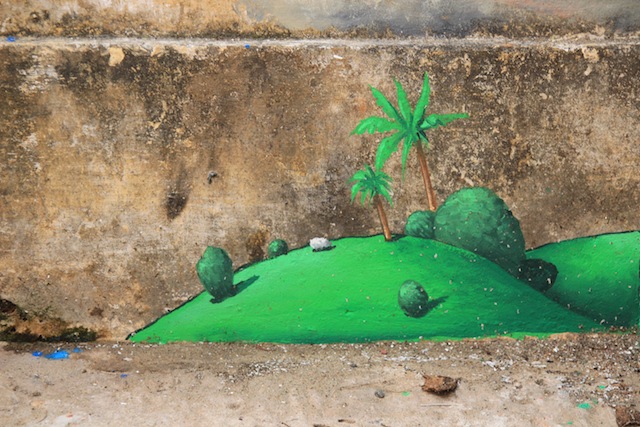
This piece by Waone of Interesni Kazki is called Lost Sheep and it’s in a little backstreet of Kochi, India. I know Interesni Kazki have done some huge murals and people really seem to love those, but I prefer their smaller works like this one. Their smaller pieces become a part of the environment rather than looking like a giant canvas attached to a wall.

IMG_1041+

Here’s a video to give a sense of the area where the piece was painted:

Photos courtesy of Interesni Kazki

Labrona and friends in Miami

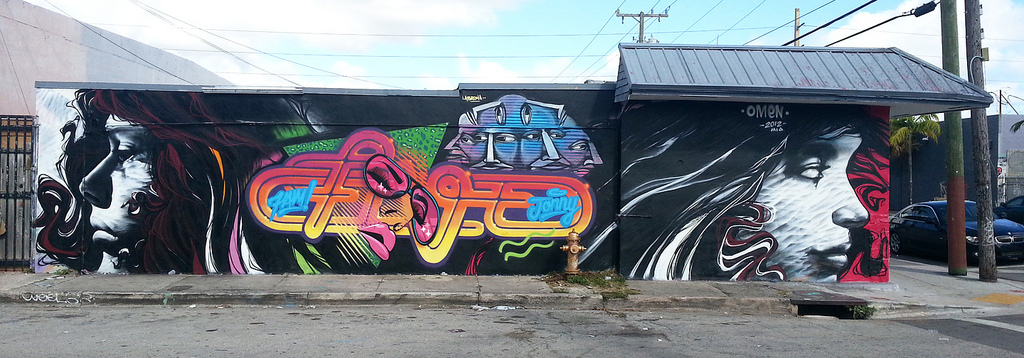
Omen, Five and Labrona
Omen, Five and Labrona. Click to view large.

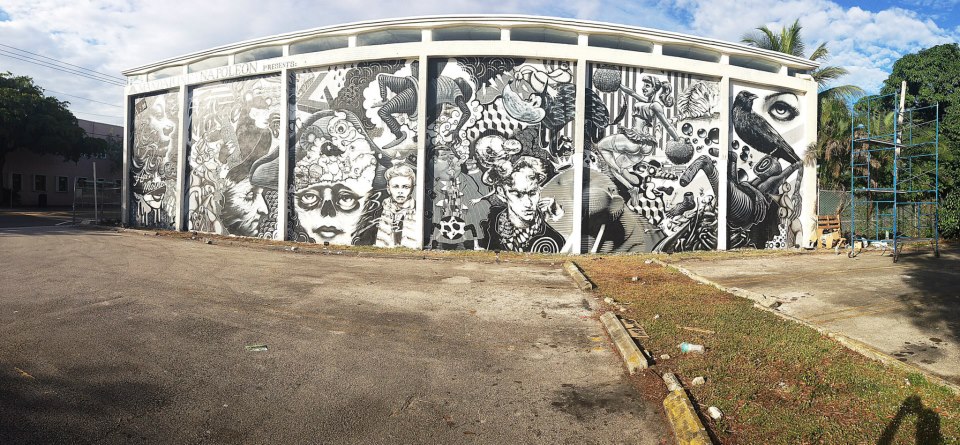
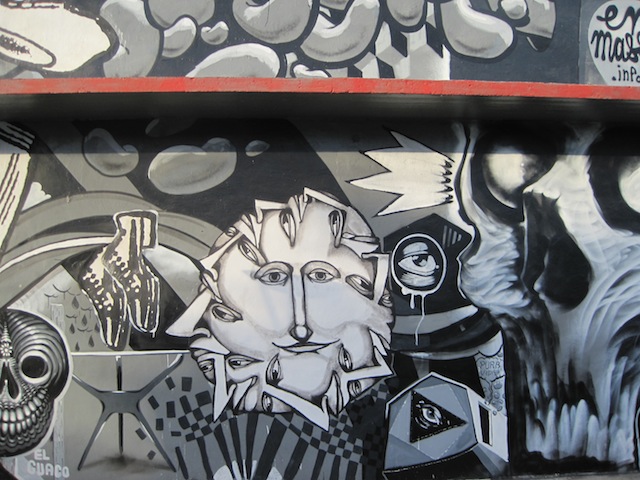
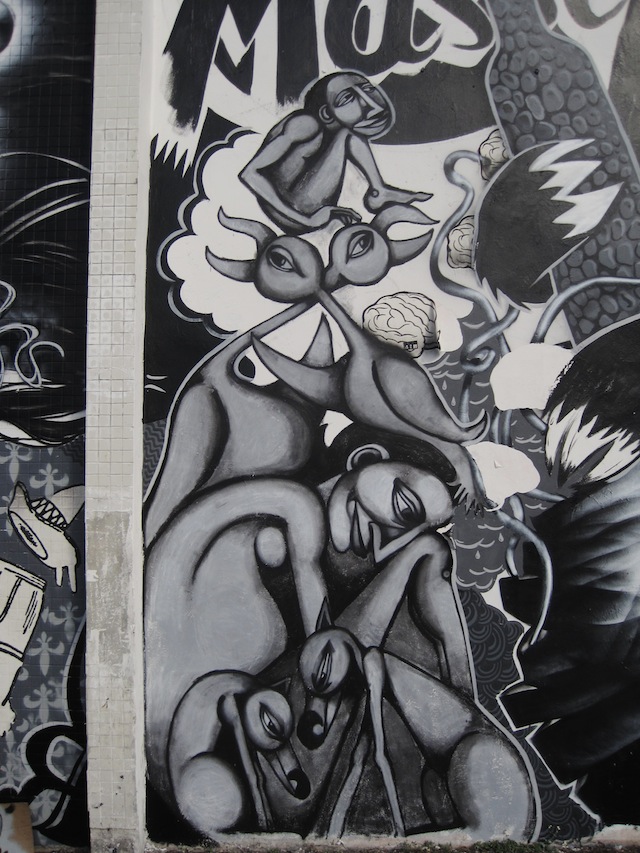
Labrona sent over some photos from his time in Miami last month, including some collaborations (with Omen and Five), work by his friends (Miss Me and Kin), and the latest En Masse wall. En Masse is a collaborative project based in Montreal where artists draw together in black and white, similar to the American project Paint It Now.

En Masse
En Masse. Click to view large.
Labrona and others with En Masse
Labrona and others for En Masse
Labrona and
Labrona and others for En Masse
Miss Me
Miss Me
Miss Me and Kin
Miss Me and Kin

Photos courtesy of Labrona

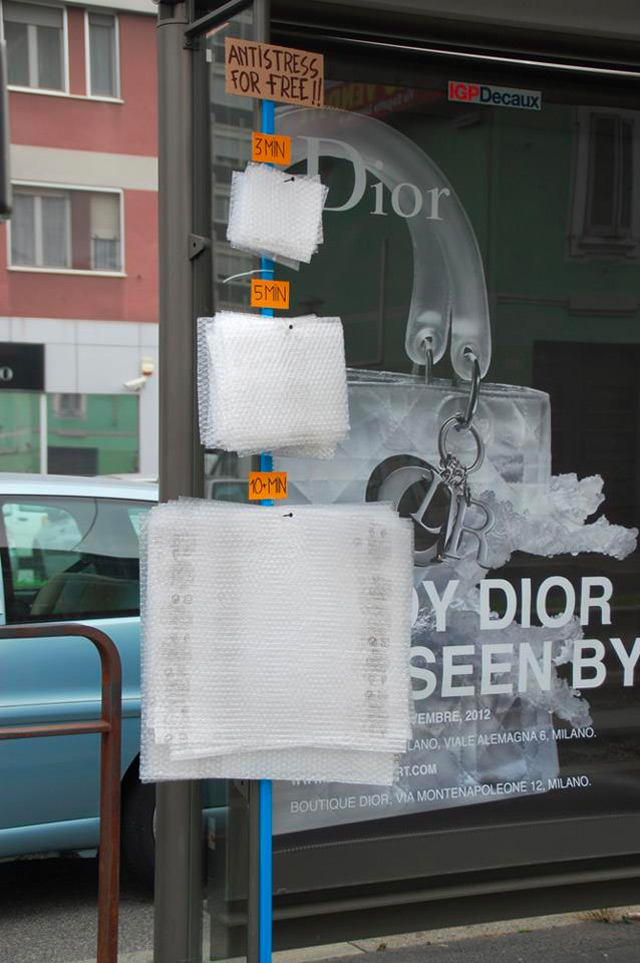
Destress with free bubble wrap

stress-4

We had it right when we were younger: bubble wrap releases endorphins. Fra.biancoshock reminds us of how it’s done with this simple little install. I don’t know if it eliminates stress so much as transfers it from the person popping the bubble wrap to the people surrounding them. But hey, it’s free, it’s fun and why restrain yourself from finding joy in the simple things?

stress-5

Photos courtesy fra.biancoshock 

Stikki Peaches

stikki7

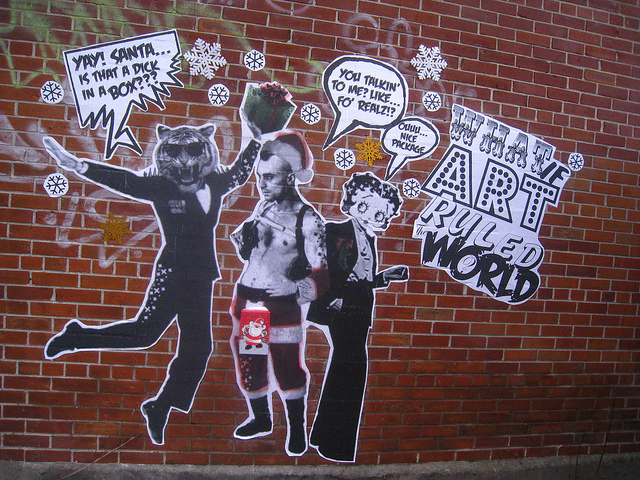
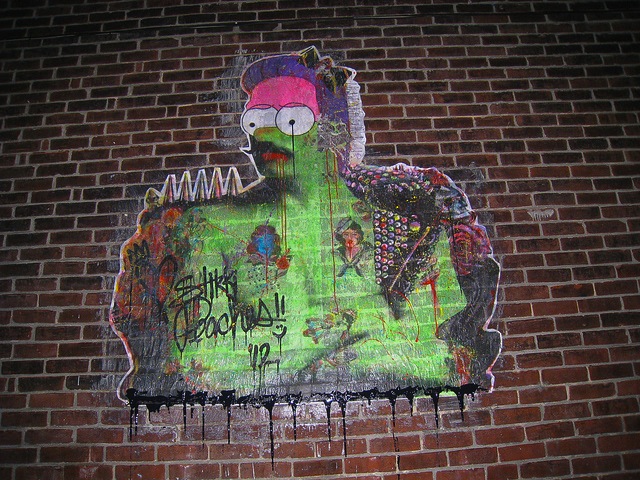
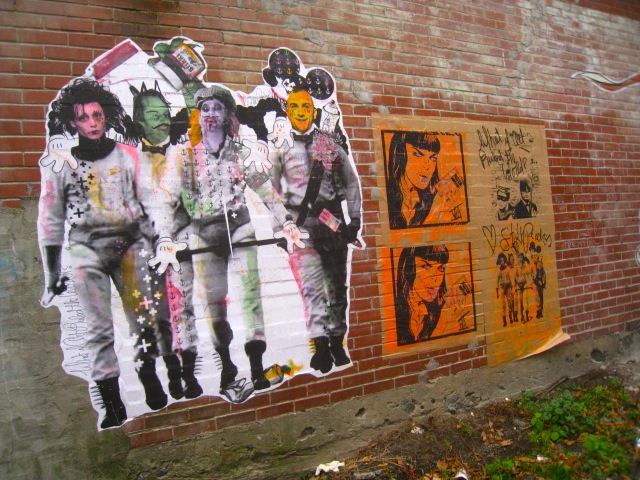
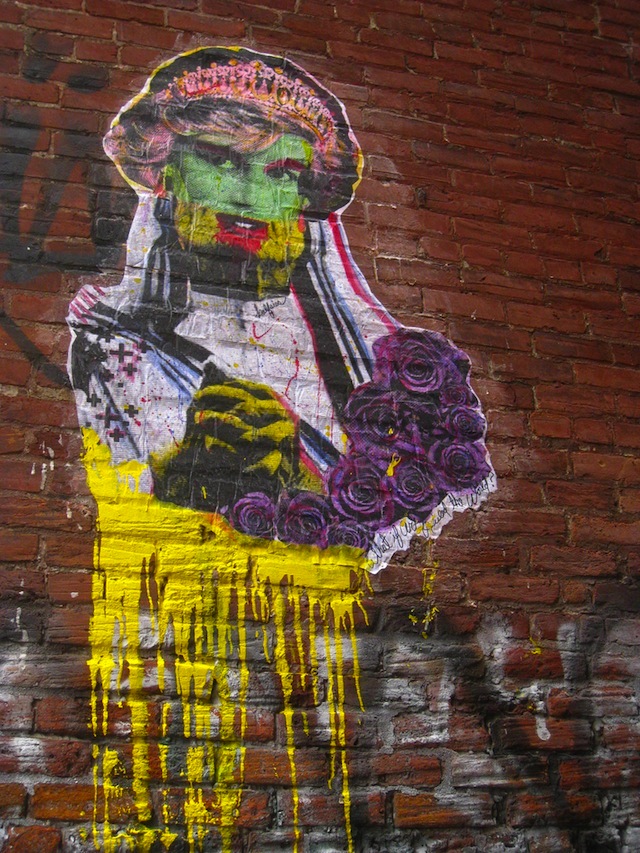
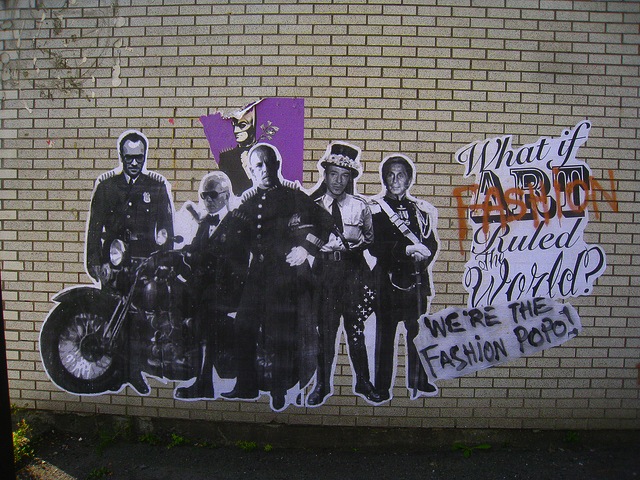
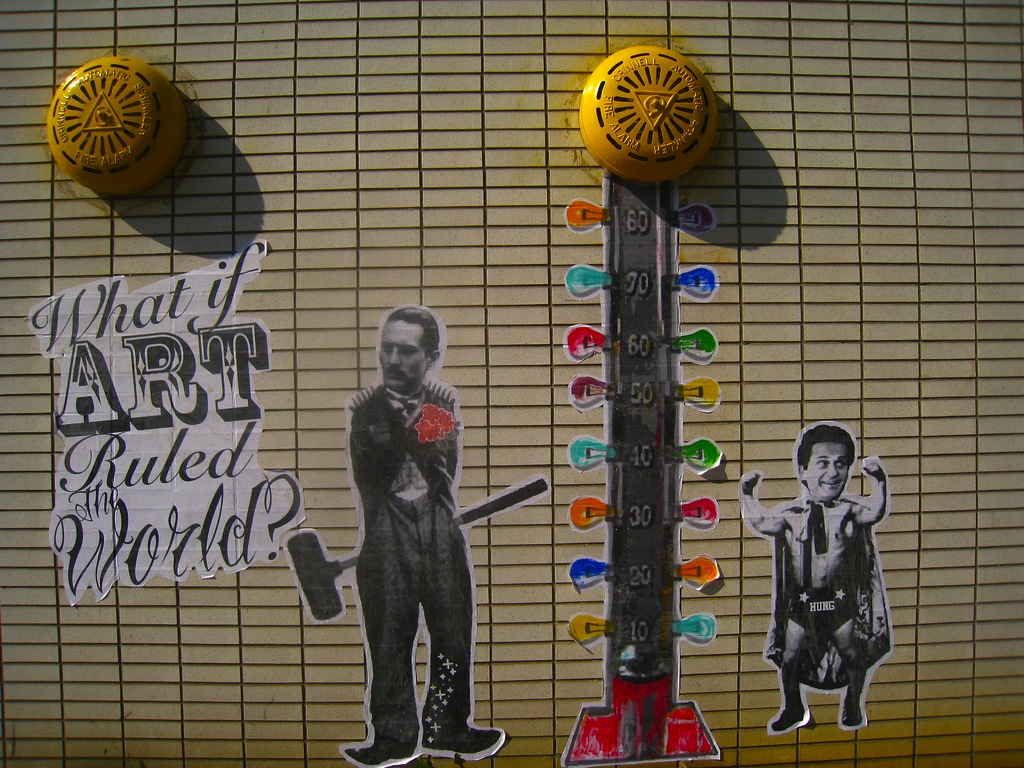
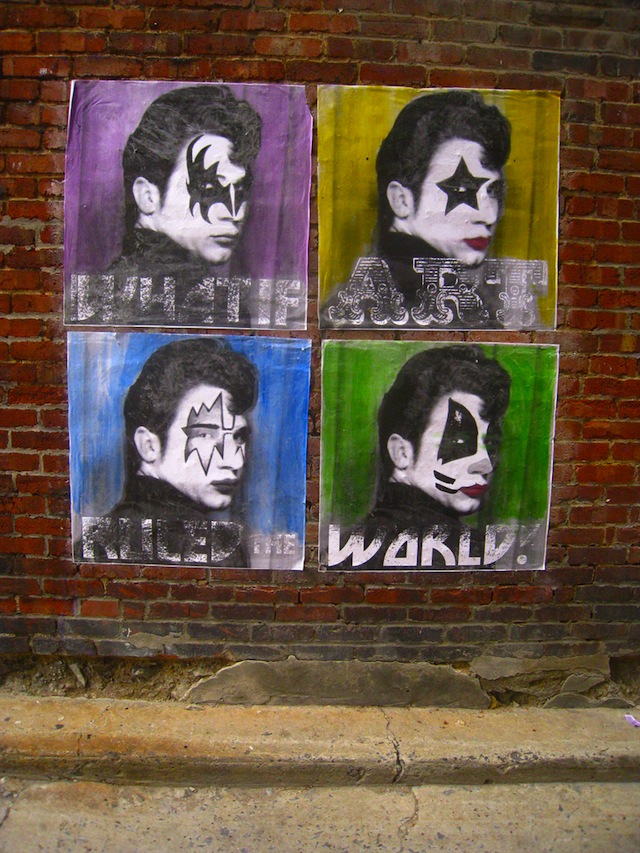
Stikki Peaches pastes up these humorous pop art pieces in Monreal, each of which asks the question “What if art ruled the world?” Imagining the answer to that, I doubt things would look like an acid trip-style satirization of contemporary pop culture. Maybe more like this. But this hardly matters when I’d like to keep seeing reality through Stikki Peaches’ imagination.

stikki

stikki1

stikki

stikki1

stikki3

stikki6

Photos by Space27

Tim Hans shoots… Dabs and Myla

-1

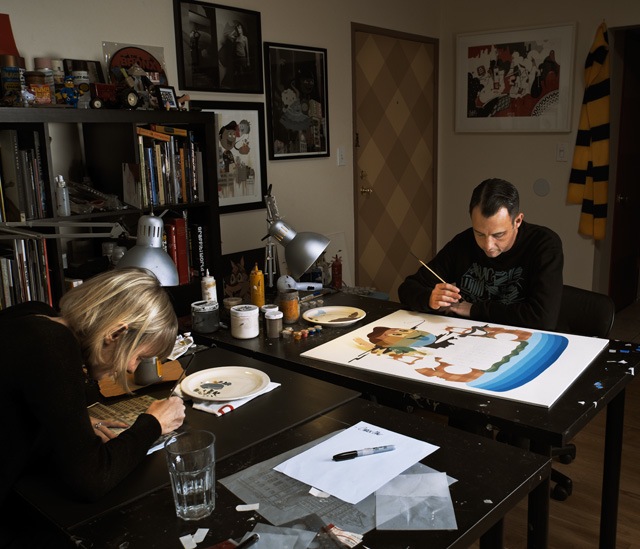
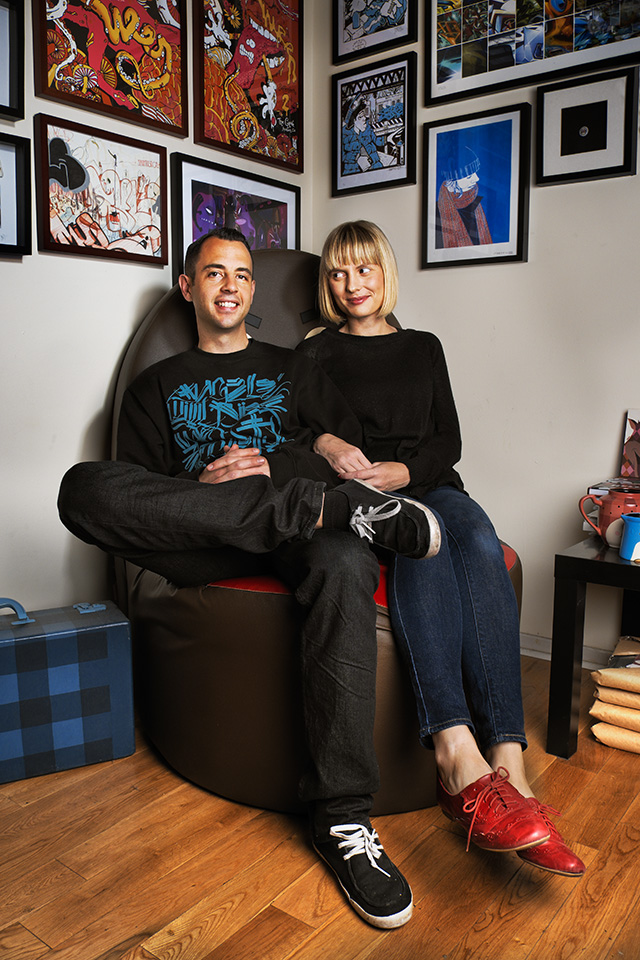
This is the first in what will hopefully be a long series of a posts where Tim Hans photographs artists and someone at Vandalog interviews them. I’ve known Tim since we were in high school together and been a fan of his photography for nearly that entire time, so I’m excited that Tim will be sharing his work with the Vandalog community.

To start off this series, Tim met up with the Australian duo Dabs and Myla. I interviewed Dabs and Myla last summer as part of the research on the book that I’m working on, and I’m now publishing some highlights from that interview for the first time.

Dabs on getting into graffiti in Melbourne:

I grew up in Melbourne. I didn’t even venture that far off my own train line. I lived on a trainline called the Belgrave Line. I lived way out on the end of the line, so most of my time was spent traveling in and out of the city on that line. So I didn’t really see much other than my local graffiti. I didn’t have that much money for magazines and books either, I had a handful of magazines, which were mostly an Australian magazine called Hype, but I didn’t really look beyond Melbourne even into other parts of Australia other than those few mags. The only graffiti I was paying attention to was what I was seeing in Melbourne at the time and what had come before me.

Dabs’ early views on street art:

When street art really started to boom, I was really against it for some reason. Graffiti writers didn’t like putting the two things in the same category: Like a skateboarder and a rollerblader. When people started putting those two things together, skateboarders started hating rollerbladers. I think it was a similar thing with graffiti and street art. But over time I guess I got a bit more tolerant and a bit wiser to what it is. Now, I don’t really have a problem with street art! But I do think the two things need to be segregated more because they really are so different.
-3

On why their work has found an audience:

Myla: I think what people say continuously is that it makes them feel happy when they see our work. I think that’s why people like it. It’s because everything we do is so positive.

Dabs: The most common thing we hear is, ‘I really like your work. It just fucking makes me smile.’ Even from the hardest dudes. It’s cool when anyone says they appreciate or like our work, if its like an old lady, a little kid or a middle-aged girl or whatever, but I love it when super-hard dudes say that. I get a kick out of it.

Dabs on working both indoors and outdoors:

The transition from a street-based artist or a graffiti writer to fine art is notoriously hard. It’s a really difficult thing for people to make that transition. So many people I know have found it hard. They are so far away from each other, and finding a way to make that transition other than just reproducing it onto a canvas can be a super bitch. For us, it was pretty easy I think because we always went at it on a completely different path. That was one of the reasons why we never painted characters on walls was because we where trying to keep our graffiti and illustrations separate from each other, and I remember about 4 years ago Rime said to me ‘Why wouldn’t you paint characters on walls? That’s stupid. That’s what your paintings are. Why wouldn’t you do that? It helps tie things to your paintings.’ Originally, when we started working together, our graffiti was our graffiti and our paintings were something different. Even though they are under the same name and made by the same people, it was like we were attacking them as different people, just with the same name. We tried to push the two away from each other, and eventually the roads have kind of worked back into each other. I’m happy for it to be like this though!

Photos by Tim Hans