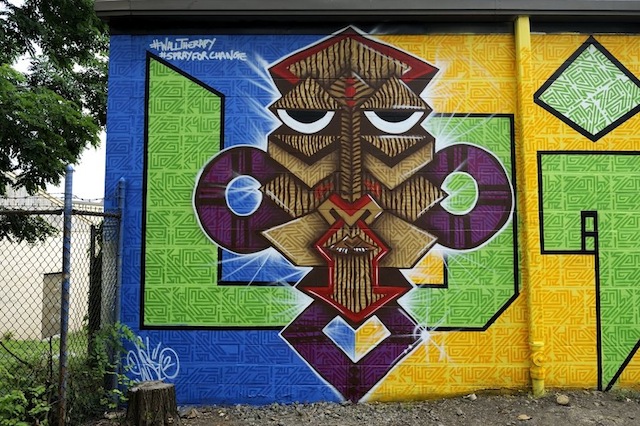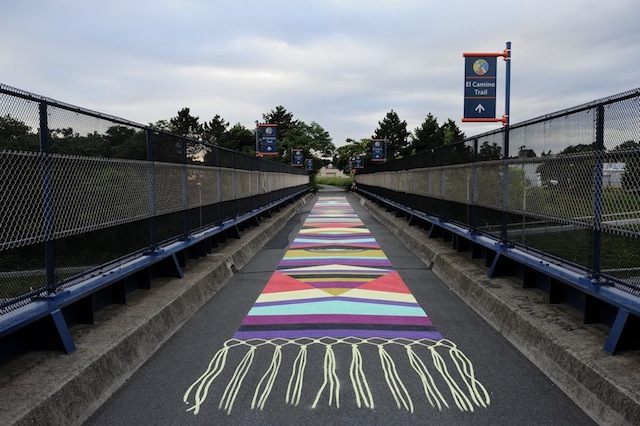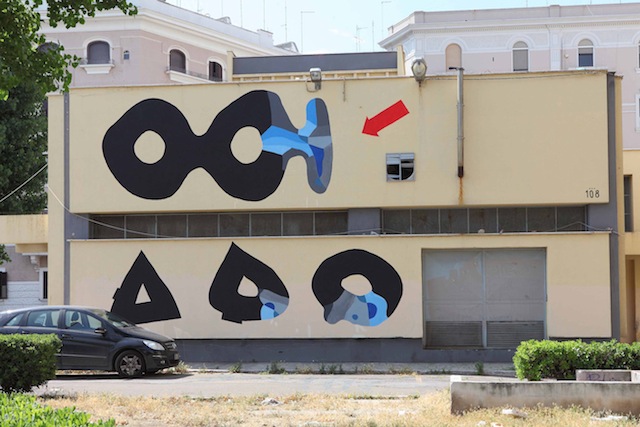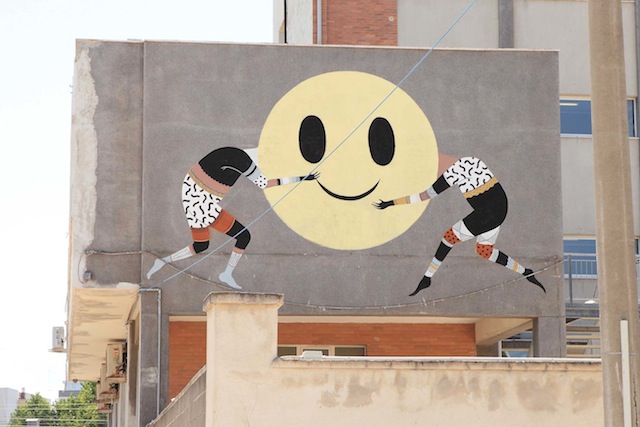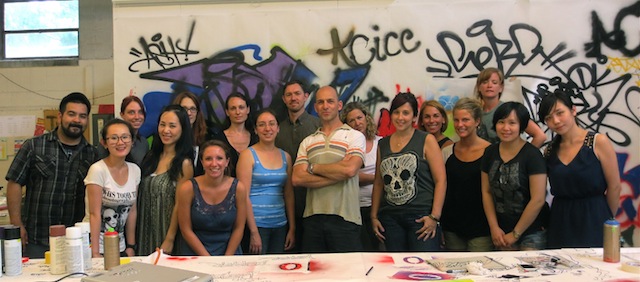
Ryan Seslow is an artist and professor in New York. I asked him to write this guest post about his experiences bringing street art and graffiti into the college classroom. Hopefully it will help to inspire others to do the same. – RJ
Street Art & Graffiti has entered the college and university level. It was long overdue. At both Long Island University (Post campus) and this coming year at CUNY York College students earn 3 credits towards their degree requirements in the areas of art history, studio art, or as an art elective. “The History & Emergence of Street Art & Graffiti” is the title of the course that I created and began teaching at LIU Post in 2010. One may think that the course would have trouble with enrollment at a University on the North Shore of Long Island, but this is quite the contrary. The course has booked solid every summer since it has been offered. I started teaching at the college level in 2003 simultaneously between 4 colleges and universities here in the NYC area.
Bringing this subject and content to the college level did take some time and convincing, but not with the students, it was more with my peers, administrators and colleagues. Even rallying support and over all approval for a course of such nature took even more time, but here we are 3.5 years strong and only building and expanding. As a graffiti writer, artist putting his works in public spaces, and an art professor, the state accreditation aspect of the course is important to me. There are a few schools and programs out there that offer workshops in both street art and graffiti, and they are fantastic. Being able to earn actual credit towards one’s chosen degree requirements validates the importance of the content itself as an emerging art movement of value contributing to the “art world” in the realm of academia. I’m passionate about graffiti and street art, it is the core of my inspiration as an artist. As an art educator, I feel it is my responsibility to bring that passion into my classroom to share and instill its energy into my students. We just completed one of the most productive, collaborative and energetic classes of my teaching career to date. The course at LIU is a 1-week intensive course. The class is offered in July and runs from 9AM-6PM Monday-Friday.
I carefully curated this course, and have been micro testing and interweaving the content into all of my classes for the last 10 years. Keeping students engaged and excited is a huge part of my teaching strategy, and I’m lucky to have a multidisciplinary studio based workload of courses that I teach. Street art and graffiti are always a topic of interest, whether it’s drawing, painting, sculpture, print-making, graphic design, or art history based courses, my passion for the content, its history, and techniques always comes through. In the classroom, the students will find themselves switching regularly between slide and video based lectures, technical demonstrations, museum and gallery visits, guest artist presentations, and hands on collaborative art making experiences. This results in an over stimulating experience filled with retained use value, plus the generation of several new pieces of both collaborative and individual works. Students create a network of new colleagues in a communal course like this. Having guest artists frequent the courses is of huge importance. All of guests are highly respected in the movements for their prolific styles and commitment to their work. Best part of all, these are warm and open people, their process and love for their craft is transparent. If that is not contagious enough, I don’t know what is. Hearing their unique personal stories inspires motivation beyond one’s expectations. This course has filled to capacity every summer since 2010. I don’t have to convince anyone to take the course, and 90% of the students that do are not street or graffiti artists. People are inspired by the movements of street art and graffiti, and I’m taking about adults older than 20 years of age. This particular class that just ended had an average age range of 28 – 40 plus. Continue reading “Teaching graffiti history and practice”