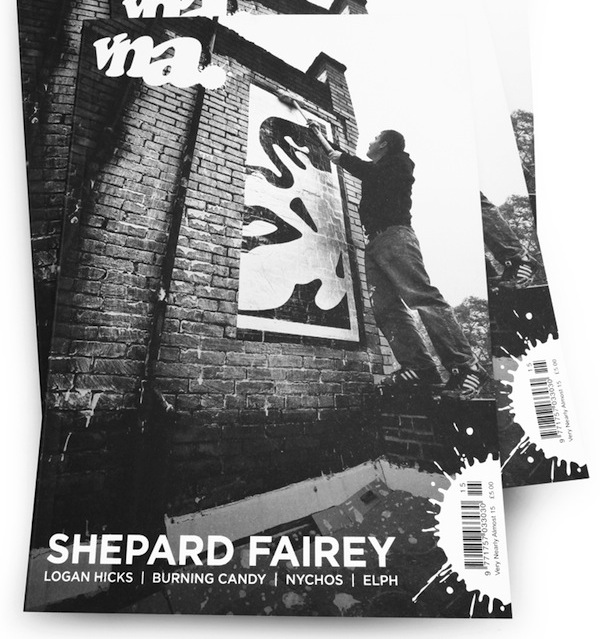
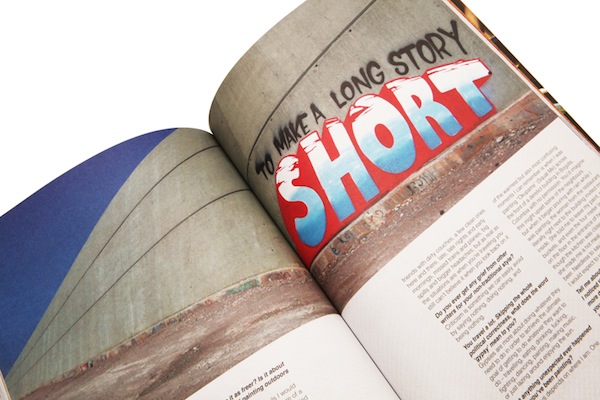
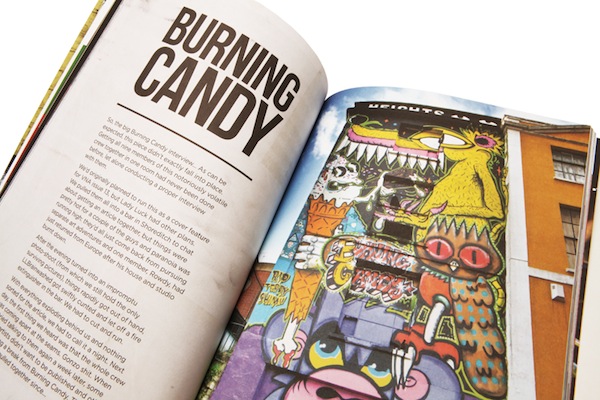
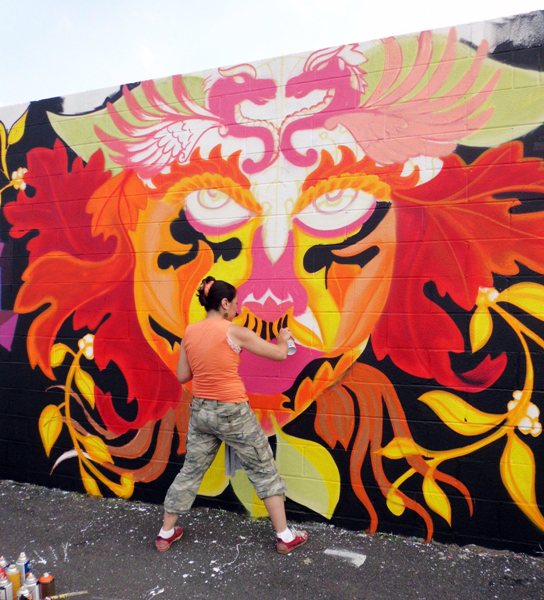
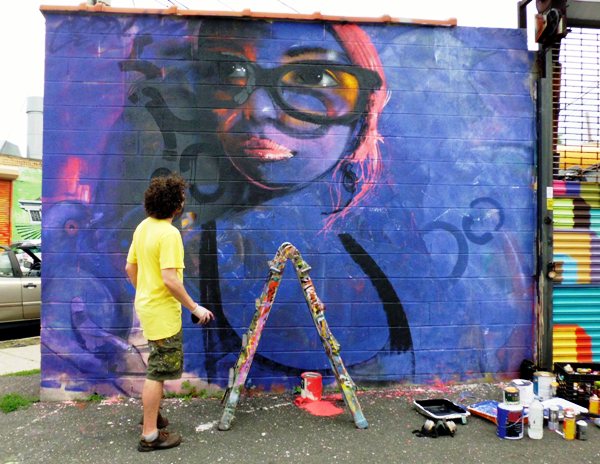
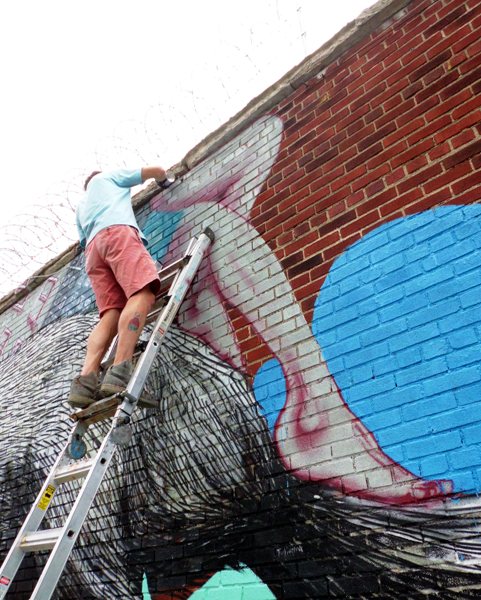
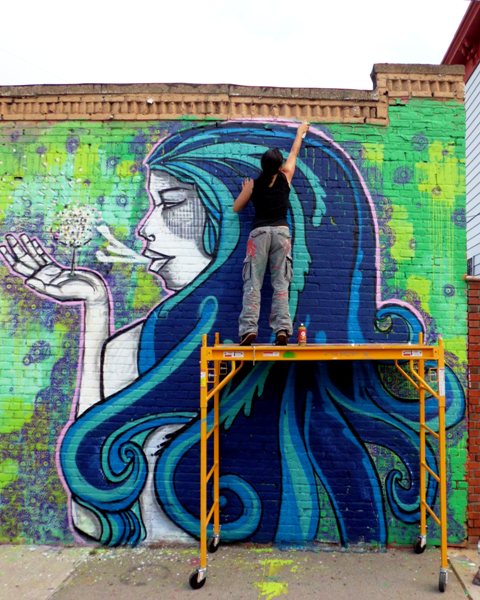
The latest issue of Very Nearly Almost, issue 15, went on sale last month. As a fan and occasional contributor to VNA, it’s a magazine that I always pick up. This issue is particularly cool though because it might have the more interviews with artists that I’ve written a lot about on Vandalog than any other issue of VNA. This is a coincidence, but certainly a happy one for me. Besides the interview that I did with Jordan Seiler, there is of course a detailed cover article where VNA speaks to Shepard Fairey, some very insightful words from Logan Hicks, a crazy series of conversations with members of Burning Candy (the VNA team might have been the only people to ever get the full nine current and former members of BC in one room at the same time) and interviews with Ripo and Nychos (who I haven’t written about too much, but now I want to) as well. As always, the guys at Very Nearly Almost have put together a quality zine and I highly recommend picking up a copy.
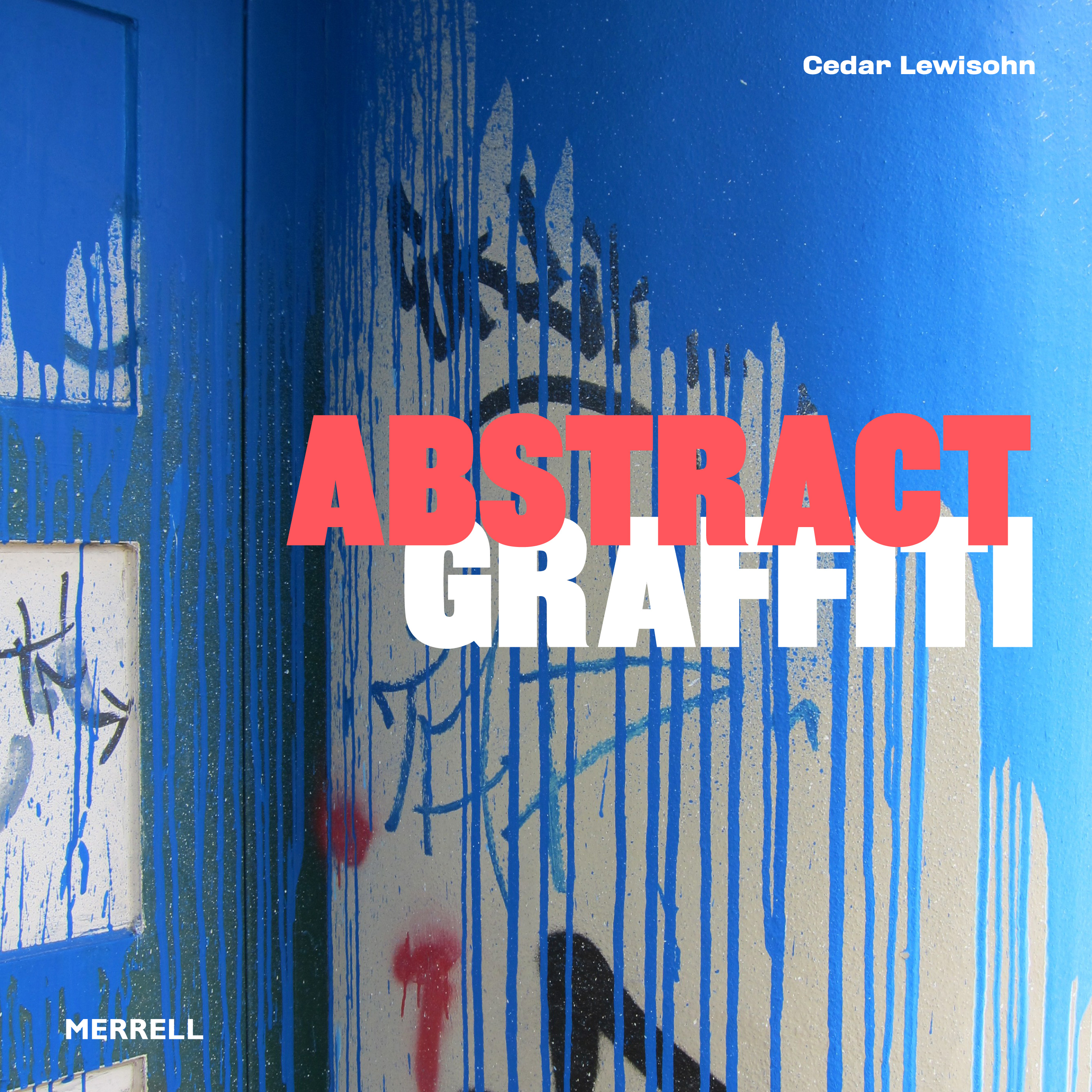
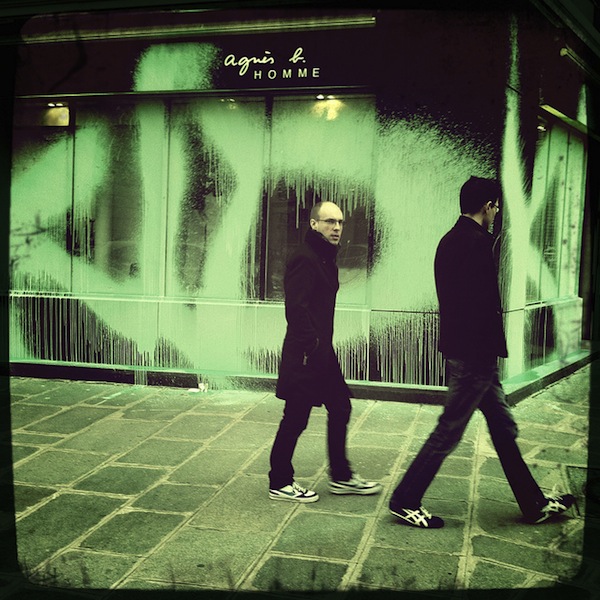
Abstract Graffiti by Cedar Lewisohn. Photo by KR, Berlin, 2010.
Often I find myself asking why certain artists have not been included in a book, but when it comes to Abstract Graffiti by Cedar Lewisohn, the spotlight is not on who should have been showcased but who has been and what they offer.
This insightful, thought provoking, and perhaps most importantly, interesting book, focuses on the increasing abstract nature of both graffiti and street art. Covering topics as diverse as knit graffiti and street training, alongside more conventional sprayology and pop influenced chapters, Abstract Graffiti immerses the reader in a world of vibrant colours, political statements and folk inspired characters.
Beginning with a fantastic introduction and conversation with Patricia Ellis, the book’s main basis is a series of interviews with both established graffiti artists and new practitioners of art based avant-garde practises. Each interview covers a different topic, my personal favourites being with Barbara Kruger, Futura, and the interviews on law with the Honourable Judge Hardy, Sweet Toof and Tek33. Juxtaposed alongside some great photos, the book not only provides an extensive review of graffiti and street art, but raises questions about how you yourself view the highly controversial art forms and their impacts on public space.
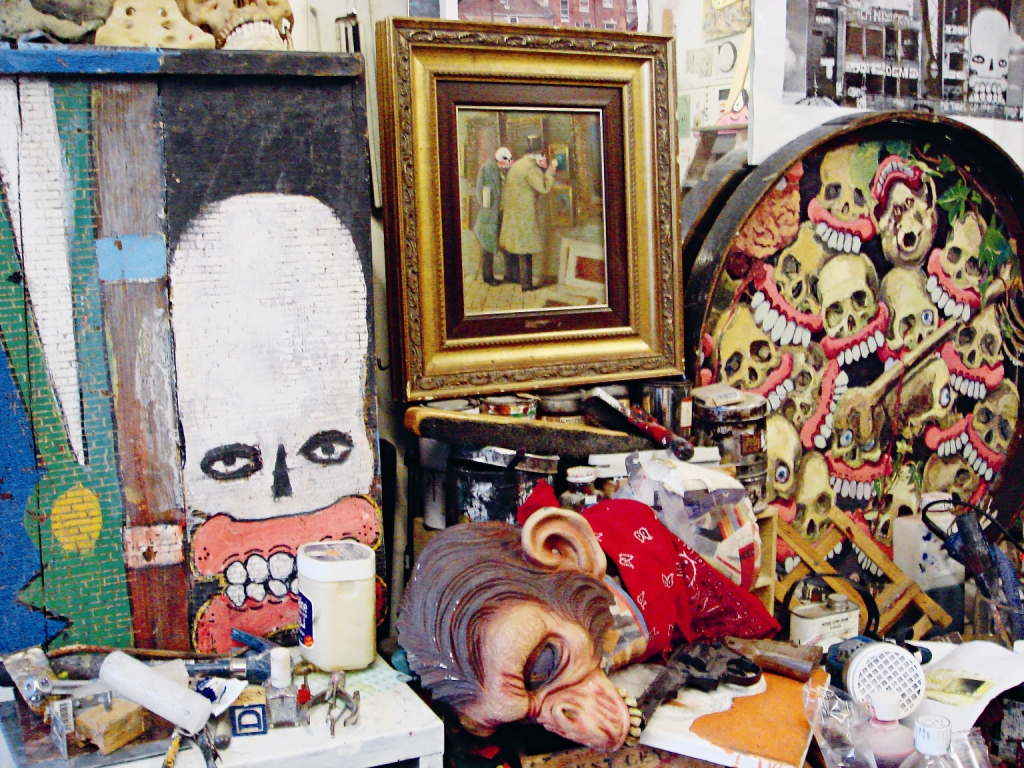
Sweet Toof's studio, London, 2008. Photo by Cedar Lewisohn (page 11).
For me, the only negative is that despite Cedar stating that he does not aim to outline a new form of art, at times I feel it does portray it as exactly that. However, I do say that with reservation, it’s more of a slight downside rather than any issue or problem. And this negative is completely forgotten when you start reading the final chapter – a conversation with Les Back, a professor of sociology at Goldsmiths in London. Not defined directly as a conclusion, the conversation provides a perfect ending to the book and rightly so. Les’s clear passion for graffiti and street art comes to the fore whilst you read questions and answers on society, race, and London’s over jealous planning authorities. Often these topics are not usually raised, or in fact covered, in the usual run of the mill street art book, but this book is not run of the mill, it’s a fantastically written and completely absorbing.
In short, I think everyone interested in art should pick up a copy and get reading. It’s thoroughly enjoyable and I highly recommend it.
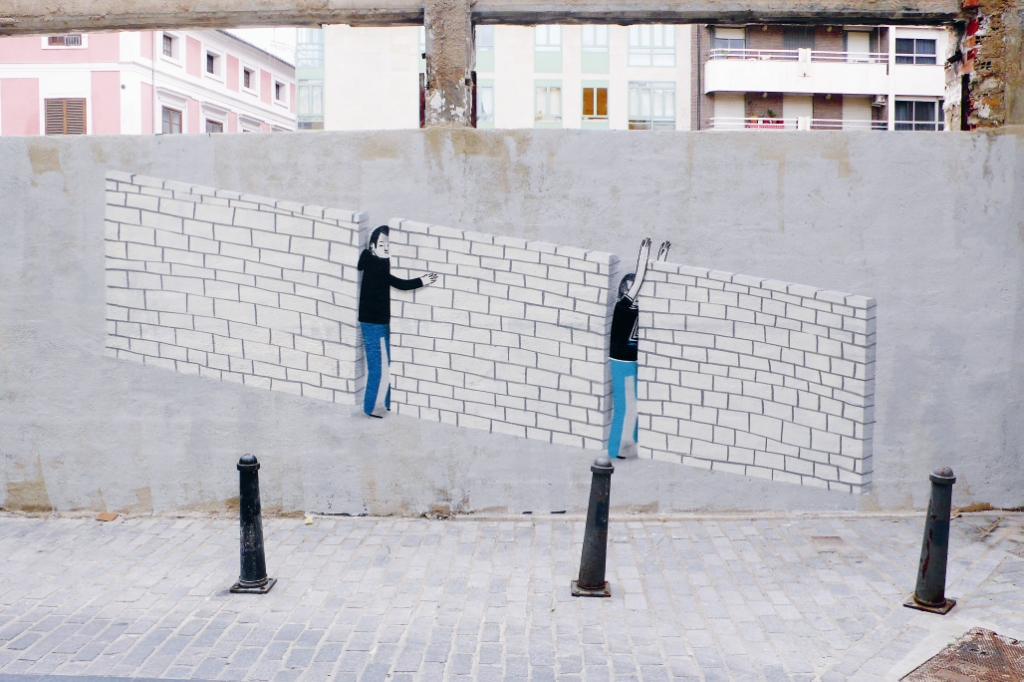
Escif - Insiders, Valencia 2010. Photo by Escif (page 158).
More information can be found here on the Merrell Publishers website.
Photos courtesy of Merrell Publishers. By KR, Cedar Lewisohn, and Escif.
A note from RJ: After writing this, I read Rub Kandy‘s interview in the most recent issue of IdN, where he speaks about street art that is created for and best experienced on the web.
What do Kidult, Blu, Maismenos and Katsu have in common? They are all examples, although not the only examples, of artists using the internet in a similar way to how graffiti writers and street artists have traditionally used the streets. These artists are each trying to spread a message at all costs. That’s standard street art/graffiti. But with these artists, a traditionally static artform is turned into a performance, what they do might be fake or impossible to see in person and, most importantly, they see the spread of their work online as at least as important as the physical pieces.
Check out these videos from Kidult (the first one is hilarious), Blu, Maismenos and Katsu…
With all of those videos, the resulting films are more important than the actual physical artworks. And yet, they were all done by street artists and graffiti writers and include (or pretend to include) art that is generally considered street art/graffiti. Who cares if anyone ever sees any of those artworks in person, or if they are even real? Even in the case of the real works that are depicted in those videos, most of those were seen by far fewer people, or at least art/graffiti fans, than these videos. In the case of Katsu’s tag on MOCA, that was buffed in less than 24 hours and it was a while before the existence of the tag and the story of it being buffed was even confirmed. The important thing for these artists is that the videos get seen. These videos and photos are more impressive than the actual work they capture. The intended audience for these street pieces is not the public on the street. These, and many other, pieces of street art and graffiti were created with an online audience in mind rather than a physical one.
So what does this mean for street art if the streets and a medium for viewing street art are being used in this way? Is street art just as legitimate when specifically designed, executed and documented for an online audience? What about graffiti? Does it even matter if a piece is real, so long as people see it? I would say that, at least when it comes to graffiti, it does not really matter if a piece is real or not. So long as it creates fame. Of course, fake videos won’t work at creating fame forever, but they are a temporary technique that can accomplish one of the goals of graffiti. It seems the case is more murky with street art. Certainly the street art in these is still art and probably still street art, just maybe not “street art” as the term is generally understood today. I consider the work in The Underbelly Project to be street art and graffiti, but others do not because it had to be viewed through photographs. Street art that is specifically designed to be viewed through the filter of documentation is still street art, but it’s an evolution too. As I’ve said before, I think hacking is 21st century graffiti, so maybe the internet is the new “street.” It’s quickly becoming a better avenue for artists to show their work to the public than real life.
For the second year, a diverse crew of dozens of first-rate street artists transformed several Queens blocks into an open-air gallery. Here is a selection of photos of artists at work captured yesterday by Lenny Collado, a recent college graduate who’s been documenting graffiti/street art alongside me. More to follow when I visit the site tomorrow:
Lady Pink CernOverUnderAlice Mizrachi aka AMJesse Jones
So what’s going on here? Why no bids? Do people not want to buy expensive art online? Do people not want to sell good art through an online auction? And what about things like that Richard Hambleton piece going for super cheap, compared to what galleries are trying to sell his work for? I guess that’s that bubble burst, yet again (his auction results are usually much lower than his gallery prices). Maybe one big plus about auctions like this is that they cut through all that hype. Unlike an auction at Christie’s or Sotheby’s, artnet auctions don’t have auctioneers and specialists goading buyers to spend big. And at a quick glance, some of the opening bids look high. Anyway, I’m not going to look through every single listing, but I suspect there might be a few deals hidden in this flop of an auction, if you can wade through everything else.
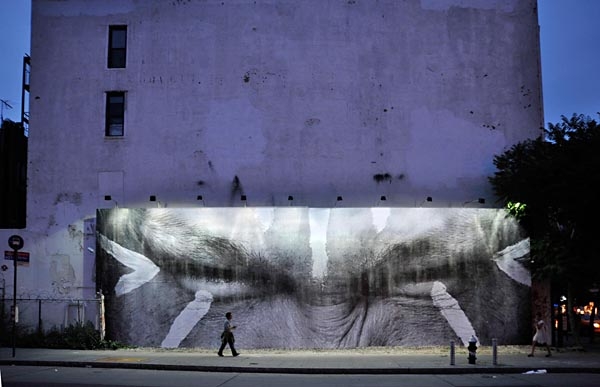
Earlier this week, JR got up at the historic mural spot on Bowery and Houston in New York City, most recently painted by Kenny Scharf. This photo is of DJ Two Bears, a man JR photographed at the Standing Rock Nation Native American reservation. Martha Cooper took this photo and has shots of the entire process on her blog.
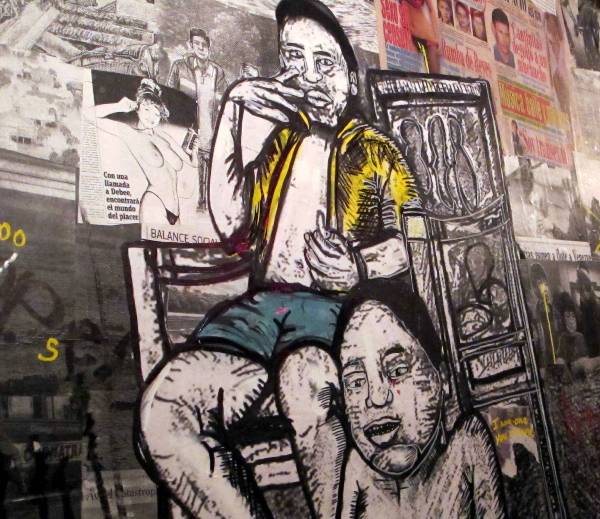
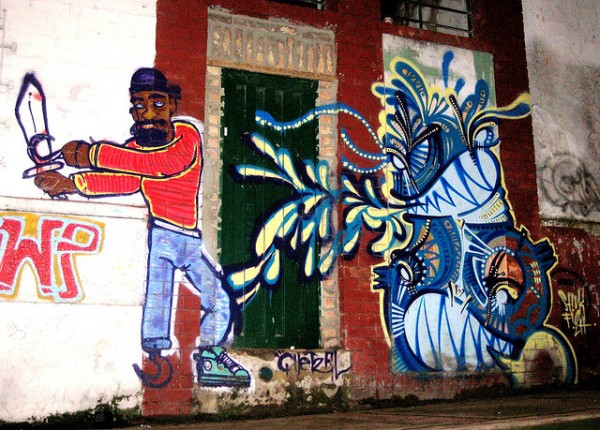
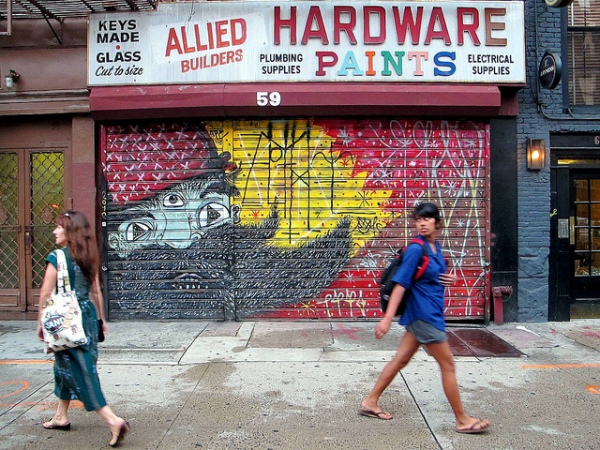
Disasters is the theme of a collaged mural currently underway in the hallway of the FUSE Gallery in the East Village. 26-year-old Lorenzo Masnah has been collecting, enlarging and painting over and on newspaper and magazine images of global disasters, tragedies and human rights violations for years. His politically-infused work has been published in zines and books and exhibited in a variety of gallery and alternative setting in New York City, LA and in his native Bogota, where, along with Stinkfish, he is a founding member of the APC (Animal Planet Collective). Lorenzo’s newest work will be the subject of an exhibit at FUSE Gallery next year. In the meantime, this mural is definitely worth checking out – if you’re anywhere in the vicinity of 93 2nd Avenue between 5th and 6th Streets in NYC’s East Village.
Close-up of mural underway in hallway @ FUSE Gallery, photo by LorenzoLorenzo's iconic Third World Pirate alongside Stinkfish in Bogota, Colombia, photo by Lois StavskyLorenzo as Third World Pirate in the East Village, photo by Lenny Collado
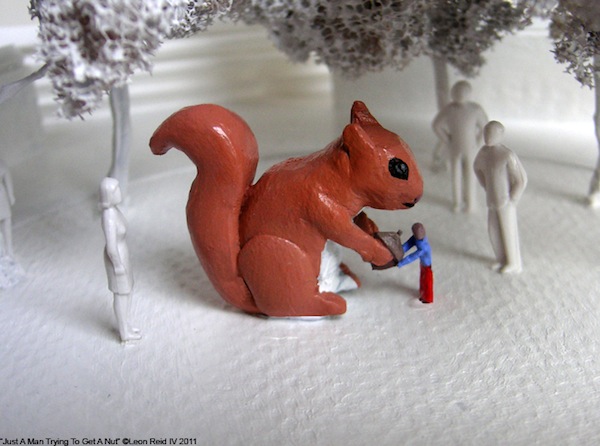
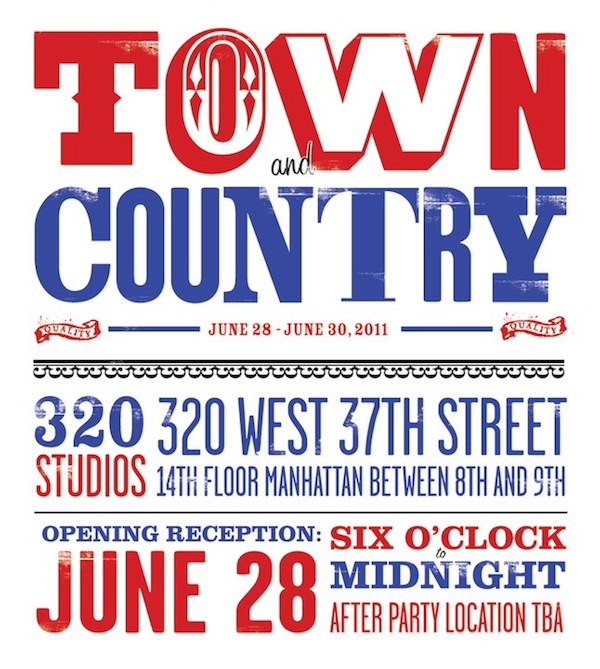
Town & Country is a group show opening next week at 320 Studios in NYC. It’s curated by my friend Keith Schweitzer at M.A.N.Y, Samson Contompasis from The Marketplace Gallery and others. Almost 2 dozen artists are in this show, including Leon Reid IV, Veng, White Cocoa, Olek and Chris Stain. Town & Country will only be open for 3 days (June 28th-30th), but it should be a pretty great three days. The opening is on the 28th from 6pm-midnight.
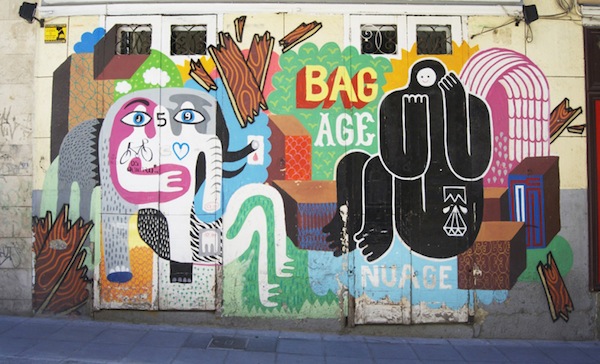
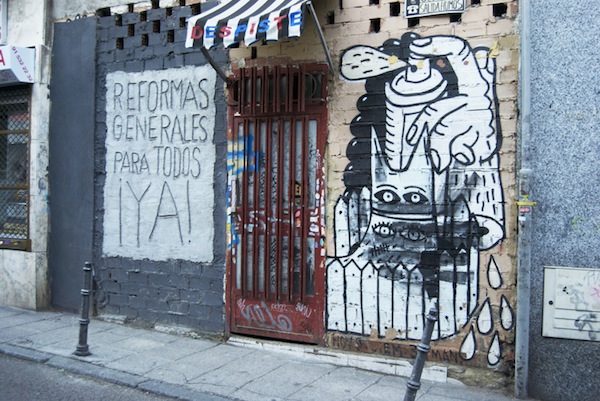
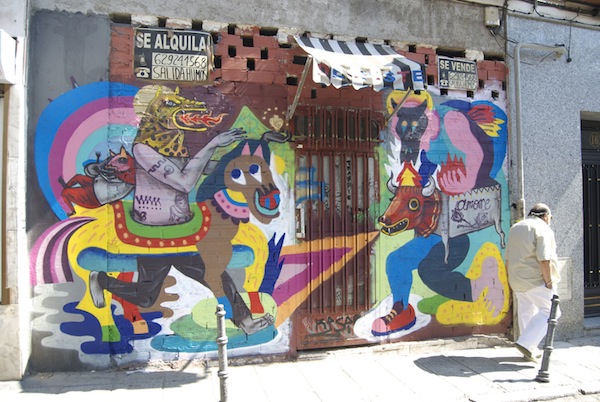
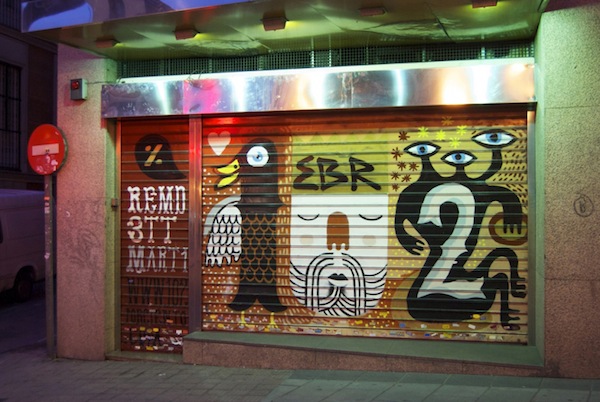
Street art photographer Miss Kaliansky sent over these photos of pieces by 3ttman and some of his friends (Remed, El Tono, Nan4814 and Saner) in Madrid…