Weekend link-o-rama

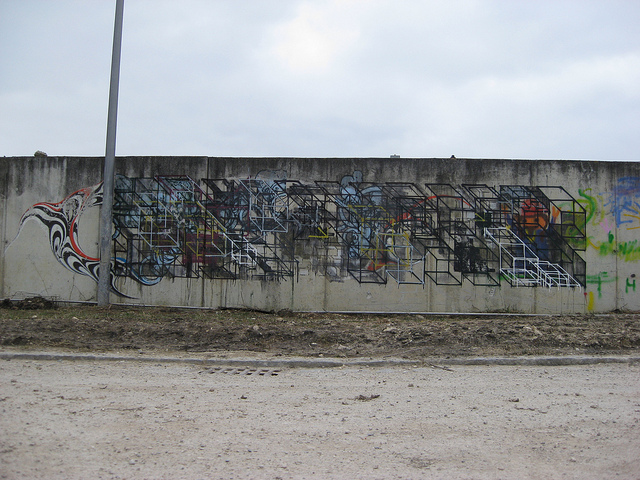
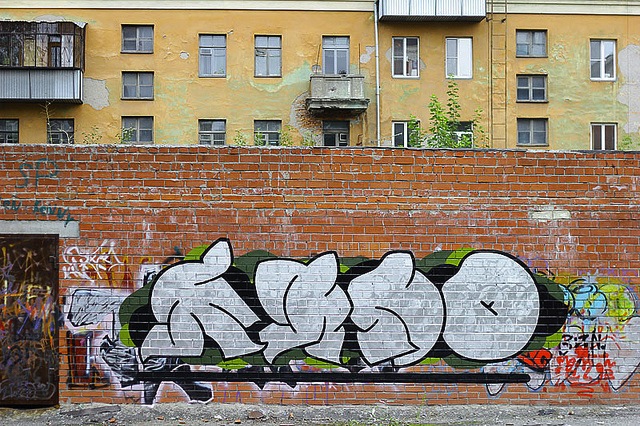
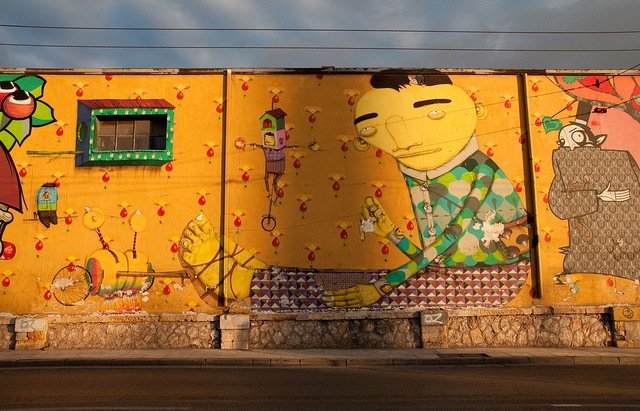
Os Gêmeos in Greece

It’s 11/11/11, so I guess that’s a big deal to some people. That seems so arbitrary to me, since our calendar is pretty arbitrary to begin with. Besides, it’s really 11/11/2011. A few years ago, 11/02/2011 was much cooler. In my social sphere though, 11/11/11 seems like an excuse to throw parties, so maybe I shouldn’t complain. While I was thinking about the ridiculousness of this date, here’s what almost passed me by this week in art:

Photo by Nolionsinengland

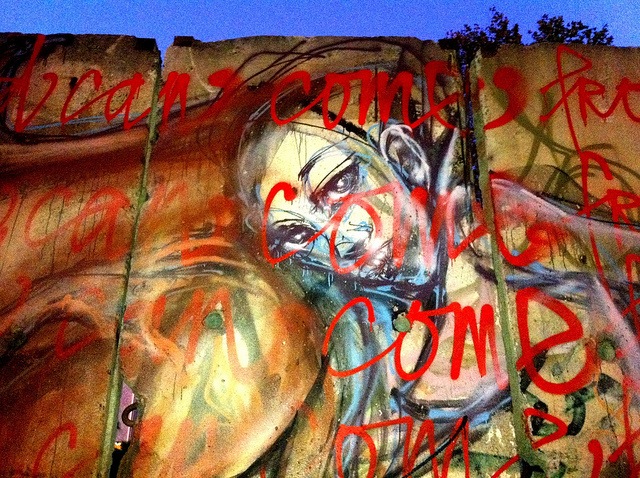
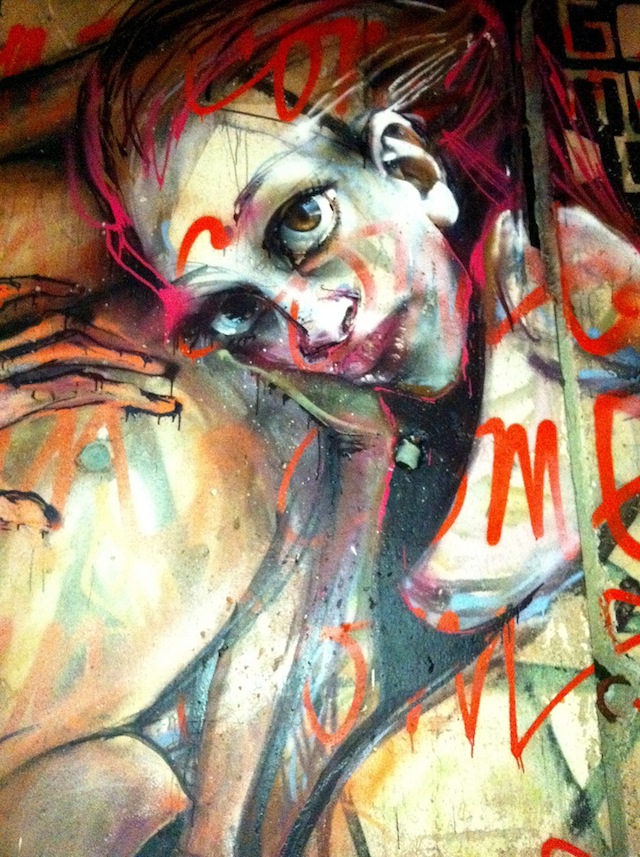
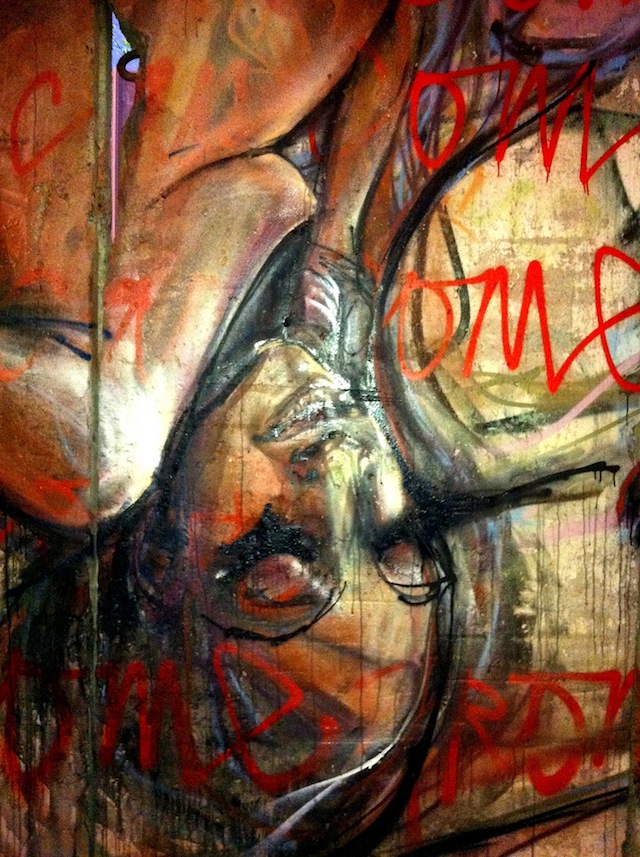
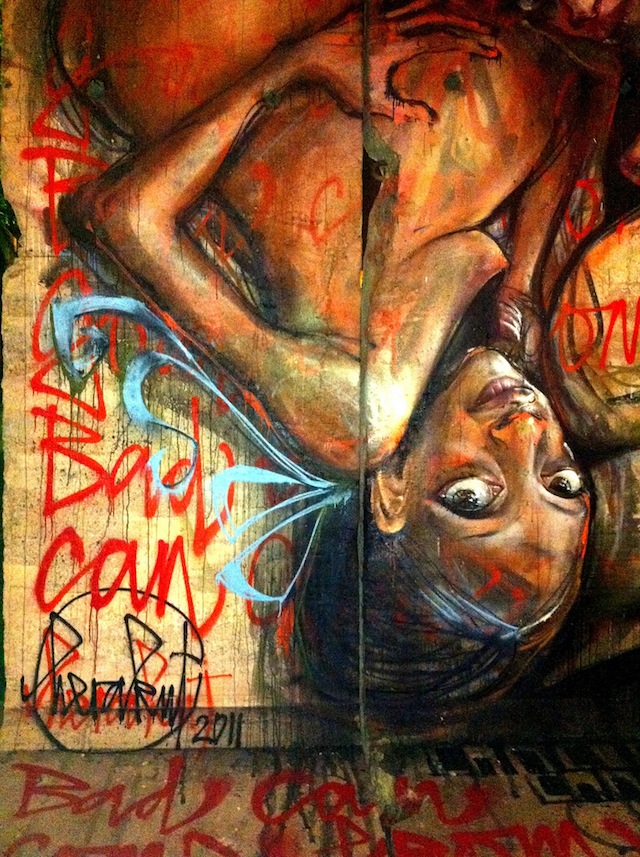
Herakut Hits “The Wall Along Wilshire”

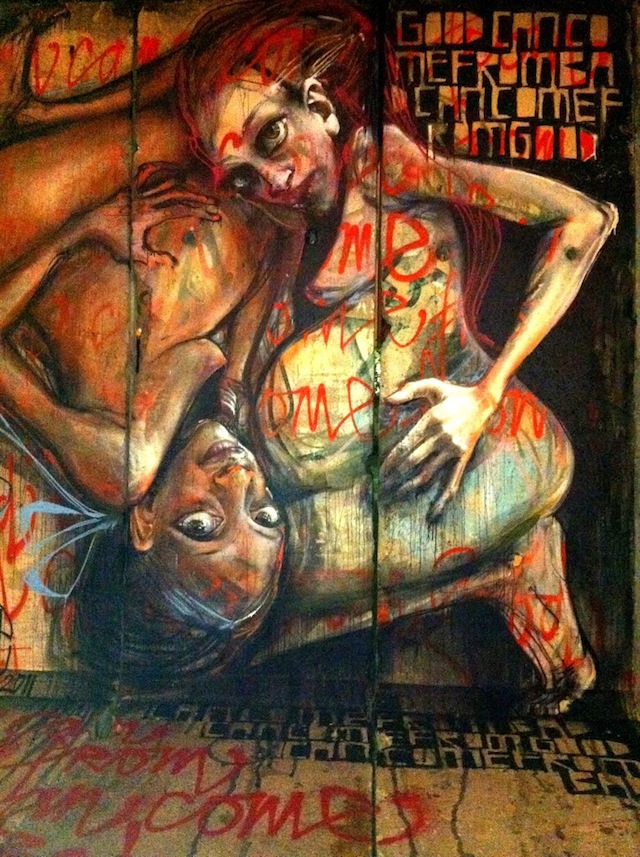
Herakut, "Good Can Come From Bad Can Come From Good" (Complete)

The Wende Museum has been doing some very interesting things lately, including the creation of an outdoor gallery wall (complete with framed work) on Main Street in Downtown Los Angeles, but its current project on Wilshire looks to be the most intriguing yet.

Now standing directly across the street from LACMA are several weathered sections of the concrete Berlin Wall. “The Wall Along Wilshire” is part of “The Wall Project,” the museum’s ongoing cultural history program.

For the front of the wall, the artists paired with Thierry Noir (one of the first artists to paint the Wall in 1984) were Kent Twitchell, Farrah Karapetian, and Marie Astrid Gonzalez. Yet, the museum also saw fit to invite several street artists to paint the back of the sectionals, asking Herakut, RETNA, and D*face to do the honors. It is expected that the other street artists will start Thursday or Friday evening, but Herakut have already completed their work.

I arrived last night when they had just finishing painting. One half of Herakut, Jasmin Siddiqui (Hera) explained that the Wall holds a very special significance for Herakut, not just because they are from Germany, but because she grew up in the West, while her partner, Falk Lehmann (Akut), grew up in the East.

“It’s amazing how small it looks now,” Jasmin said as she surveyed their work, “and it’s hard to imagine it kept so many people apart.”

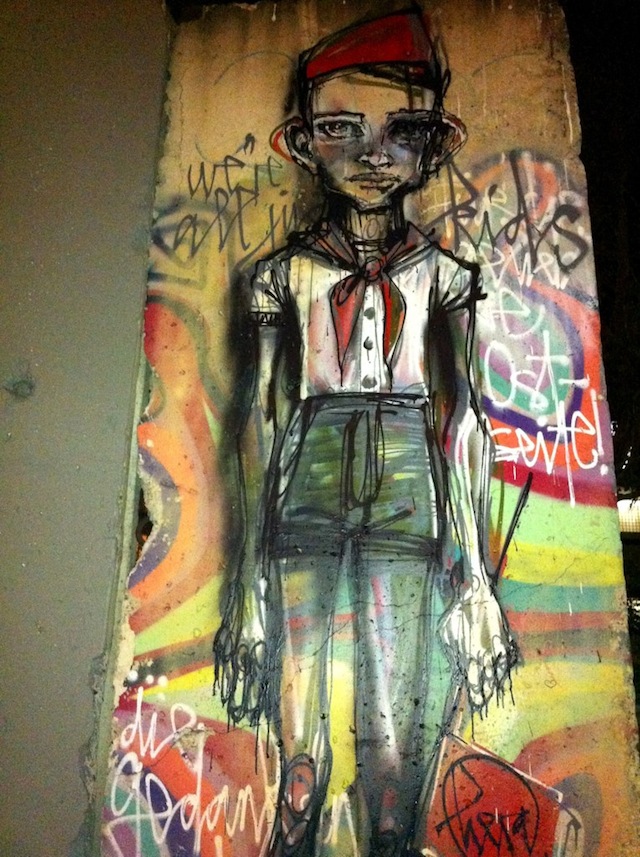
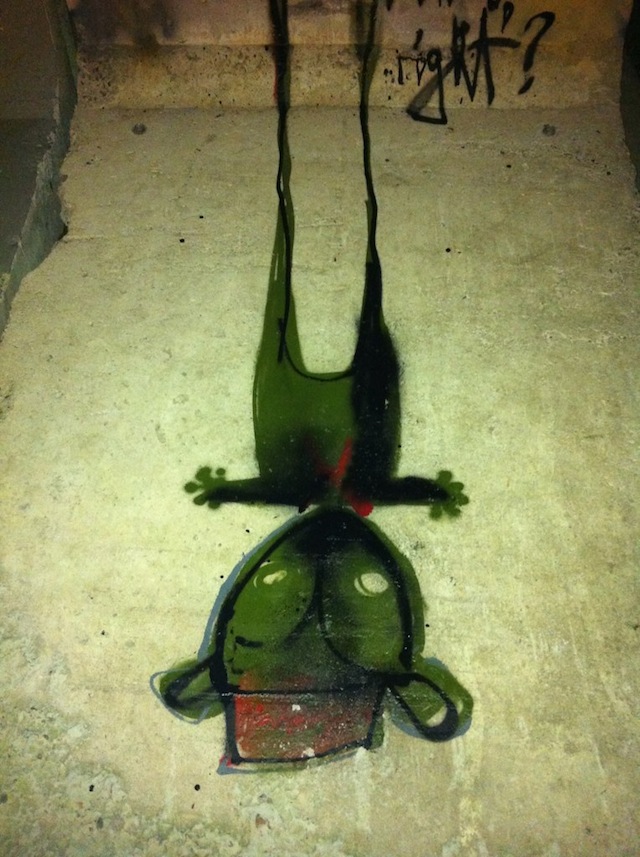
Their piece on the left-most sectional, “Good Can Come From Bad Comes From Good,” was informed by the transformative circularity of history, and features two pregnant women crouched together in a yin-yang position. Their piece on the right-most sectional, “We Are All Just Kids, Right?” depicts a thin schoolboy tapering into a teddy-bear-like black and green shadow. Both showcase the dark, illustrative quality of their work, and are all the more poignant given the history of the material they are painted on.

“The Wall Along Wilshire” will be in front of 5900 Wilshire until November 13, 2011, where a private reception will be held with the artists from 1 to 4 p.m. After that, the sectionals of the Wall will shift to The Wende Museum’s permanent collection at 5741 Buckingham Parkway, Suite E, Culver City, CA 90230.

Herakut, "Good Can Come From Bad Can Come From Good" (Yang, Phase 1)
Herakut, "Good Can Come From Bad Can Come From Good" (Yang, Complete)
Herakut, "Good Can Come From Bad Can Come From Good" (Yin, Phase 1)
Herakut, "Good Can Come From Bad Can Come From Good" (Yin, Complete)
Herakut, "We Are All Just Kids, Right?" (Boy)
Herakut, "We Are All Just Kids, Right?" (Shadow)

Photos by Ryan Gattis

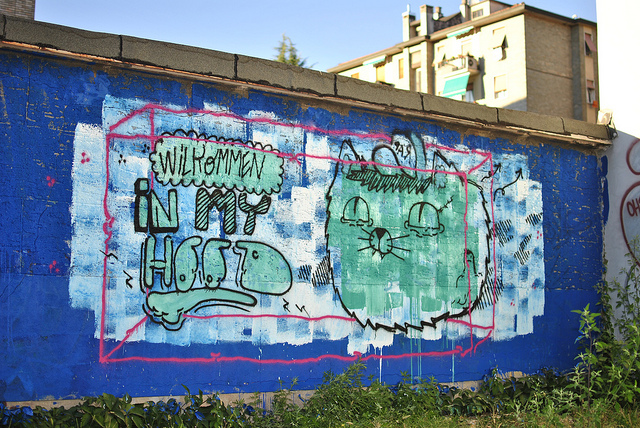
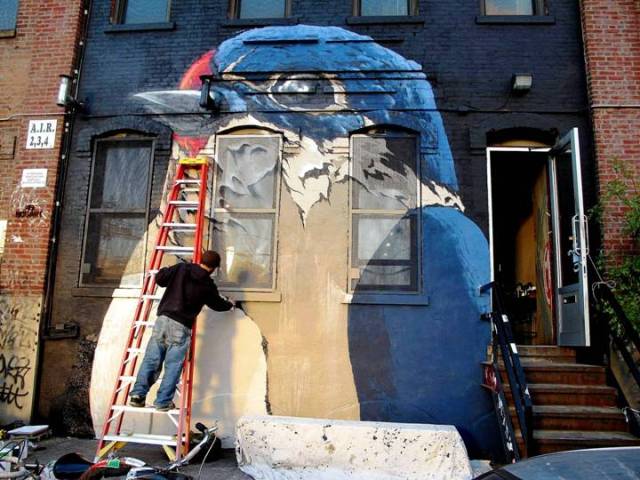
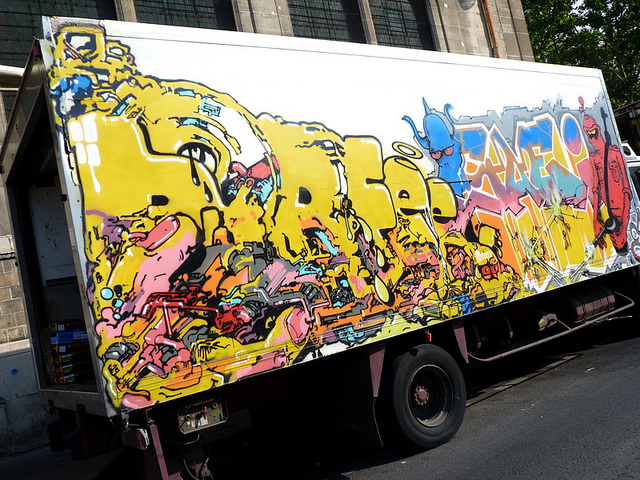
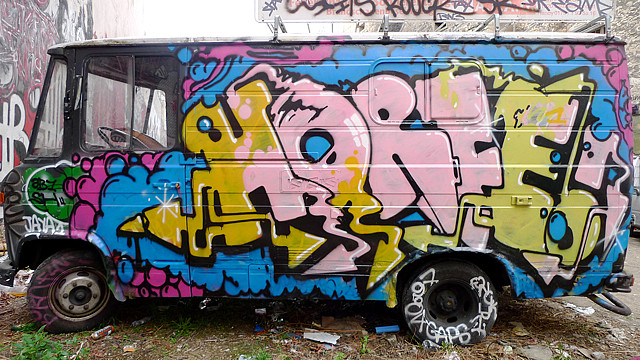
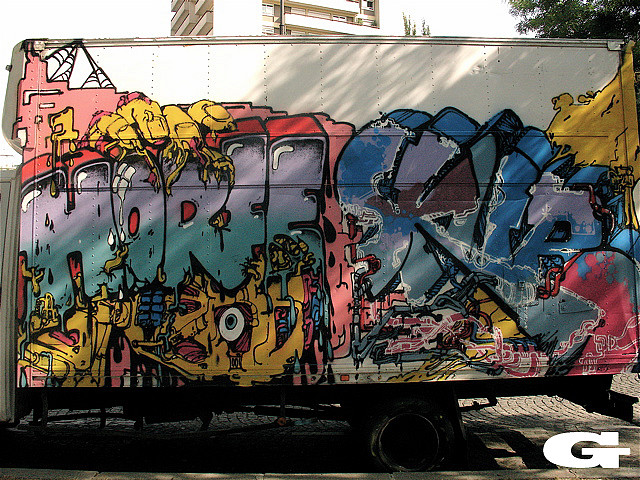
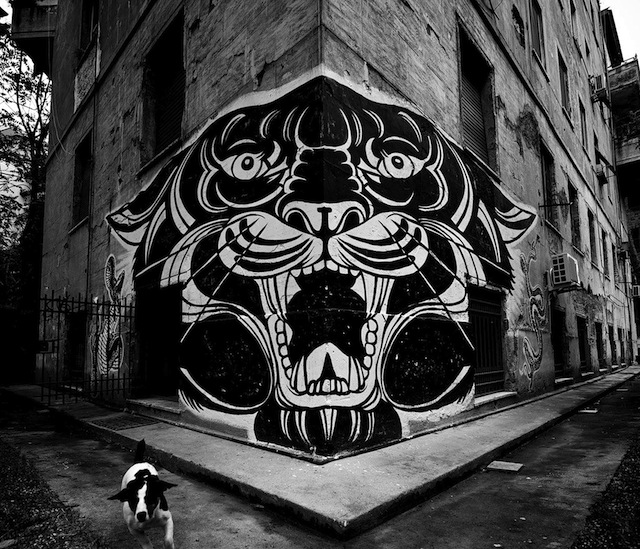
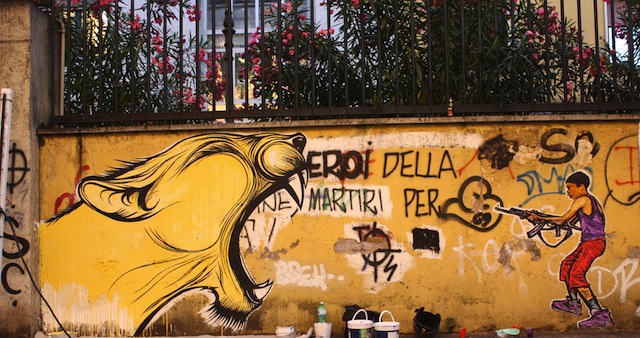
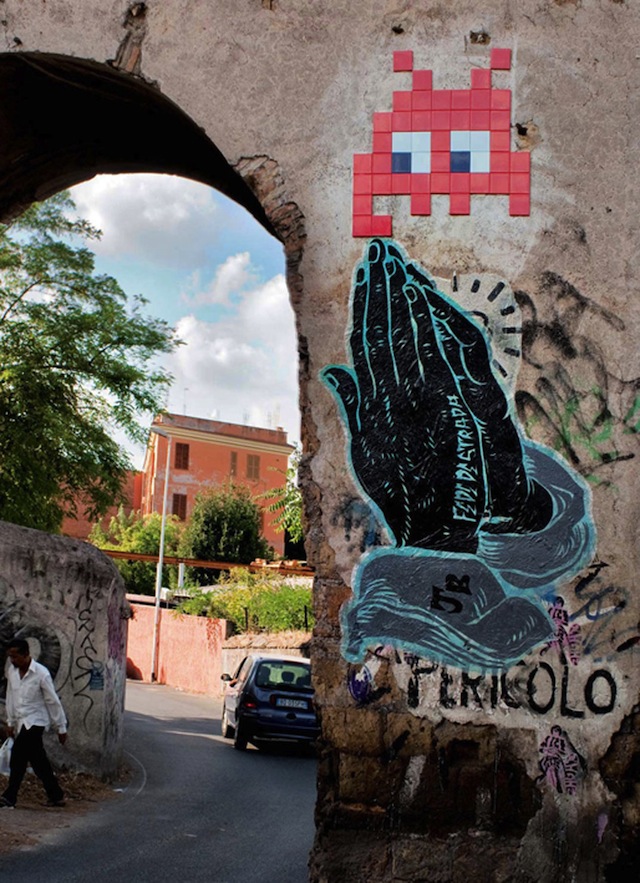
JB Rock in Rome

JB Rock is an artist working in Rome. Some really great work. It’s graphic and the impact is immediate, but JB Rock also has his own styles and doesn’t look like he’s just recycling stereotypical street art styles. He does go over graffiti though…

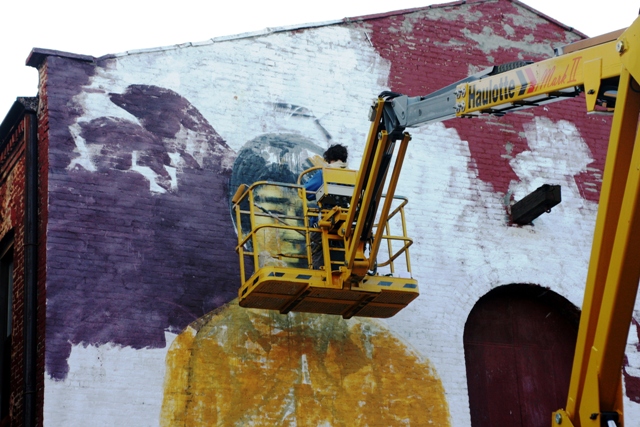
Vhils at Woolfest (yes, wool)

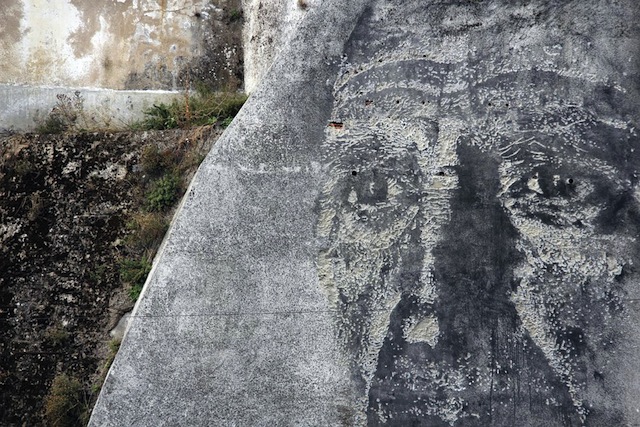
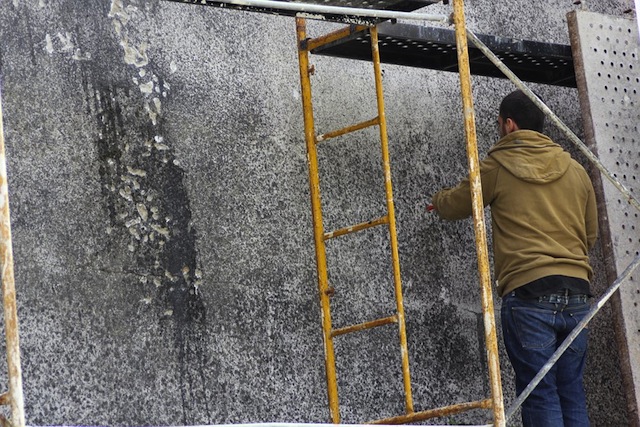
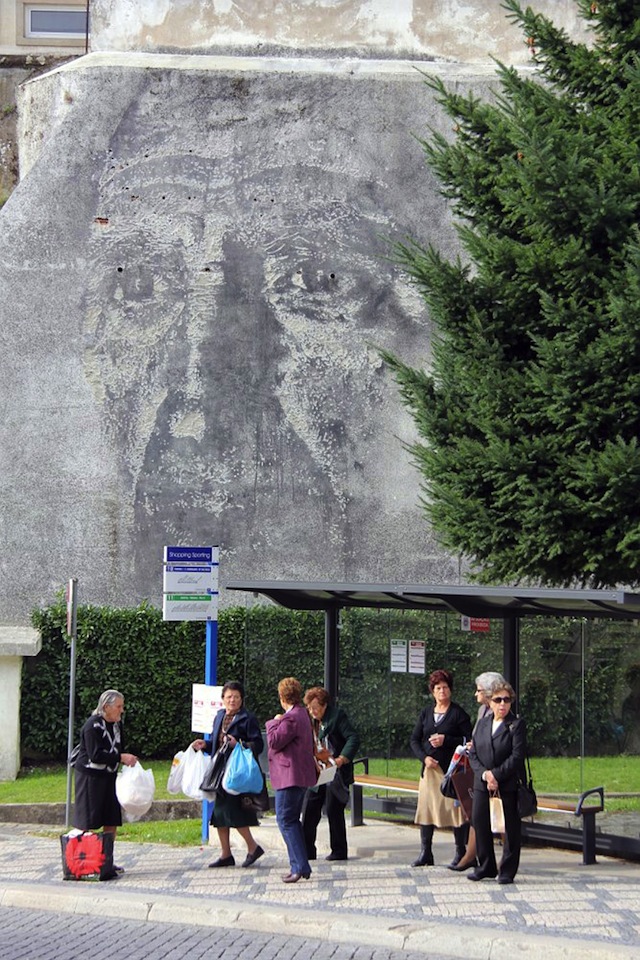
Vhils recently chiseled a wall in Covilhã, Portugal for Wool, an urban art festival in a town which has been closely tied to the wool and textile industry since the industrial revolution. The organizers of Wool say “With this piece VHILS wants to talk about the desertification of the interior of Portugal, which appears to be irreversible and portray the reality that we live in a territory with a population growing older, ‘where the cuts and the current measures are felt even more hardness and where most of young people are future opportunities and are forced to seek them elsewhere, either on the coast or abroad’.”