RJ Rushmore has been involved in contemporary art as a writer, curator, photographer, arts administrator, and fan since 2008. With a focus on street art, graffiti, and public art, RJ facilitates and promotes catalytic and ambitious art outdoors, in galleries, and online. He founded the street art blog Vandalog and has worked at The L.I.S.A. Project NYC, Mural Arts Philadelphia, and Creative Time. Currently, RJ is Co-Curator of Art in Ad Places.
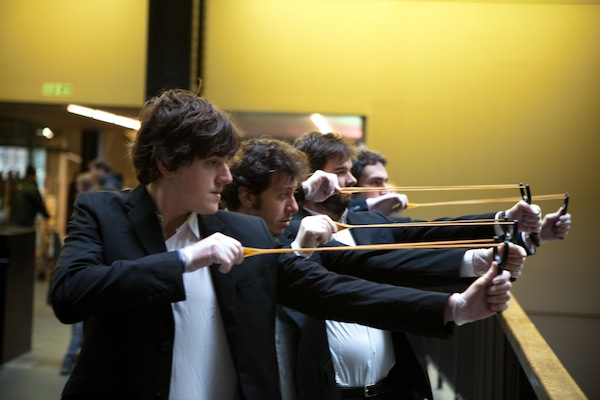
Right now at the Tate Modern in London, there’s an artwork in the main hall by Ai Weiwei. The work is called Sunflower Seeds. It consists of about 100 million hand-painted porcelain sunflower seeds. Even from up close, these porcelain seeds look real. It’s quite… something. But actually, that’s what I saw at the Tate a few weeks ago. Now, that’s just what most people think they’re seeing. IOCOSE says different though. The group of European artists used slingshots to fire 4 real sunflower seeds in the midst of Ai Weiwei’s sea of porcelain seeds to create their new artwork, Sunflower seeds on “Sunflower Seeds”. Okay yeah, there’s some conceptual art meta-bs going on here, but I still love it and within the context of a museum and interacting with a piece of conceptual art, that seems perfectly appropriate. IOCOSE’s act is just the playful sort of thing that Ai Weiwei would probably love. Fantastic work.
Here’s some of what IOCOSE says about Sunflower seeds on “Sunflower Seeds”:
The new artwork looks exactly the same as the previous one, as the natural seeds and those made of porcelain are indistinguishable from each other. IOCOSE reclaims the authorship of the new installation and reminds viewers of Ai Weiwei’s previous statement: ‘what you see is not what you see, and what you see is not what it means’.
And here’s a video of the performance/action taking place:
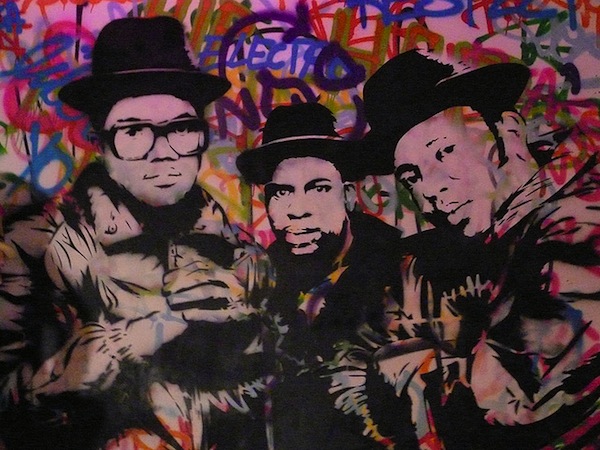
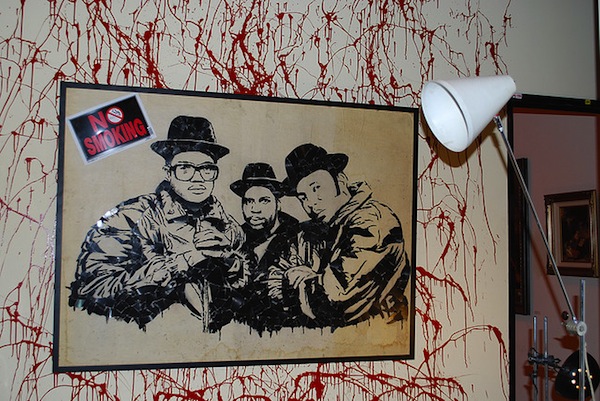
As mentioned a few days ago, Mr. Brainwash is being sued by Glen E. Friedman over the use of Friedman’s iconic photo of Run DMC. While this lawsuit has been going on for quite a while, attention was first really brought to it after a recent post on Boing Boing. The immediate reaction from the blogosphere seems to be to side with Friedman and against MBW, while somehow trying to explain how this is massively different from Shepard Fairey’s lawsuit with the AP where most of these same people were siding with Shepard.
I would love to, as usual, bash Mr. Brainwash’s work as overpriced, barely qualifying as art, completely derivative and only of any value (monetary, intellectual or otherwise) for the absurdity of him and his career as a whole. And I’d love to back up Glen E. Friedman, a photographer with a uniquely talented eye that combines taking photos of interesting/historic things with aesthetic and technical know-how. If there’s a guy a want to like in this story, it’s Friedman, and if there’s a guy I’d love to hate, it’s Mr. Brainwash. Unfortunately, I’m not going to take the easy sides. All those things I’ve said are true, but in the wider context of fair use and artist rights, Mr. Brainwash is the bastard child of a good idea worth defending.
Photo by textdrivebys
A lot of MBW’s work relies on taking existing iconic imagery and changing it to fit within his world. With the Run DMC image, he has used it in a variety of ways, including stencils and his portraits made of broken records. He didn’t copy the photograph and start running off copies. He transformed it into something new. Yes, you could overlay MBW’s stencils with Friedman’s photo in photoshop and they would match up, but that’s how references photographs often work. That similarity, the reference, doesn’t mean they two works are the same thing or that MBW is legally obligated to license the use of the image from Friedman. The MBW artwork transforms the Friedman photograph into something new, and even if it doesn’t, street art fans need to be careful about not defending appropriation.
Street art and pop art in particular have relied heavily on the ability to appropriate from other people’s photographs or other imagery, iconic or not and often not licensing or even crediting the original creators. Shepard Fairey (countless times including his early André the Giant image and the Obama poster), Banksy (source), D*face (source), Rene Gagnon (source), C215INSA (okay this one is within the public domain but it’s still a good example of appropriation) and so many others have used source imagery in their artwork and transformed it into something new. We can debate, particularly with a lot of pop art, the extent to which the original thing was transformed, but there is definitely a change taking place and some sort of artistic or design input involved in making that new image. And if you want to argue that in all those examples I provided except for INSA, the artist should be legally and morally obligated to license the imagery from the creator of the source material, then that’s another debate. What I’m taking particular issue with today is that the same people who defend Shepard Fairey doing his lawsuit with the AP are now rooting for Friedman against Mr. Brainwash for doing essentially the same thing that Fairey did.
Sean Bonner has argued that the key difference between what Fairey and MBW did comes down to how iconic the photograph was to start with. By that logic, any random photograph is fair game to turn into a stencil without credit, but it would become problematic if the source photograph is well-known. Well then Bonner must also think that a lot of street art and pop art is vulnerable to lawsuits. The same argument that Bonner makes on behalf of Friedman would threaten some of the artists mentioned in the last paragraph, Warhol’s Campbell’s Soup Can series, the work of Elaine Sturtevant, any artist using Mickey Mouse except in instances of parody and possibly even Shepard Fairey’s Andé sticker since Fairey was basically utilizing the iconic nature of Andé the Giant for his sticker.
Taking that view out of art and looking at music for a moment, mash up artists like Flosstradamus, The Hood Internet, Girl Talk and DJ Dangermouse rely on a combination of iconic and non-iconic sounds for their songs and don’t license that material. The courts have made it clear that a lot of what they do is illegal, but I don’t think that’s a decision conducive to the creation of new art and music. The White Album, The Black Album and The Grey Album are three very different artistic creations.
I hope that MBW wins this lawsuit and the rights to fair use and artistic appropriation are upheld.
That said, I want to get back to my earlier comment that MBW is the bastard child of fair use. It doesn’t seem to me like MBW’s artwork is how fair use is intended to work. And he looks like a complete jerk for not licensing imagery which it might have been possible to license (Shepard Fairey has licensed some of Friedman’s photos). The ethical thing to do might have been to at least attempt to license as much of the imagery that MBW uses as is possible. But he can’t legally have an obligation to license the imagery. Otherwise, art and music are screwed. MBW’s art based on iconic imagery is not how fair use is intended to work, but if it doesn’t work for MBW, it stops working for the artists who deserve fair use rights and use them respectfully. Although excessive allowances for fair use can screw good over people like Friedman who get taken advantage of by jerks like MBW, on balance, it’s better to have too many rights for fair use than not enough.
But I’m no expert on fair use. I’m hoping to get a nice discussion going here. What do you think?
PS, if you’re wondering why I’ve not posted Friedman’s original photo, it’s because I don’t have permission or a way to get in touch to ask for permission, and I don’t want to upset him by using his photo without permission even though it probably qualifies as fair use in this case. Just kidding (sort of).
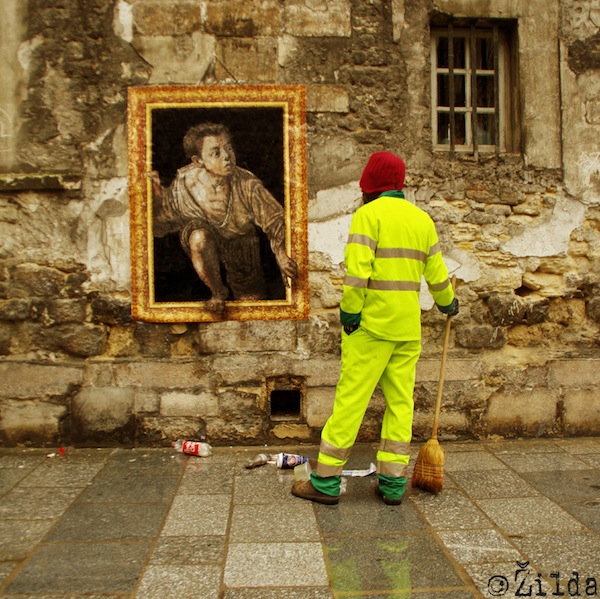
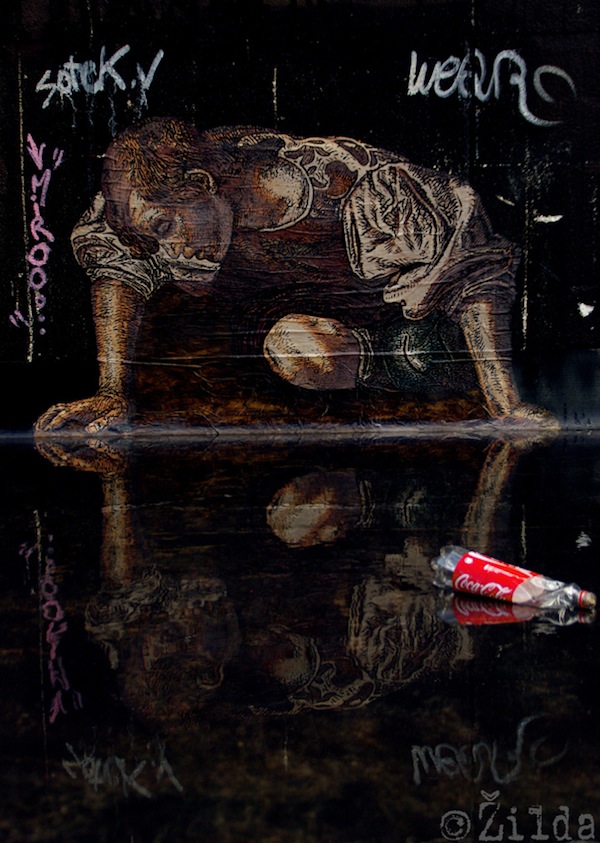
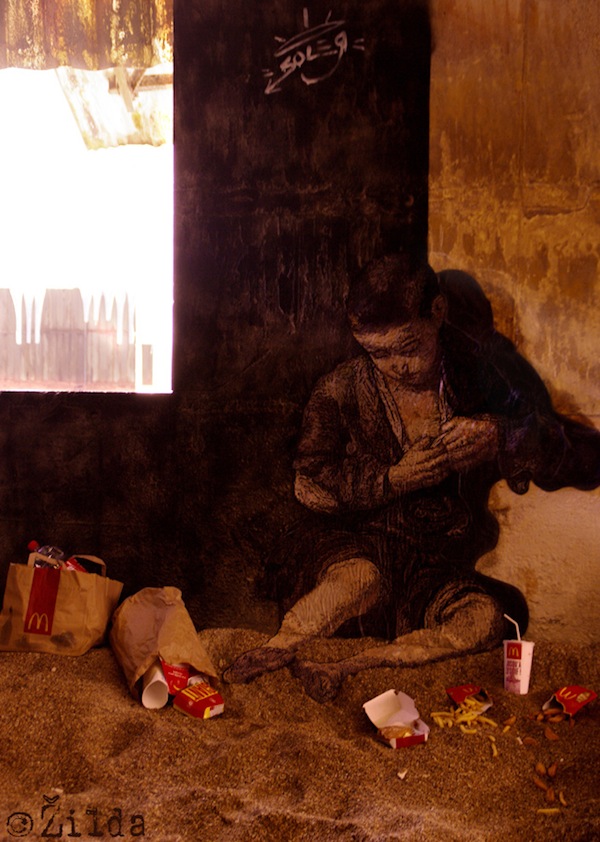
Zilda has outdone himself yet again. These latest wheatpastes are copies of famous paintings, but I think they come to life in an entirely new way outdoors.
With the riots and protests in Egypt, I thought the above sticker is a worthwhile thing to consider this week. I’m a bit late on this week’s link-o-rama.
A TWIST bus stop from 1995. And intense Barry McGee fans may appreciate this video, but it’s kind of lost on me.
Seems really interesting that this piece has text in English even though it’s placed in Iran. As if they intended for a good number people to see it online in the Western world and placed as much importance on that as on people seeing it in person.
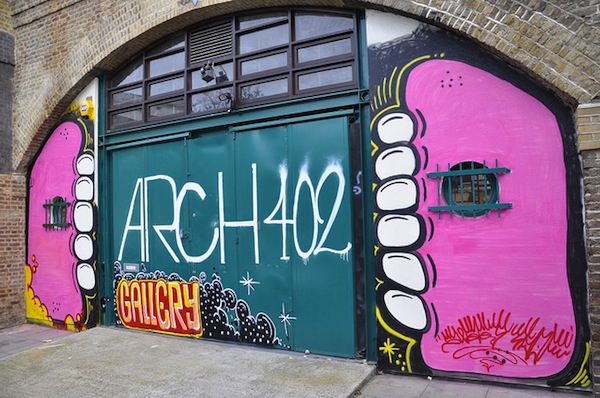
The entrance to Arch 402 with artwork by Sweet Toof and Cept. Photo by Nolionsinengland
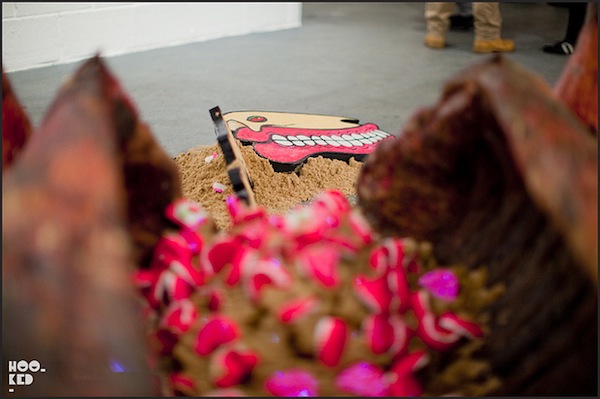
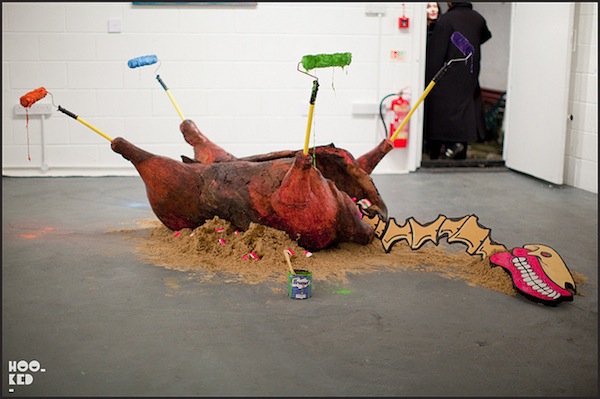
Sweet Toof’s show at Arch 402 Gallery in London opened earlier this month. While not a 100% smash hit, there are also some of my favorite Sweet Toof works ever. Some of my favorites from this show are actually the ones that I posted in the preview. The show is open through February 3rd, so you still have a few days to check it out. Well worth a look.
You may be familiar with José Parlá‘s recent artwork, like the above canvas. And you may also know that Parlá used to write graffiti under the name Ease, primarily in Miami. But you probably haven’t seen much of that graffiti. Until this week, I’d only seen maybe one or two Ease pieces. Just a few days ago though, Depoe sent me a great link: It turns out that the website Miami Graffiti has dozens of photos of Ease graffiti by Parlá. So maybe I’m on the only one out there for whom this is new informatoin, after all this website isn’t a secret, but I hadn’t seen this work before and really enjoyed checking it out.
Thanks again to Depoe for the tip (and check out his recent series of etchings. I’ve got a few of his etchings and they are the first thing I see on my wall when I get up in the morning. Great stuff.)
I really enjoyed this no-bs interview that EIKNARF did with Revok. Just a basic video: Revok is an awesome writer, here’s a few thoughts on graffiti, his work and life. Check it out:
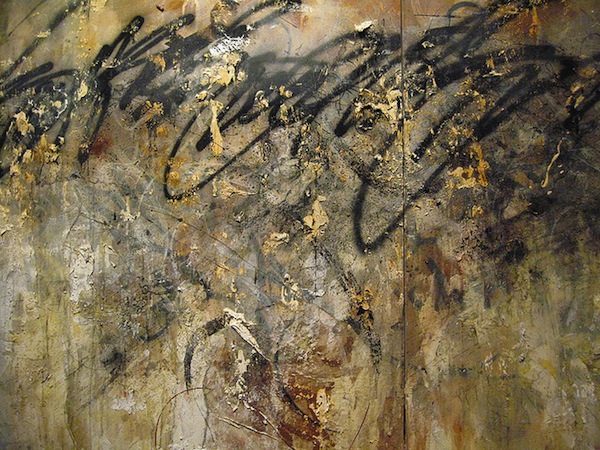
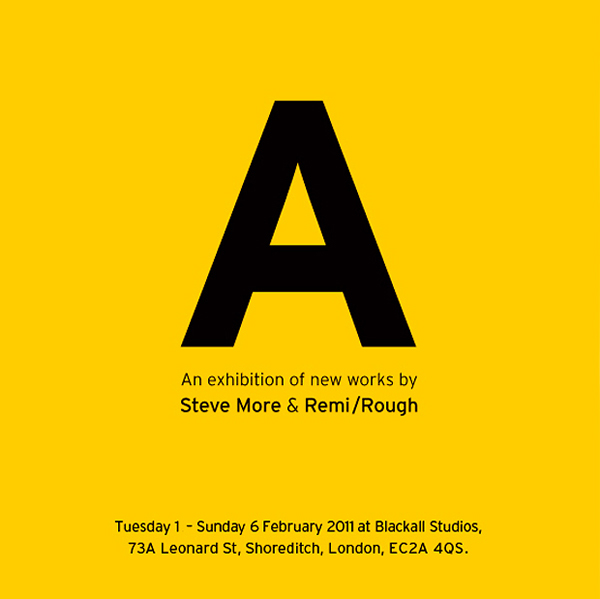
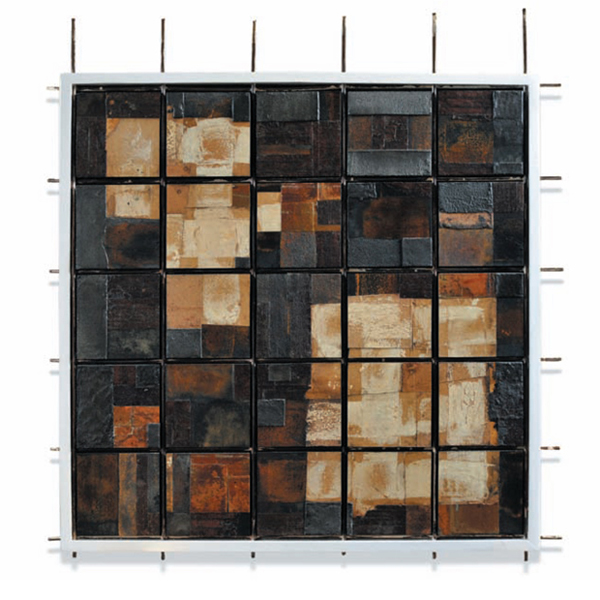
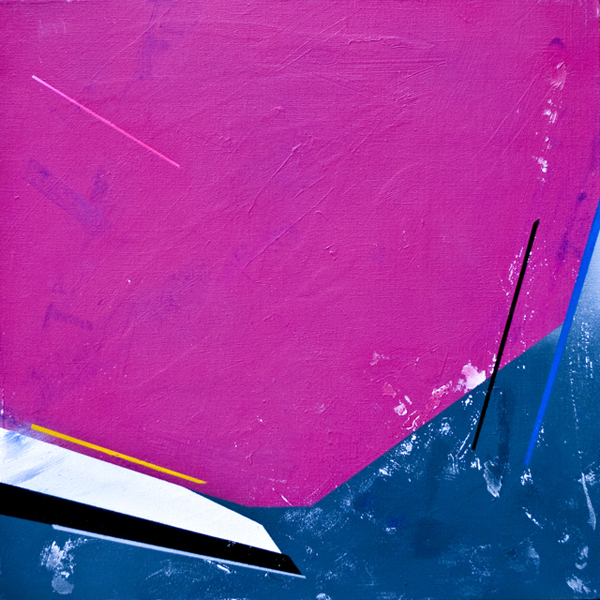
Steve More and Remi/Rough have a show opening next week at Blackall Studios in London. A is intended as a sort of checkpoint for what Remi and More call the urban abstract movement (them plus people like Kofie, Jose Parla and Retna). I’m not sure about that, but hey, I like the pictures so I’m not going to complain about a bit of over-hyping. Vandalog readers will probably be familiar with Remi’s abstract graffiti-style canvases, but this is one of the first time I’ve seen a substantial number of artworks by More. Arrested Motion recently did studio visits with both More and Remi, so you can check those out here and here. Here’s some of what you will see in A, and Londoners can go to Blackall Studios next week to see everything (I have a feeling that Steve More’s work really needs to be seen in person to pop):
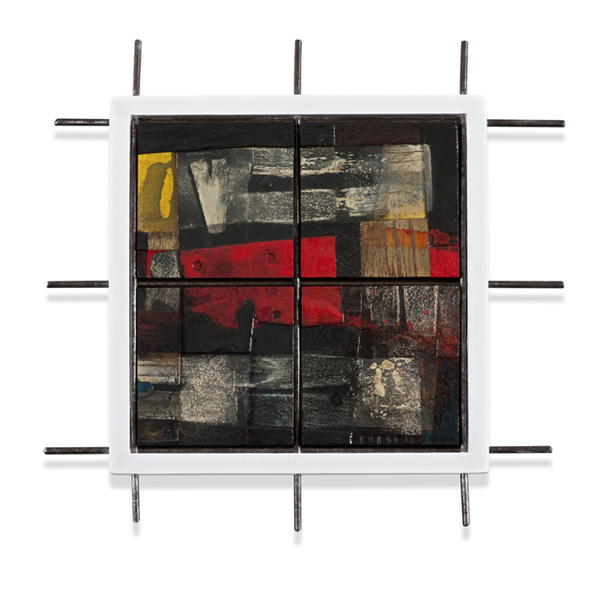
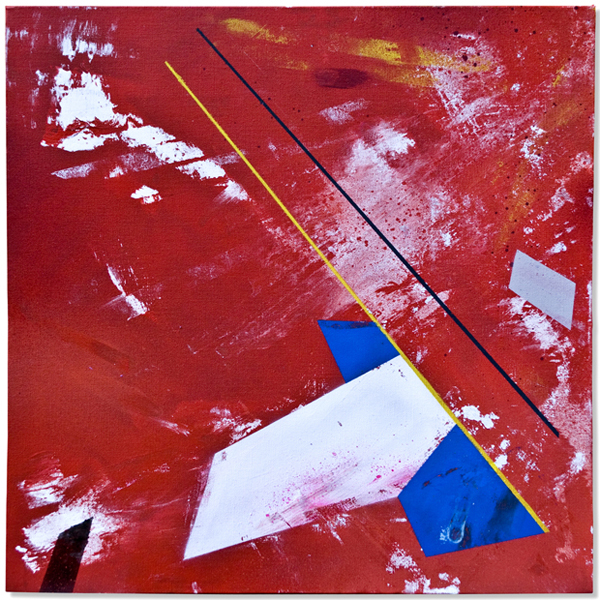
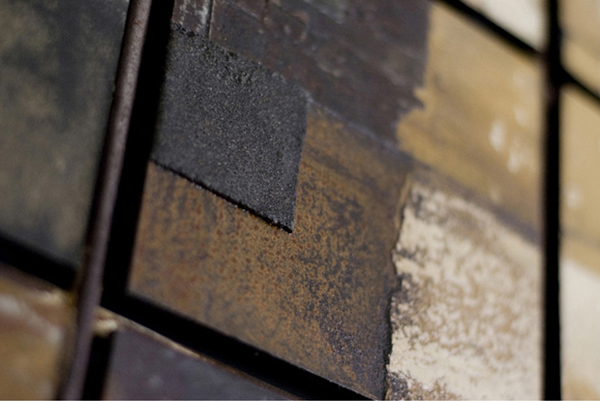
Steve MoreRemi/RoughSteve MoreRemi/RoughSteve More
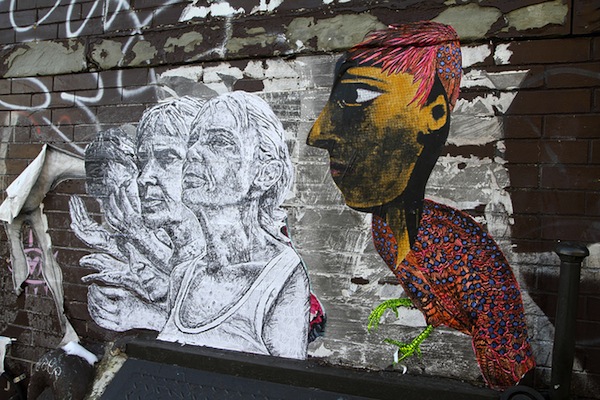
Looks like Judith Supine has been getting up a bit in NYC, which is always nice to see. These aren’t his most complex pieces ever, but I do like how the above piece interacts with its surroundings. It’s also kind of interesting to compare these to his recent indoor work. It seems to me like his street art is looking a bit more DIY while the gallery work is getting more refined (and I don’t just mean the super glossy coating on his canvases).