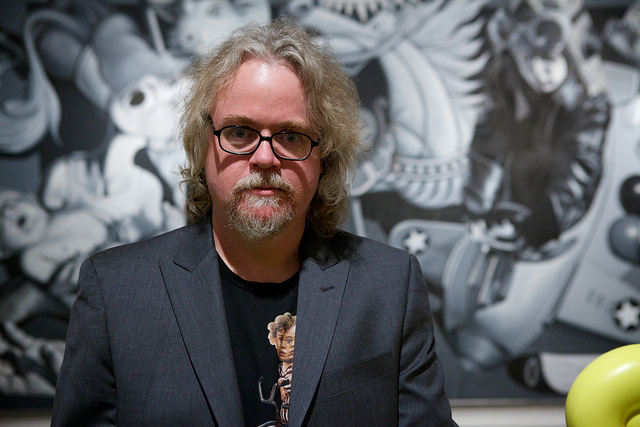
RJ Rushmore has been involved in contemporary art as a writer, curator, photographer, arts administrator, and fan since 2008. With a focus on street art, graffiti, and public art, RJ facilitates and promotes catalytic and ambitious art outdoors, in galleries, and online. He founded the street art blog Vandalog and has worked at The L.I.S.A. Project NYC, Mural Arts Philadelphia, and Creative Time. Currently, RJ is Co-Curator of Art in Ad Places.
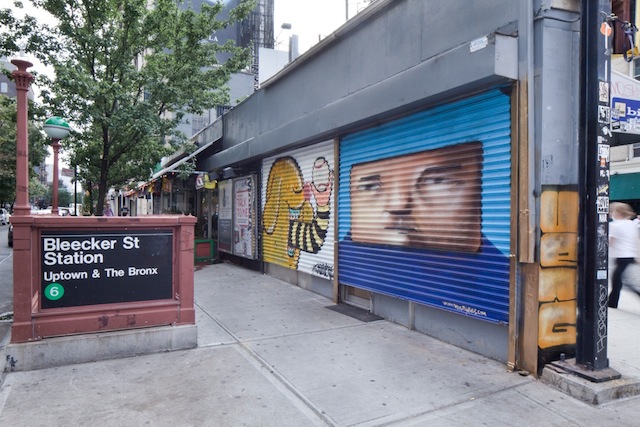
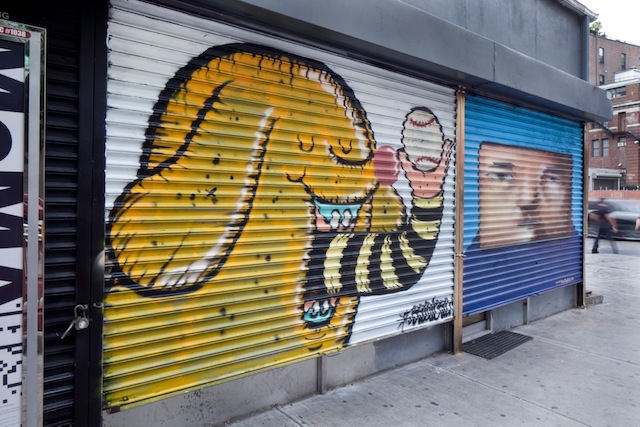
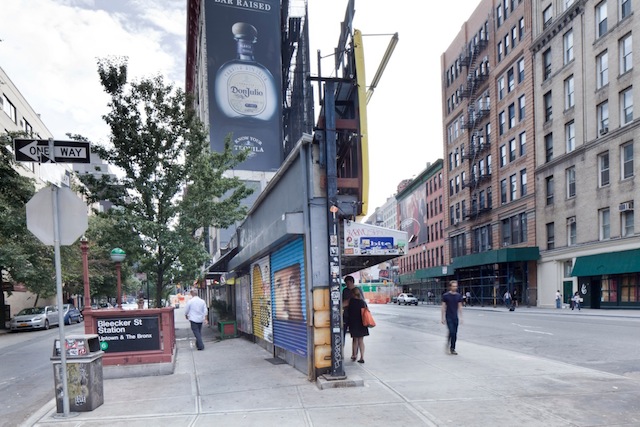
Here’s the latest spot organized by Murals around New York/MaNY. As you can see, it’s in NoHo in NYC, right by the entrance to Bleecker Street Station. The gate on the left was painted by Radical, and the gate on the right was painted by Veng.
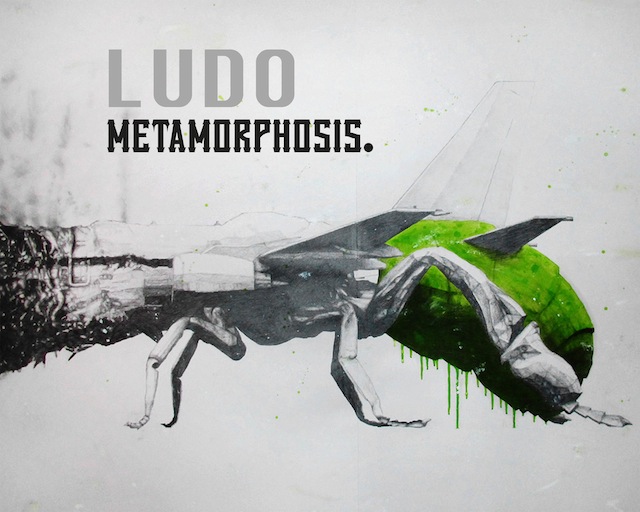
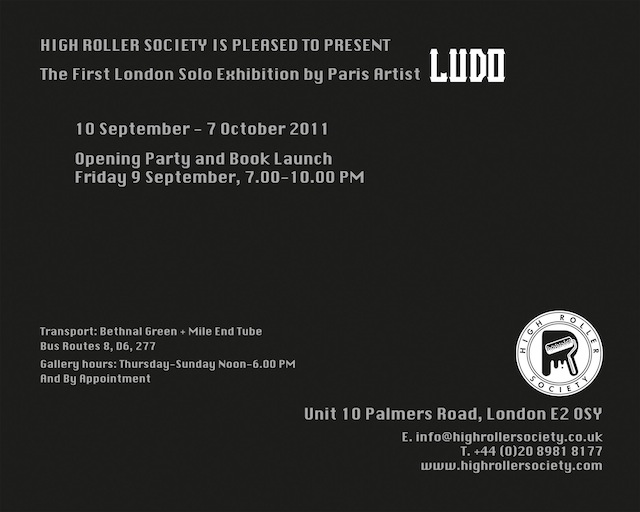
This Friday, Metamorphosis opens at High Roller Society in London. It will be Ludo‘s first solo show in London, and certainly something his fans (like me) have been looking forward to for quite a while. I’ve been a fan of his Nature’s Revenge series for at least two years, but rarely have I seen what Ludo is capable of when he moves indoors. The work in this show includes, in addition to prints and drawings, some of Ludo’s sculptures, which might just be the most underrated things he makes. The opening for Metamorphosis doubles as a book launch for a Ludo book, Opus #23, with an introduction by Marc and Sara Schiller of Wooster Collective.
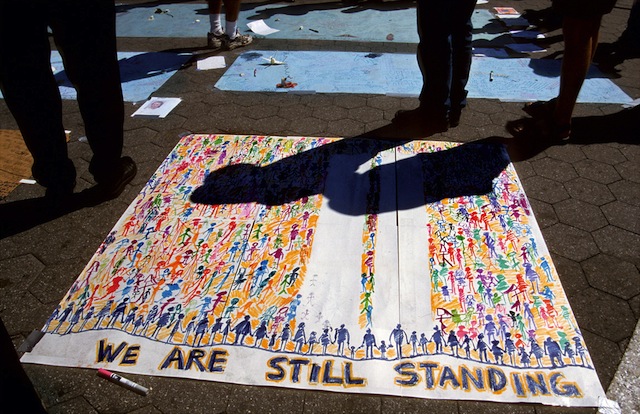
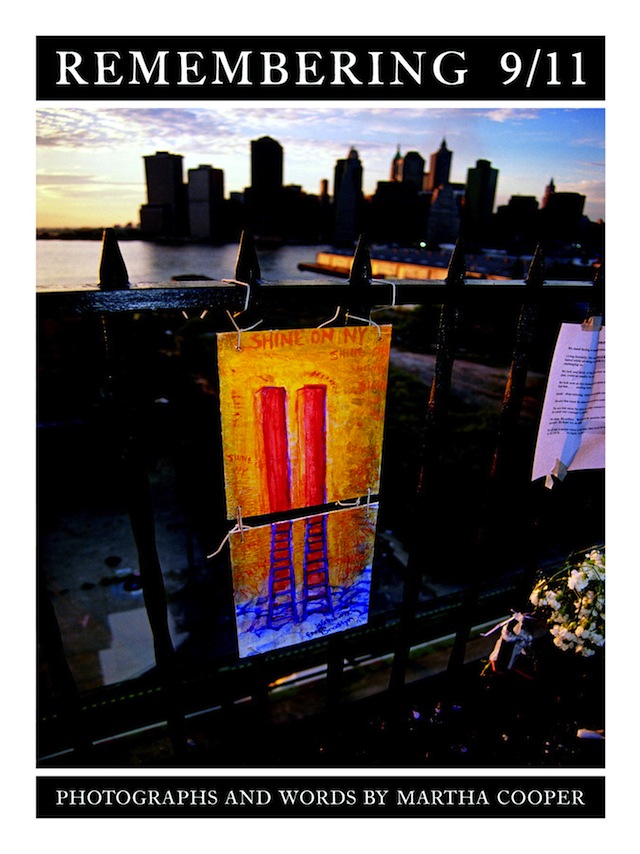
Martha Cooper‘s latest book is, on the surface, a bit different from what she’s best known for, but really it’s not so strange at all. Continuing with Martha Cooper’s tradition of capturing authentic and unorganized expressions of creativity, Remembering 9/11 is a book of photographs that Martha took of the street memorials that popped up around New York after 9/11. In addition to the paperback version, Remembering 9/11 is also available on iTunes as an ebook (which means you can read it on an iPhone, iPad or iPod). Most days, the ebook will be available for $5.99, but on September 11th, it will be downloadable on iTunes for free. In addition to photos, there is also an essay by Martha Cooper.
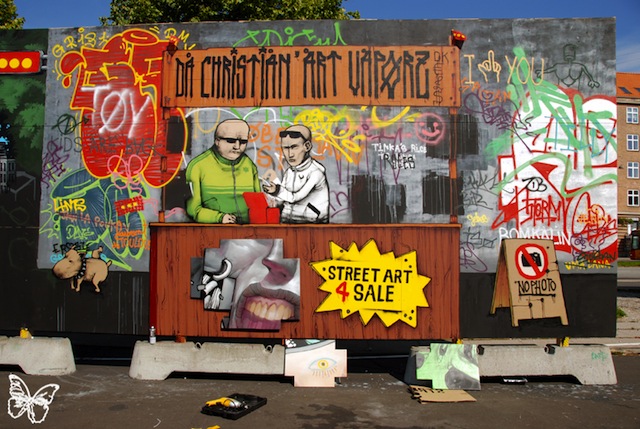
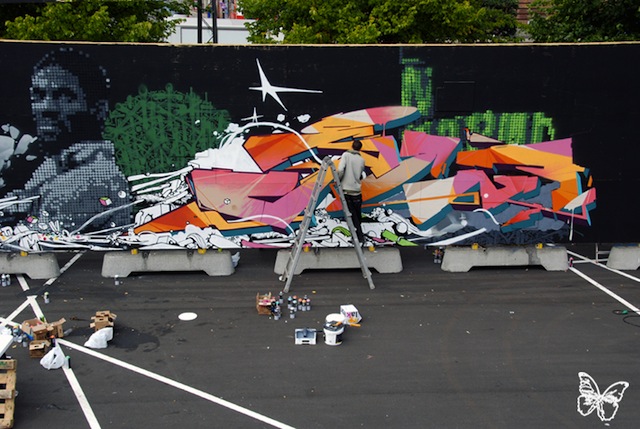
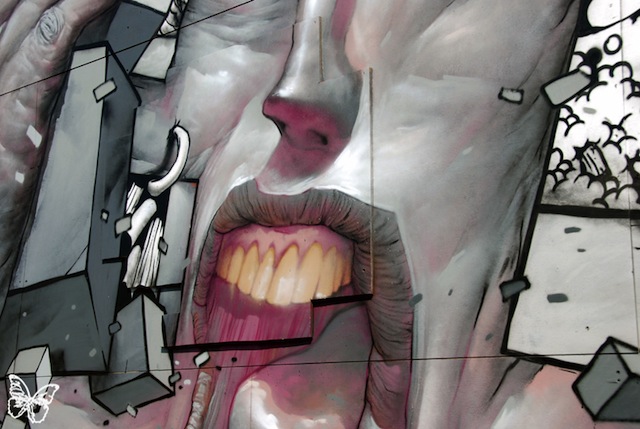
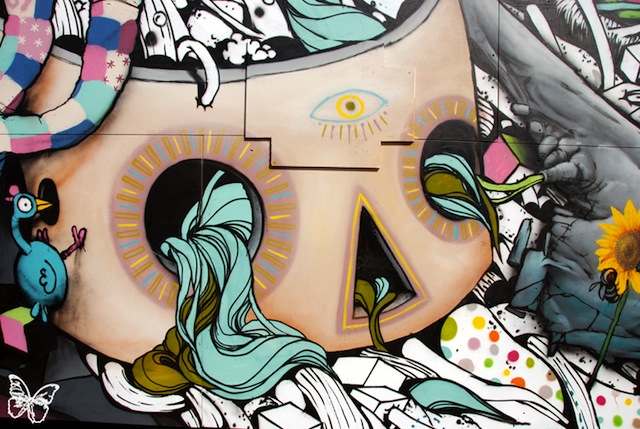
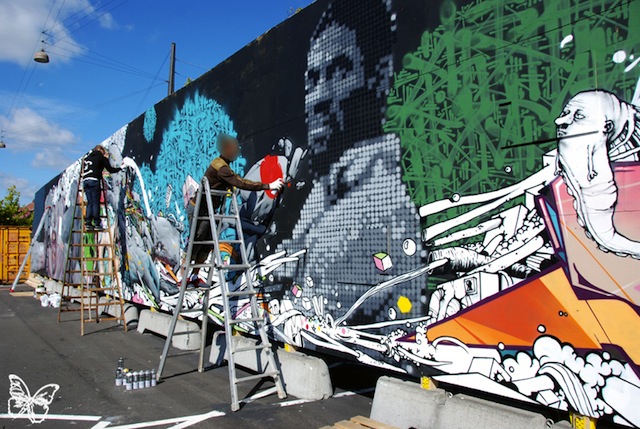
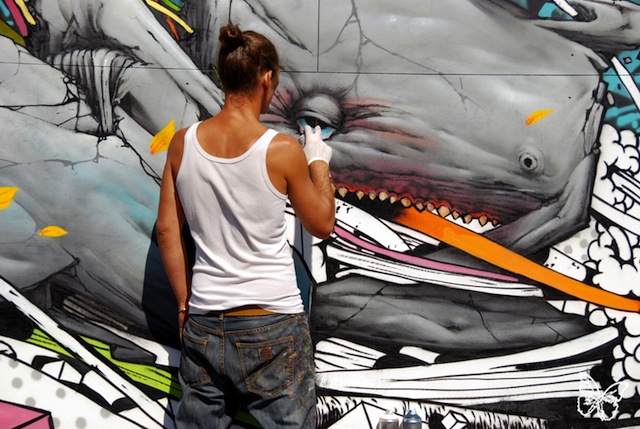
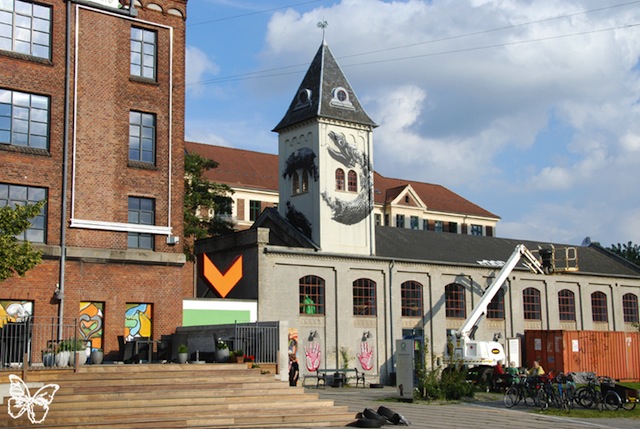
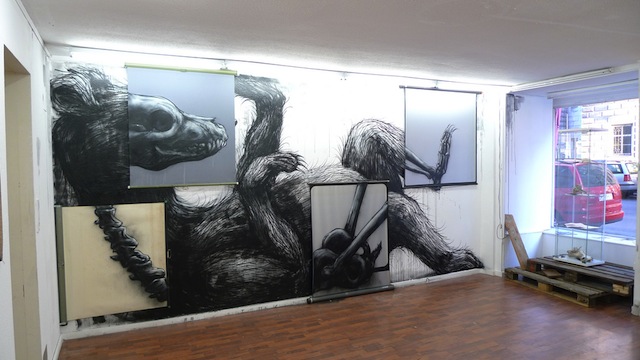
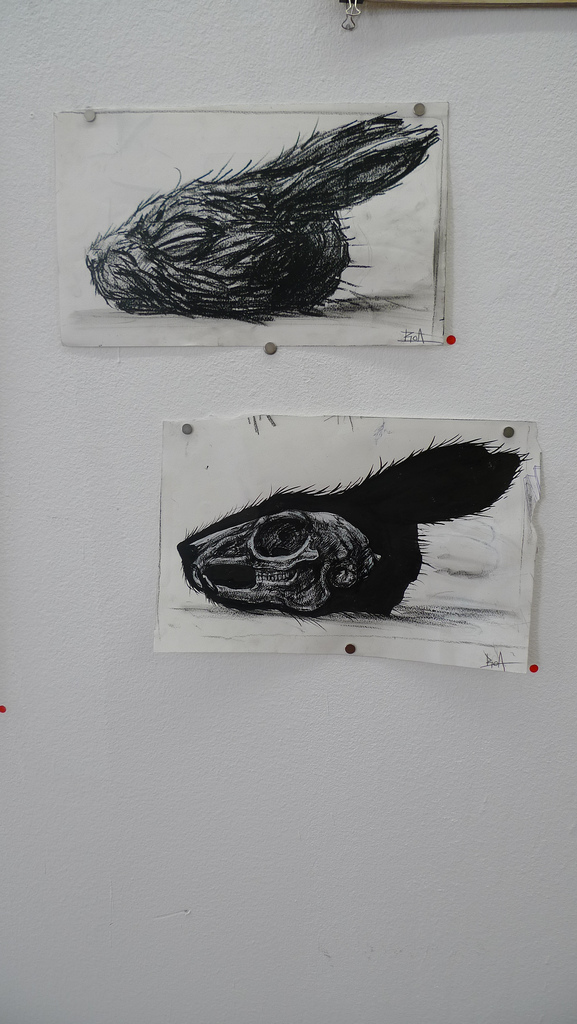
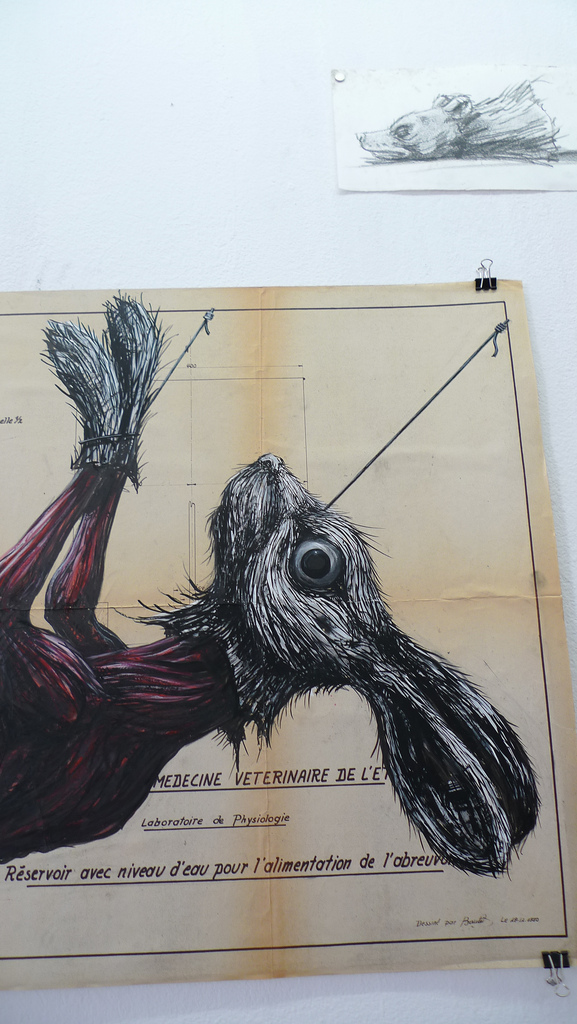
As we mentioned the other day, Roa and the French Da Mental Vaporz crew (Blo, Bom.k, Brusk, Dran, Gris, Jaw, Kan, Sowat), as well as others, were recently in Copenhagen painting for the Galore Festival. Here are some photos of the festival by S.Butterfly, mostly of DMV’s wall. You can find more pictures from her on flickr or her blog.
First though, this is a video by S.Butterfly of DMV working on their mural…
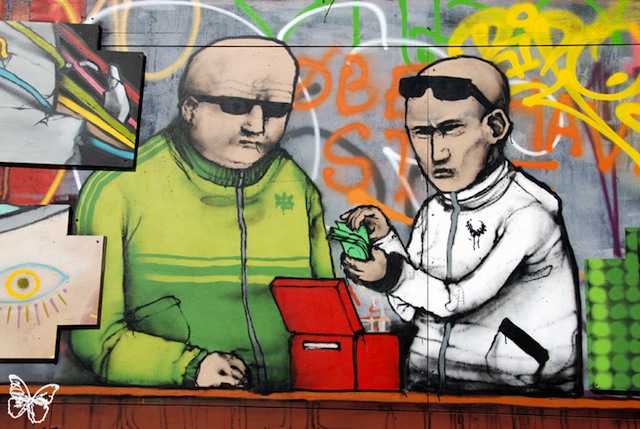
There’s actually an interesting story behind the mural. S.Butterfly explains, “The mural is a satyrical reference to unscrupulous people who are willing to deface street art walls for profit. The DMV also incorporated a tribute to Kase 2 (RIP), as well as Copenhagen landmarks, including the infamous Christiania market, where you can find anything.” So the crew painted segments of the mural on removable panels, which they then moved to the end of wall and hung next to the “street art shop” (pictured above and below). In place of those panels, they painted windows to other places, as if the wall itself had actually been removed.
This documentary about street art in Buenos Aires, Argentina gives a great sense of the scene, the people and the culture that make up their street art community. It includes interviews with a number of Argentinian artists, including Jaz and Ever. I liked the video, but if that description doesn’t sound like your thing, just skip ahead to 10 minutes in, because the story of José Carlos Martinat Mendoza’s time in Argentina is one that you definitely have to hear.
Thanks to Endless Canvas for turning us on to this story.
It seems that police pressure in Portland has resulted in The Railyard gallery being evicted from their location. The Railyard opened earlier this summer with an installation-based show where dozens of artists (including Swampy, Feral Child and Gats) painted on the walls of the space. Portland police claim that the gallery is responsible, through that show, for bringing artists to Portland who then painted street art and graffiti illegally while they were in town. On the one hand, this whole thing is ridiculous: The Railyard is not responsible for what artists do in their spare time, and the work that The Railyard is responsible for was painted legally (and looks pretty good too). On the other hand, I’m surprised that more police around the world don’t try this tactic. Probably because a. it’s a difficult case to prove and b. it makes the police look like uncultured jerks. Shutting down art galleries isn’t exactly a popular move. Although in this case, it sounds like the police just used intimidation rather than actually pressing charges, so there’s really nothing that would have to be proven in court.
Get the full details on this series of events here and here.
Best of luck to The Railyard. Hopefully they can move to a new space where the police will leave them alone.
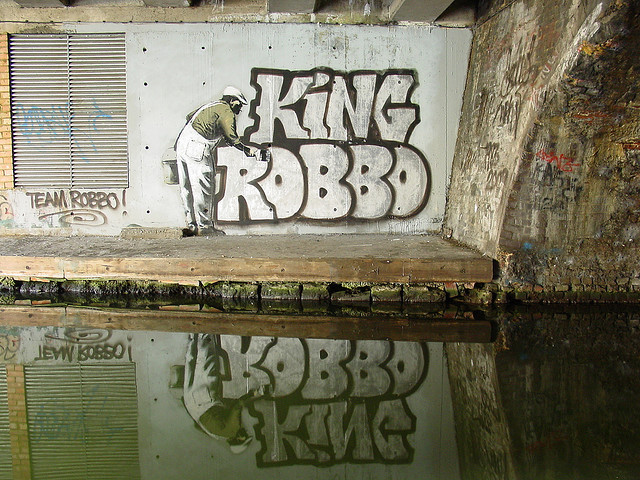
According to The Guardian, Banksy‘s got a little problem with Channel 4’s Graffiti Wars documentary about Robbo and the Banksy versus Robbo feud. Rather than taking it to the street like you might expect when a street artist has a problem with the government or mass media, Banksy has sent a formal letter of complaint to Channel 4 and demanded an investigation. Among other concerns, Banksy is particularly upset that, in his opinion, the end of the documentary implies that Banksy was responsible for putting Robbo in a coma. To be clear, Banksy was not responsible for Robbo’s injury. Check out more details of Banksy’s complaints over at The Guardian.
Speaking of Robbo, a fundraiser for him took place today at Cargo in London. We hope it was a success.
An interview with Ron English has revealed a number of new twists in the stories of Banksy/Shepard Fairey/Mr. Brainwash/Exit Through the Gift Shop, as well as confirmed some major long-time rumors. Read Ron’s words in full over here, but here’s a summary:
Thierry Guetta/Mr. Brainwash is a real guy and he’s really like how Exit portrays him. He’s not some actor hired by Banksy or whatever else people have claimed.
Even before becoming Mr. Brainwash, Thierry was pretty wealthy and he owned a bunch of property in LA. That was his big “in” to connect with street artists: He could offer them the best walls to paint legally.
Exit Through the Gift Shop came out of Banksy’s intervention in a lawsuit between Shepard and Thierry over Thierry essentially holding hostage all these tapes that Shepard and Banksy wanted access to.
Euth, a street artist, sued Green Day for appropriating one of his images in background graphics for their live show. That lawsuit has been dismissed. Melrose&Fairfax seems to lean towards agreeing with Euth on this one, but while Green Day might have been in an ethical grey area by not compensating Euth, they were undoubtedly legally in the right, and on the whole, that’s a good thing. No idea is 100% original and appropriation is appropriate. As M&F point out in this post, a lot of street artists base their work on appropriation.
A guy in the Hamptons is selling a bunch of Banksy pieces that were ripped out of walls from around the world. Gawker has some explanation of what happened. Of course the work is all unauthenticated and the morals of the whole situation are pretty sketchy.