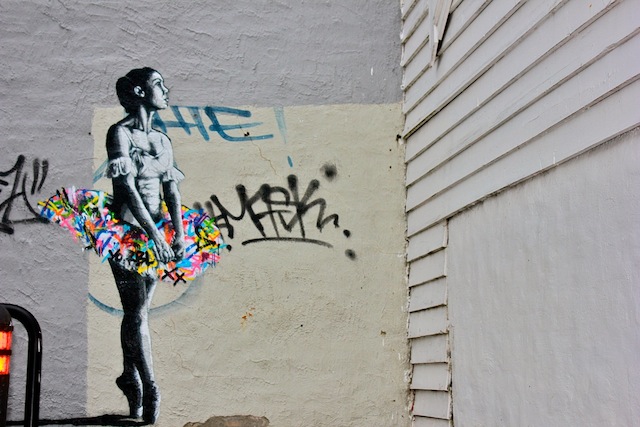
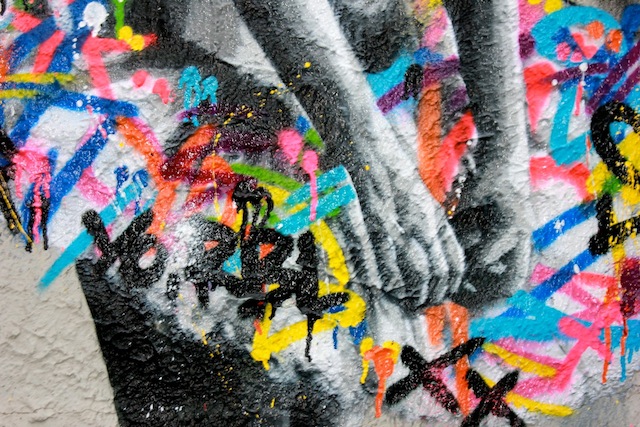
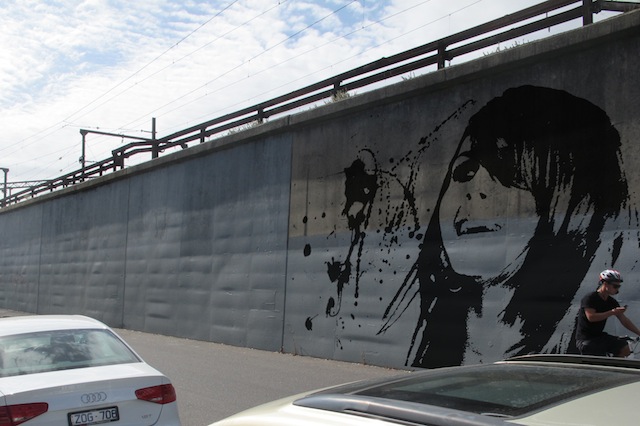
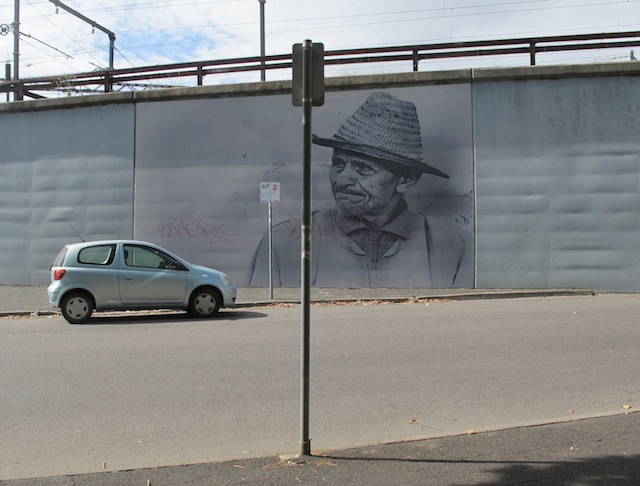
Norwegian artist Martin Whatson just painted these two pieces in Stavanger, Norway to coincide with his solo show at Reed Projects. Martyn Reed, of Reed Projects and Nuart, describes Martin’s work in a way that I really love: “Having seen street art dogged, tagged and generally disabused, Martin Whatson gets in ahead of the crowd by tagging his own stencils to bits.”
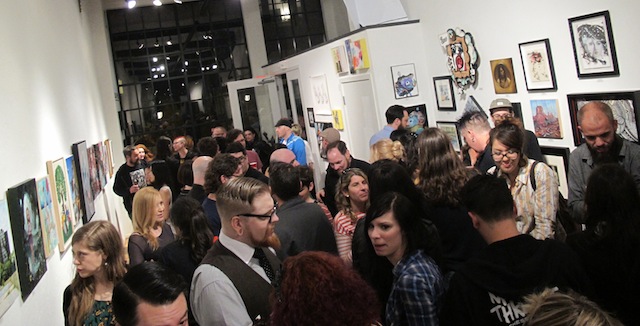
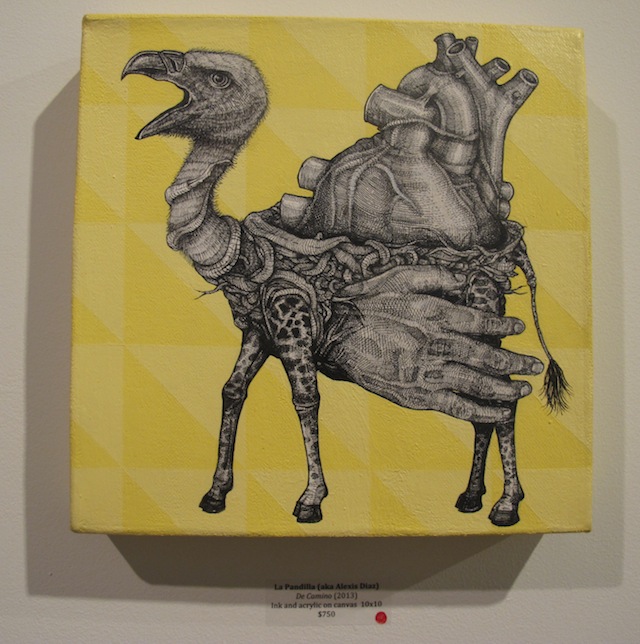
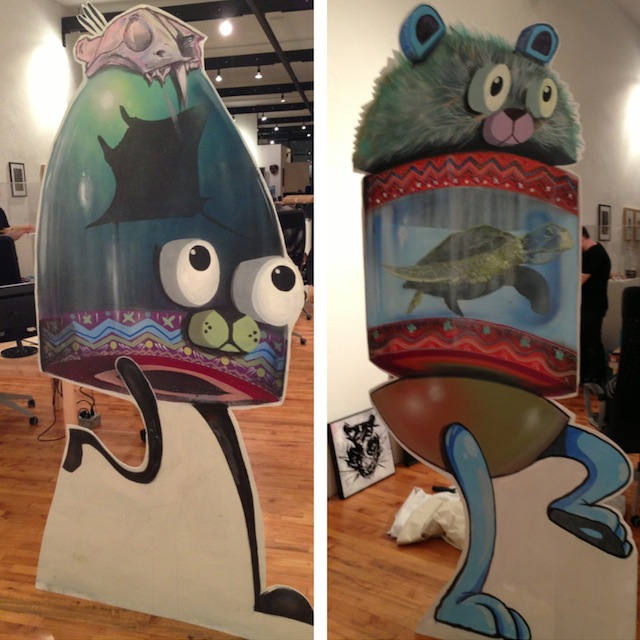
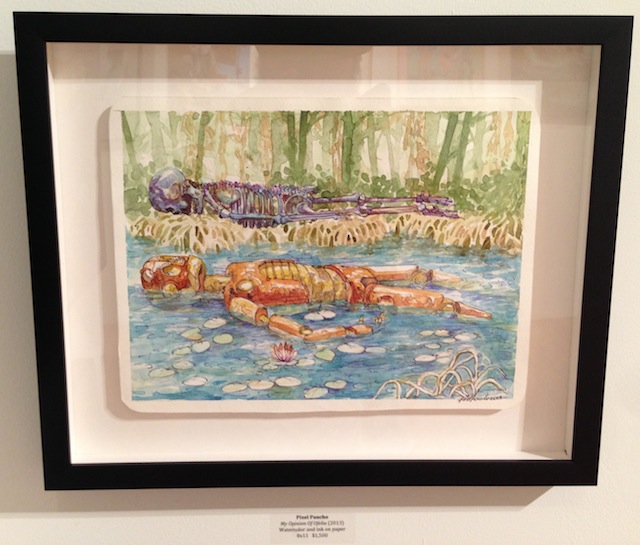
LA’s Thinkspace Gallery was just in Philadelphia guest-curating a show at Gallery 309. Looks like the opening was absolutely packed, and with good reason. The show, LAX/PHL, includes installation from NoseGo and work by La Pandilla, Pixelpancho and many more. It’s open now through June 21st. I can’t wait to stop by myself as soon as I finish my exams.
A note from the editor: This is a guest post by Australian street artist CDH. Although I personally disagree with some of the conclusions CDH reaches in this post, I think it may be the start of a debate well-worth having, and it’s one that connects closely to my upcoming book, Viral Art. – RJ
Street art is primarily consumed as digital images online, rather than as paintings on walls in the physical world. Juggernaut sites like Street Art Utopia pump out new images each day to their million plus audience. Street art fans are likely to subscribe to multiple sites and so this audience encounters far more street art online, than on the streets. The street art fades away but the digital images live on, which makes them the primary cultural product that we engage with.
In many ways it’s very positive; I can view global works from locations I may never visit, or the works may be gone by the time I do visit. It’s also just more efficient; I don’t need to travel all over my city to view the latest works, I can just check out the Melbourne Street Art page. There are many other consequences of online consumption to the street art medium that I don’t intend to investigate here. I’m primarily interested in exploring two consequences of online consumption:
Audacity: Before the internet, placing works in a high traffic location was the only way to ensure a large audience (of generally passive observers). Today a work can be painted in any back alley, photographed and shared online with a huge audience of active consumers. Contextual spatial elements like the police station around the corner and the legality of the work are typically discarded online. So connecting with the audience doesn’t implicitly demand the same personal risk.
Lifespan: Digital images of street art bounce around the internet long after the original work has been buffed into oblivion. In Melbourne, the limited legal spaces make it common to see writers paint a piece, photograph it and buff it immediately for their mate to use the space. The works exist in the physical world for just a few minutes, but live on indefinitely online. They’re made for online consumption.
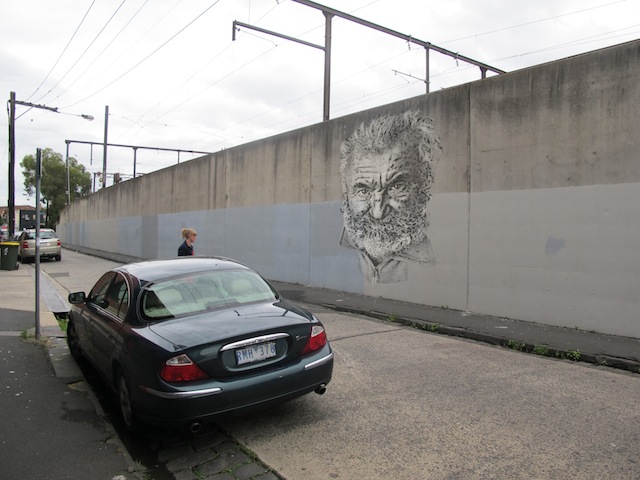
Online dissemination has generally diminished the audacity and the physical-world lifespan of street art. In the experiment here, I will take these 2 elements to their logical minimum and reduce them to zero. I have created street artworks that require no audacity and have no physical-world lifespan. I do this by photoshopping street art images into photographs of physical locations. Ultimately if we primarily engage with street art online and the digital image has effectively become the art (rather than the physical object), why not make this cultural production more efficient? This just cuts out the laborious middle step of painting a physical object, to then photograph, to then share online.
Results:
This image utilizes a portion of a photograph by sultan-alghamdi
Interpretation:
This is an art experiment, so we should examine these images honestly. My interpretation is this: I think this is an interesting idea but ultimately I think these works are really just a bit shit. If the images were printed out, framed and hung in a gallery it would feel completely in place. But on a street art blog it feels out of place. It seems dishonest. An unspoken rule of street art has been cheated- it’s not on the actual street anymore, so can it even be street art? We had a similar debate in the early 2000s, when street art first transitioned into the gallery system; it’s a weird limbo space outside of what’s really street art. Perhaps it can be called ‘street inspired art’, like the gallery street art was originally described. The term ‘street art’ again appears amorphous and manipulable.
This experiment also draws attention to the idea that street art is really something halfway between art and mountain climbing. These photoshopped street art images are like photoshopping yourself into a picture at the top of Mt. Everest; the real point is that you climbed the mountain, not that you got a photo. Street art is less about the image and more about the task of creating the image. The street art audience is continually fascinated with large scale works. It seems absurd that artistic merit could be proportionate to the scale of a work, but when interpreted through the prism of the ‘audacity and the task’, it seems perfectly reasonable. Perhaps it’s why street art is closely tied to cultures that are intertwined with physicality, like skateboarding or parkour.
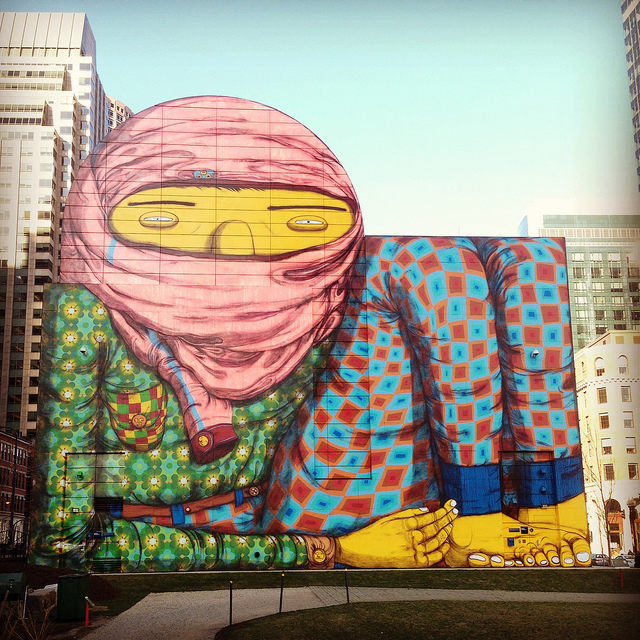
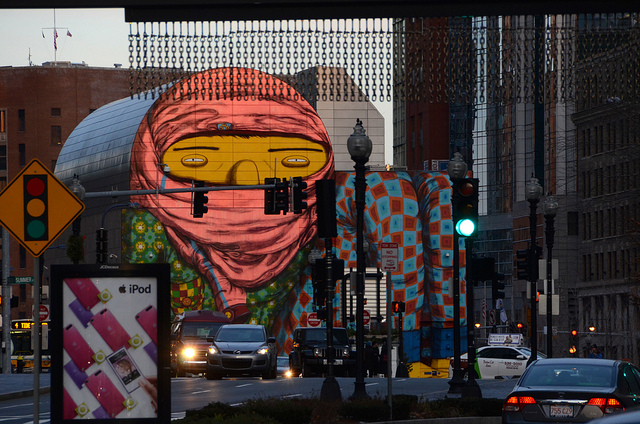
What are we actually engaging with when we view street art images online? We’re consuming a digital facsimile of a street work, not the actual street art in its original psychogeographical location. People sometimes falsely believe the photograph is an objective representation of truth. In reality the photographer’s eye subjectively selects images to present. Those images are then open to the same forms of manipulation as the photoshopped images above: Perspectives are forced; contrast and lighting can be adjusted in Photoshop; colours can be enhanced; the photograph might be taken from a crane or an angle that is inaccessible to a viewer in physical reality. So who is really the author of the online content we consume? Is it the street artist, the photographer or a convolution of the two? This photographic subjectivity and influence become even more noticeable when images of the same artwork by different photographers are compared side by side; sometimes they look like completely different artworks. With the online dissemination of the digital image, where exactly does street art end and digital art begin? Perhaps it’s tied up in abstract elements like the intent of the photographer or the place of exhibition.
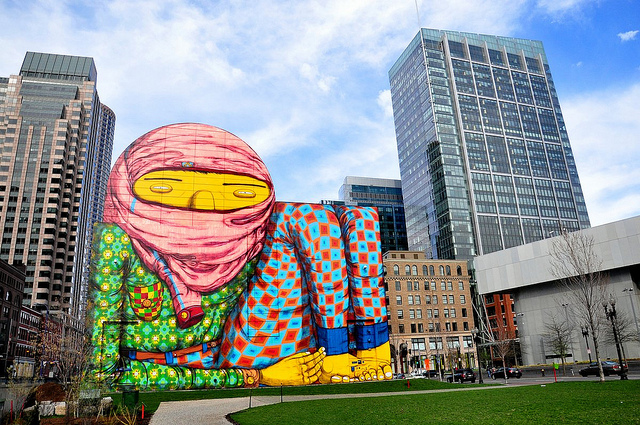
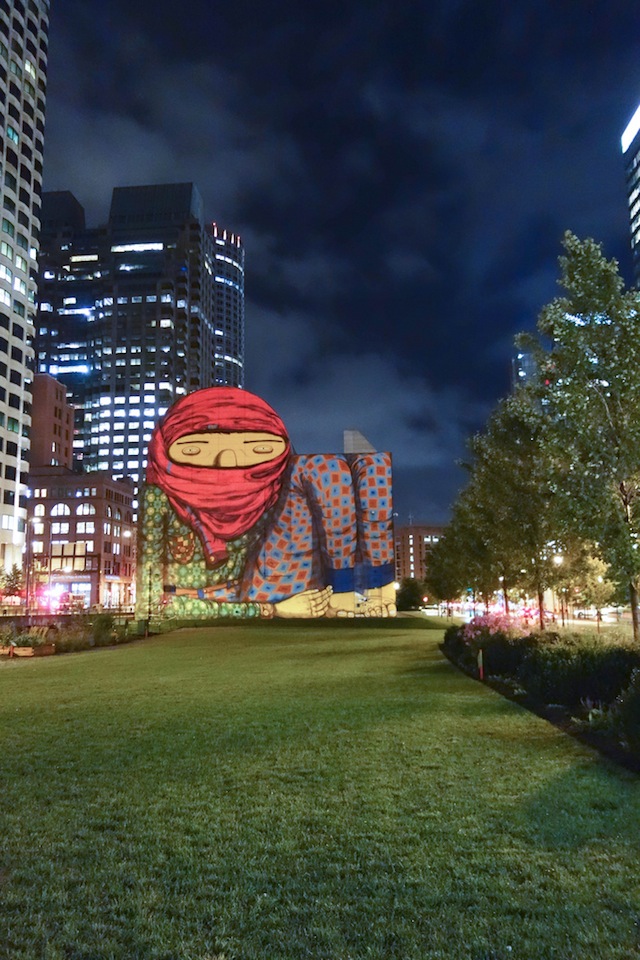
“The Giant” by Os Gêmeos. Photo by RJ Rushmore.Photo by Nate DorrPhoto by AnubisAbyssPhoto by Dylan Pech
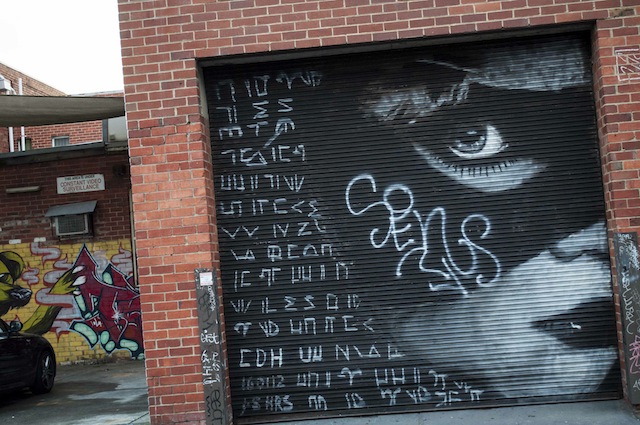
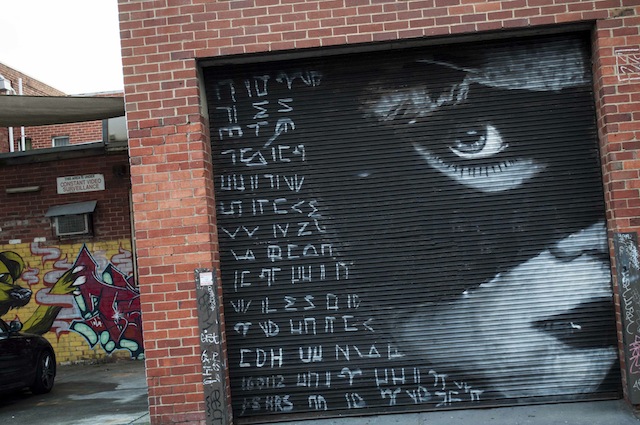
Post-Script: Coincidentally, after submitting this article, thesephotos, which depict one of my pieces, appeared on the Melbourne Street Art Facebook page. The tagging has been photoshopped out of the original image by the photographer. Random experiences like this never cease to amaze me in street art. On a personal level, it’s flattering that someone has taken the time to digitally restore the work but it also demonstrates that the digital image is not an objective record of reality. Similar to a restoration, the photographer constructs their interpretation of my original intention, not the work as it exists today. What if I tagged the work or intended for it to be tagged? Like a photoshopped image of a girl in a magazine, this photograph represents a mutable, aspirational reality. The photographer and I become collaborators in the construction of a new cultural artifact, that is consumed by the online audience but only exists in a digital realm.
Before photoshop. Photo by Melbourne Street Art.After photoshop. Photo by Melbourne Street Art.
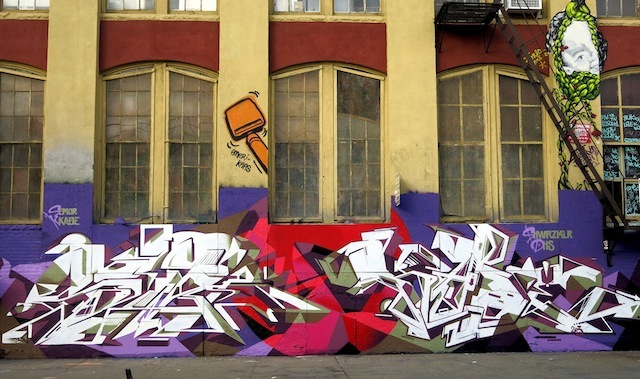
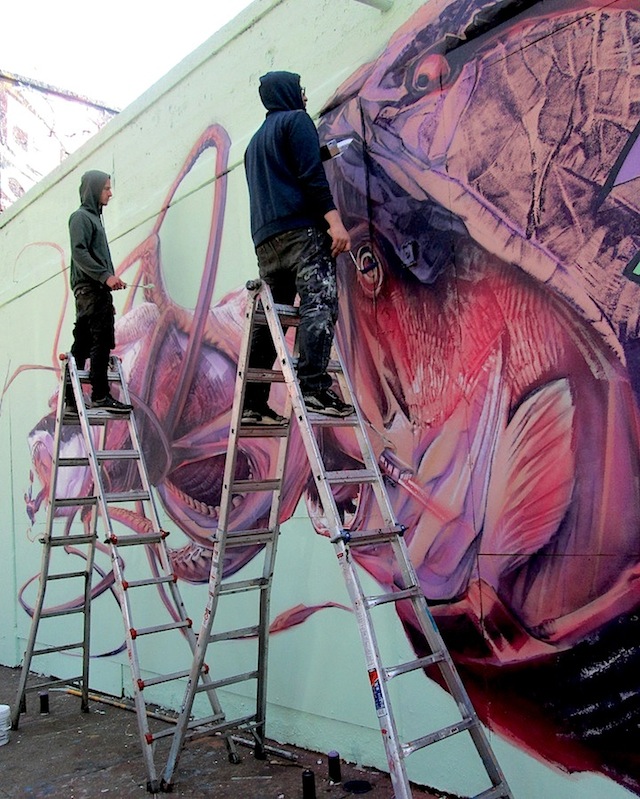
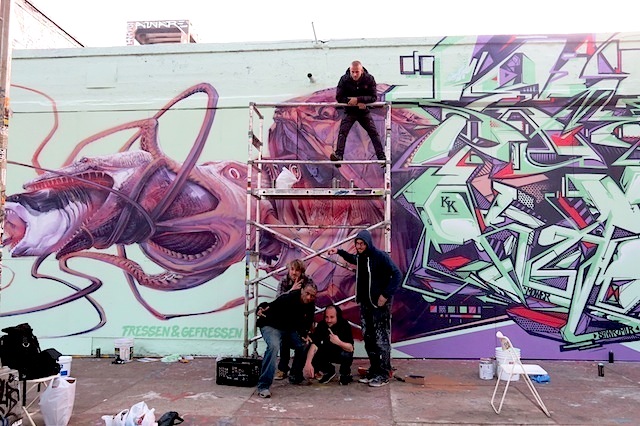
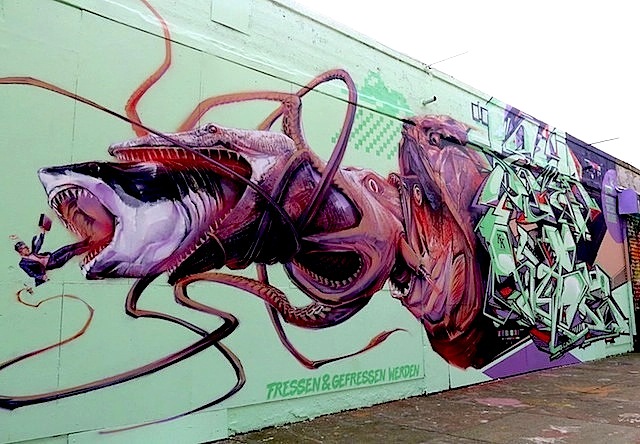
German graffiti master Semor — who had painted at 5Pointzlast year — returned to NYC earlier this month with three amazingly talented Swiss artists: Onur, Wes21 and Kkade. A standout is the mural — fusing elements of surrealism, photorealism and graffiti — that the four fashioned together.
Wes 21 and Onur at workPosing with Meres (second to left), 5Pointz founder and curatorThe completed mural
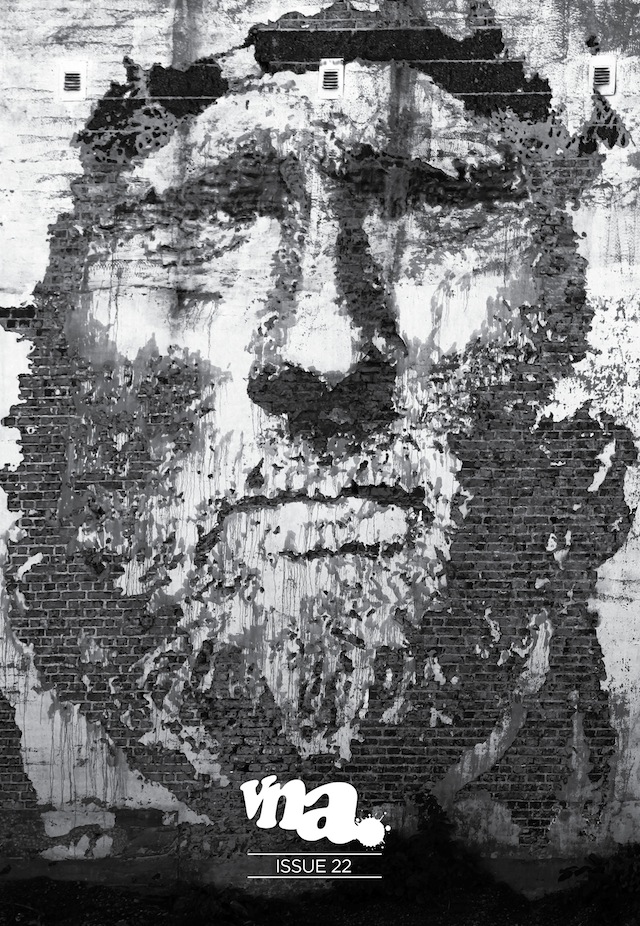
Longtime readers will know that I am a big fan of Very Nearly Almost, a British art magazine for street art, graffiti, illustration and the like. Their latest issue has been a very welcome reprieve for me as I’ve turned to it in between writing essays upon essays for my final exams. Issue 22 features interviews with Vhils, Vexta, Cranio, Moneyless, Husk Mit Navn and more.
The Vhils and Husk Mit Navn interviews in particular make this issue worth seeking out. Vhils talks about his early career as a graffiti writer and suggests that he’s still active today, although the work isn’t traceable back to his career as a fine artist or muralist. This certainly isn’t unheard of for street artists who have “gone legit,” but it’s still a bit surprising to hear him talk about it, and about how graffiti still informs his work today. And Husk Mit Navn is an absolutely fantastic and underrated artist (check out some of his work here) who also has a lot to say about how his work is perceived in galleries, on the street, and online. Good stuff.
Although he is interviewed, the one thing this issue doesn’t answer for me is what people see in Cranio’s work. Seems to me like Nunca + Os Gêmeos – awesomeness/originality = Cranio, but people seem to go nuts over it. Is he a really nice guy? Is it just that people are so in love with what Os Gêmeos and Nunca are doing that they’ll accept a substitute when the masters aren’t available? This isn’t one of those times where I’m gonna say a grey wall would be better than Cranio’s work. There’s plenty of street art in the world that’s better than a grey wall but still doesn’t need to be celebrated like it’s the next big thing, and Cranio seems to me to fall into that category. If you have an answer or an opinion, I’d love to read it in the comments. Anyway…
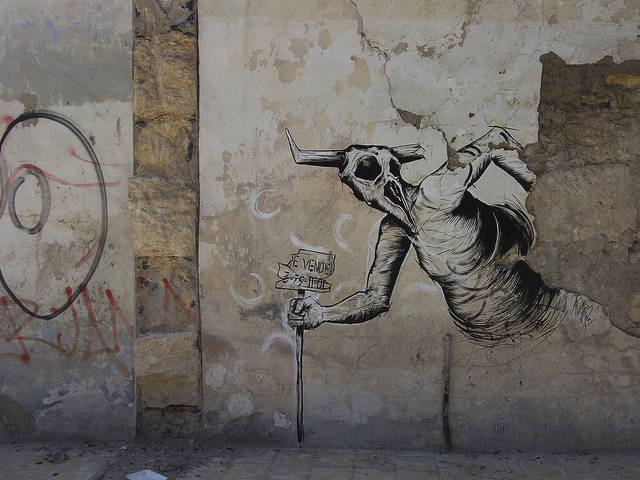
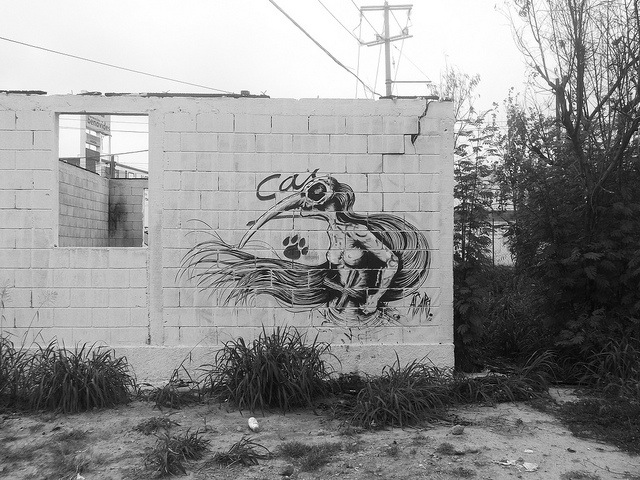
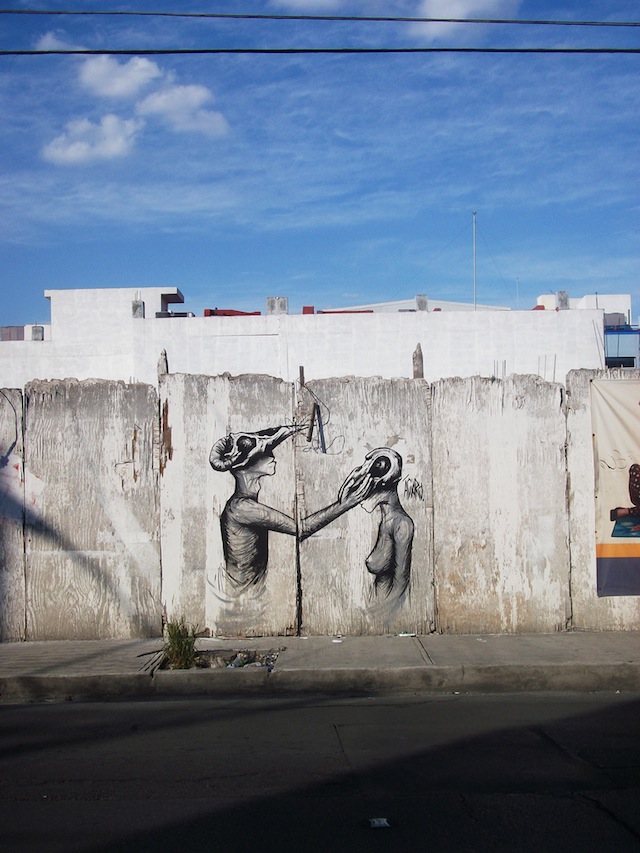
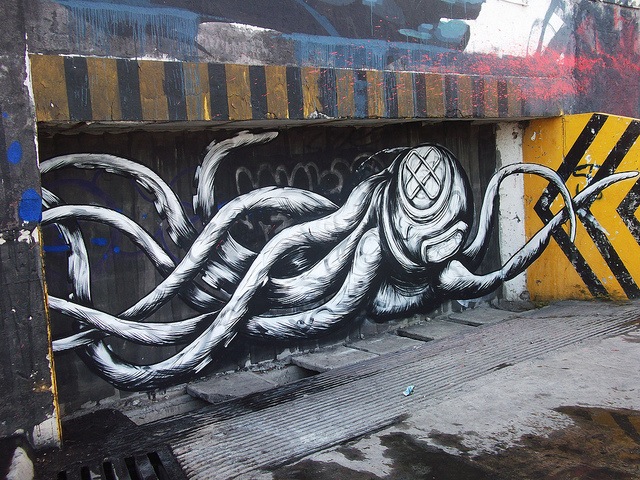
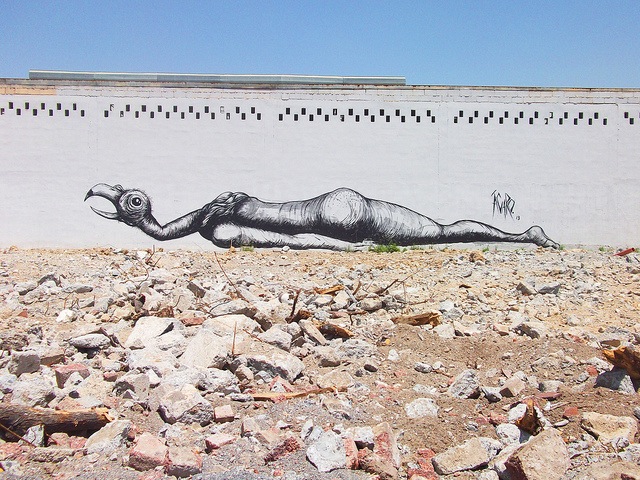
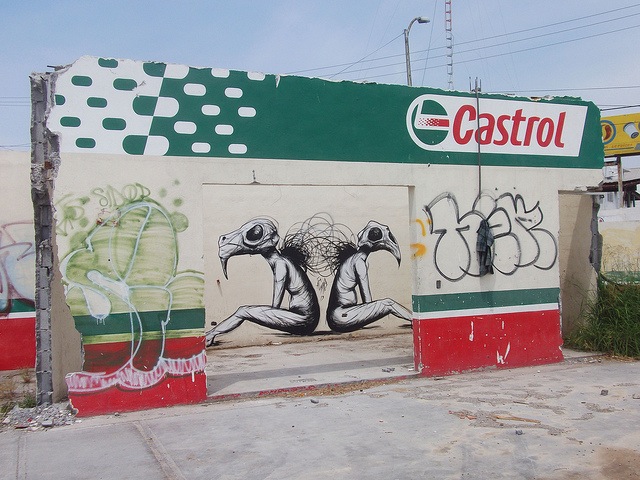
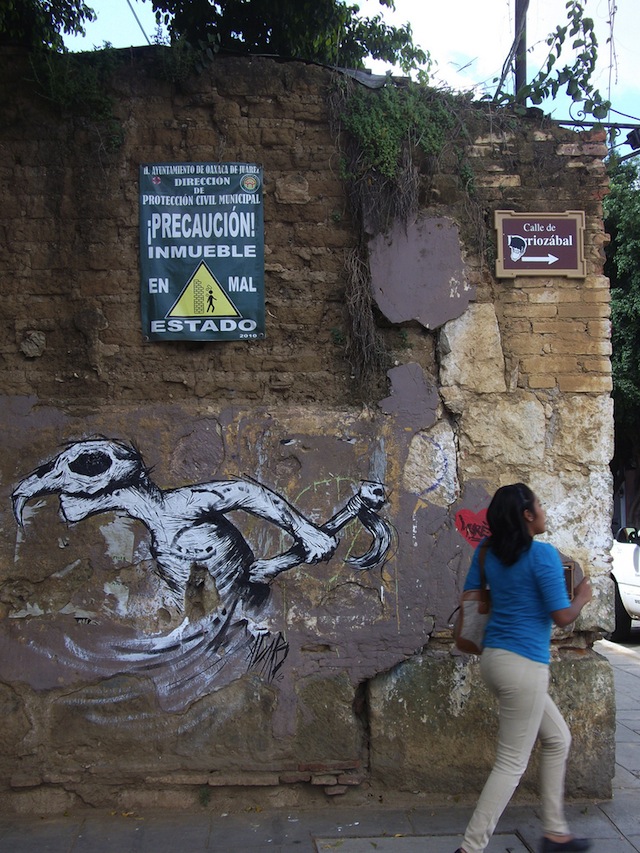
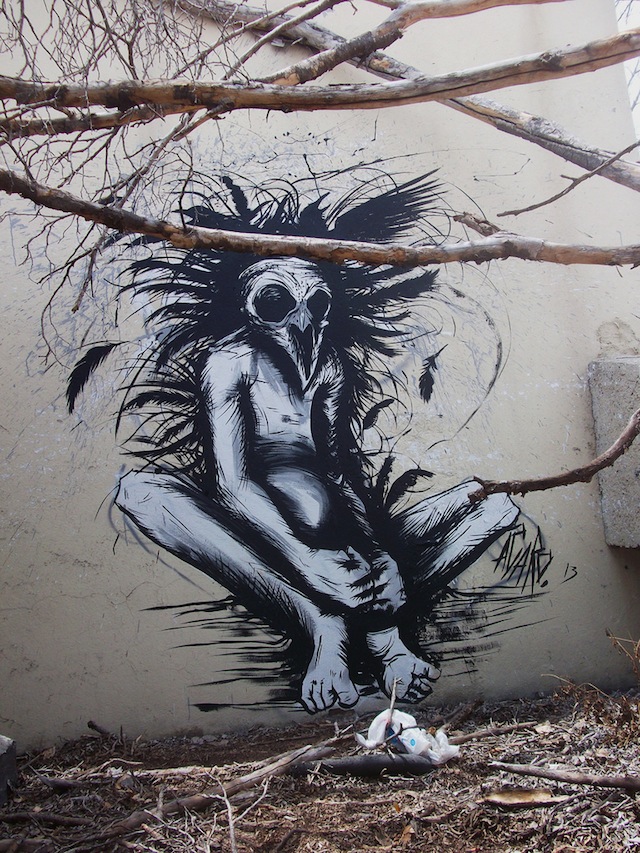
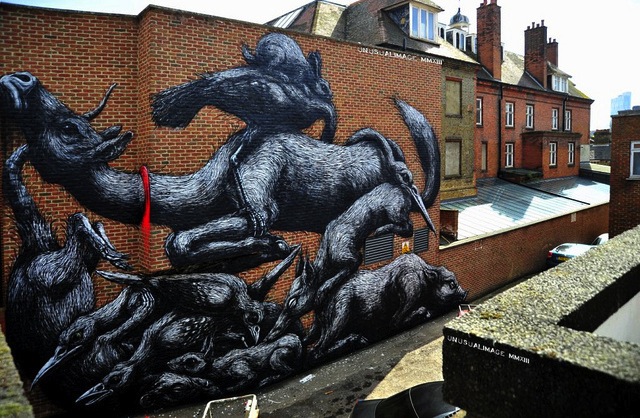
Ácaro is a street artist based in Monterrey, Mexico with a lot of talent and a beautiful black and white style and iconography reminiscent of Roa, Herakut, and Phlegm. Ácaro’s characters really look like they belong where they are painted, and that’s a rare but important skill for a street artist. Can’t wait to see more from them, but here’s some of my favorites from their flickr archives.
This video by Creative Urban Industries and Rowdy features art from Rowdy, one of my favorite British street artists, animated into a short little story about crocodiles in the big city.
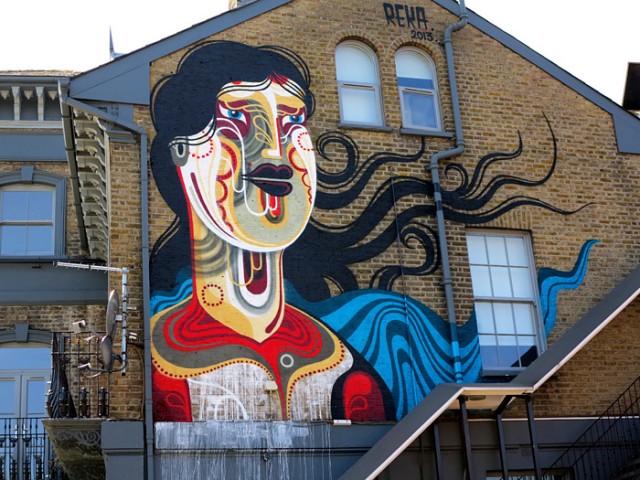
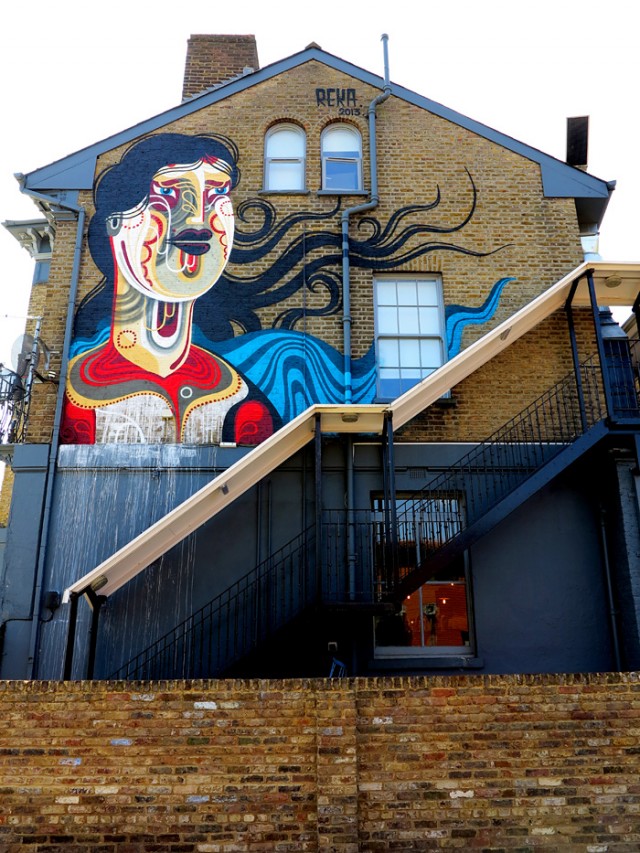
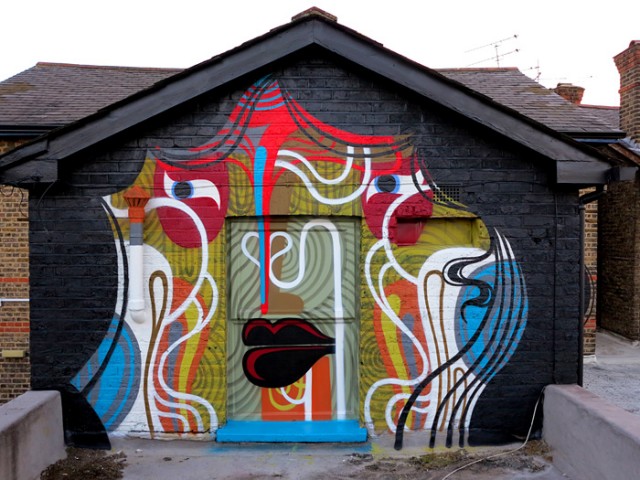
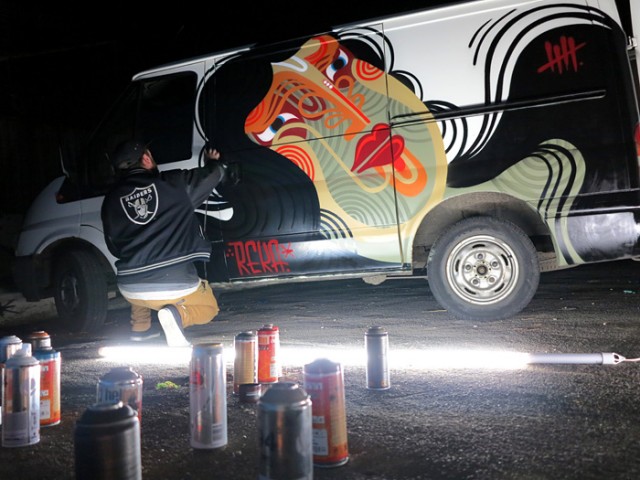
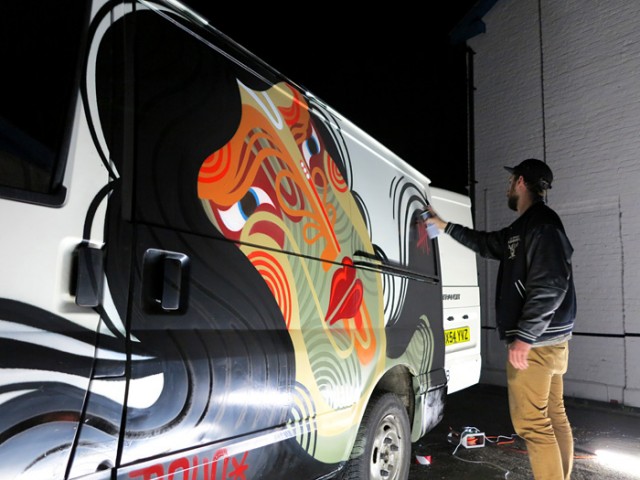
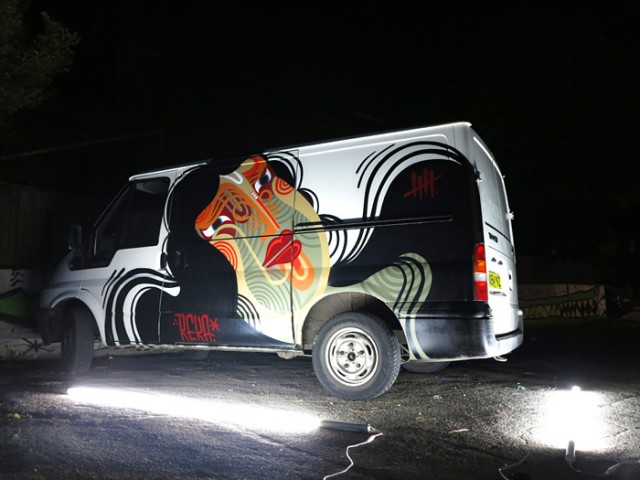
Another update from Reka, this time from London. Reka continues to push his distinctive style around the world, he was recently in London for the Dulwich Art Festival.
From Reka “I was asked to take part in the Dulwich art festival in London this week. Each artist was to base their wall on a painting from the oldest Art museum in UK – The Dulwich Picture Gallery. Other artists taking part included Conor Harrington, ROA, Run, Shok1, Remi Rough and Phlem to name a few. I chose a piece called “The Rape of Europe” An ancient Greek Mythology. More info on the festival check the website.”
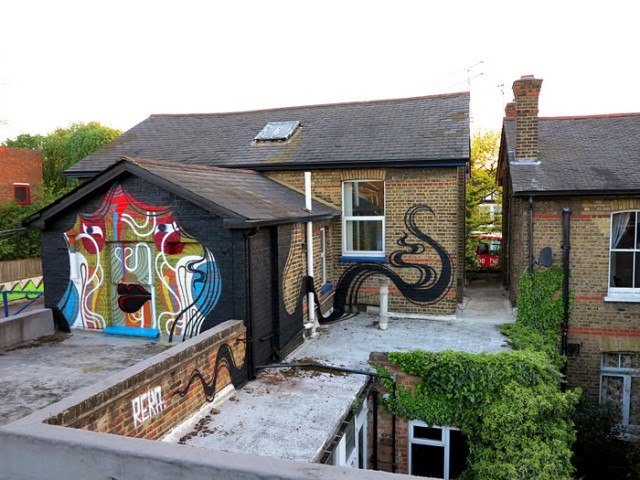
He also painted an abandoned house in South London.
A bit late on this one, but tonight the shop/gallery/bookstore Needles and Pens celebrated 10 years of existence with a huge show at The Luggage Store in San Fransisco including work by Know Hope, Deuce Seven, Pez, and so many other talented artists. Luckily, the show is on through June 8th.
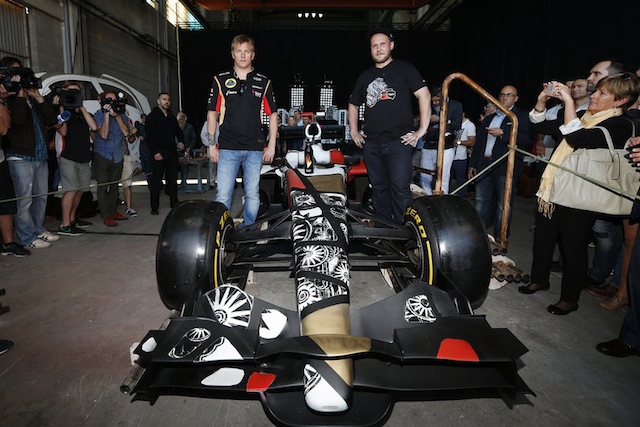
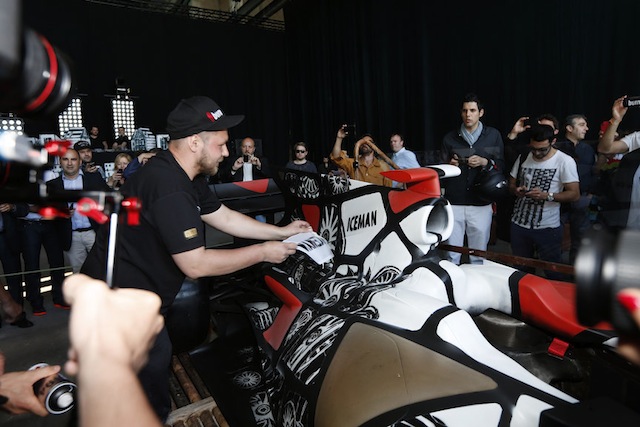
Okay, I’ll admit this is a slightly odd collaboration, but still probably a pretty cool opportunity for M-City and I like the result. Earlier this week, M-City painted a car for the Lotus F1 Team as part of an event for burn, Coca-Cola’s energy drink. Lotus F1 Team driver Kimi Räikkönen even picked up a stencil and spraycan for a little bit. The event took place at burn Yard, a traveling event that will also be headed to Hungary, Korea, Mexico and Brazil. Here’s more from the event: