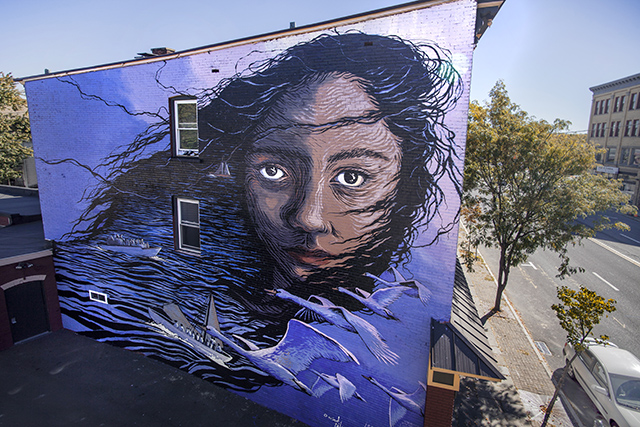
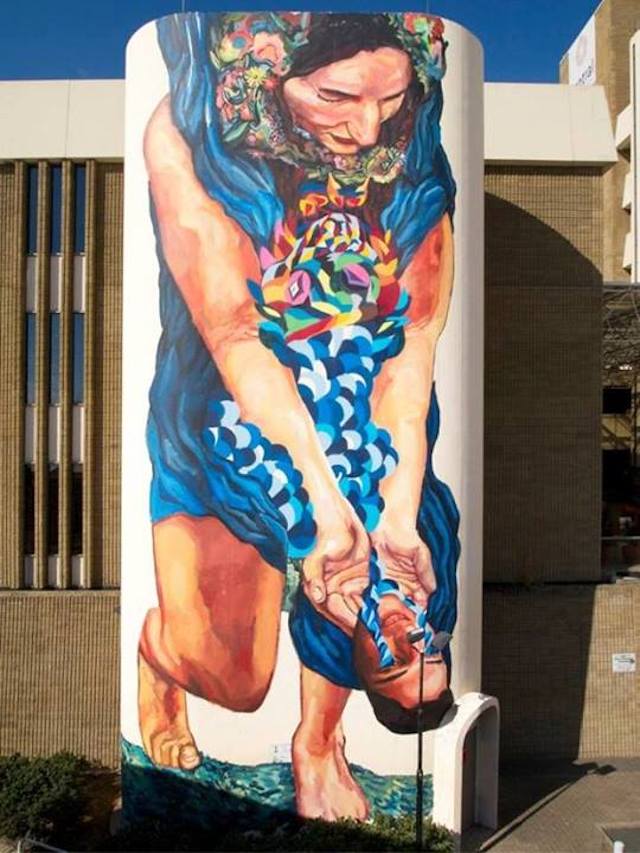
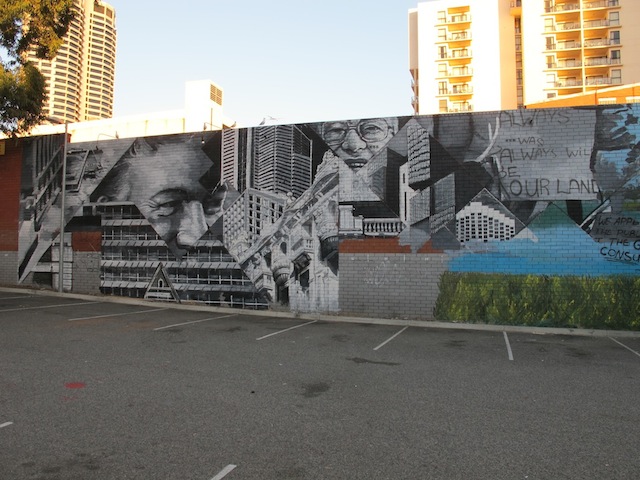
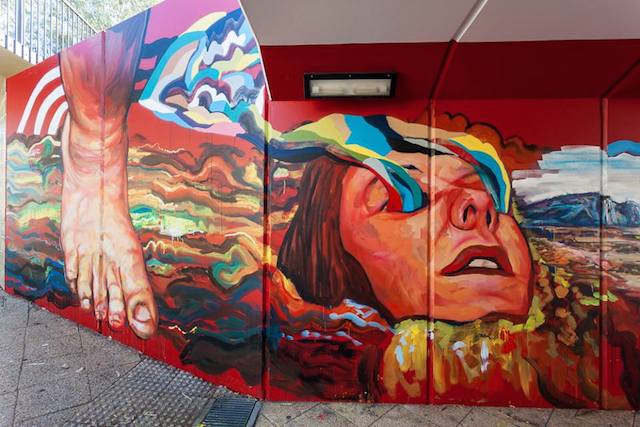
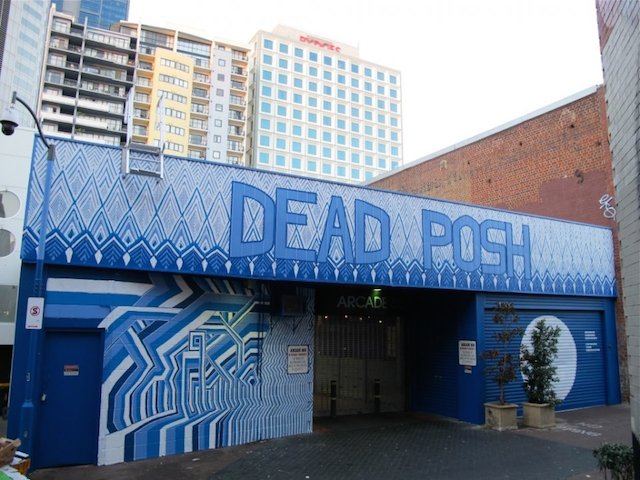
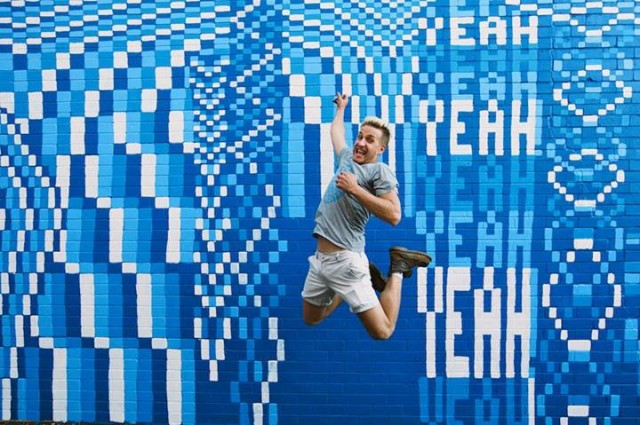
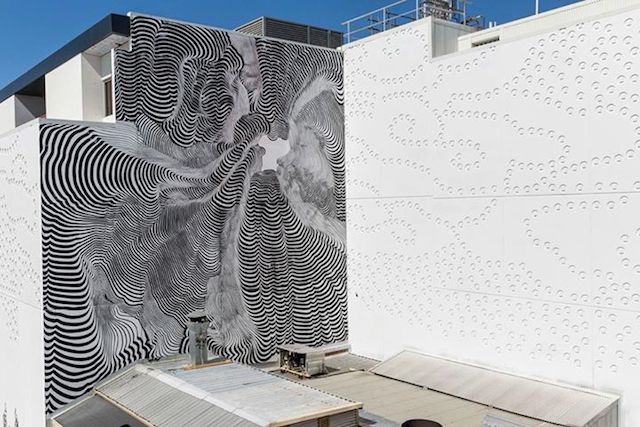
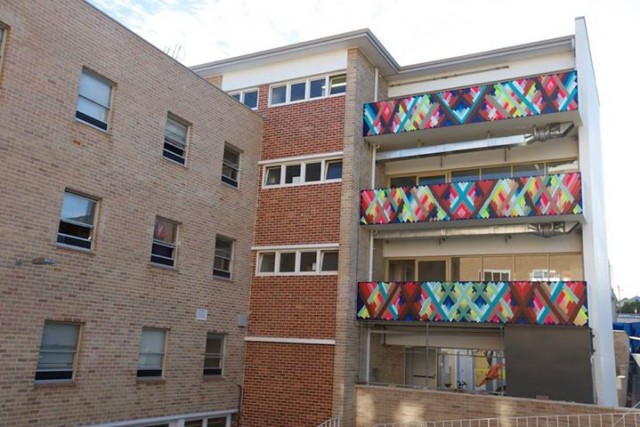
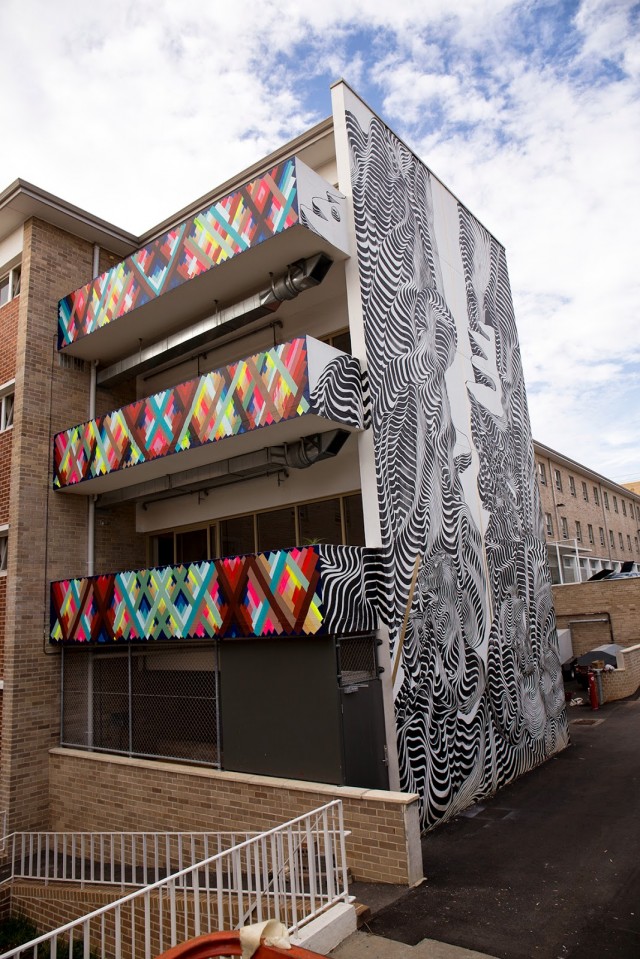
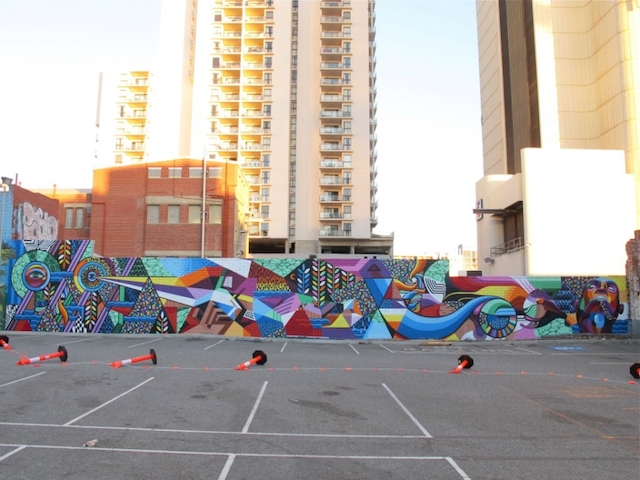
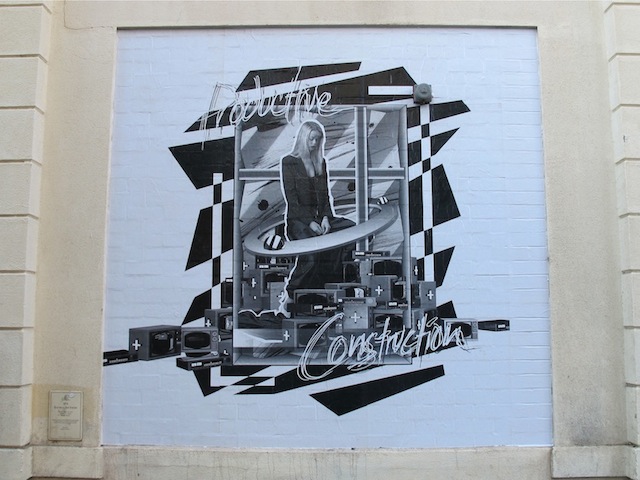
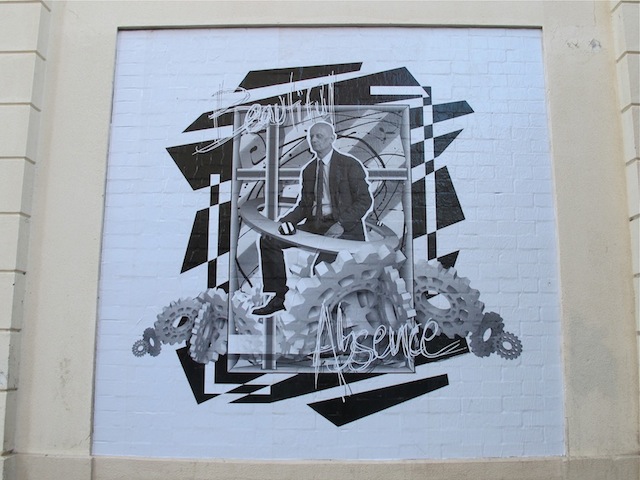
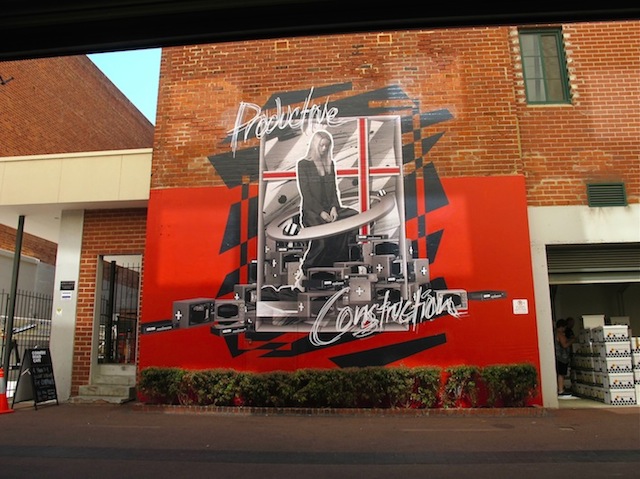
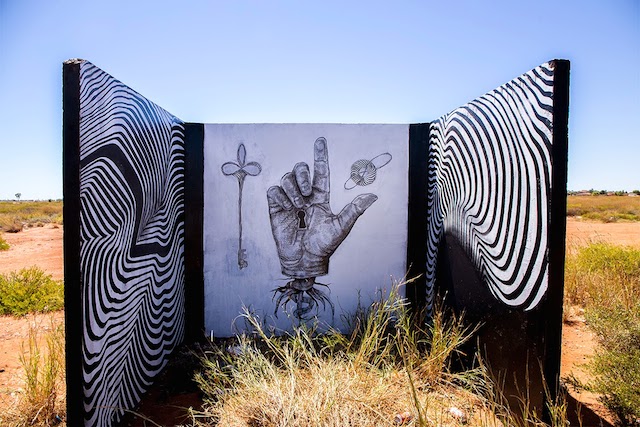
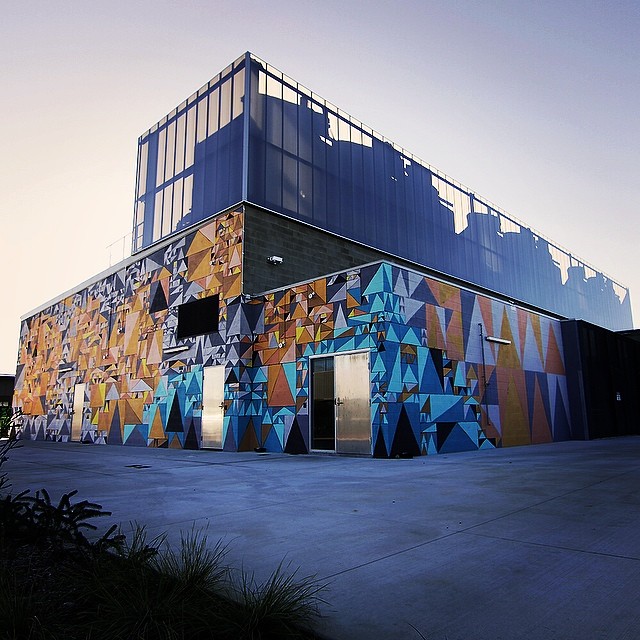
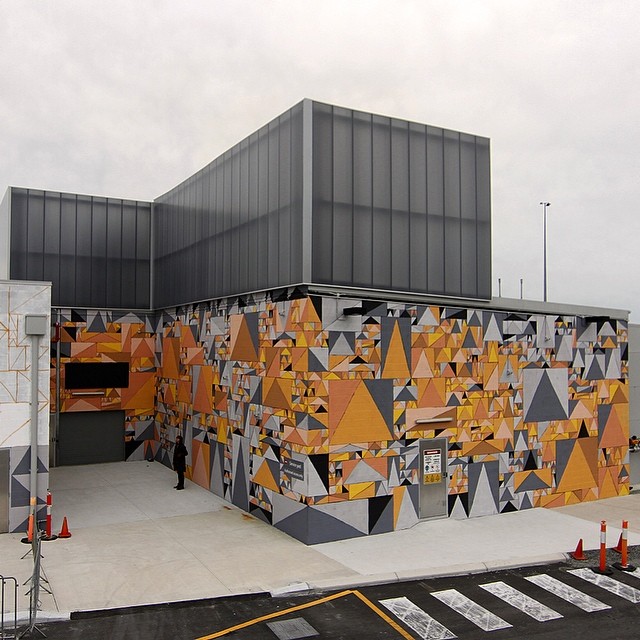
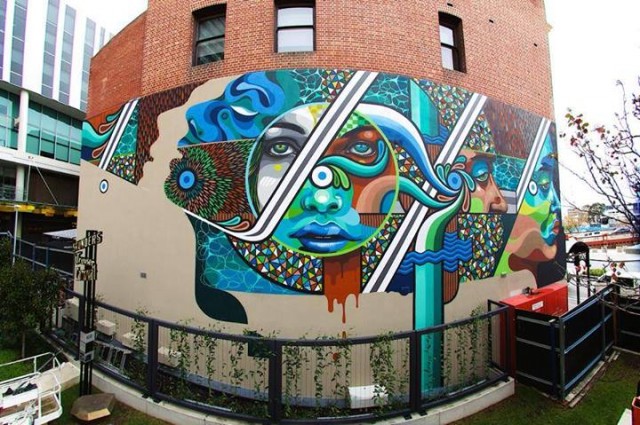
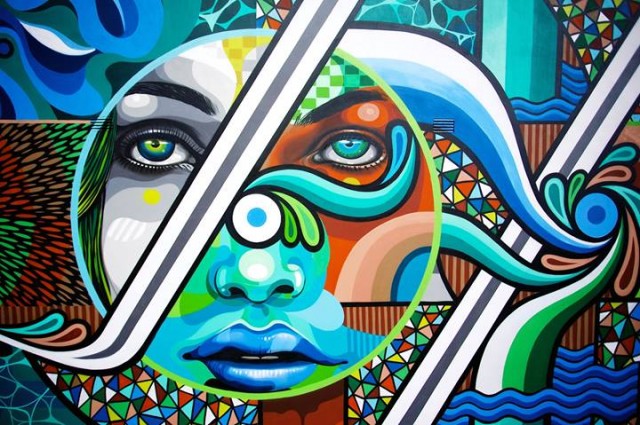
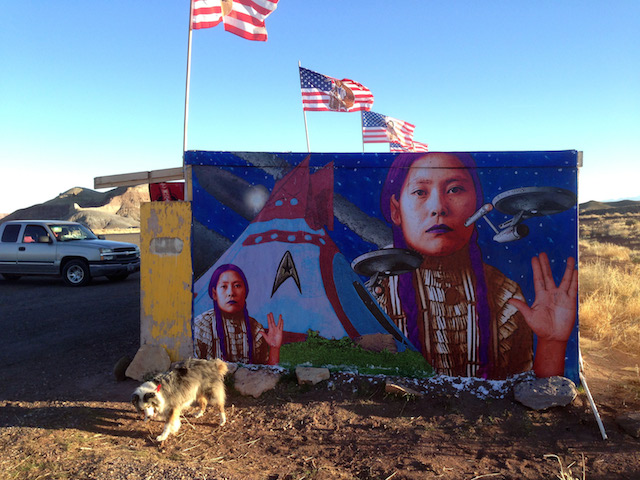
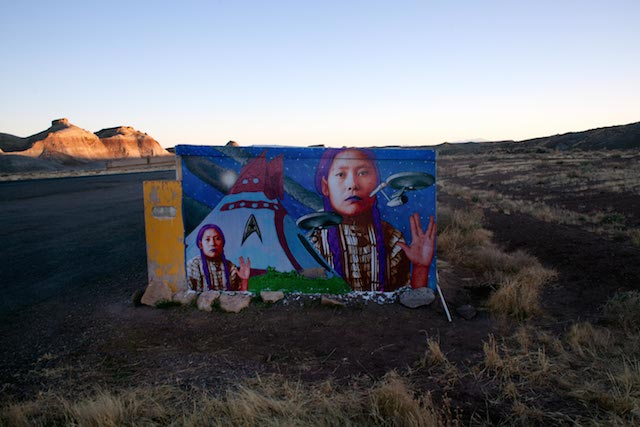
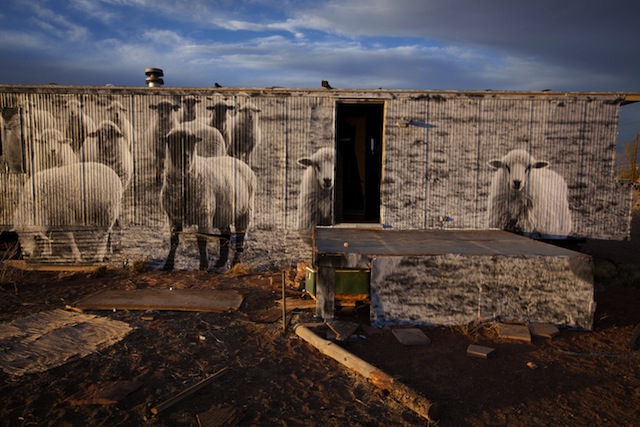
O Wind, Take Me To My Country by Jess X. Snow. Kingston, NY, ft. Safia Elhillo. Photo by Jess X Snow.
Jess X Snow (@jessxsnow), the author of this post, is an artist, filmmaker and Pushcart-nominated poet.
At its worst, public art can be imagery that heightens already existing social hierarchies and inequalities, and at its best–can be a portal into a future of healing and transformation.
I am a queer Asian American immigrant woman and non-citizen to this country. I grew up with a speech impediment so severe it caused me to fear my own voice. When my speaking voice failed, I fashioned myself a new one on the blank page.
I became a muralist because public art became the closest thing to a voice after a lifetime of feeling silenced. When I started painting murals, I was both exhilarated to make work on such a large level and immobilized by a fear of taking up public space. Where did this fear come from? For my childhood, every time I stuttered, my classmates finished my sentences for me. As I grew up, I experienced gender and racially-exoticizing harassment just walking down the street. As a woman of color working in film and public art, the icons I have to look up to are few and far between. As a migrant, I grew up watching my mother get denied at the U.S. border, homeland security giving her trouble every time she renewed her visa, up until we finally obtained our green cards after nine years. In all this, the ability to survive as an artist, and live here legally, comes at so high of a cost that the idea of doing illegal art, or physically taking up public space, can feel life-endangering.
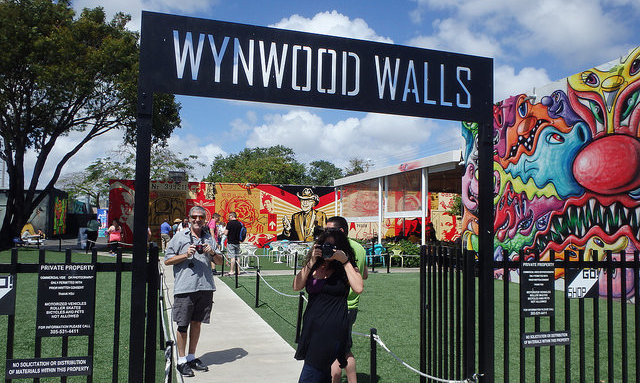
The entrance to Wynwood Walls in Miami, Florida. Photo by Osseous.
Earlier this week, the online street art community was abuzz about an article by Rafael Schacter for The Conversation, From dissident to decorative: why street art sold out and gentrified our cities. Between the time I left my apartment on Monday morning and when I arrived at work half an hour later, it seemed like a dozen of my friends had shared the article or reacted to it in some way.
Schacter has captured a feeling about street art and contemporary muralism, a nagging fear really, that seems to have been bubbling just beneath the surface for a while now. Basically, Schacter argues that street art isn’t rebellious anymore. Rather, that it’s most notable form is as a tool used by corporations to spur gentrification. Agree or disagree, the article is a must-read.
Coincidentally, today’s links all revolve around the law…
It looks like Starbucks ripped off Maya Hayuk‘s work, and now she’s suing. You might be thinking, “Is Starbucks really ripping her off, or are there just some similarities? A coincidence isn’t impossible. Just try Googling ‘abstract geometric bright colors’ and see what pops up.” Except that ad agency 72andSunny contacted Hayuk to license her work for a Starbucks Frappuccino campaign, and she declined their offer. Now, work remarkably similar to Hayuk’s is appearing in Frappuccino ads worldwide. Plus, Hayuk cites specific paintings of her’s that the campaign rips off. So yes, clearly Starbucks and 72andSunny are in the wrong here morally. Legally speaking though, does she have a case? Wired has a great article on the uphill battle that Hayuk faces.
There is now a second 5Pointz lawsuit. This time, specific artists are suing the 5Pointz property owner for whitewashing their work. Now, we could argue whether or not those individual murals on 5Pointz qualify for protection under the Visual Artists Rights Act (an important question that this article covers in detail), but there’s a larger issue here: With this lawsuit, the artists are shooting themselves (and muralists in general) in the foot. I’m now disinclined to work with any of the artists in this lawsuit, and I suspect others will be too. I don’t want to tell a property owner, “Here’s a great artist who will paint a stunning mural for you, but if you ever remove the mural, they might sue you.” And if I’m a property owner and I hear about this lawsuit, I’m a lot less likely to put any murals on my property. VARA is an important law. It protects artists. But these artists aren’t using it responsibly, and that means consequences for all of us.
The Bushwick Daily has a must-read piece on the billboards that have begun to infest The Bushwick Collective. The neighborhood is transitioning from a mural hub to a new Times Square. It’s extremely lucrative for property owners, but detrimental to the surrounding artwork and the neighborhood vibe. So what are property owners to do? As Jordan Seiler notes, no reasonable property owner is going to turn down $24,000 per year to have a billboard on their wall, so the answer is regulation. If we, as a society, decide not to allow billboards in public space, or at least in certain neighborhoods, then those neighborhoods can have murals instead. Because of Little Italy’s status as a historic district, property owners cannot slap up billboards on every available surface. That’s part of why The L.I.S.A. Project NYC is able to get so many great walls. Maybe all of NYC, or at least Bushwick, should get the same protection.
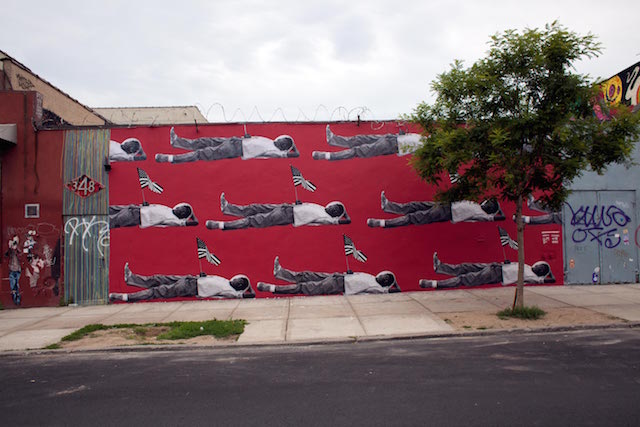
Speaking of The Bushwick Collective, it’s nice to see them relaxing their unofficial rules barring political murals (where they can still get permission to paint). Chip Thomas aka Jetsonorama installed a stirring mural in Bushwick just in time for the 4th of July (shown above). The Huffington Post has the story behind the piece.
I’m back after a brief blogging hiatus. I’ve been meaning to post my review for this great event that happened back in April over in Western Australia for a while now…
Leaving a cold wet 17 degrees in Melbourne, I was pretty damn excited to fly to Perth on the 10th of April, right in time for the grand finale of PUBLIC by Form Gallery in Perth, Western Australia, which I posted a preview of a while ago.
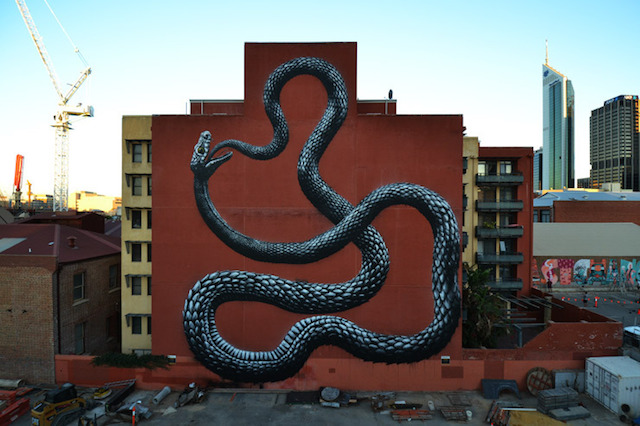
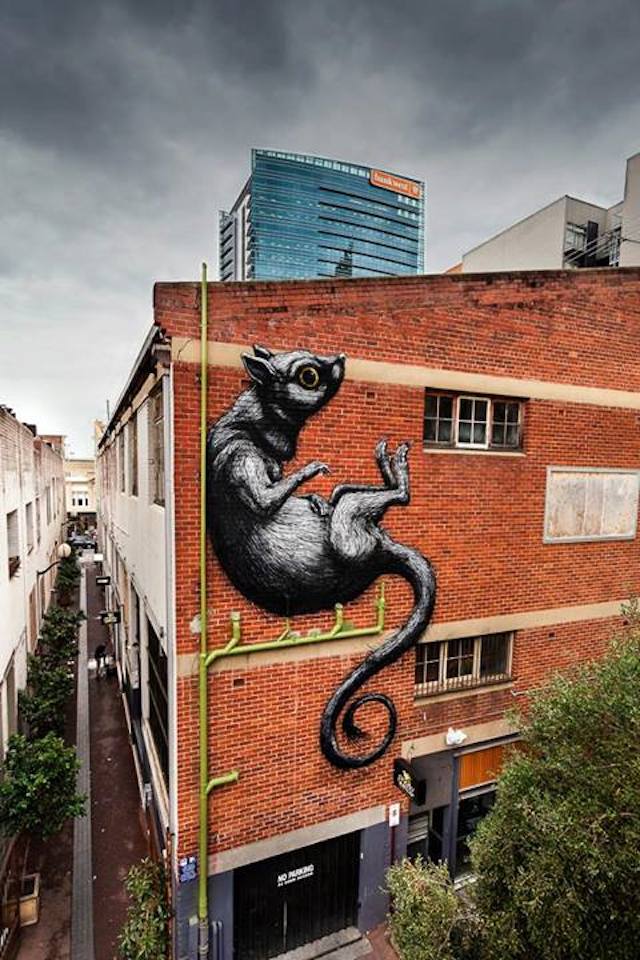
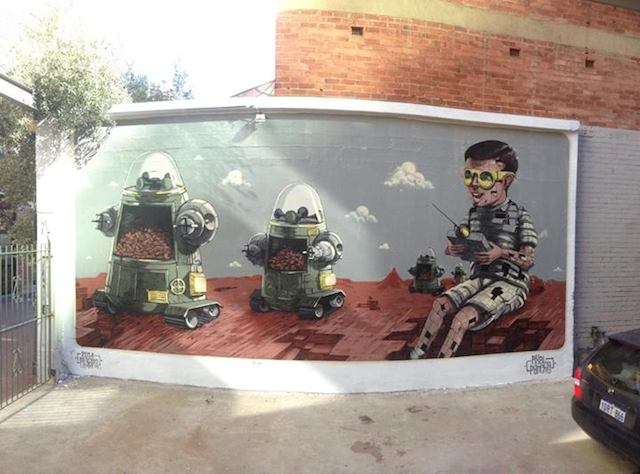
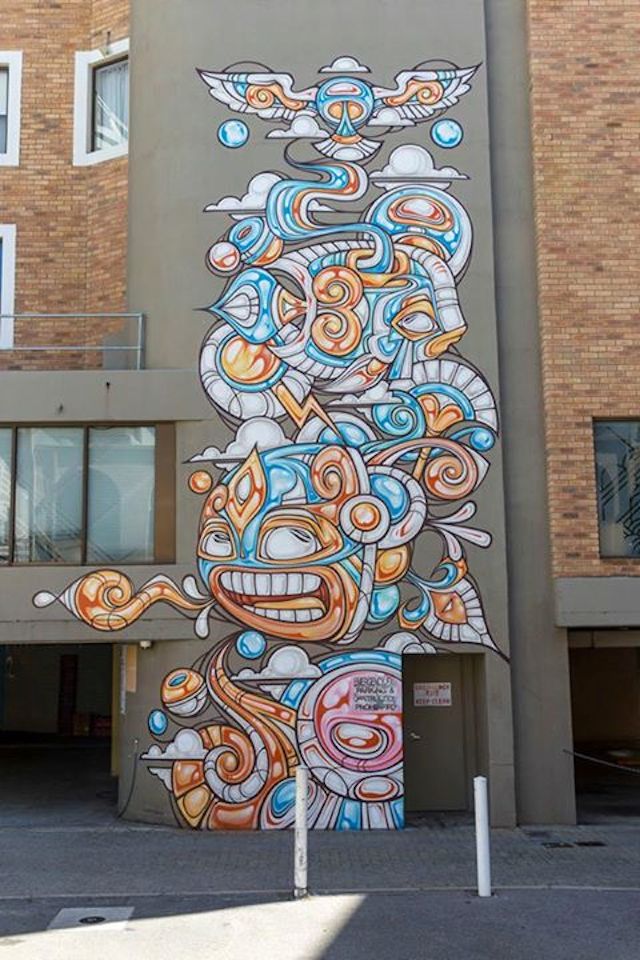
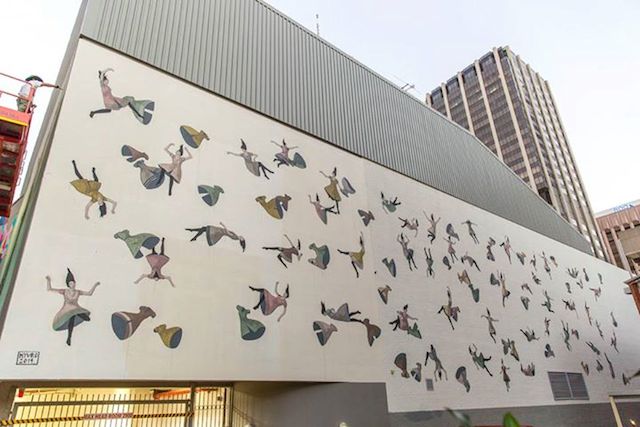
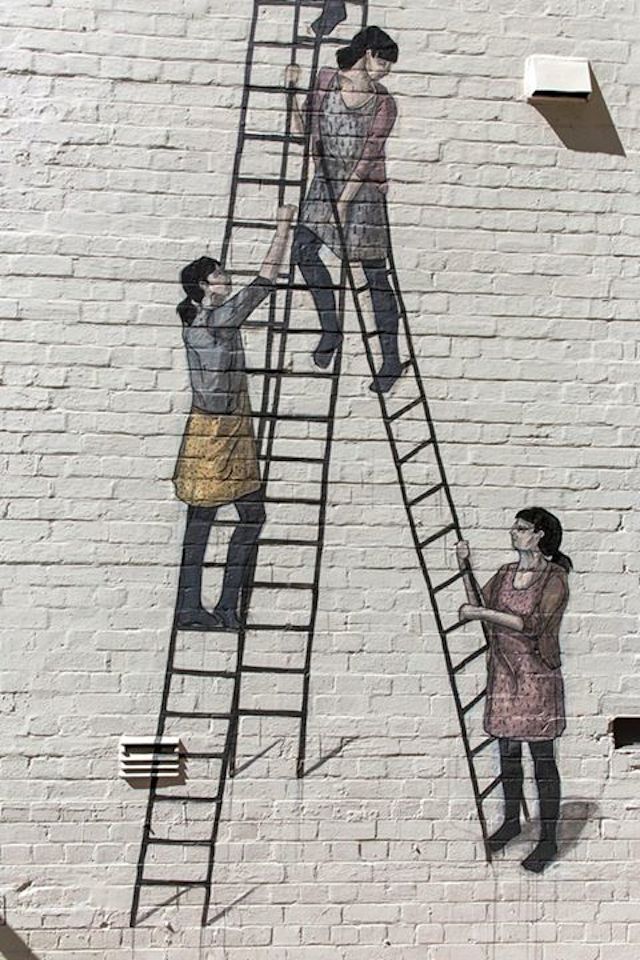
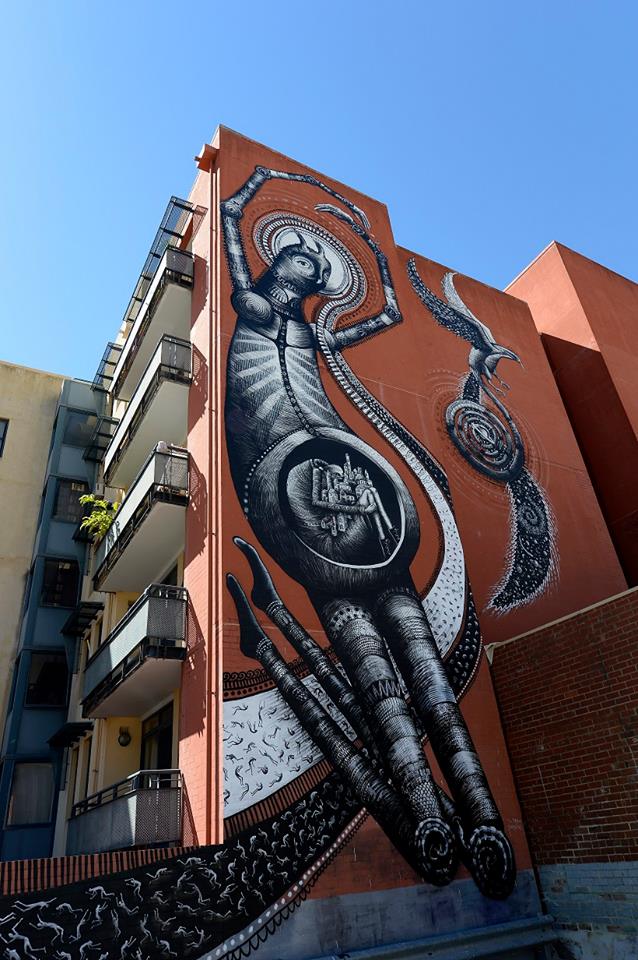
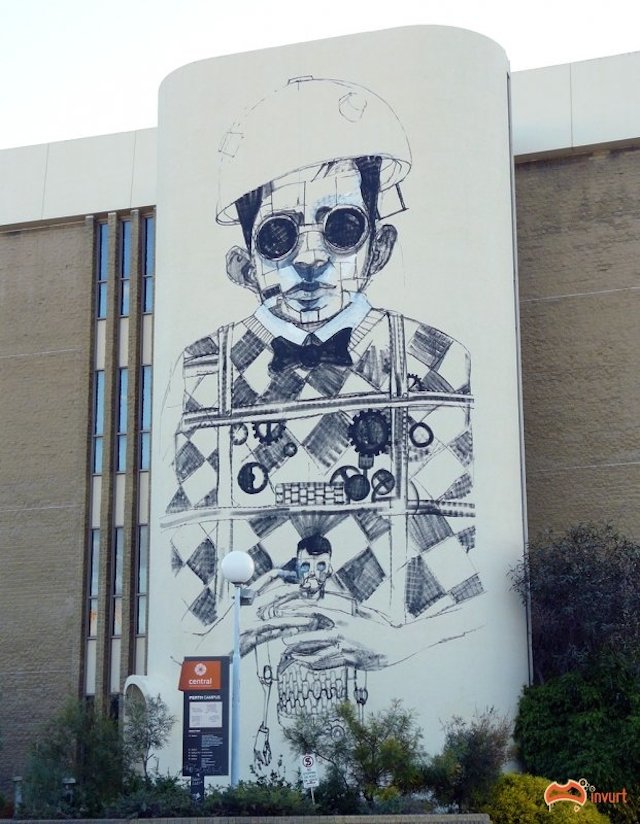
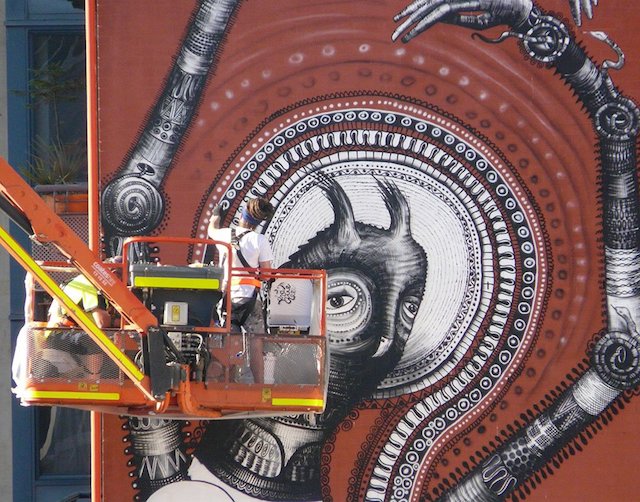
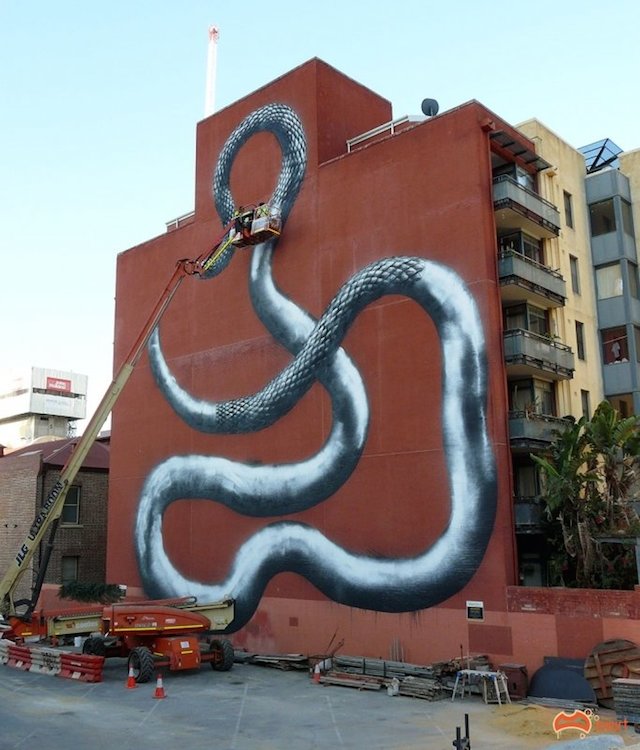
I arrived to a perfect sunny 30 degrees and soon as I hit the ground, I had a good feeling about Perth, I hadn’t been before, but something felt right. I went straight to the hotel and dropped off my bags, and went for an explore. Within a few hundred metres of my hotel, I could see the amazing Phlegm and ROA murals in progress. I made a beeline straight for them. Upon entering the car park I also saw the work of many other great artists. The works were spread throughout the CBD and inner city suburbs. Here’s a selection of some of my favourite pieces from the event.
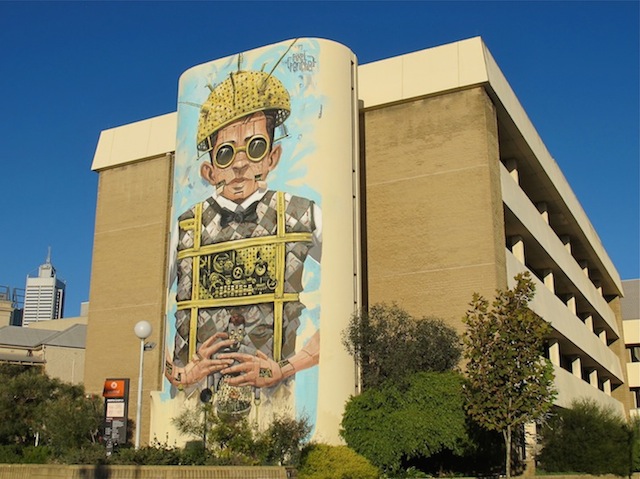
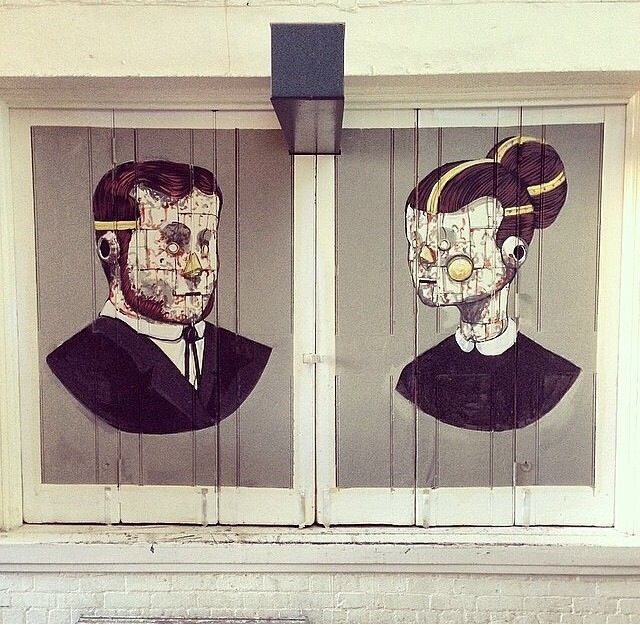
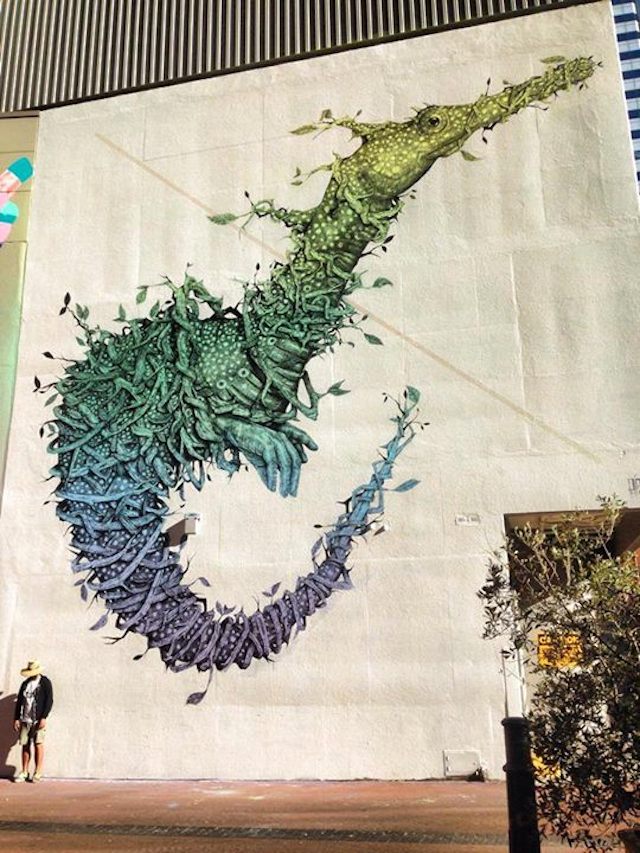
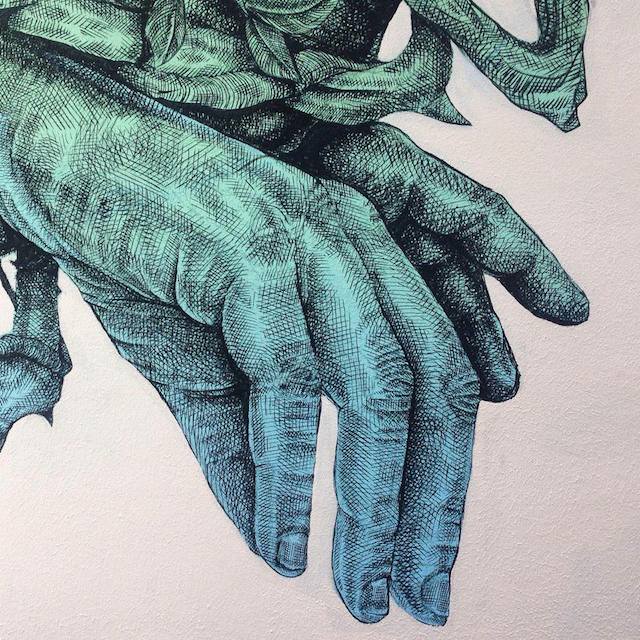
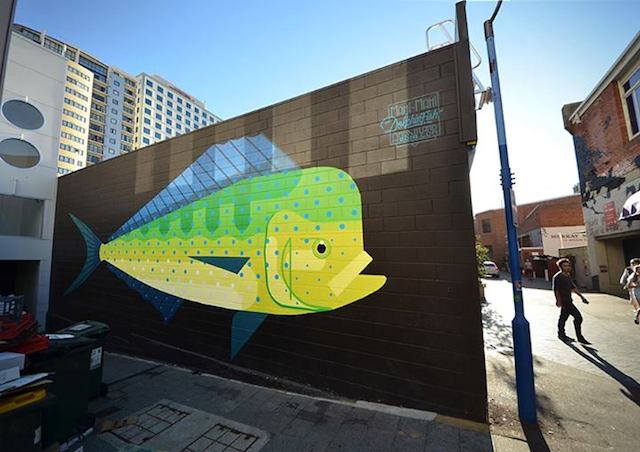
ROA. Photo by Bewley Shaylor.Pixel Pancho. Photo by Dean Sunshine.Pixel Pancho. Photo by Pixel Pancho.Pixel Pancho. Photo by Pixel Pancho.Phibs. Photo by Luke Shirlaw.Hyuro. Photo by Luke Shirlaw.Hyuro. Photo by Luke Shirlaw.Phlegm. Photo by David Dare Parker.Alexis Diaz. Photo by Alexis Diaz.Alexis Diaz (detail). Photo by Alexis Diaz.Amok Island. Photo by Amok Island.Ever. Photo by Ever.GAIA. Photo by Dean Sunshine.GAIA and Ever. Photo by Brendan Hutchens.Lucas Grogan. Photo by Dean Sunshine.Lucas Grogan. Photo by Jean-Pierre Horre.2501. Photo by Luke Shirlaw.Maya Hayuk. Photo by Jean-Pierre Horre.2501 vs Maya Hayuk. Photo by 2501.Beastman and Vans the Omega. Photo by Dean Sunshine.HEAVY Projects. Photo by Dean Sunshine.HEAVY Project. Photo by Dean Sunshine.HEAVY Projects. Photo by Dean Sunshine.HEAVY Projects. Photo by HEAVY Projects.
While the event spanned over ~30 days, the main event was the painting of Perth’s 1st ever giant murals over the last 3/4 days of the event. In total there were around 30 murals painted for the event, spanning across the City of Perth. I was very impressed by the organization of the event by the FORM Gallery crew. With a logistical nightmare trying to coordinate over 45 artists, paint and equipment, all in 35 degree heat, the FORM Crew did an amazing job, Well done guys!!! A very friendly and hospitable crew. Thanks very much for taking such great care of us while we visited.
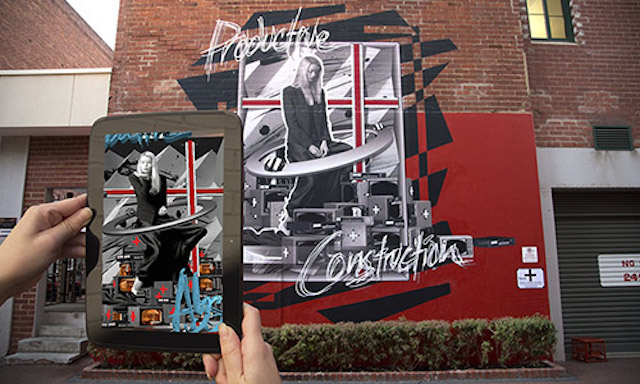
There was a great selection of artists from ac cross the globe representing all different styles and genres. Unfortunately there was no graffiti, but I suppose street art was a big stretch for conservative Perth, so graffiti may have been avoided for this reason. For a city not really known for street art, the public reaction was encouraging. People of all ages and walks of life filled the city over the weekend. I love walking around randomly and listening to some of the conversations and questions people ask each other. In particular I was really impressed by the public’s reactions to the HEAVY PROJECTS installations (interactive works of art that use Augmented Reality on smart phones and tablets). Here’s a short video the guys out together to document the event (plus some footage from a previous project).
On the Friday night there was also a great show at FORM Gallery – PUBLIC SALON showing off canvases from the contributing artists, some great work on display, check out some shots here.
And finally. This great video by Chad Peacock is a really accurate representation of the event and well put together. Damn it takes me back!!!
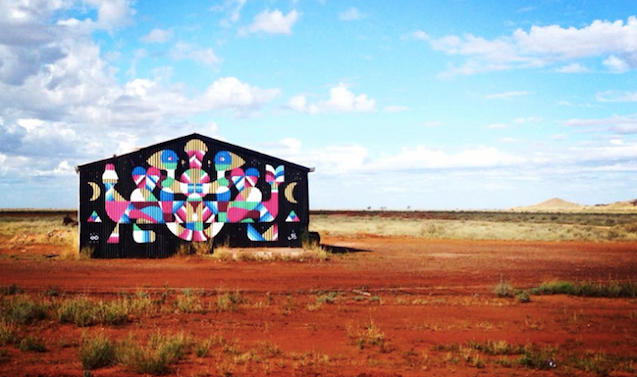
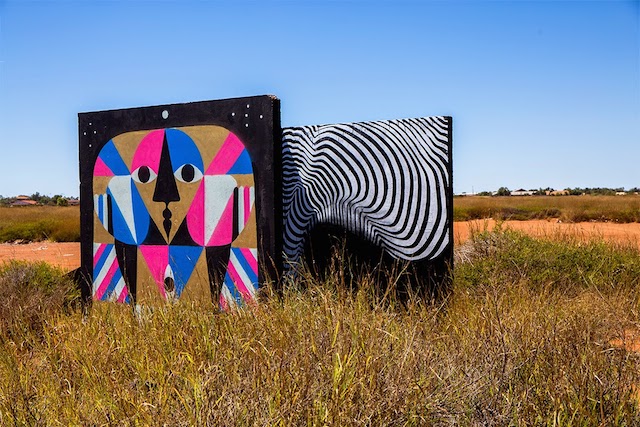
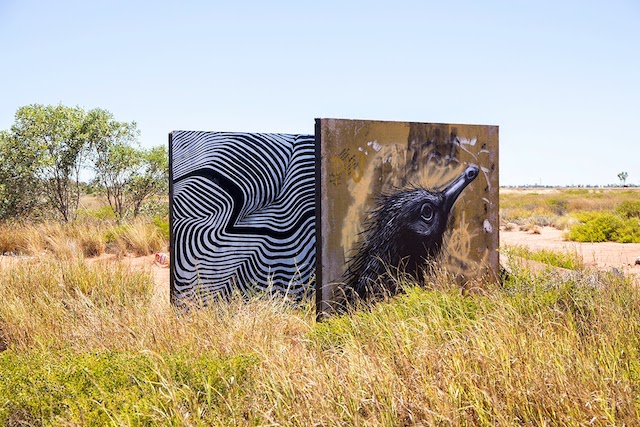
The FORM guys also took a number of artists to visit the Pilbara, a very special part of top end of Australia with breathtaking views and incredible nature (also sadly known for mining – the 2 don’t really go hand in hand). A few of the artists had a paint while there, I particularly like the piece by Remed.
Remed. Photo by Ben Fulton-Gillon.2501 and Remed. Photo by 2501.2501 and ROA. Photo by 2501.2501 and Alexis Diaz. Photo by 2501.
After all of the above, any street art fan in Perth would have to be pretty happy, but it didn’t stop there. FORM has continued putting up murals in Perth, with Creepy (aka Kyle Hughes-Odgers) painting at Perth Airport (a sponsor of PUBLIC) and also Vans the Omega and Beastman’s new piece that went up last week.
Kyle Hughes-Odgers. Photo by Kyle Hughes-Odgers.Kyle Hughes-Odgers. Photo by Kyle Hughes-Odgers.Vans the Omega & Beastman. Photo by Jarrad Seng.Vans the Omega & Beastman (detail). Photo by Jarrad Seng.
What I loved most about the event wasn’t just the art, and was not unique to PUBLIC; is the sense of community I felt. This is something I really love about the street art scene. I got to catch up with some great old friends, and made some new ones who I will undoubtedly randomly catch up with again somewhere around the globe.
Fingers crossed that this event is on again next year. I will be there with bells on!
If you are in Perth, check out the full list of artists and the mural map. FORM has also put together this short book called PUBLICation available for Purchase at the Gallery and viewable online for free here. FORM have also started “PUBLIC Urban Art Walks” to give fans a guided tour of the city, well worth checking out.
Ok, so that’s enough, right? Actually no, there’s more. And it’s massive. Due to some logistical 😉 issues SANER was unable to make it over for the original dates. I was gutted to hear this when I found out, but when I found out FORM are still bringing him over in August to paint in Perth and also the Pilbara, I was pretty damn excited! I’ll make sure to cover this later in the month.
A little while ago I heard whispers of something big happening in Perth, Western Australia. I usually only cover Melbourne based art and events, but this is an exception and needs to be shared. I’m heading over to Perth tomorrow so I will be covering the remainder of the event for Vandalog.
PUBLIC started on the 5th of April and continues through to the 13th and will feature street art, projections and installations across the city. 45 amazing artists will paint over 30 giant murals and walls over the fortnight.
The line up is mind blowing and an Australian first, with names like 2501, Phlegm, Yandell Walton, Hayley Welsh, Jordan Seiler, Jerome Davenport, Amok Island, Ian Mutch, Casey Ayres, Chris Nixon, Darren Hutchens, Martin E Wills, Paul Deej, Daek William, Stormie Mills, Hurben, ROA, Ever, Kyle Hughes-Odgers, Peche, Natasha Muhl, Phibs, Beastman, Lucas Grogan, Andrew Frazer, Hyuro, Mekel, Mow Skwoz, Drew Straker, Jaz, Abdul-Rahman Abdullah, Maya Hayuk, Reko Rennie, Pixel Pancho, Jetsonorama, Gaia, Alexis Diaz, Nathan Beard, Remed, Vans the Omega, The Yok and Sheryo and more.
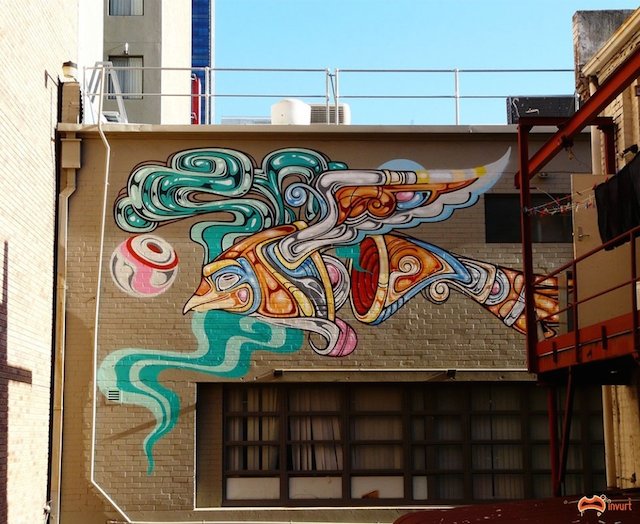
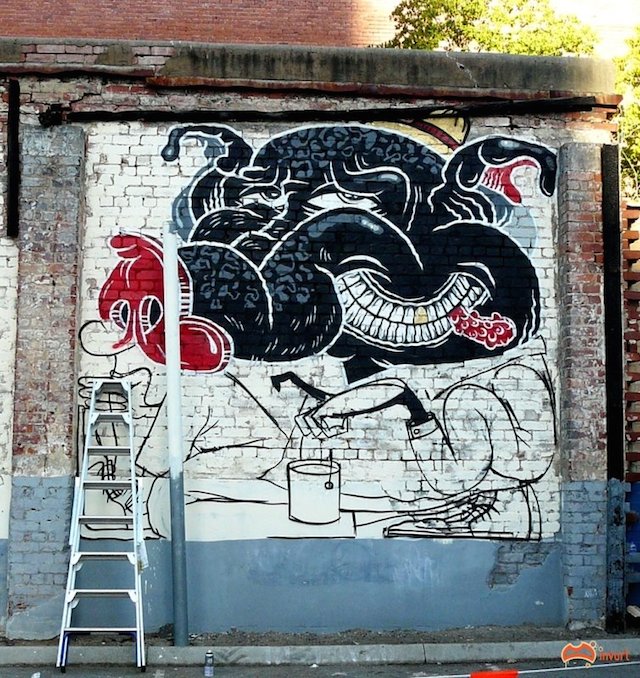
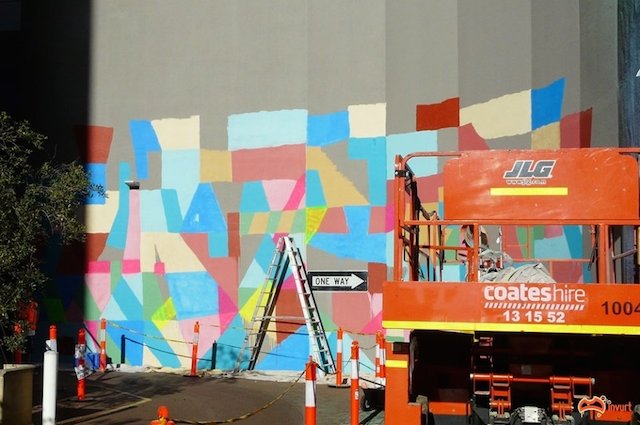
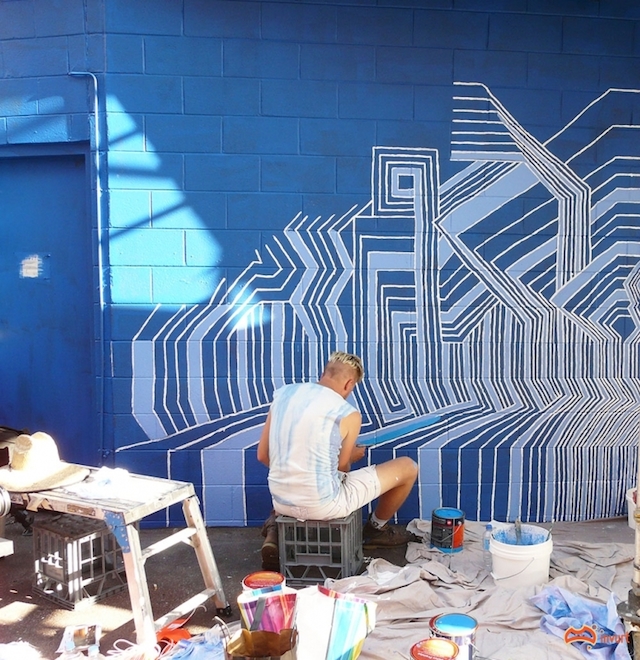
Here’s a couple of work in progress shots I stole from Sam Gorecki via Invurt. More here.
Pixel PanchoPhlegmROAPhibsThe Yok and SheryoMaya HayukLucas Grogan
Note from the editor: I’m pleased today to have this guest post from Chip Thomas aka Jetsonorama, an artist we have covered on Vandalog many times and also the organizer of The Painted Desert Project. The most recent contributor to the project is Debra Yepa-Pappan, whose piece is shown above. Yepa-Pappan’s work is new to me, so we’re also publishing an interview that Thomas did with her. – RJ
Chip Thomas: Can you tell me a bit about yourself? Where are you from originally, how did you meet and end up in Chicago?
Debra Yepa-Pappan: I was born in Korea. My father was in the Army and was stationed in Korea where he met my mother. I was born after he had been moved back to the U.S. When I was 5 months old, my mother and I emigrated to the States to be with him. We lived in Jemez for a short time, then on the Army base with my dad in Alabama and then Mississippi, where my parents were married. By the time I was one year old, my dad was discharged from the Army and we moved to Chicago. I’ve been here ever since, although I maintain a strong connection with Jemez and my Korean side. Throughout my childhood and teen years, my parents and I would visit Jemez frequently. And I ultimately went to school at IAIA in Santa Fe to meet other Natives and to be close to “home” that being Jemez Pueblo. Chris and I met there, and I brought him back to Chicago with me when we were both done at IAIA. We’ve been together for 22 years and married for 19 years with a beautiful 12 year old daughter.
CT: What is your art training?
DYP: Growing up, I never really thought of “becoming an artist.” My interest in art started late in high school and I was focused more on design. When I attended IAIA, I began by taking jewelry and then photography. I fell in love with photography. I felt at home in the darkroom and I enjoyed the hands on process of developing my own film and prints. My instructor was Meridel Rubenstien. What I really appreciated about her was that she didn’t teach me to just be a photographer, but she taught me to be an artist. So I’ve never really thought of myself as a photographer, but an artist who uses photography as my medium. I continued on at Columbia College of Chicago where I learned to refine my darkroom skills and where I learned how to use the digital medium, but then I had to “take a break” when I became pregnant. I’m still on that break!
Mata Ruda’s piece on Broadway. Photo courtesy of Wall Hunters.
Editor’s note: I tried to write about this fascinating project that just finished up in Baltimore, but for some reason I was unable. So, instead, I asked Nether to write about the project for Vandalog. Nether was one of the co-organizers, so instead of my guesswork and thoughts based on a few articles I had read, now we have a first-hand account of one of the more daring street art projects in recent memory: Wall Hunters’ “Slumlord Project”. – RJ Rushmore
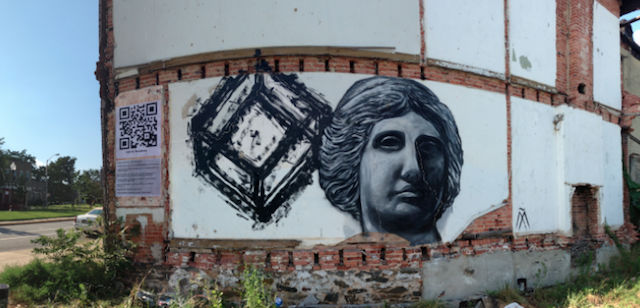
Wall Hunters‘ “Slumlord Project” was a project that installed 17 pieces on dilapidated vacant houses that are owned by people we consider to be negligent property owners. The project was a collaborative venture between the newly-minted street artists’ nonprofit, Wall Hunters, and Slumlord Watch, a local blog that documents the city’s shameful and shockingly large stock of uninhabitable vacant homes. QR codes and text descriptions were pasted alongside the art. A cell phone app scan of these instantly unveiled ownership information on the guilty landowner by linking to the Baltimore Slumlord Watch website. The artists’ ephemeral work and the community reaction to it was recorded for a documentary being produced by the project’s third partners, filmmakers Tarek Turkey and Julia Pitch. The project’s goal was to catalyze a larger conversation on Baltimore’s vacancy issue–a conversation that includes the normally muted voices of those who live in the targeted neighborhoods, as well as politicians and the developers whose phone calls get answered by city hall.
The idea for the project was born about a year ago. At that time I was putting up wheatpastes on dilapidated, vacant houses. As I was researching specific properties I was hitting, I regularly came across the Baltimore Slumlord Watch blog run by the housing activist Carol Ott. Slumlord Watch is basically Wiki-leaks for Baltimore’s underfunded housing authority. As blog posts make clear, many of the blighted houses are owned by entities with the means to fix their crumbling properties–slumlords who blithely ignore the cost of their neglect on city communities. Since much of my work uses images to deal with the vacancy problem and Carol was battling the same issue, we decided to meet and try to do something that joined street art with housing activism. I began driving her around while she catalogued vacants and researched ownership, and I wheatpasted.
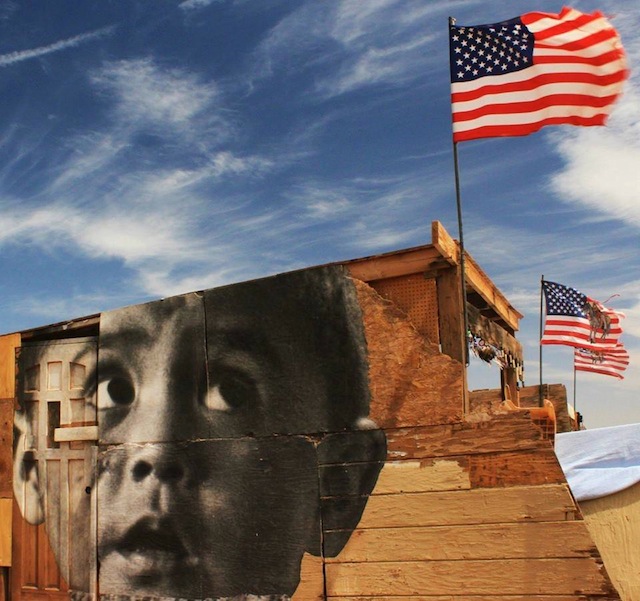
Jetsonorama sent over this photograph along with an interesting explanation:
after reading your piece about shep’s displeasure with the obama administration, i too am bummed.
i pasted an image of a kid from my community on a roadside stand in april. when i shot the image the kid (owen), was playing with matches while his mom was watching a video close by. hoping he wouldn’t notice him, he’d peer over his shoulder from time to time to see if she was looking. the look on his face is one of guilt + slyness, hoping he doesn’t get caught with his hand in the cookie jar so to speak.
a visitor to the little colorado river gorge where the image is pasted recently shot this image which in my mind is a subtle commentary on our current state of politics with the obama administration getting caught with it’s hand in the cookie jar – increasing the use of drone missles, spying on it’s citizens + allies and not persecuting those responsible for the predatory lending that resulted in the housing crisis.
Young New Yorkers is a restorative justice, arts program for 16 -17 year olds who have open criminal cases. The criminal court gives eligible defendants the option to participate in Young New Yorkers rather than do jail time, community service and have a lifelong criminal record. After our successful pilot program last year we continue to finance the project by hosting a silent art auction this summer – which would not be possible without the very generous donations of our artists, friends and collaborators – This year we are also publishing a catalog which contains critical essays on Youth Justice, Art as Social Practice and Street Art in order to make connections between these projects and our youth at risk.
The following is one of those essays and we’ll be publishing more of them on Vandalog as we approach the auction – so feel free to join the developing discourse…
We are a self-organized and grassroots effort. If you’ll like to help us find a locale for the auction, donate your time, partner with us or just be more informed please visit our website or Facebook page or write to Rachel@youngnewyorkers.org.
A couple years ago I was doing a wheat paste installation on a friend’s outhouse at his rodeo arena. A team roping competition was to start several hours later. I woke up around 5 a.m., drove an hour to the site and started working before sunrise. An 18 wheeler loaded with calves was parked nearby. A white cowboy emerged from the cab and groggily made his way to the outhouse. Upon seeing me he mumbled to himself “…Where else would you find on old black man wallpapering the outside of an outhouse at dawn at a rodeo event on an Indian reservation? Only in America.” We both laughed. In retrospect, it was an improbable moment but in the words of Spaulding Gray, it was also a perfect moment in that it captured the bridge building potential of public art.
That’s the question I get asked most frequently – what the fuck is an old black doctor doing making street art along the roadside on the Navajo reservation? Admittedly, it’s an unlikely journey which upon further inspection it makes perfect sense.
I came to work at a small clinic on the Navajo nation 26 years ago bright eyed and full of idealism and misconceptions. My first misconception was that as an African-American I’d be accepted by the Navajo who I thought would share a sense of solidarity with me as a member of a historically oppressed group like themselves. Wrong. I learned quickly that people here are focused on addressing their daily needs such as herding sheep, hauling water, firewood and/or coal and taking care of family. Acceptance into the community is hard won. There’s an expression amongst people here that unless you’ve walked amongst the Navajo for 2 years, they don’t take you into their trust. They’ve grown weary of outsiders coming to take from them leaving little in return.
My first year here I set up a black and white darkroom. After work I’d go out into the community to spend time with people as they were doing chores around their homesteads or hanging out with their families often getting to photograph these experiences. I’d started shooting black and white film in junior high school. My junior high school experience was unique and in retrospect, was instrumental in influencing my efforts to contribute fully to my adopted community.
I attended a small, alternative school in the mountains of North Carolina called The Arthur Morgan School. The school had 24 students, aged 12 – 15 in grades 7, 8 and 9. Being an actively engaged community member was demonstrated to us in practical terms every day. Each student had work assignments that we’d rotate weekly. The projects involved everything from preparing meals to working in the garden to repairing bridges on the dirt roads around the school. Once a week we’d have community meetings where students and staff would sit around in a large circle to discuss issues affecting our lives at the school. Coming from a traditional, all black public school, I remember being impressed that my opinion in these meetings mattered just as much as anyone else’s including our principal.
During my family practice residency in West Virginia during the early 80s, I’d make frequent trips to NYC hoping to see break dancing on street corners + burners on trains. My dream was to become a member of the Zulu Nation and it was during this time I started experimenting with graffiti.
Public Health Meets Public Art
The Navajo nation is located in the Four Corners region of the U.S. The land area of the rez is 27,500 square miles in size which is larger than the state of West Virginia. It’s home to roughly 160,000 people. Coal, natural gas, oil, uranium are found in abundance here. The Navajo should be one of the wealthiest groups of people living in the U. S. However, because of the way the contracts were written to exploit those natural resources, the Navajo people are amongst the poorest people in the U. S. Health problems on the reservation reflect those of other impoverished communities. Rates of diabetes, heart disease, hypertension, alcohol and drug abuse, domestic violence, teen pregnancy, interpersonal violence are all higher than the national average. The unemployment rate is close to 60%. Yet in the midst of what many from outside the reservation characterize as overwhelmingly dire circumstances, there are people living lives of dignity, celebrating the joys of family, farming and community.
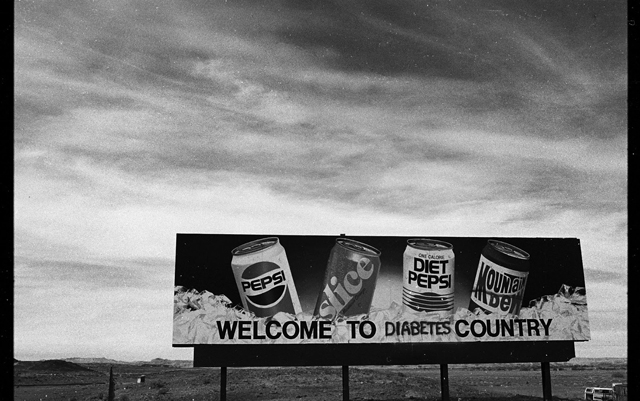
My first intersection of public art and public health occurred shortly after I arrived on the reservation. Concerned with what we considered irresponsible advertising in that it was promoting cheap, sugary drinks in a population plagued with Type 2 Diabetes, a community health nurse and I went out one night to correct a billboard on the reservation.
It used to read “Welcome to Pepsi Country.”
Building Community
Wikipedia defines community as a social unit that shares common values. It goes on to say that “in human communities intent, belief, resources, preferences, needs, risks and a number of other conditions may be present and common, affecting the identity of the participants and their degree of cohesiveness.”
What does it mean then to build community and what are the implications of such an undertaking for someone from another community whose belief system differs from the host community? I didn’t consider any of these questions before I started placing photographs along the roadside.
During my time on the reservation I’d been following street art from a distance. Any time I’d go to a big city with graffiti or street art, I’d seek it out. In the mid 90s I did a project called the Urban Guerrilla Art Assault where I’d place black and white photos on community bulletin boards and in store windows in Flagstaff. In 2004 I traveled to Brazil for the first time and was blown away by the abundance, diversity and caliber of the street art there. I returned to Brazil for 3 months in 2009. The first day of my return the feeling of being alive and intrigued by art on the street made by the people and for the people consumed me again.
There was one guy whose work I saw and liked as I moved around Bahia. His name is Limpo. It turned out that during my last 3 weeks there I rented a flat immediately above his studio. I spent everyday in his studio talking with him and street artists from around the world who’d stop by to share ideas in sketch books, videos online and street art books. The highlight was getting to go out on the street with one of the artists as he did a piece. These guys loved what they were doing. Their energy and enthusiasm were infectious. As I left Brazil, the street art community that had embraced me and stirred my soul said “keep it going!”
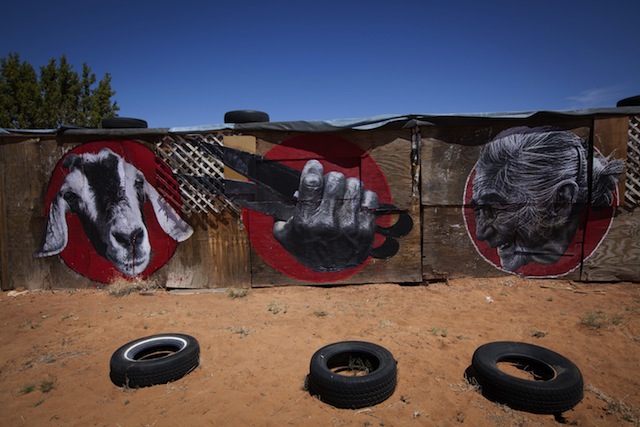
When I returned to the States I decided to enlarge and start wheat pasting images from my 22 year archive of negatives along the roadside. I got a recipe for boiling wheat paste off the internet, talked with people at Kinko’s about how to make enlargements and away I went. My first forays were at night. I pasted onto roadside stands where people sell jewelry to tourists venturing to the Grand Canyon, Monument Valley and Lake Powell. As I contemplated doing this, I had to consider how to introduce a new art form into a traditional culture. What imagery is acceptable? After stumbling a couple times, I settled on what I considered universally beloved Navajo themes – Code Talkers, sheep and elders.
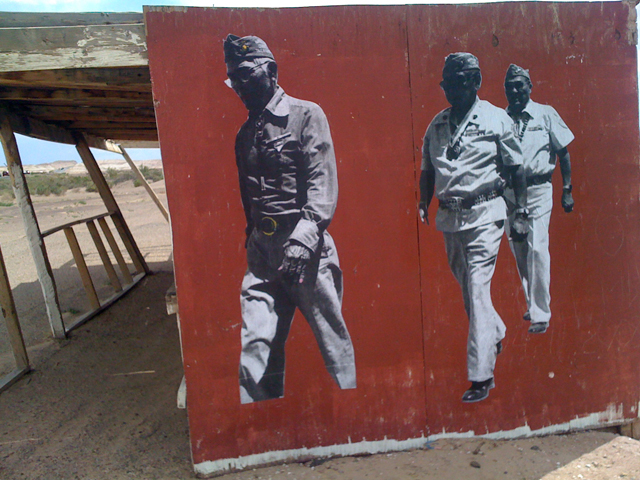
One of my first pastings was of Navajo Code Talkers that I pasted onto an abandoned, deteriorating jewelry stand along the highway to Flagstaff.
I was shocked a week later as I drove by the stand to find people repairing it. Curious, I stopped to find out what was up. The guys working on the stand didn’t know I’d placed the Code Talker photo there. They said that so many tourists were stopping to photograph the stand, they decided to repair it and start using it again. I asked if I could take a photo as well and told them that I placed the image there. They responded by asking me to put something at the other end to stop traffic coming from that direction. This was my first validation from the community to continue pasting and it was my first insight into the potential of art to promote economic independence for the roadside vendors. More importantly, I appreciated the potential of this work serving as a tool to bridge cultures and races of people.
It is through these types of interactions with people as I’m installing art that I get to better know my community apart from the constrained interactions I have in the clinic. Installing art in communities on the reservation where people don’t know I’m a doctor who has been here for 26 years and that I have a sixteen year old 1/2 Navajo son, I defend what I’m doing by telling people that my project is a mirror reflecting back to the community the beauty they’ve shared with me over the past quarter century. It’s my hope that a stronger sense of self and collective identity is nurtured through the images which thereby strengthens the community.
Last summer I decided to pursue a dream suggested by a fellow street artist to invite some of my favorite artists out to the reservation to paint murals and to work with local youth. I called this experience The Painted Desert Project.
The Painted Desert Project
The Painted Desert Project hates stereotypes, respects the unique culture in which it operates and spreads love.
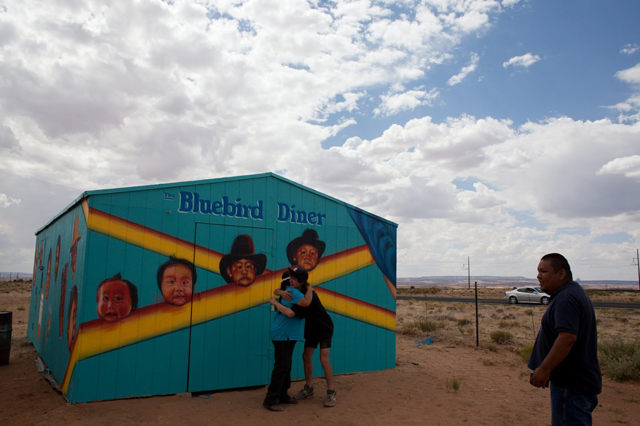
Before the first group of artists came out last summer to paint murals (which included Gaia, Labrona, Overunder, Doodles, Tom Greyeyes and Thomas “Breeze” Marcus), I sent to the non Native American artists copies of a book chapter on the Navajo creation story, a book of images and observations about the land and the people, a beaded item from one of the roadside stands and a film (“Broken Rainbow”), in an effort to sensitize the artists to the different world view here. I attempted to pair artists with various roadside stand owners and arranged for sweats with tribal elders to bless our efforts and to give the artists an idea of acceptable imagery and Navajo taboos.
It’s important to me that artists come to the project without preconceived ideas of what they’re going to paint. It’s important that they have enough time to interact with community members and spend time in this land of enormous skies and stunning landscapes then create work that reflects this interplay of cultures and landscape. In this way, the art is responsive to the moment like jazz. My hope is that the artist leaves enlightened and that the community feels enriched or vice versa.
Gaia saying goodbye to Matilda + her son, Tony
Last summer as the first group of artists was preparing to leave, we did something I’d never done in my long tenure here. We invited members from the community to my house to share a dinner with the artists. It was a simple meal shared around a candlelight lit table outdoors under the stars. How can this type of rich exchange not inform my medical practice which like my art practice attempts to heal and spread love?
My hope for the project this year is to not only share art but to do community service projects. For example, last summer Doodles painted a killer mural on a nearby food stand which burned down last fall. I’d very much like to get him back this summer to help the vendor rebuild the stand and then repaint it.
So when mofos ask me what’s up? What’s an old black doctor man doing wheat pasting on the Navajo nation? I tell them like the brothers told me in Brazil. I’m just trying to keep a good feeling going round and around.
Jetsonorama sent over photos of his first piece on the Navajo reservation this year, a pasting celebrating springtime, which is also sheep-shearing season in the area. Of course, putting up a piece of street art (particularly at this scale) is never as simple as it may appear when you see the pristine finished product, and this piece was no exception. Jetsonorama has done a great job over at his blog explaining just what went into getting this piece up and the people he met along the way.