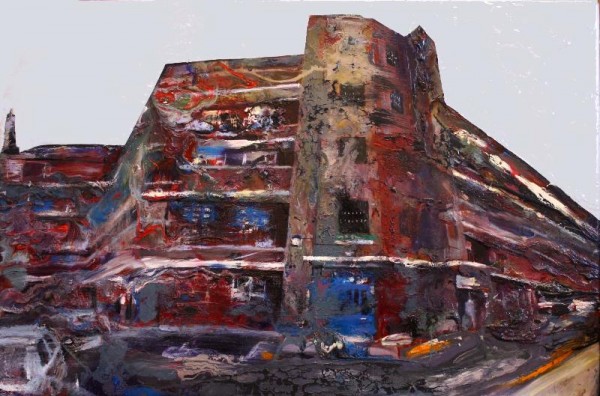
Matt Small and Zac Walsh have a two-man show, This Is Us, opening on Thursday at Signal Gallery. Matt is one of my favorite painters in the UK, so I’m really looking forward to seeing his new work.
Matt Small and Zac Walsh have a two-man show, This Is Us, opening on Thursday at Signal Gallery. Matt is one of my favorite painters in the UK, so I’m really looking forward to seeing his new work.
Jon Naar, the photographer behind The Faith of Graffiti
Stussy – Jon Naar from Stussy on Vimeo.
And Wooster Collective has put together a special edition of the book coupled with a limited edition signed print from Jon Naar. Just $75.
Sinboy painted this in Shoreditch recently. The shutter on the left is a modified ad for Sol beer.
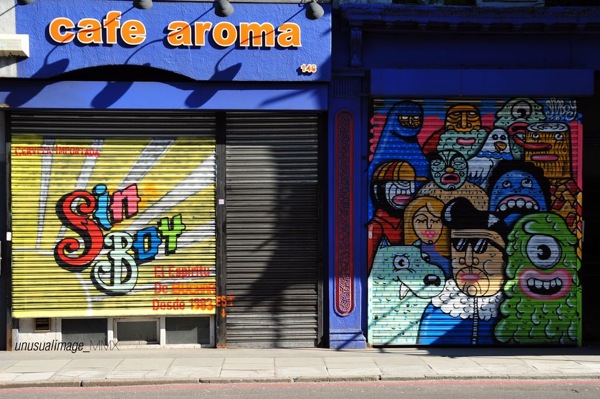
Photo by unusualimage
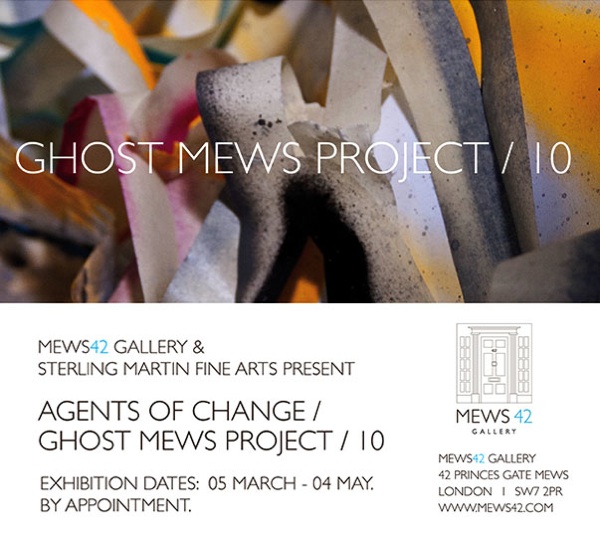
Agents of Change have a group show on right now in London at Mews42 Gallery. I haven’t been down yet myself, but here are a few photos from Remi/Rough’s flickr:
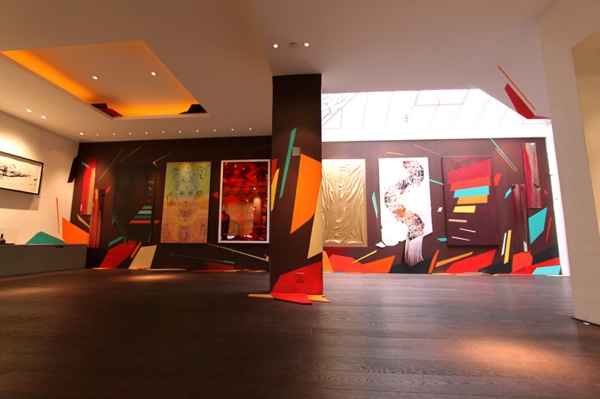
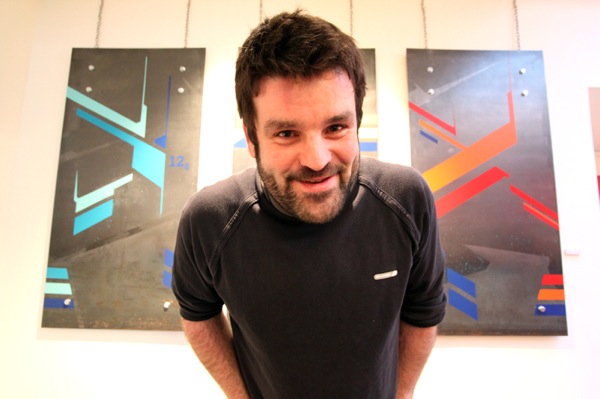

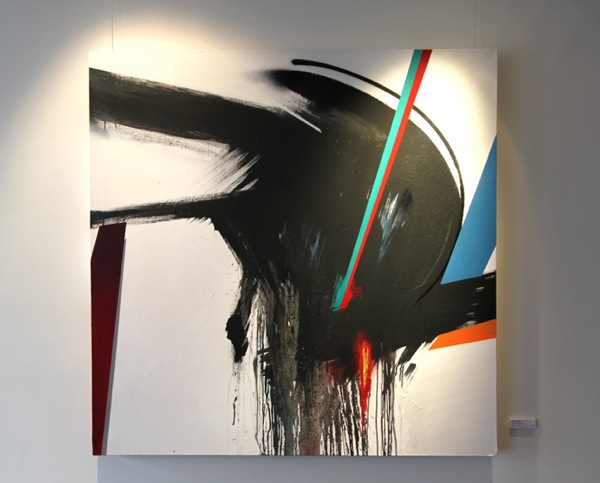
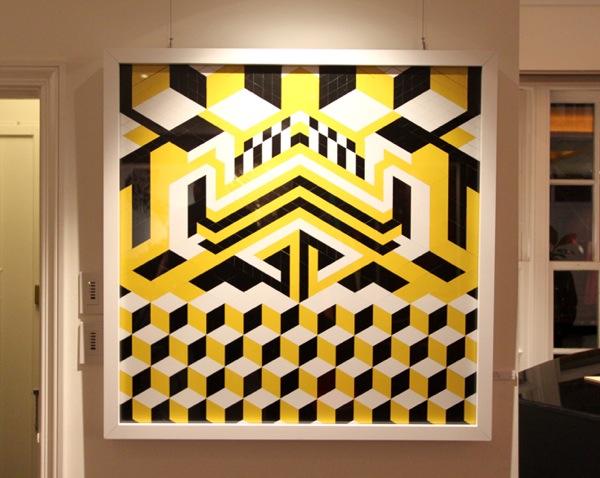
See more on Remi’s flickr…
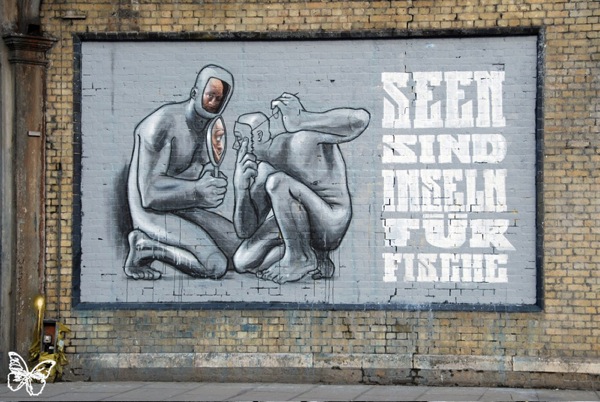
A couple of weeks ago Case, Akut and Typism painted the above piece in London. I happened to catch them in action:
Photo by S.butterfly
Manifest Equality is open in LA right now, and they’ve put together a solid show to raise awareness for gay rights.
Sam Graham put together this film of the opening (via Juxtapoz):
And Arrested Motion was there to take photos:
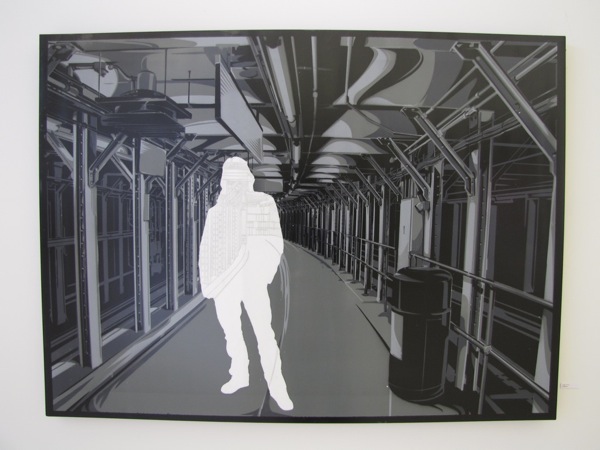
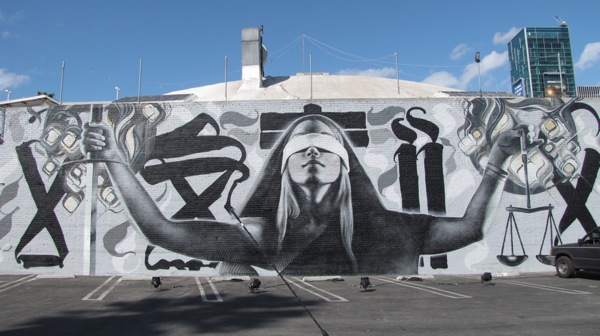
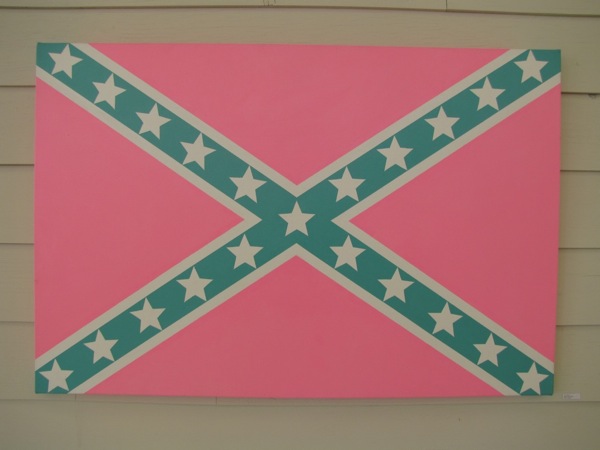
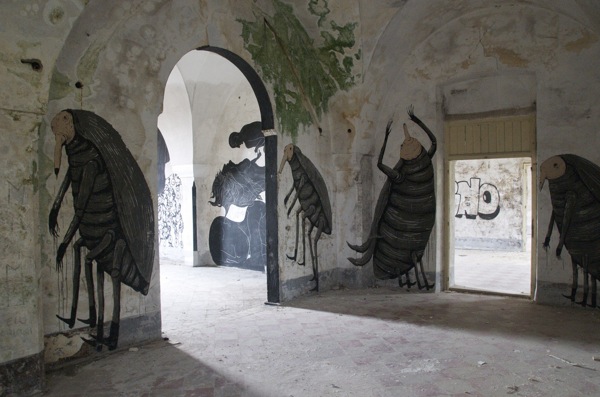
Last year, I had the amazing opportunity to visit the FAME Festival in Italy. This year, the festival looks like it will be bigger and better than ever. It opens on September 25th, which is a long way off of course, but they’ve just announced a tentative line up:
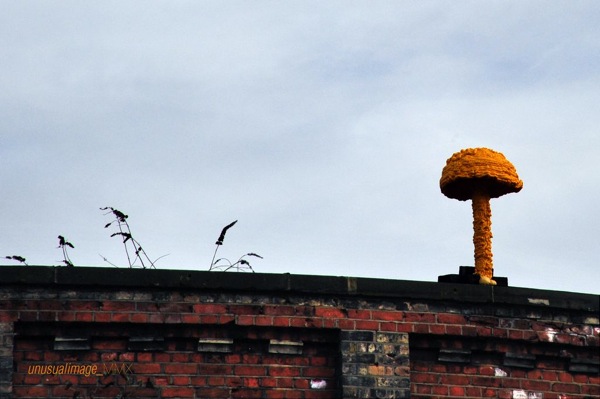
These mushrooms have been popping up in Shoreditch recently. No idea who is doing it. They look kind of odd, but I will give the artist or artists credit for awesome placement.
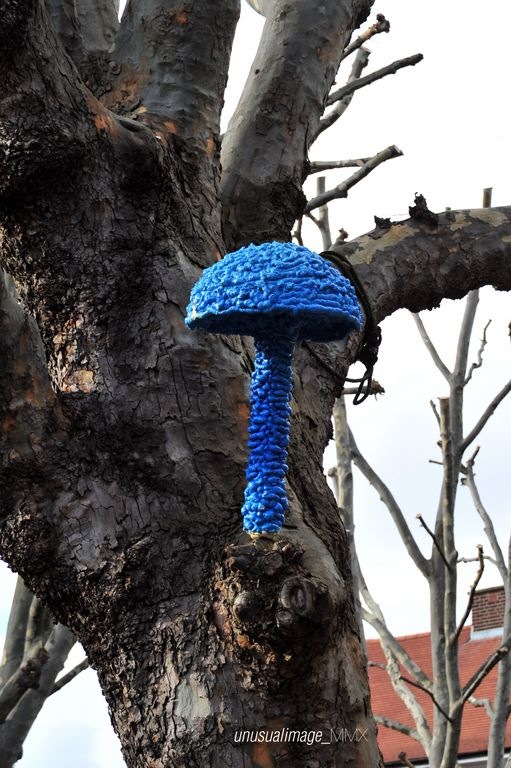
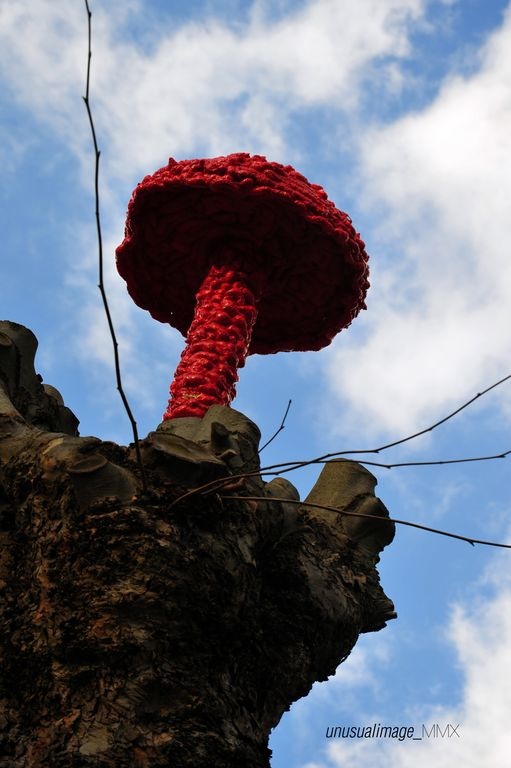
Photos by unusualimage
Note from RJ: The following is a guest post by Jordan Seiler of Pubic Ad Campaign. The opinions are entirely his own, but I did ask him to write this post. I was asking myself the same questions that Jordan has considered, and I knew that he could provide a more intelligent analysis of the situation than I’m able.
Is this new Banksy Street Art or advertising, and does it even matter when it manipulates the public and negatively affects people’s relationships to the streets that surround them?
It is my contention that Street Art’s positive affect on the viewer and therefore the public in general is directly related to the producer’s intent to manipulate for self-interest. For pedestrians, the appropriation of public space by advertisers and artists is an interruption to the normal architecture of the city. When that interruption has no clear expectation of the viewer, the work becomes a point of dialogue and conversation between two unknown parties. It is as if a gift has been left behind to be appreciated or forgotten according to the viewer’s discretion. When that interruption is motivated by self-promotion, as in the case of advertising, this dialogue becomes a monologue that demands the viewer recognize a specific person, product, or thing. It would seem the intention of the imagery put in our public spaces can create two very different reactions in the viewer to the space itself.
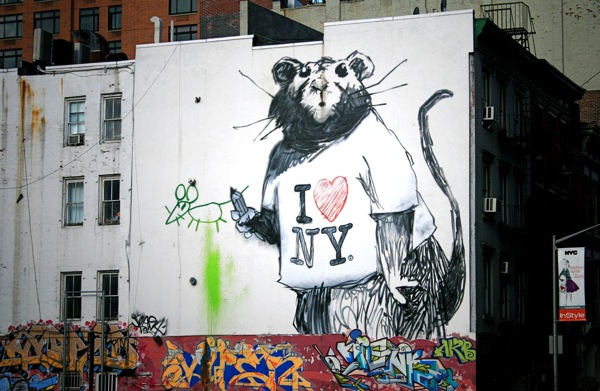
Banksy is a hard nut to crack. His work very successfully uses the street to do what good Street Art always does, create moments of interaction and dialogue between public individuals where once a barren emptiness stood. And yet I often find myself wanting give him shit for some of the stunts he pulls (for example the above rat painted by Colossal Media) because they ride a thin line between being good street art and the work of someone with money to burn and a staff to pull off his antics. For me, having someone else do your work for you seems too close to advertising and therefore a manipulative abuse of public space. But this is clearly my personal opinion. As the Banksy machine grows in size and scope, the line he walks becomes ever more treacherous as possibilities to taint his street credibility multiply. The upcoming release of Exit Through the Gift Shop, and its subsequent promotion on Portabello Road in London, is a good example of this thin line we expect Banksy to carefully navigate. More importantly, it provides us with some insight into when street art has abandoned its initial interest in creating dialogue in favor of an outright promotion of the artist, and how that affects the public.
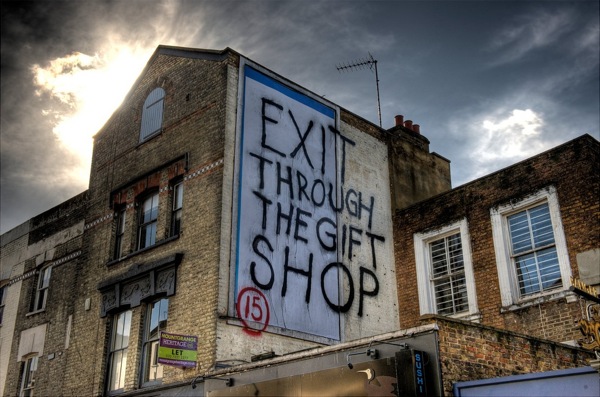
I was recently made aware of the above “advertisement” on Portabello Road in Notting Hill. It seems to be the work of Banksy, or his PR firm, and promotes the upcoming release of his new documentary film. What stood in this location before the infamous vandal got his hands on it was a more traditional advertisement. To me this reinforces the notion that indeed Banksy has started advertising for himself. If so, this is an interesting juxtaposition to earlier works attributed to Banksy, which include this YouTube anti-advertising piece done over a blank advertising frame. Although Banksy may not be at work in this video, writing “The joy of not being sold anything” on a billboard is something we could expect out of an artist who describes his relationship to outdoor advertising like this:
Any advertisement in public space that gives you no choice whether you see it or not is yours. It belongs to you. It’s yours to take, re-arrange, and re-use. Asking for permission is like asking to keep a rock someone just threw at your head.
– Banksy in his book “Cut It Out”
This advertisement makes me want to get up there and buff it, a reaction against this piece and how it uses public space. One could argue that Banksy has crossed a line here by using public space for outright promotion instead of artistic practices and that this should affect how people see his work. Some would say that this line is dependent on whether or not Banksy has paid for this space or not. If he has rented the billboard, then he is simply promoting his personal agenda by buying public space, which seems counter intuitive to Banksy’s interests. If he has not rented the space and this appropriation of advertising real estate was done without permission in typical street art fashion, then is he simply continuing a long history of public appropriation?
Whether or not this Banksy piece is good or bad, art or advertising, tainted by the hypocrisy of advertising for himself using street art, or bettered by his wholesale appropriation of the public for his own means, is open for debate. To me the answer to the argument lies in the larger question of how we utilize public space productively so that our artwork creates more interactions and public relationships, instead of separations and points of friction.
The notion of intention as it is applied to artists and advertisers’ self interest when appropriating the public environment might reveal how the public receives the work and what benefits the work might have for the public at large. As I said before, both of these visual forms in public are interruptions, and maybe even distractions, so they have a serious affect on the way the public experiences its space. That said there are four examples of intention that create reactions with varying degrees of animosity or endearment for the viewer. These examples apply directly to advertising and art and I believe explain how visual works can affect the public’s feelings of separation or connectedness to public spaces.
So Advertisement, intending to distract you for its own purposes, creates a conflicted interaction where the viewer recoils from an environment that is manipulative. Good Street Art, with an interest in dialogue and two way communication, builds relationships by integrating the viewer into his or her experience of public space. Banksy’s traditional street work, intending to interrupt your day for the sake of communication is therefore experienced as a positive use of public space and leaves the viewer happy about his or her serendipitous run in. Alternatively, Banksy’s use of public space to promote his upcoming movie, whether intending to or not, is a use of public space for self-interest and therefore manipulative to the viewer. Whether or not this is advertising or Street Art is really not the question so much as is this a poor use of the public environment by an artist whose long history or work should have taught him better? To someone who greatly appreciates Banksy’s Street Art this image tarnishes the shine on much of his work. For someone who is unfamiliar with the artist it is just another image on the wall repeating a self-interested meme.
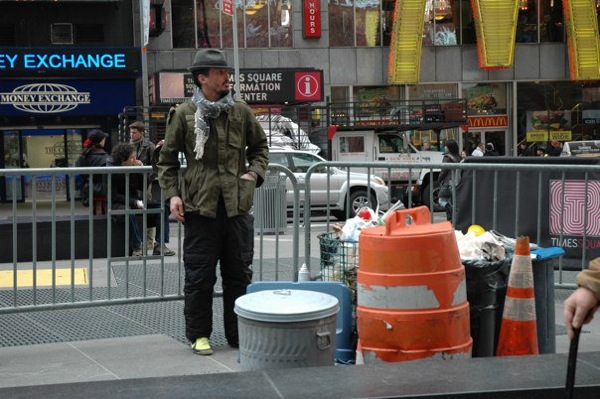
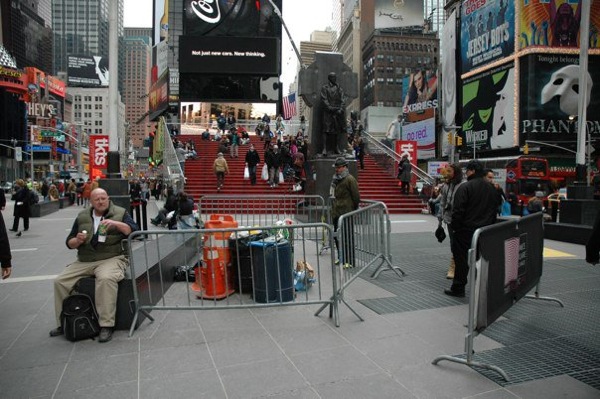
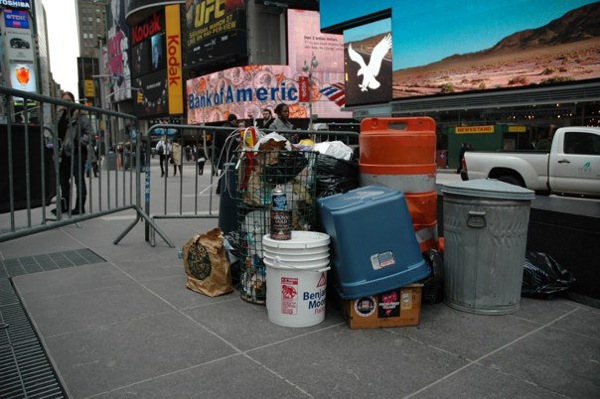
The latest David Ellis / Roberto Lange trash sculpture has been placed in Times Square (thanks to Anonymous Gallery and Times Square Arts), and will be there through March 8th. Here are a few photos. Videos should be coming soon. That’s when the sculpture will really make sense, since it’s actually a sort of robotic music machine disguised as a pile of rubbish.
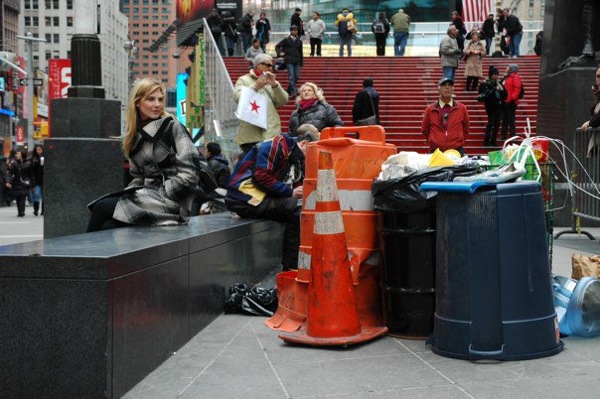
The only downside to this piece is that it has to be surrounded by that fence and a sign that reminds people that they are looking at a piece of art. I wish there was some way they could just leave the piece unmarked and film people’s reactions. Then again, these piles of trash retail for up to $50,000 so that might not be the most financially sound idea…