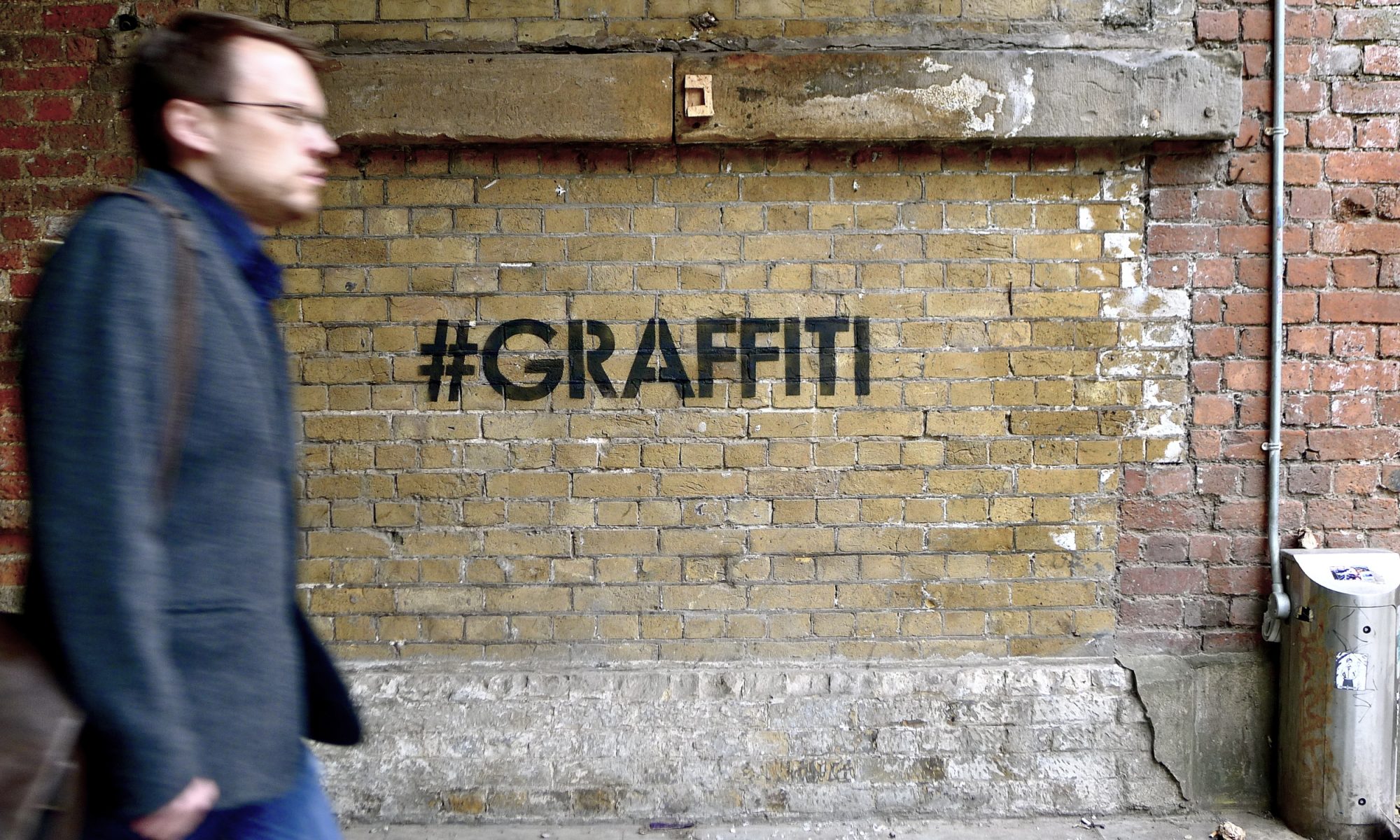
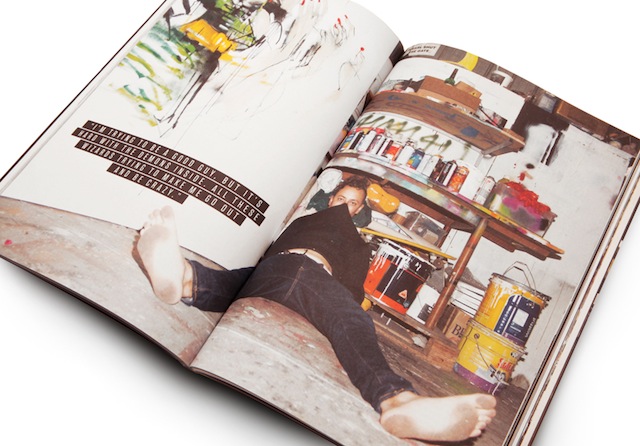
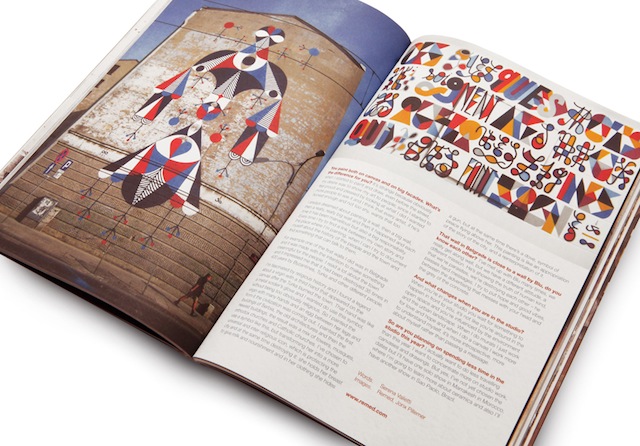
We’ve got 5 issues of Very Nearly Almost magazine’s latest issue to send off to Vandalog readers. I’ve been a fan of VNA since around the time I started Vandalog, and it’s a magazine that I always recommend as an alternative to Hi-Fructose and Juxtapoz.
For issue 19, they’ve got a great cover article on Anthony Lister, as well as interviews with Twoone, Remed and others. As it tends to be with VNA, my personal favorite part of this issue is not what you might expect (the interviews) but their photos of graffiti and street art in Newcastle. Of course the interviews are great too, particularly Lister’s.
We’ve got 5 copies of VNA issue 19 up for grabs, just answer this question in the comments: What country is Anthony Lister from? Out of those who answer correctly, 5 will be selected at random and sent a copy of the magazine. Answer by noon East Coast time on Saturday, September 8th. We’ll notify the winners via email shortly after that.
This is an essay I wrote a couple of years ago for a book that was to be a collection of essays by a number of different people in the street art world, but the final product has not yet materialized, so I’m posting the piece here instead.
I don’t want to see the plan succeed/There won’t be room for people like me/My life is their disease/It feels good/And I’m gonna go wild/Spray paint the walls – Black Flag
Good subcultures get co-opted by the mainstream. That’s what happens. Punks and preps, hippies and hipsters, gangsters and geeks have all had parts of their cultures brought into the mainstream, and that attention usually harms the actual subculture.
Sometimes it can feel like street art is getting taken over the mainstream more and more every day. Plenty of people have told me that Vandalog contributes to that co-opting of the culture. The most obvious examples naturally also tend to be the most popular names in street art: Banksy and Shepard Fairey. These guys used to be the torchbearers of street art, but their newfound fame as household names has come at a price: they certainly aren’t the revolutionary artists they once were, and I would go so far as to say that in their outdoor work they are as much guerrilla marketers as they are artists. There’s plenty to say on that topic alone, but I won’t get into too much detail about the negative aspects of street art. I still have faith in the general movement of street art: Even as some artists “sell out,” it’s inevitable that street art as a whole will remain authentic, powerful and revolutionary for a long time to come.
Anyone who has read Norman Mailer’s 1973 essay The Faith of Graffiti has probably had a good laugh at Mailer’s suggestion that graffiti was already dying out. Street Art, a book by Allan Schwartzman and published in 1985, makes a similar suggestion about street art. Looking through Street Art, you’ll see the work of early street artists like Jenny Holzer, John Fekner and Richard Hambleton as well as many other names that have mostly faded from the history of street art. Most of those artists no longer make street art. Of course, street art didn’t die out, and Schwartzman was far from the last person to write a book about it, but something special is definitely captured in Street Art: The first generation of modern street art.
While most of that first generation has now moved on from street art into other mediums, they inspired future artists to start working outdoors. In the early to mid-90’s, artists like Phil Frost and Reminisce were members of a new generation doing work on the street. Frost doesn’t work outdoors anymore, and Reminisce only very rarely does. They and many (but of course not all) of their contemporaries have more or less moved on from their roots.Then in the 2000’s, new artists like Swoon and Leon Reid IV became involved in the movement with as much passion as previous generations. While both Swoon and Leon Reid IV are both still actively making work outdoors, they have somewhat moved away from street art’s anti-establishment roots: a good portion of their outdoor work is being done with permission and in cooperation with galleries, museums or arts organizations. Over the last few years, the internet has allowed street art to grow even further, and talented new artists from around the world are coming to light all the time. Artists like Roa and Escif were already well known among street art fans before they first painted outside of their home countries because people had seen their artwork online.That’s an oversimplified history, but hopefully it shows in a very general way that street art is always evolving.
Since the 1970’s, the media has lost and gained interest in street art numerous times. Naysayers often suggest that the interest of media and the injection of money can only serve to destroy street art culture, but each time this cycle repeats, street art is reborn and brought back to its core values by a new generation of revolutionary artists. Even as the most world-famous street artists stop making street art, there’s always a talented and idealistic artist just starting out with a can of spray paint or a bucket of wheatpaste, working their way up from the bottom.
Artists and even people who don’t consider themselves artists are interested in the opportunities that only street art can provide. Once the idea that street art exists is in somebody’s head, it can’t be taken away. Now that the idea of street art has become part of the collective mainstream public consciousness, it can’t be taken away from there either. Even as its general popularity may fluctuate, the idea of street art is always going to be resonating with somebody around the world, and that’s all it takes. People want to express themselves and communicate with the public, and there are few better ways to reach the public than street art.
Street art doesn’t discriminate. A trained artist in a studio with dozens of brilliant assistants can make street art, but so can a teenager with nothing more than a permanent marker and an idea. Practically any wall is an equally valid place for a piece of work for drunken men to piss on or for kids to be inspired by.
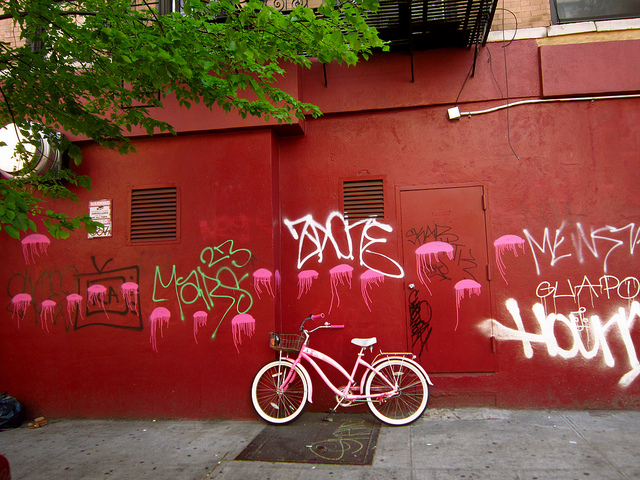
Tags by The Jellyfish. Photo by bitchcakesny.
The combination of almost no barrier to entry and the fantastic power wielded by street artists, a combination unrivaled by any other art form, is why the underground nature of street art will always triumph over any push to make the genre truly mainstream. It just takes one person with a crazy idea to shift the culture in a new direction, and there are thousands of those people out there trying out crazy ideas every day. You can’t make a culture mainstream if the thing is constantly changing, you can only make out-of-date segments of the culture mainstream.
And does it really matter if one segment of street art becomes mainstream? The fact that you can buy an OBEY shirt in a department store doesn’t diminish the power that street art has in giving a voice to any person who has something to say, and it doesn’t make it any harder to pick up a can of spray paint for the first time. Street art is a great way to buck the system, especially if that system is the street art establishment itself.
For the last three decades in particular, working outdoors without permission has fascinated artists, and they keep finding ways to do it differently. During that time, stars have been born and many have faded away. Media and art-world interest has waxed and waned. In the end though, the mainstream popularity of street art doesn’t make much of a difference. Artists will always have the drive make street art and the public will always notice street art. That’s not going away. Even if it’s just one artist reaching one other person, street art can change the world. Of course, it’s never going to be just one artist. From here on out, it won’t be less than an ever-evolving army.
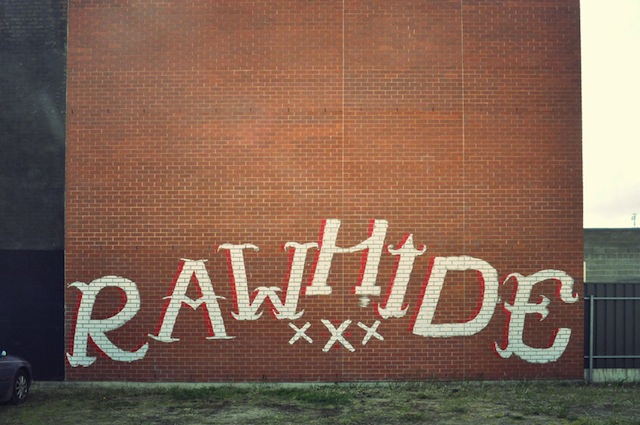
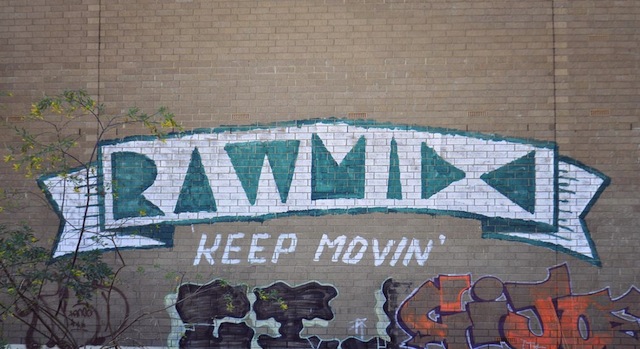
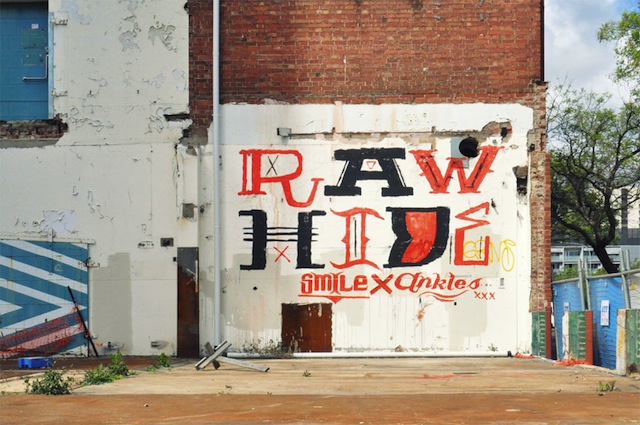
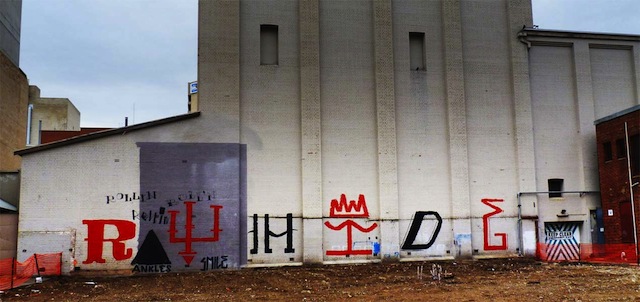
There’s something about these RAWHIDE rollers by Ankles and Smile that I really like. Obviously they’re influenced by ReadMoreBooks, Steve Powers and maybe AvoidPi, but that’s alright by me. These guys are doing some rollers that are a step above what you’re likely to see day-to-day. And they are (or at least Ankles is) based in Adelaide, Australia, so it’s cool to see something so nice coming out of a city that isn’t internationally known for their street art or graffiti.
Oakland has some of the most exciting and slightly underground graffiti and street art going on the USA right now, and GATS (which stands for Graffiti Against The System) is one of the most exciting guys in that already exciting city. iamOTHER is making some videos about what’s going on in Oakland, with a particular focus on GATS. The first part of that series is above.
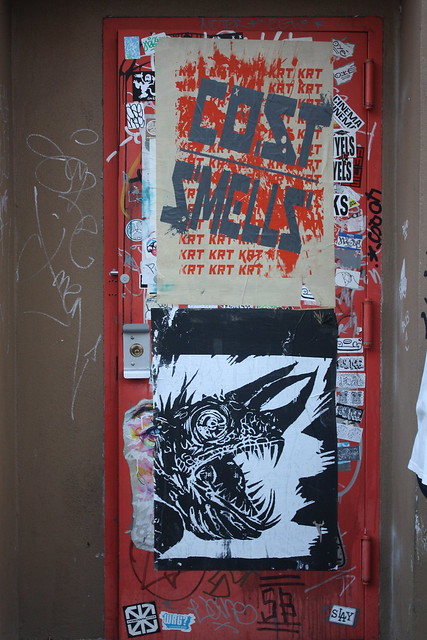
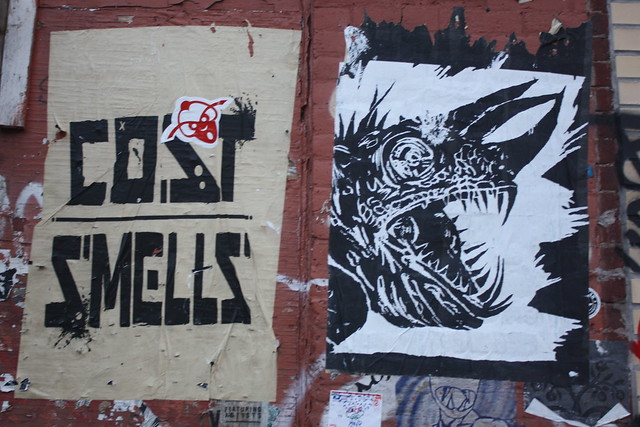
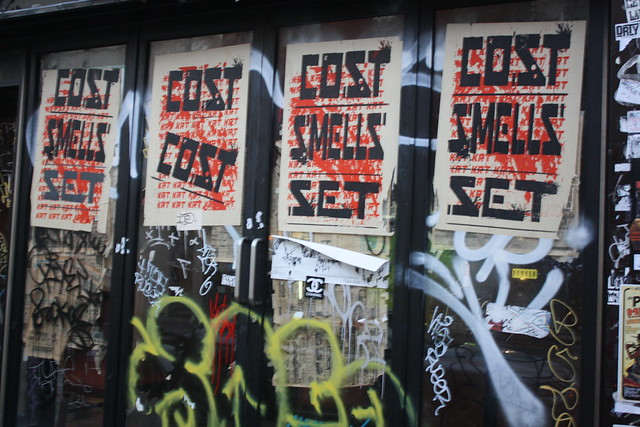
With what has been a relatively slow summer in regards to wheatpasting, Cost, Set, and Smells of KRT and Keely came as a breath of fresh air. Flipping between monochromatic color schemes to eye popping fluorescents, the designs in these posters grab the attention of viewers from a stylistically minimalist stance as well as those drawn in by painfully bright colors.
Of particular interest is the use of “emergency orange” in some of Cost and Smells collaborative pieces. While this color has been co-opted in the area by EKG for quite some time, I was glad to see someone else incorporating it into their work, especially when paired with an orange door.
For those who may not be drawn to text-based work, they are sure to notice the razor-sharp edges of Keely’s lizard. Having a presence on the streets for a while with stickers, these wheatpastes are the largest images I have seen from the artist outside of Pandemic’s walls. The imagery, scale, and voracity with which this team hit the streets recently makes for an exciting end to what has been a relatively slow summer.
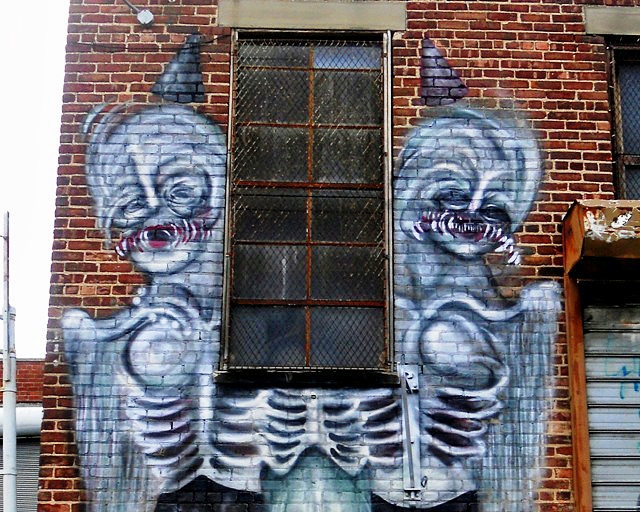
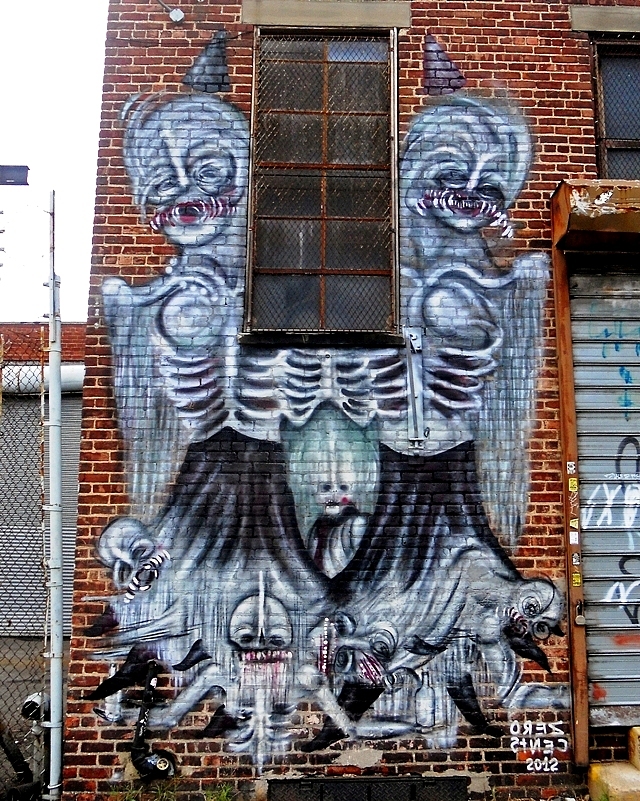
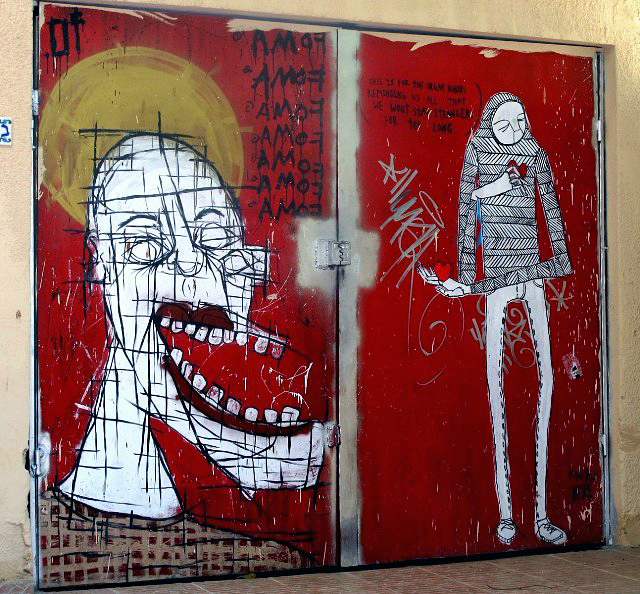
Zero Cents‘ distinctly disfigured – often disturbing — characters have been part of Israel’s visual landscape for years. It was quite a thrill to see his work this past week in Bushwick, Brooklyn.
Zero Cents with Know Hope in Haifa, Israel, fall, 2010
Photos of Zero Cents in Bushwick by Tara Murray; photo with Know Hope in Haifa by Lois Stavsky
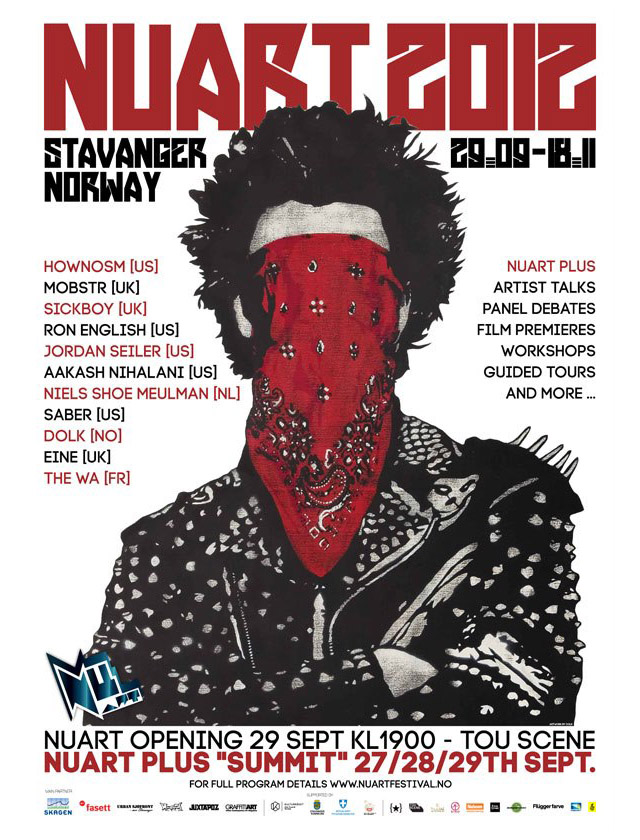
I’ll be participating in three events at Nuart Plus, a 3-day international summit on street art taking place during the festival. Evan Pricco, Tristan Manco, Carlo McCormick and others will be speaking there too. Here’s what I’m involved in: On the 27th, Jordan Seiler and I will be giving a tour of some of the art (and ads) in Stavanger; On the 28th, Carlo McCormick and I will be at Martinique, a cafe and pub, to debate about whether or not one can truly appreciate street art on the internet; On the 29th, Evan Pricco, Tristan Manco and I will be on a panel about street art and the internet moderated by Eirik Sjåholm Knudsen. Sorry if I’m focusing a bit too much on my own stuff, but I’m really excited to be going to Nuart, especially since I’ll be speaking alongside so many of my friends and idols.
There will of course also be an indoor art component to the festival.
Nuart’s street work begins September 20th, the indoor show opens on the 29th at Tuo Scene and the panels and talks will take place on the 27th-29th.
We would like to take a brief moment to thank this month’s sponsors. These are the organizations and companies that keep us publishing, so be sure to check them out!
Brooklyn Museum–GO is a community – curated open studio project. Artists across Brooklyn will open their studio doors, so that you can decide who will be featured in a group show at the Brooklyn Museum. Voter Registration: July 17–September 9, 2012
School of Visual Arts – The NYC art and design school is offering continuing education courses to meet the diverse educational needs of the city’s professional art and design community.
If you are interested in advertising on Vandalog, please get in touch with Nectar Ads, the Art Ad Network.
It’s a great pleasure to introduce my good friend (he DJ’d at my wedding), author and vinyl obsessive Mr Tim O’Brien. He and I share a love of a funky tune and the graffiti you find on record covers but Tim has done more research into the field than anyone I know. His physical collection of graffiti vinyl has to be second to none and through his numerous essential blogs it a subject he generously shares with the world…
– Tristan Manco
Hello, my name is Tim and I have a problem with vinyl…
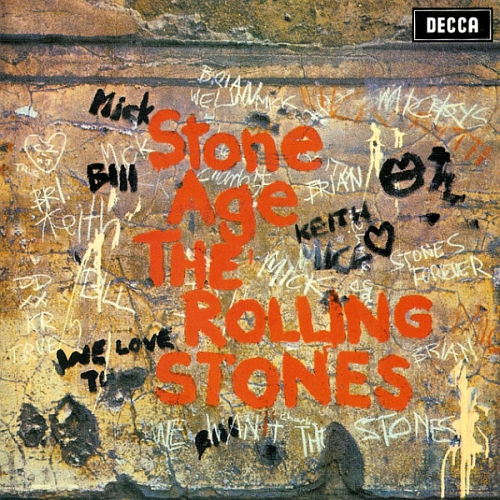
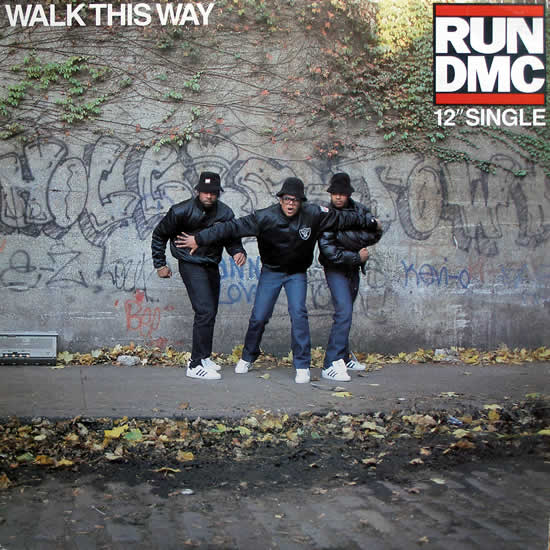
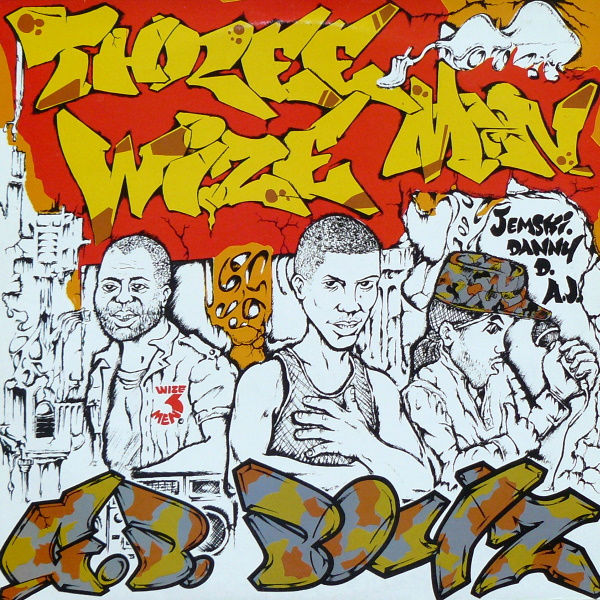
The humble album cover tells the whole story of graffiti. From the earliest tags to the latest styles, the album cover has used them all. Any styles in-between, it’s used them too. Go into any record shop, search long enough and you’ll come across some graffiti-based album art. Look in any of the Hip Hop, Jazz, Rock, House, Indie, Electronica sections and you’ll find graffiti based album art. Look to some of the most famous artists of all time – James Brown, The Rolling Stones, The Jam, Run DMC – and you’ll find graffiti based album art. Go through the bargain bin and you’ll find disrespected tunes with great graffiti based covers. Don’t forget, if the owner/assistant/loiterer gives you a hard time, for some obscure and unfathomable reason, you can always get them elsewhere.
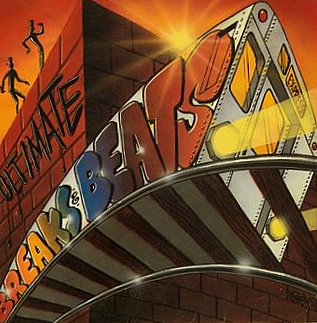
“Walk This Way” by RUN DMCUltimate Breaks & Beats
The first time graffiti album art caught my eye was in HMV, Oxford Street, in the late 80s. The shop was clearing out their vinyl and in a back room they had rows of Ultimate Breaks & Beats LPs. The artwork really captured my imagination, classic as it was and is. Straight away I loved the colours, design, themes and styles and have done ever since, the music on the LPs too. HMV were switching to selling CDs of course. 25 years later and CDs are on the way out, vinyl is still going strong and the Breaks & Beats series looks as fresh as ever.
The inspiration for these blogs came courtesy of a lucky break/some small success with the publication of Naked Vinyl in 2003, thanks to Chrysalis Publishing. For a while I was on the same label as Blondie, kind of and it was a fun time. The graffiti vinyl blogs followed from there and are well on the way to becoming a follow up book in their own right. This is pleasing in lots of ways, firstly because computer servers don’t destroy enough trees for my liking and also because album art is such a great way to showcase the ongoing creativity of graffiti/street art.
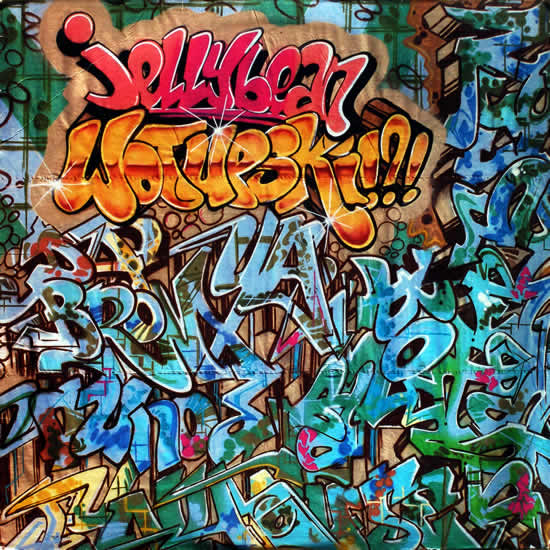
“Wotupski” by Jellybean
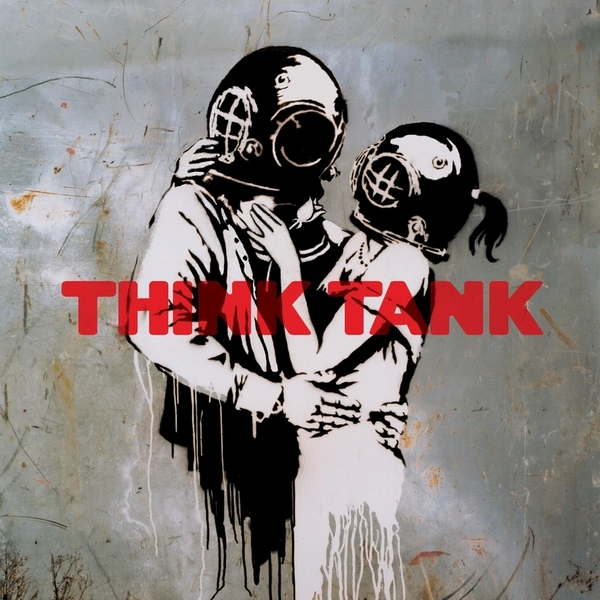
The best thing about graffiti vinyl is that it includes artwork by classic artists like Futura, Seen and Keith Haring, plus lots of different graff/street art styles, and lots of modern graffiti based design too. While, I’m happy to say, the Thames & Hudson titan of street art, our very own Mr Tristan Manco, has designed (with the artwork of Banksy and others) his own graff vinyl covers too. These come courtesy of his freelance design work and are pictured here in all their glory.
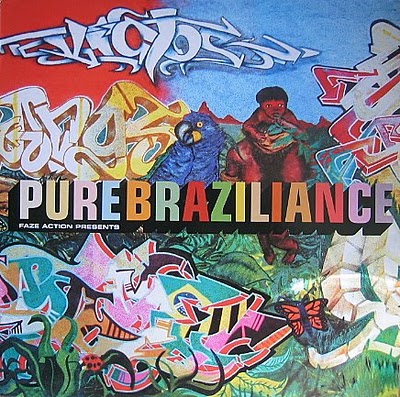
“Think Tank” by Blur“Pure Braziliance”
Most of the covers were bought in the UK or online. With special mentions going to the Notting Hill Soul & Dance Exchange, Rarekind Records, Brighton, West Pier Records, Brighton and FOPP, Cambridge. The mighty Worldwide Empire of Discogs is, of course, due a mention too. Some of the vinyl was, and is, pretty pricey and a few of them I still haven’t been able to find – the, stunning, graffiti picture sleeve of Tyrone Brunson’s The Smurf and the Trouble Funk, 7”, graffiti picture sleeve, of Pump me up, spring to mind. So, if you’ve got them, please send them on to Vandalog for safe-keeping.
The graff blogs created include three themed around graffiti vinyl – an overview with info and links, a gallery and the story of graffiti vinyl:
Some of the above blogs are archives and complete, while others will have content added on an on-going basis. Finally, if you get a chance to check my google blogger profile, you’ll find some more blogs based around other left-field themes. New blogs will be likely added as inspiration strikes.