Rowdy Solo Show

Rowdy

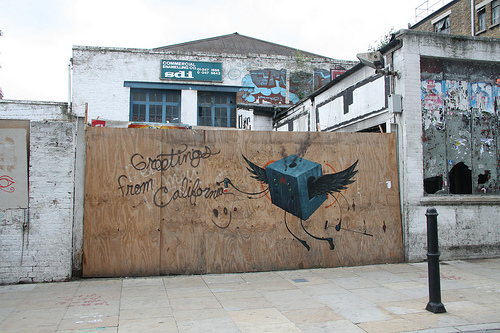
Rowdy has a solo show coming up at Sartorial Contemporary Art on June 4th. I’m curious, but aprehensive. I’ve enjoyed his canvases and his street work, which are completely different, but I’m not sure what I’ve seen could fill a solo show.

Here’s the press release:

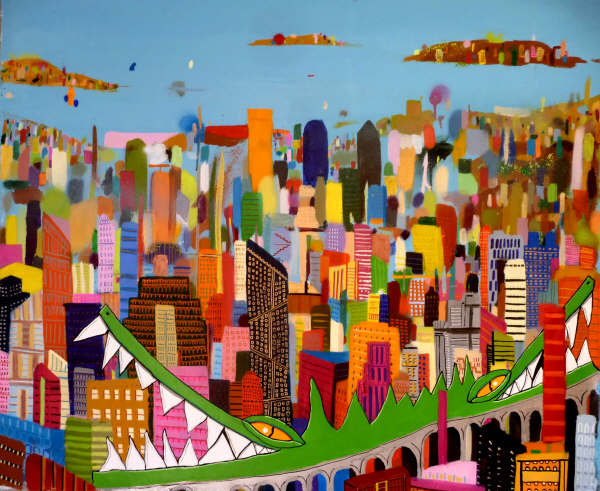
In his first major London solo show the King of Crocs showcases his diverse talent at Sartorial Contemporary Art. Expect to see Rowdy’s unique take on urban living and landscape in the form of his legendary boulders, abstract cityscapes and of course the ubiquitous crocs.

Bricks and mortar may mean money and mortgages to some but Rowdy prefers his building blocks in their raw state. ‘The local quarry provides the bedrock for our roads and cities’ says the artist. ‘I hit the rocks before they reach their destiny of becoming our new urban spaces’. Simultaneously caveman-esque and contemporary, the cartoon monoliths have been described as ‘Ren & Stimpy meets Goldsworthy’. Their arrival in the urban landscape provides jarring juxtaposition.

His Cityscape paintings show Skyscrapers constructed out of the tiniest marks a spray can can make, reminiscent of T.S Lowry’s ‘matchstick men’, combined with 1980’s graffiti fades. Some are hectic, others more meditative. Highly sought after, this accomplished series offers nuances and subtleties both in style and substance, often somewhat lacking in today’s saturated street art market.

Continuing the narrative of City versus The Ancient; Rowdy’s trademark crocodiles are often huge in scale and are indicative of the playful nature of the imagery in his work, and long may we continue to see these King-sized crocs attacking our walls and lurking in the concrete swamps. The last few years have seen him collaborate with cohorts Cyclops & Sweet Toof resulting in one of the most widespread bombing campaigns seen in the UK’s capital in the last decade.

‘Don’t be taken in by his welcome grin, he’s imagining how well you’d fit within his skin…’

Nick Walker book launch @ BRP

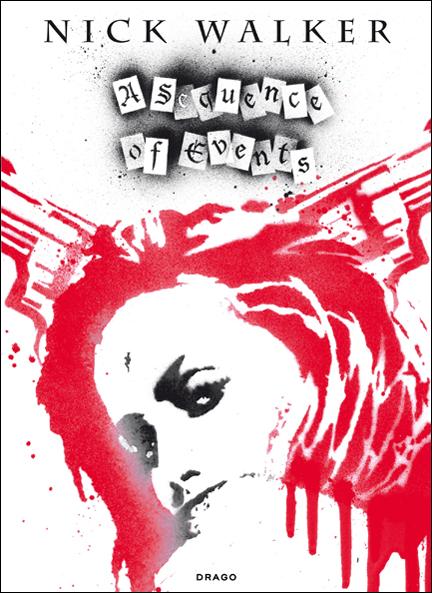
Sequence of Events Cover

“A Sequence of Events” is Nick Walker’s new book, due to be released this spring, and in conjunction with the book, Walker has a solo show at Black Rat Press.

The show, also called “A Sequence of Events” opens May 28th, and there will be 2 screenprints released on that night.

They’ll kill me for saying this, but start lining up outside of BRP soon, and bring tents. Camping out overnight may be the only way to guarantee your chance at one of Walker’s highly-in-demand screenprints.

New Lazarides Rathbone Place Gallery

Lazarides

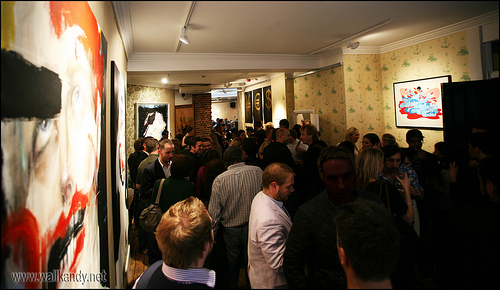
It’s finally open. The new space for The Lazarides Gallery at Rathbone Place in London opened last Thursday for their latest group show called “Grow Up.” I went to, and tweeted, the opening, but I’ve waited to do a proper post on the show because it took until today for me to get back when it wasn’t so crowded.

As usual, Lazarides puts on a good show. Even though they seem to have lost their #1 star, Lazarides reminds us that it wasn’t just The Banksy Show over in SoHo. Vhils, JR, Faile, and many others are doing great work there too.

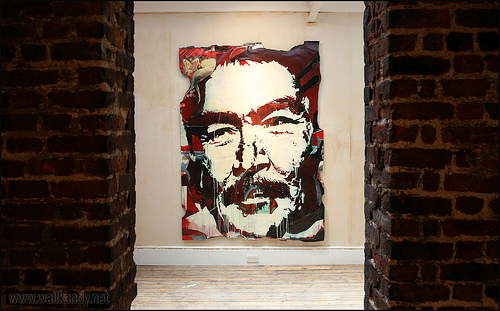
Two giant pieces by Vhils are impressive and I definitely enjoyed them, but almost too big to fully appreciate. You get close enough admire the craftsmanship, and you lose the image, you get far enough away, and the image is clear but simplistic. Hopefully his upcoming solo show (July I think?) will have a range of sizes.

Vhils

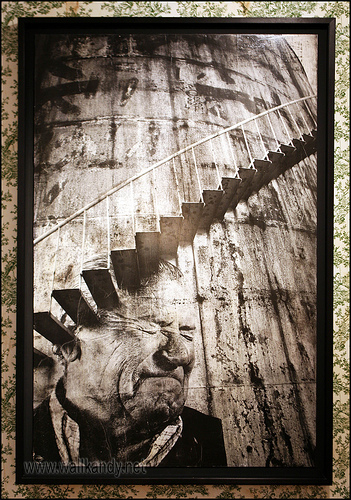
As always, the work from JR was absolutely gorgeous. I can’t say enough good things about the best photographer street artist. There was even one piece from his recent trip to Africa where he pasted his work into trains.

JR

This piece is probably old, but it’s a nice Faile and a bit different:

Faile

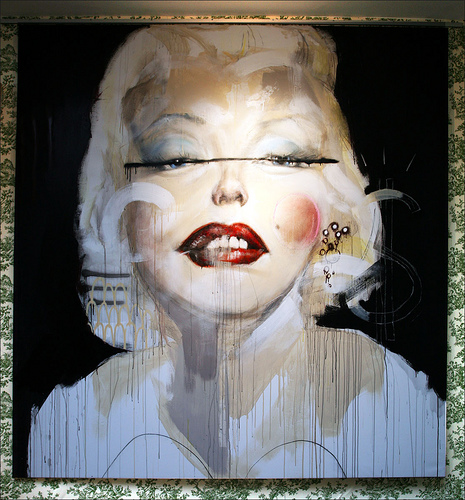
Of course, there was plenty more interesting work from artists like Invader and David Choe (among others), but one worth mentioning in particular is Charlie Isoe. Isoe is the newest artist as Lazarides. All I know is that he’s from Australia and paints very well. This portrait of Marilyn was my favorite. Yes, his work is a bit like a combination of Anthony Lister and Antony Micallef, but umm… okay let’s just ignore that bit for now.

Charlie Isoe

While I enjoyed “Grow Up,” I’m just glad to see Lazarides finally in a space fitting of the gallery’s importance, and I look forward to the solo shows they have lined up for later in the year.

Photos by WallKandy/Ian Cox

Playing catch up with a few links

Here’s a few things that I could/should have done full posts about, but I’d just like to quickly cover before they become too old and get lost in my inbox.

  • Until May 30th you can get a special “early bird” rate on tickets to OFFSET2009, a 3 day conference taking place in Dublin this November. A number of street/urban/low-brow artists will be there including D*Face, Asbestos, and Brad Downey.
  • Faile put up another prayer wheel in New York. Unfortunately, @newyourpulse has just tweeted that the piece is gone. A picture below (and more here):
    Faile
  • Jeff Soto has been in London. I’ve never been a fan of his work (admitted, I have only seen jpegs), which is why I didn’t cover his current show at StolenSpace Gallery, but he’s also done a couple street pieces which I like much more than his gallery work, so below is one of those. Also, here’s a recent interview with Soto for Civil Clothing.
    Jeff Soto
  • Public Ad Campaign‘s recent New York Billboard Takeover was even larger than I could have imagined. They’ve just released a Google map detailing all the work that was done. Great job guys. Looks like you took over the city (if only for a day or two).
  • And lastly, the Brooklynite Gallery‘s latest show has brought a bit of London to New York, with Sweet Toof and Cept getting up in across the pond.
    Cept Sweet Toof

Jeff Soto photo by Sabeth718, other photos by SMKjr

Scrathing the Surface video by Vhils

Vhils is a street artist really taking it to the next level. His portraits and city-scapes actually involve taking a jackhammer to the wall. He’s just put online this beautiful video called “Scratching the Surface.” It shows how he creates his work, and is well worth watching.

For more work from Vhils, check his website. Also, he has work in the current show at Lazarides Gallery (and a solo show coming up there later this year), and he’ll be at the Fame Festival in Italy.

The structure of street art

About a month ago, I was in Baltimore and had a fascinating conversation with Gaia. We were debating which form or forms of government can best be used as an analogy to structure of the street art and graffiti worlds. The primary systems of government that we mentioned were democracy, autocracy/dictatorship, and anarchy.

Gaia’s post on the conversation went online a while ago and can be read on his blog. As Gaia notes, he believes that both street art and graffiti are inherently democratic. Artists and writers can put up their message and everybody has just as much right as anybody else to do so. I would add that this democracy also creates a general respect and understanding between those working on the street. For example, Barry McGee’s work is not going to be painted over because, as a group, artists and writers have given him a lot of respect. Similarly, it is generally understood within graffiti that there is a hierarchy of work, and that work of a higher complexity (pieces) can go over simpler work (tags, throw-ups…), and that hierarchy is upheld by consensus among writers. Gaia’s view seems to be the prevailing opinion among street artists, and many specifically talk about how the democracy of the street is what draws them to working in such a unique environment.

I held this view for a while as well. Then Brad Downey told me that he believes street art is the opposite of democracy. Essentially, his argument is that street art allows him or anybody else to do whatever they want, which isn’t democracy at all. And I’ve started to think he has a point. Maybe street art is more like anarchy.

In a democracy, everybody can voice their opinions, but their actions must ultimately be judged as acceptable or not by the masses. That means an artist could be reprimanded for his or her actions if they are against the general will of the other artists. While there are some unwritten rules of street art and artists might be frowned upon for breaking them, that’s about all the punishment they will get. As long as an artist is not afraid of people hating him, he could potentially claim that ripping up every Swoon wheatpaste in New York is his form of street art, and nobody could stop him no matter how upset they might be. On the street, artists can do pretty much anything they want.

Somebody’s going to point out that Gaia uses a different definition of democracy than I do. Well, we can still look at his definition (“a realm in which agonistic polemics and discourses can occur without suppression”) and see why it doesn’t fit with street art. Take a look at that last bit where it notes “without suppression.” Work gets painted over all the time, and that certainly seems to me like a form of suppression. While all fans of graffiti and street art must accept the ephemeral nature of the work, that generally implies that the work decays over time. On the contrary, work can be buffed or removed seconds after it is put up, and even within the community, many artists have no qualms about painting over other people’s work (and some even develop personal vendettas which play out as writing over/supressing brand new work – see 10 Foot). If that’s not suppression (particularly when it is done by fellow artists/writers), I don’t know what is.

Another potential system of government comparable to the street art and graffiti world might be a dictatorship. Particularly in the graffiti world, artists can get extremely hierarchical (can you believe I spelled that right on the first try?), and the kings have a good deal of power. Admittedly, I am not anywhere near as knowledgeable about graffiti as I am about street art, but as I understand it, not only is there the hierarchy I mentioned earlier with different types of pieces taking precedence over others, but the work of certain writers is left alone by all but the most bold up and coming writers. And unlike street art, when writers do break the rules, they get into actual fights about it (and no, street art’s flickr comment wars do not count).

This even crosses into street art a bit. The way that the street art community currently works, its existence is entirely dependent on passive acceptance by the graffiti community. All too often, street artists get their work intentionally written over with tags and graffiti, and the artists act as though they are honored that some writer is familiar enough with their work to write over it. If graffiti writers wanted to really put in the effort, they could virtually destroy a city’s street art scene.

10 Foot has shown this very well. Even though most artists are still trying to get up, it’s extremely rare to see certain artists whose work has not been tagged over by 10 Foot.

That’s not a dialog, it’s suppression.

The reality is though, no one of these systems can fully encapsulate what street art and graffiti are. I think it is more accurate to say that the correct analogy is whichever one the last person to get up was thinking of when they did their work. Some artists do work with the intent of creating a democratic dialog and respecting the work of others. Other artists just get up for themselves or to spread their message, disregarding the will of others. And many just paint to maintain a balance of power.
Bristol council buffs legal wall

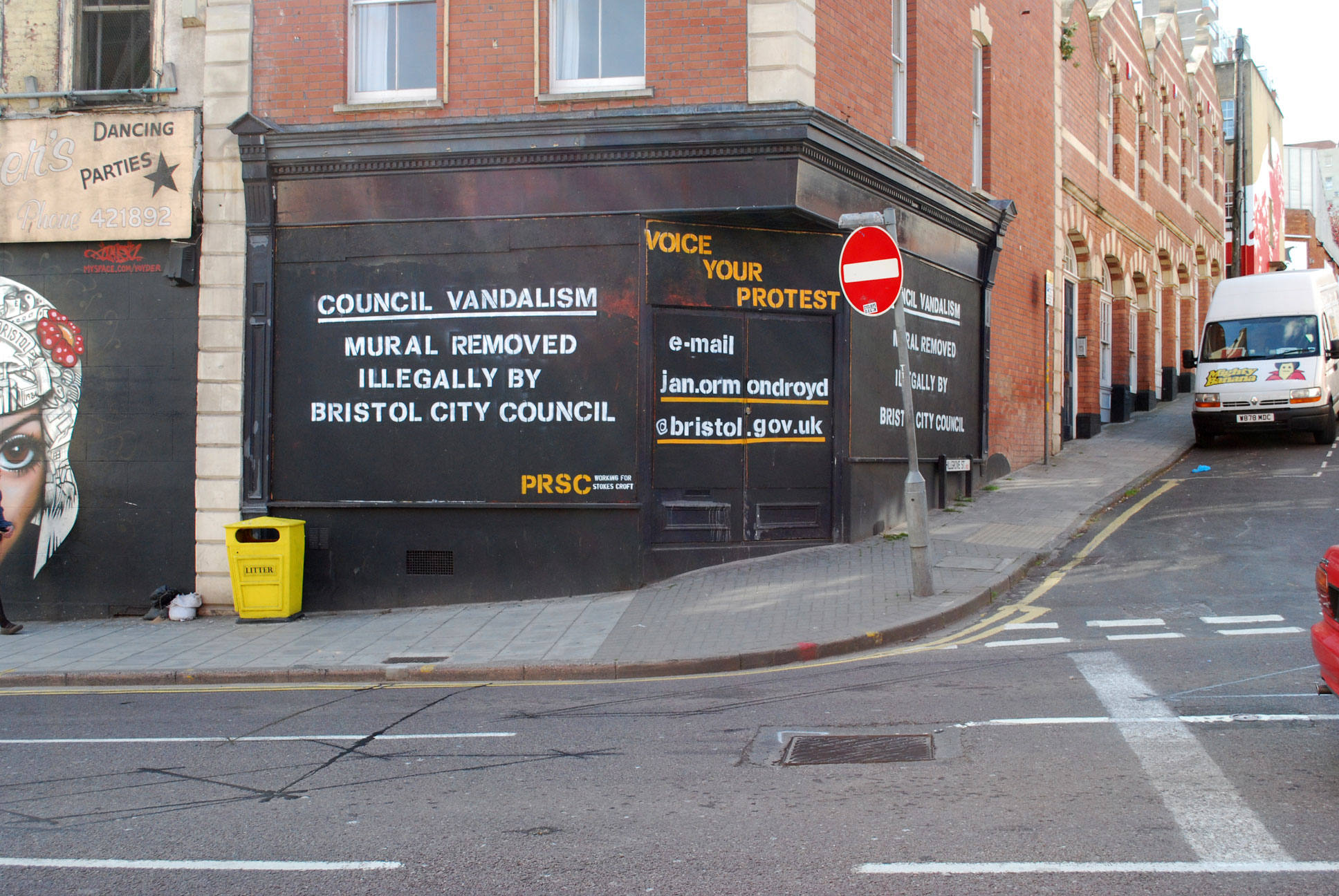
This is not cool. A nice piece in Bristol by some guys called Cheo and 3Dom got buffed by the council. Happens all the time right? Well this particular piece had been painted with permission, and the council knew that.

At leasts the artists got back at the council in their own special way. Check out these photos of before the buff, after the buffing, and after the artists found out about it (click on the images for a larger size)

Original

Buffed

Post-buffed

(that sign reads “Council Vandalism: Mural removed illegally by the Bristol City Council”)

Hopefully, the council will learn from this and be more careful in the future, but I doubt it.

Via Bristol Graffiti