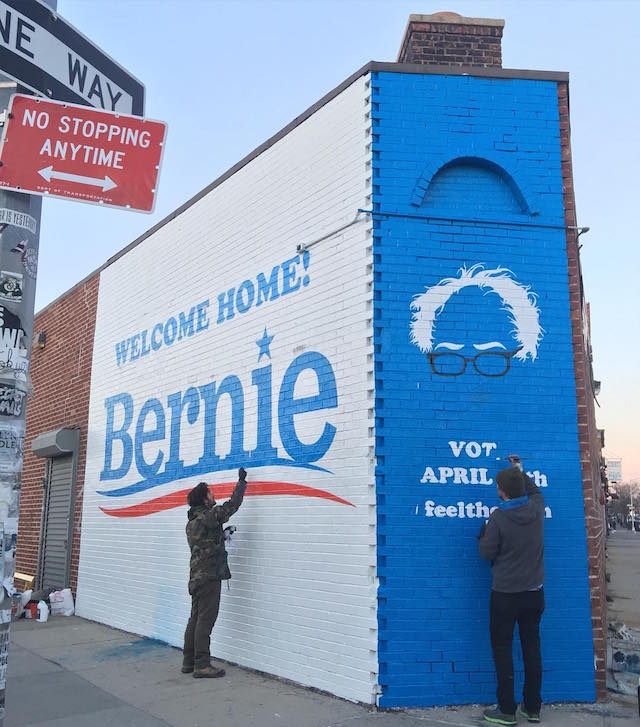
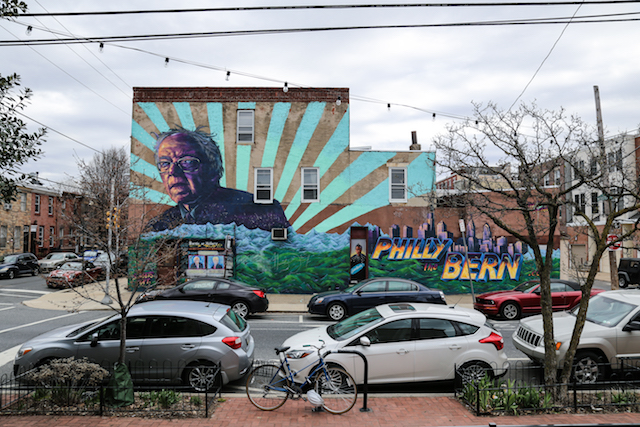
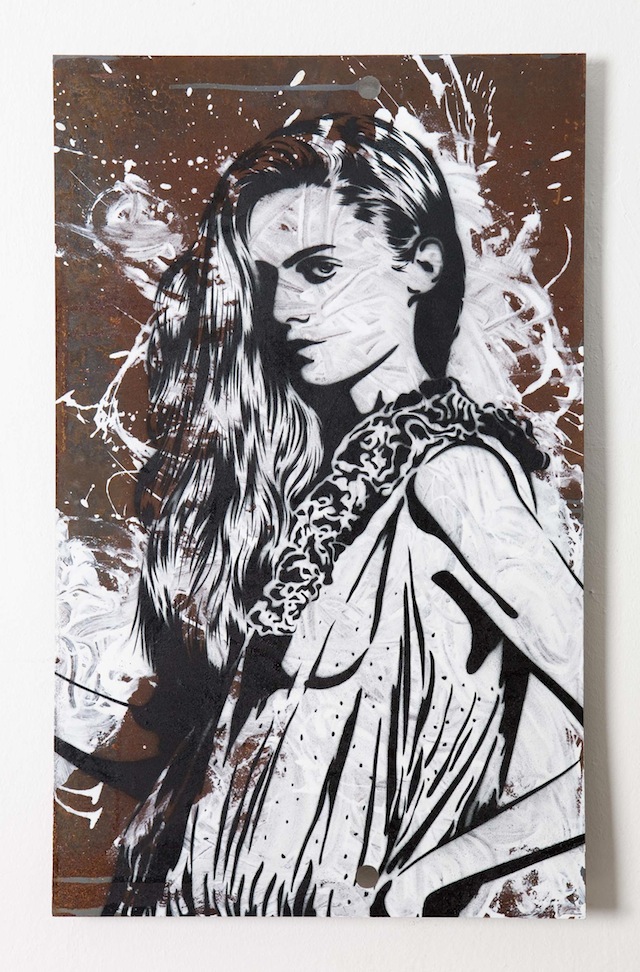
Nick Kuszyk’s Bernie Sanders mural in Greenpoint. Photo courtesy of Nick Kuszyk.
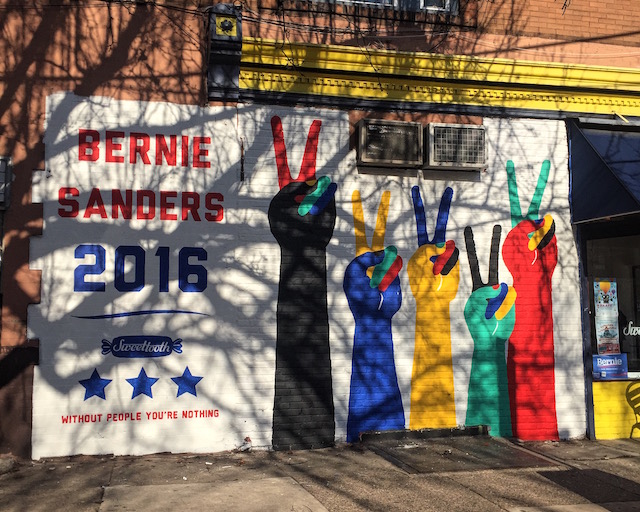
Are you feeling the Bern? Artists definitely are. On Saturday night, Bernie Sanders stopped by The Hole in NYC to check out an art exhibition inspired by his campaign. Artists are also taking their love of Bernie to the street, with pro-Bernie murals popping up in Philadelphia and NYC (and probably other cities too, so let us know if you’ve seen others). Here’s a bit of what’s been going up…
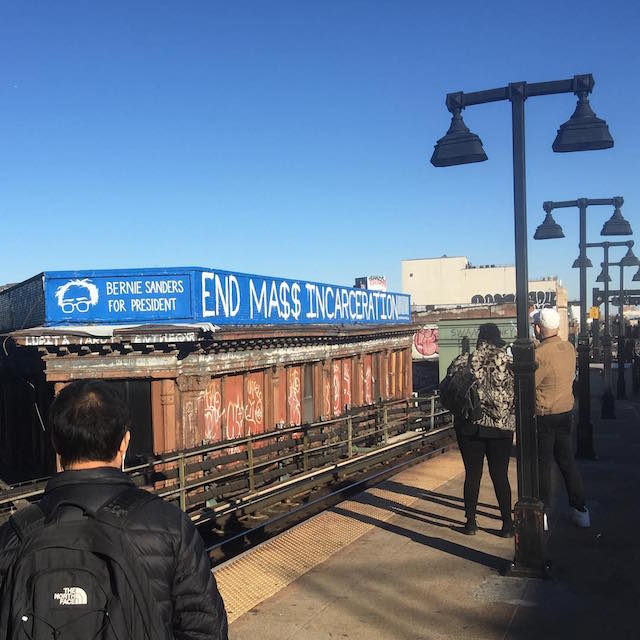
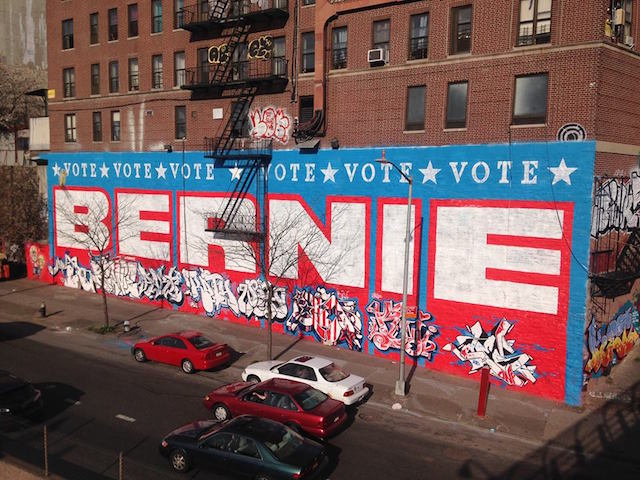
Nick Kuszyk has painted two murals in Brooklyn. One (above) welcoming Bernie back to his hometown in anticipation of the New York primary (takes place on Tuesday!), and one highlighting Sanders’ commitments to criminal justice reform.
Nick Kuszyk for Bernie Sanders. Photo courtesy of Nick Kuszyk.
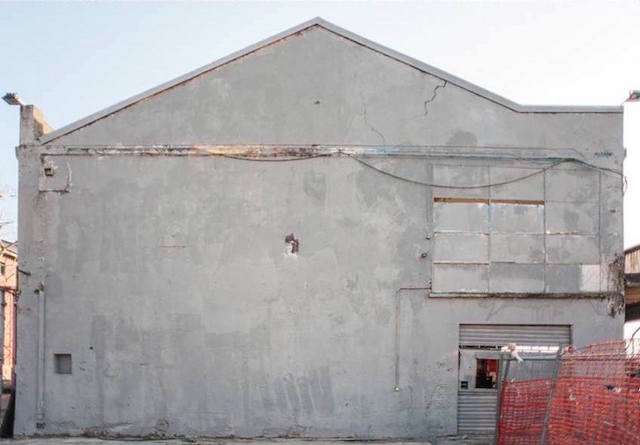
Once the site of a mural by Blu in Bologna, now buffed by Blu and his team. Photo from blublu.org.
Last week, we covered Blu‘s protest in Bologna, where he and a team of helpers buffed out all of his murals in the city (and some now face legal issues as a result). They were protesting an exhibition, Street Art – Banksy & Co., which includes murals by Blu that were removed off the streets of Bologna and are being exhibited against his wishes. I called on people to boycott the exhibition. However, the response from the street art community has been more mixed, with many supporting Blu, and others suggesting that Blu has acted like a petulant child. The exhibition opens today, so we’ll soon see how the public responds, and (as the show’s lead curator Christian Omodeo insists we hold our breath for) what the controversial mural remnants look like in the museum.
In the meantime, John Fekner, whose work is included in Banksy & Co. (as is the work of his long-time collaborator Don Leicht), reached out and shared his reactions with Vandalog. Fekner is a key historical figure in street art, a pioneer as a stencil artist with an unimpeachable record as a political artist and an artist’s artist.
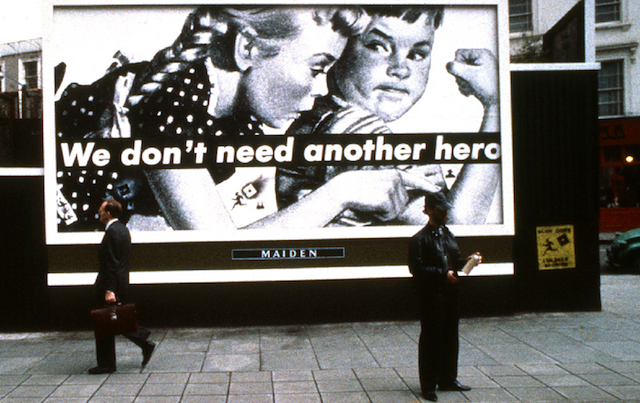
John Fekner’s Slow Down Children Growing (right) and Burning Tech, Factory & John Wayne Cowboy tagged on Barbara Kruger Billboard. Spray paint & stencil, London England 1988. Photo courtesy of John Fekner/Artangel.
From Fekner:
Whether you stole a pencil from your schoolmate, or a lover from your best friend, or a stapler from work, the cold-hearted facts remain: everyone steals. We exist in a confusing and twisted reality of unscrupulous financial gain and artistic theft.
If you create rock, punk, rap or any other type of music, there’s no way of stopping some Muzak elevator-friendly dispirited interpretation of your original rebellious music.
If you originally aspired to be an underground artist; then just stay underground. Similarly, if you’re a musician, don’t get pissed off if a fan asks you to sign a copy of your cutout vinyl album that they bought for a buck or less.
In the 80s, low brow thieves literally ripped Keith Haring’s chalk drawings from subway advertising spaces and entrepreneurial high brow scoundrels ripped off New York City urban kids’ graffiti sketches for pennies.
The bottom line is: what’s done in public-doesn’t remain in public. There’s no protection for artists who trespass. It’s the chance one take outdoors.
If you create illegal art murals, street rules are always in effect:
1) You can’t stop a drunk in the middle of the night from pissing on your wall.
2) You can’t stop a bulldozer from razing your work.
3) You can’t stop a neighborhood anti-graffiti squad from painting over your work.
4) You can’t stop a well-dressed thief in a suit, or their hired slug with a chisel, from removing your wall work and hauling it off to their lair, garage, museum or art market.
Under any circumstances, don’t immediately and irrationally react. If your original aspirations were to be an artist- then just do what you were meant to do: be an artist. Don’t double shift and be a night watchman patrolling the streets to try and thwart thieves of your work. Unique temporary outdoor creations engendered a public conversation that includes everyone: art lovers and art haters, lowbrow and highbrow, and everyone who interacts with your public work.
If you analyze and then destroy your creations; that’s an overreaction. Courageous? Yes. But it goes beyond your original spirit, freedom and joy of creating your work. It might potentially backfire and flame unquenchable desires for something else: more acceptance, more branding, more visibility, more publicity, more interviews, more legendary status, etc. It’s tricky.
The rip-off and resale of an artist’s artwork continues long after the artist is gone. If the artist doesn’t erase it in his/her lifetime, there’s a good chance that the corrupt art world of bankers, developers, board of directors, scholars, academicians, curators or art history itself, will erase you.
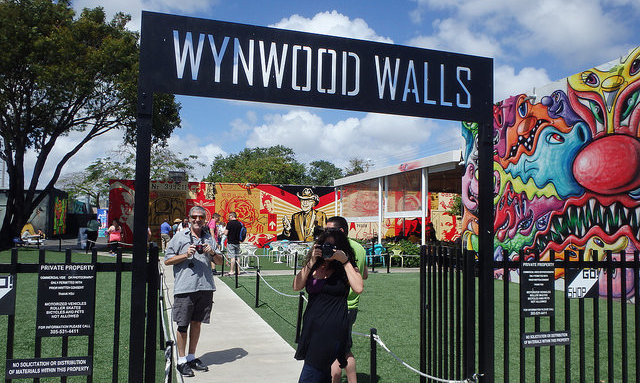
The entrance to Wynwood Walls in Miami, Florida. Photo by Osseous.
Earlier this week, the online street art community was abuzz about an article by Rafael Schacter for The Conversation, From dissident to decorative: why street art sold out and gentrified our cities. Between the time I left my apartment on Monday morning and when I arrived at work half an hour later, it seemed like a dozen of my friends had shared the article or reacted to it in some way.
Schacter has captured a feeling about street art and contemporary muralism, a nagging fear really, that seems to have been bubbling just beneath the surface for a while now. Basically, Schacter argues that street art isn’t rebellious anymore. Rather, that it’s most notable form is as a tool used by corporations to spur gentrification. Agree or disagree, the article is a must-read.
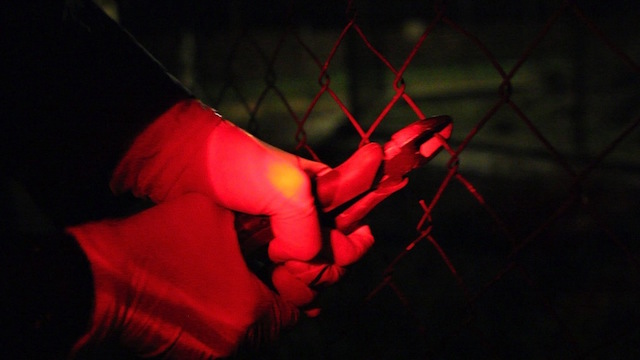
A still from DE-FENCE. Image courtesy of DE-FENCE.
Earlier this week, two very different pieces of street art landed in my inbox within half an hour of each other. That’s not so strange. Plenty of people send me photos and videos every day. What was strange is that both pieces aim to shed light on the crisis facing the thousands upon thousands of people in the midst of international migration, and that both pieces were installed without authorization.
The first piece is by two of my favorite artists: John Fekner and Fra.Biancoshock. “Family Portrait ” (Displaced And On The Run…) is the first time these two artists have collaborated. Fekner comes from the first generation of contemporary street artists, putting up his first stencil in 1968. Biancoshock is a young Italian street artist making some of the most exciting interventions in public space today.
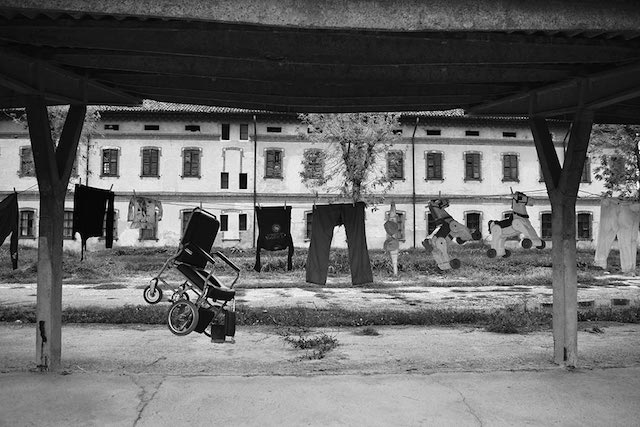
“Family Portrait ” (Displaced And On The Run…). Photo courtesy of Fra.Biancoshock.
Fekner and Biancoshock have intentionally avoided saying where Family Portrait is located, but they do have a bit to say about why they did it:
Drawing on the spirit seen in Dorothea Lange’s photographic portrait documentation of rural poor families and migratory farm workers during the Great Depression, the artists’ intent is to create an empathetic reflection of the plight of the migrant; an intimate portrait of a family “left hung out to dry” and on the run.
While Fekner and Biancoshock’s intervention is quiet and meditative, a group of artists and activists in the Czech Republic have responded to the plight of the migrant with a very different energy.
A still from DE-FENCE. Image courtesy of DE-FENCE.
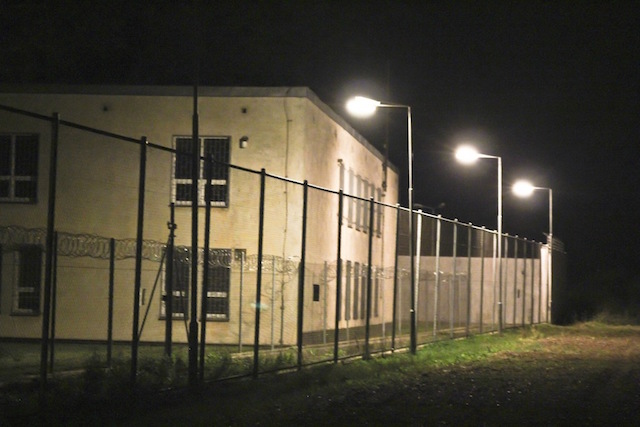
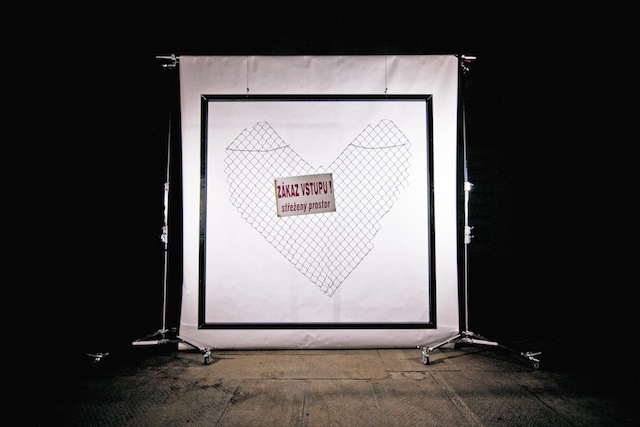
The DE-FENCE collective has made their presence felt at detention center (a former prison) in the Czech village of Drahonice. The detention center currently houses refugees that were caught by the Czech authorities. The refugees are incarcerated indefinitely and watched over by up to 100 guards, and each refugee is charged $275 a month for the privilege. On September 28th, Czech Statehood Day, DE-FENCE visited the detention center, which they compare to a concentration camp. DE-FENCE brought with them a can of paint and some bolt cutters. Here’s what happened:
Now, the heart-shaped section of fencing that they cut out of the detention center is going to be auctioned off, with all profits going towards “grassroots refugee aid activities.” The starting price is 10,000 euros. If you’re interested in buying the object, contact de-fence@riseup.net.
So you’re swiping right and swiping left, swiping left and swiping right, swiping right and swiping left… Tinder is a practically mindless activity, at least anytime I’ve ever seen someone use it. But what are you swiping right and left, yes and no, to? Sometimes, it’s people’s lives.
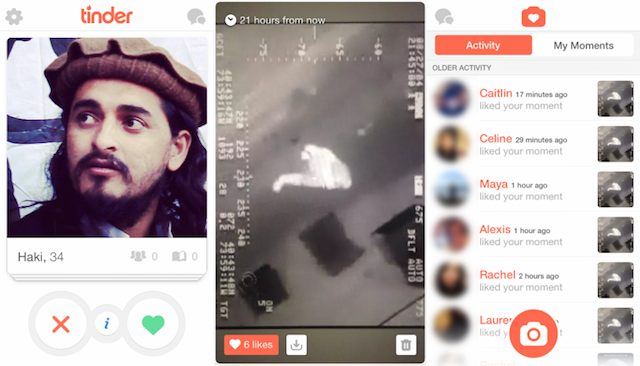
This isn’t actually a new project, but last summer artist and hacker Matthew Rothenberg was inserting imagery of drone strikes and drone strike victims into Tinder for an artwork he calls Swipe Left. That bearded young man gazing off into the distance wasn’t another Williamsburg hipster. It was Hakimullah Mehsud, a commander in the Pakistani Taliban. Mehsud was killed by a US drone strike in 2013. Which way did you swipe? And what about that odd black and white photo that you liked on “Haki’s” profile? Blurry abstract art? No. Footage from a drone about to unleash hell on a target.
Since Rothenberg has already written so well about the social and political meaning ofSwipe Left, I just want to make a note about its meaning within the art world. Rothenberg considers the piece to be performance art, and yes it is, but what I think is most fascinating about Swipe Left is its relationship with street art. It’s a great example of what I’ve called invasive viral art, art that treats digital public space like street art and graffiti treat physical public space. While Tinder users are expecting one thing, Rothenberg gave them another, and he used the app for something it isn’t intended for.
Swipe Left may not immediately appear as art to viewers, but that’s okay. Plenty of street art doesn’t either: John Fekner’s random dates series, Dan Witz’ Broadway Poem, Jenny Holzer‘s Inflammatory Essays when they first appeared on the street as posters, and of course Shepard Fairey‘s early work could all appear as something other than art to someone seeing it for the first time, but it could still reach them. And as Rothenberg points out, “Tinder members who encounter the images are forced to make a decision.” Unlike street art, which can be ignored, Rothenberg’s project can be swiped away or not understood by the view, but it can’t be ignored entirely, and any reaction to Swipe Left‘s content is a valid and interesting data point.
But even if Swipe Left is a bit hidden within Tinder, arguably really meant to be be considered by observers reading about the work later on, not the Tinder users participating in the performance/experiment, the piece shows the potential for a new venue for performance art and invasive viral art.
What if someone like Shepard Fairey joined Tinder and used it to put his art in front of a new and unsuspecting audience? Every day, he could upload a different poster as a profile picture. Suddenly, his work would be reaching people in a relatively random way, like a sticker or a poster on the street does. And if people are playing with their phones and browsing Tinder as they ride the bus to work rather than looking out the window where they might see some street art, why not place that art on Tinder instead of, or in addition to, the street? Reach people where their eyeballs already are. I’d swipe right to that.
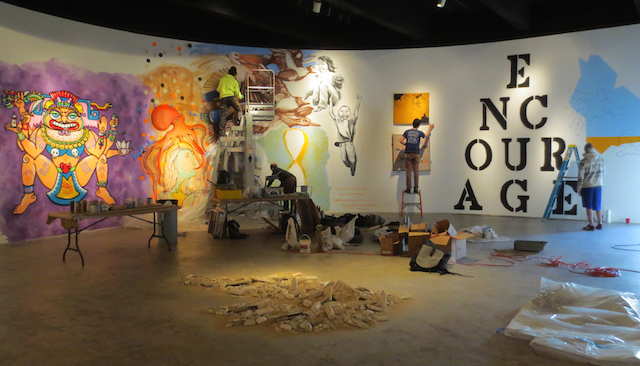
This weekend, a particularly forward-thinking yet historically mindful street and graffiti exhibition opens at Long Island University. CONCRETE To DATA, curated by Ryan Seslow, explores the history of street art and graffiti from golden age of NYC subway graffiti through to the emerging potential for digital public art in forms such as virtual reality environments and animated GIFs.
CONCRETE To DATA includes work by many Vandalog contributors and friends including Caroline Caldwell, Gaia, ekg, and Yoav Litvin. Seslow also included my book Viral Art and our collaborative project Encrypted Fills in the exhibition. On some level, CONCRETE To DATA feels like vindication and the physical manifestation of Viral Art, albeit through the eyes of another curator. Seslow and I both have a deep love for early street art and graffiti, as well as a belief that some contemporary digital art is created and disseminated in that same spirit.
In a fitting coincidence, the exhibition takes place at the Steinberg Museum of Art at Long Island University in Brookville, NY and will run during the 10-year anniversary of Tawkin’ New Yawk City Walls, an exhibition curated by John Fekner that took place in the same space in 2005. Tawkin’ New Yawk City Walls was actually conceptually similar to CONCRETE To DATA, not just another street art exhibition in the same space. Ahead of his time as always, Fekner included digital works in Tawkin’ New Yawk City Walls and arguably even hints at the possibility of viral art in the exhibition’s curatorial essay. A decade later and the world predicted in Tawkin’ New Yawk City Walls has come to fruition, and artists are creating new works for a new world, as seen in CONCRETE To DATA. In this way, Seslow provides an important and expansive update to his friend Fekner’s exhibition.
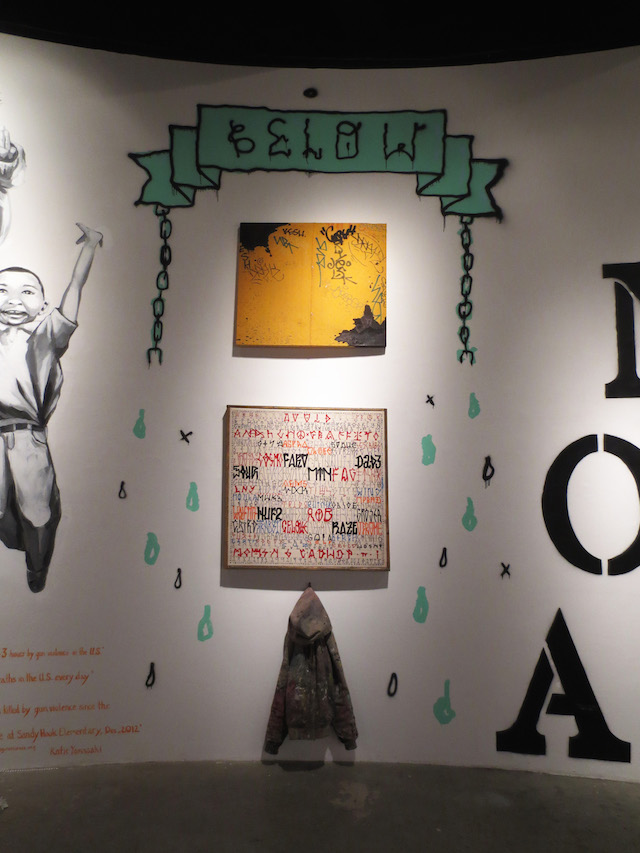
But CONCRETE to DATA is more than an exhibition to promote digital media as a route for contemporary street art and graffiti. It’s also an exhibition that attempts to capture, again much like Tawkin’ New Yawk City Walls, the most interesting elements of the contemporary streetscape in NYC and place those in a historical context alongside the best of previous generations. There’s work from Adam VOID, Swoon, Gaia, Fekner, Cash4, and many others. So, there are visuals to enjoy too.
Adam VOID’s installation at CONCRETE to DATA
CONCRETE to DATA opens on Friday, February 6th from 6-9pm and runs through March 21st. Learn more here. I’ll be missing the opening because I’ll be at Sam Heimer‘s Why Are You Here?, opening that same night at LMNL Gallery in Philadelphia, but I’m really looking forwarding to checking out CONCRETE to DATA in person soon.
This year was my third time visiting the Nuart Festival. I went first in 2009 as a tourist, returned in 2012 to participate in Nuart Plus (the conference portion of the festival) participant, and finally this year participated in and helped a bit to plan Nuart Plus. I have a lot of love for Nuart. For me, the three models of muralism festivals that I look to most often are Nuart, FAME and Living Walls. But, out of the three, Nuart has always confused me the most.
John Fekner
FAME is (or was, since it’s no longer active) perhaps the only no-holds-barred street art festival. It can be difficult to tell what’s been painted legally and what’s been painted illegally, and festival organizer Angelo Milano doesn’t hide his face. In the small town of Grottaglie, Italy, it would be easy for anyone to track down Milano and confront him about painting on their home. Still, Milano never seemed to care. He just wanted to invite amazing artists to town to paint walls and maybe make a print or two at his studio. Grottaglie now has one of the finest collections of murals, graffiti and street art in the world.
Living Walls is one of the most professional DIY outfits I’ve ever encountered. They are the model of a well-run muralism conference with next to no budget, sometimes stumbling but always trying to do something great for Atlanta. Living Walls has the uncanny ability to launch or at least predict the impending launch of a muralist’s career. They produce some blockbuster murals, but usually not from the artists you would expect.
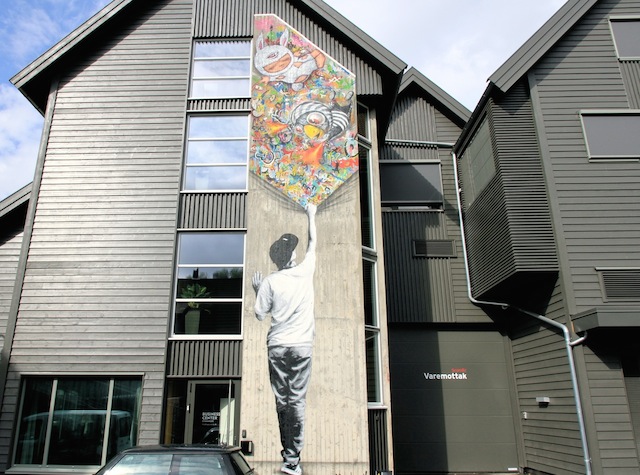
Martin Whatson (with BON and Alex Face) at Stavanger’s Scandic Hotel. Whatson’s art also decorates the inside of the hotel.
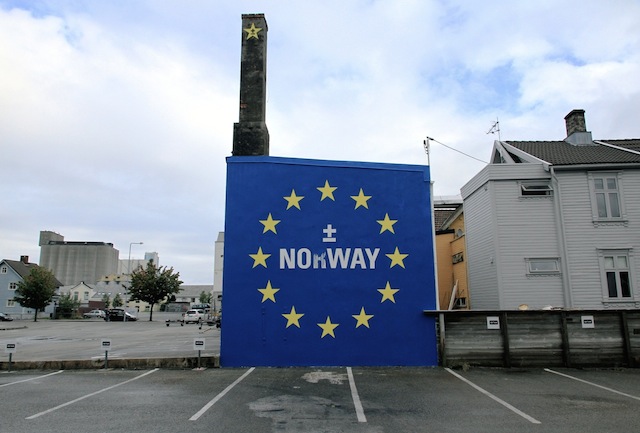
Nuart is a brilliant schizophrenic beast, oscillating between Martyn Reed’s seemingly dueling interests of creating a spectacle of corporate art and disrupting The Spectacle. That was more true than ever this year, with an artist line up including Martin Whatson, SpY, Tilt, Fra.Biancoshock and others. What I mean is, there are artists who were invited to paint murals that function as billboards for print releases and decor for posh hotels, and artists who are invited to install “interventions” (Nuart’s euphemism for illegal street art). Even Nuart Plus was split (and this is an idea I agreed to when we were planning the conference so if this is a problem, I’m as much at fault as anyone) into one day about “activism” and one day about “muralism.”
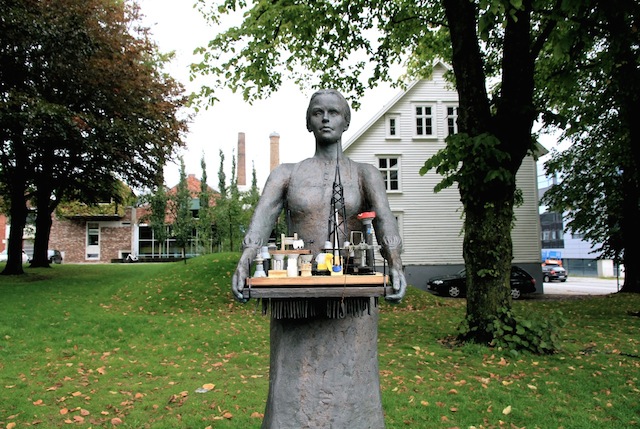
Maismenos’ intervention for an existing public sculpture
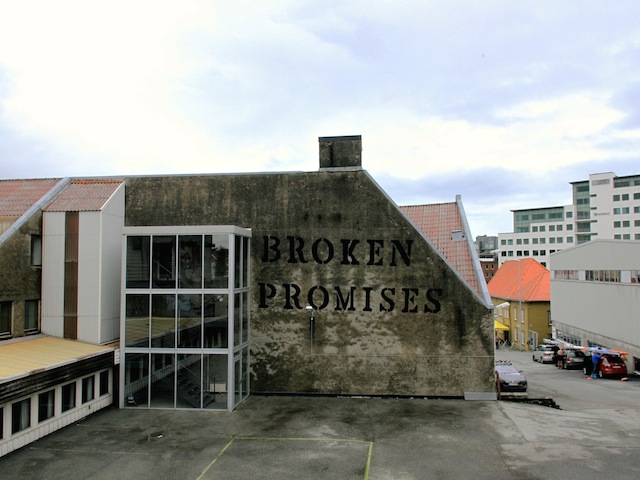
Sometimes, this schizophrenia results in beautiful things that few other festivals would be able to facilitate. Maismenos‘ mural, indoor work and outdoor interventions this year are a great example. Reed isn’t afraid to let artists get political, with their topic of choice typically being oil, since Nuart takes place in the oil city of Stavanger, Norway. And maybe he’s only able to get away with that because he also brings in artists like Tilt and Etam Cru.
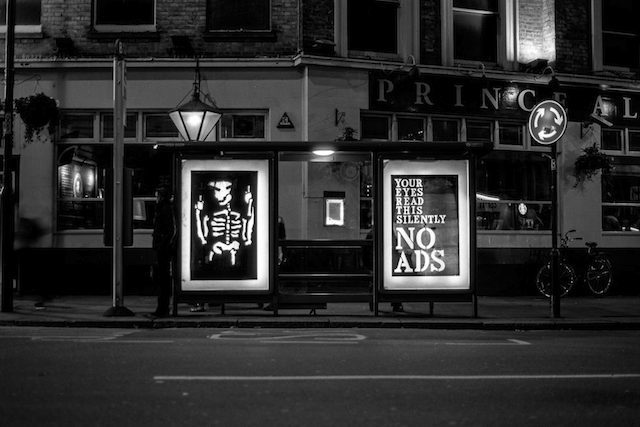
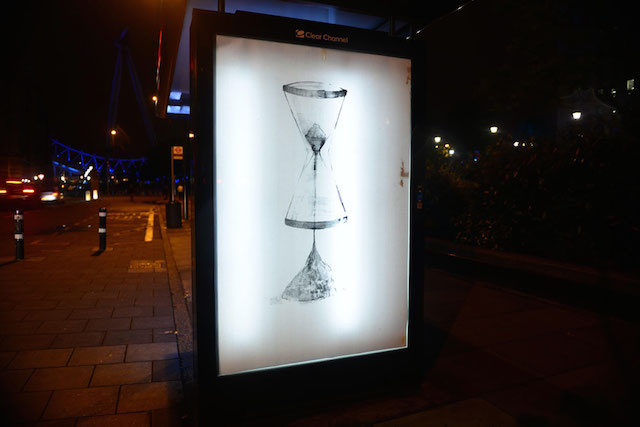
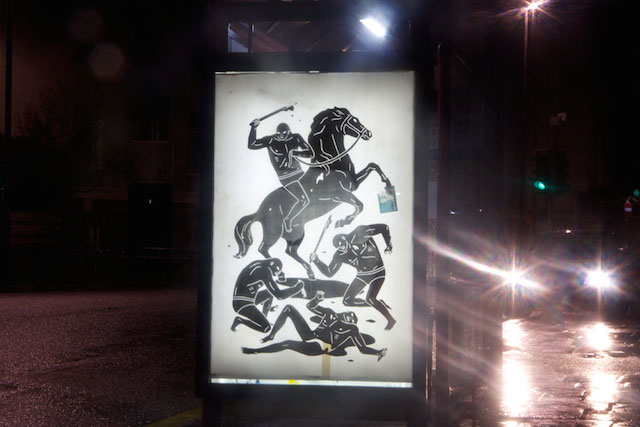
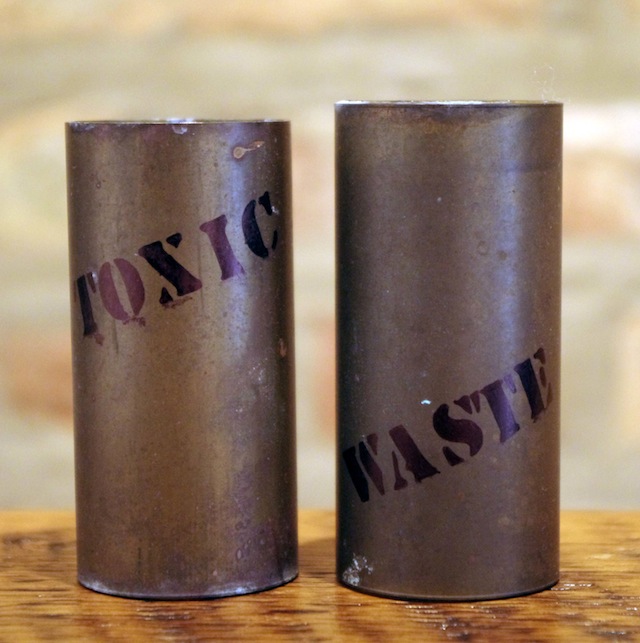
About two years ago, a group got together to take over about 50 billboards throughout the UK in the course of a few days. It was the Brandalism project. And they are back. Last month, Brandalism brought together the work of 40 artists, including a few very big names, to replace 365 bus-shelter ads in 10 UK cities. The results are beautiful and impressive. Here are a few of my favorites (okay, it’s a lot, because there’s a lot of great work in this project):
Chicago’s Vertical Gallery has a group show opening this weekend featuring the work of some of the world’s top stencil artists (and some artists who are just stencil artists in the world). sten(t)-səl includes over a dozen artists, including John Fekner, XOOOOX, Aiko and Rene Gagnon. It opens this Saturday from 6-10pm and runs through July 27th.
This is an essay I wrote a couple of years ago for a book that was to be a collection of essays by a number of different people in the street art world, but the final product has not yet materialized, so I’m posting the piece here instead.
I don’t want to see the plan succeed/There won’t be room for people like me/My life is their disease/It feels good/And I’m gonna go wild/Spray paint the walls – Black Flag
Good subcultures get co-opted by the mainstream. That’s what happens. Punks and preps, hippies and hipsters, gangsters and geeks have all had parts of their cultures brought into the mainstream, and that attention usually harms the actual subculture.
Sometimes it can feel like street art is getting taken over the mainstream more and more every day. Plenty of people have told me that Vandalog contributes to that co-opting of the culture. The most obvious examples naturally also tend to be the most popular names in street art: Banksy and Shepard Fairey. These guys used to be the torchbearers of street art, but their newfound fame as household names has come at a price: they certainly aren’t the revolutionary artists they once were, and I would go so far as to say that in their outdoor work they are as much guerrilla marketers as they are artists. There’s plenty to say on that topic alone, but I won’t get into too much detail about the negative aspects of street art. I still have faith in the general movement of street art: Even as some artists “sell out,” it’s inevitable that street art as a whole will remain authentic, powerful and revolutionary for a long time to come.
Anyone who has read Norman Mailer’s 1973 essay The Faith of Graffiti has probably had a good laugh at Mailer’s suggestion that graffiti was already dying out. Street Art, a book by Allan Schwartzman and published in 1985, makes a similar suggestion about street art. Looking through Street Art, you’ll see the work of early street artists like Jenny Holzer, John Fekner and Richard Hambleton as well as many other names that have mostly faded from the history of street art. Most of those artists no longer make street art. Of course, street art didn’t die out, and Schwartzman was far from the last person to write a book about it, but something special is definitely captured in Street Art: The first generation of modern street art.
While most of that first generation has now moved on from street art into other mediums, they inspired future artists to start working outdoors. In the early to mid-90’s, artists like Phil Frost and Reminisce were members of a new generation doing work on the street. Frost doesn’t work outdoors anymore, and Reminisce only very rarely does. They and many (but of course not all) of their contemporaries have more or less moved on from their roots.Then in the 2000’s, new artists like Swoon and Leon Reid IV became involved in the movement with as much passion as previous generations. While both Swoon and Leon Reid IV are both still actively making work outdoors, they have somewhat moved away from street art’s anti-establishment roots: a good portion of their outdoor work is being done with permission and in cooperation with galleries, museums or arts organizations. Over the last few years, the internet has allowed street art to grow even further, and talented new artists from around the world are coming to light all the time. Artists like Roa and Escif were already well known among street art fans before they first painted outside of their home countries because people had seen their artwork online.That’s an oversimplified history, but hopefully it shows in a very general way that street art is always evolving.
Since the 1970’s, the media has lost and gained interest in street art numerous times. Naysayers often suggest that the interest of media and the injection of money can only serve to destroy street art culture, but each time this cycle repeats, street art is reborn and brought back to its core values by a new generation of revolutionary artists. Even as the most world-famous street artists stop making street art, there’s always a talented and idealistic artist just starting out with a can of spray paint or a bucket of wheatpaste, working their way up from the bottom.
Artists and even people who don’t consider themselves artists are interested in the opportunities that only street art can provide. Once the idea that street art exists is in somebody’s head, it can’t be taken away. Now that the idea of street art has become part of the collective mainstream public consciousness, it can’t be taken away from there either. Even as its general popularity may fluctuate, the idea of street art is always going to be resonating with somebody around the world, and that’s all it takes. People want to express themselves and communicate with the public, and there are few better ways to reach the public than street art.
Street art doesn’t discriminate. A trained artist in a studio with dozens of brilliant assistants can make street art, but so can a teenager with nothing more than a permanent marker and an idea. Practically any wall is an equally valid place for a piece of work for drunken men to piss on or for kids to be inspired by.
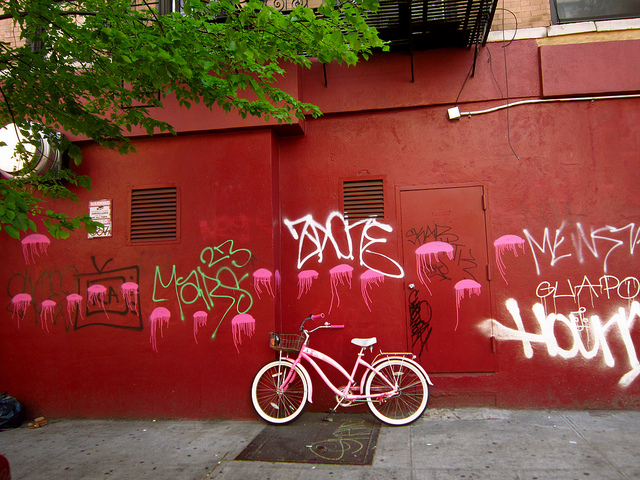
Tags by The Jellyfish. Photo by bitchcakesny.
The combination of almost no barrier to entry and the fantastic power wielded by street artists, a combination unrivaled by any other art form, is why the underground nature of street art will always triumph over any push to make the genre truly mainstream. It just takes one person with a crazy idea to shift the culture in a new direction, and there are thousands of those people out there trying out crazy ideas every day. You can’t make a culture mainstream if the thing is constantly changing, you can only make out-of-date segments of the culture mainstream.
And does it really matter if one segment of street art becomes mainstream? The fact that you can buy an OBEY shirt in a department store doesn’t diminish the power that street art has in giving a voice to any person who has something to say, and it doesn’t make it any harder to pick up a can of spray paint for the first time. Street art is a great way to buck the system, especially if that system is the street art establishment itself.
For the last three decades in particular, working outdoors without permission has fascinated artists, and they keep finding ways to do it differently. During that time, stars have been born and many have faded away. Media and art-world interest has waxed and waned. In the end though, the mainstream popularity of street art doesn’t make much of a difference. Artists will always have the drive make street art and the public will always notice street art. That’s not going away. Even if it’s just one artist reaching one other person, street art can change the world. Of course, it’s never going to be just one artist. From here on out, it won’t be less than an ever-evolving army.