In defense of Mr. Brainwash (the appropriation, not the art)

January 31st, 2011 | By | 18 Comments »

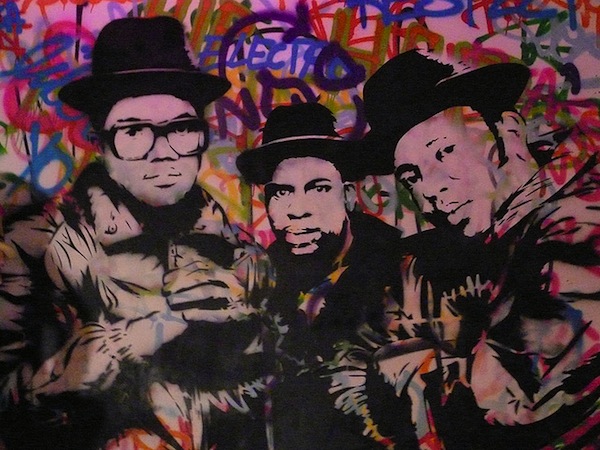
Photo by catheadsix

As mentioned a few days ago, Mr. Brainwash is being sued by Glen E. Friedman over the use of Friedman’s iconic photo of Run DMC. While this lawsuit has been going on for quite a while, attention was first really brought to it after a recent post on Boing Boing. The immediate reaction from the blogosphere seems to be to side with Friedman and against MBW, while somehow trying to explain how this is massively different from Shepard Fairey’s lawsuit with the AP where most of these same people were siding with Shepard.

I would love to, as usual, bash Mr. Brainwash’s work as overpriced, barely qualifying as art, completely derivative and only of any value (monetary, intellectual or otherwise) for the absurdity of him and his career as a whole. And I’d love to back up Glen E. Friedman, a photographer with a uniquely talented eye that combines taking photos of interesting/historic things with aesthetic and technical know-how. If there’s a guy a want to like in this story, it’s Friedman, and if there’s a guy I’d love to hate, it’s Mr. Brainwash. Unfortunately, I’m not going to take the easy sides. All those things I’ve said are true, but in the wider context of fair use and artist rights, Mr. Brainwash is the bastard child of a good idea worth defending.
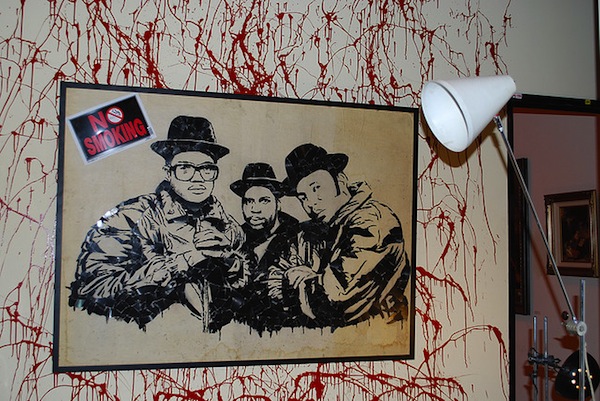
Photo by textdrivebys

A lot of MBW’s work relies on taking existing iconic imagery and changing it to fit within his world. With the Run DMC image, he has used it in a variety of ways, including stencils and his portraits made of broken records. He didn’t copy the photograph and start running off copies. He transformed it into something new. Yes, you could overlay MBW’s stencils with Friedman’s photo in photoshop and they would match up, but that’s how references photographs often work. That similarity, the reference, doesn’t mean they two works are the same thing or that MBW is legally obligated to license the use of the image from Friedman. The MBW artwork transforms the Friedman photograph into something new, and even if it doesn’t, street art fans need to be careful about not defending appropriation.

Street art and pop art in particular have relied heavily on the ability to appropriate from other people’s photographs or other imagery, iconic or not and often not licensing or even crediting the original creators. Shepard Fairey (countless times including his early André the Giant image and the Obama poster), Banksy (source), D*face (source), Rene Gagnon (source), C215 INSA (okay this one is within the public domain but it’s still a good example of appropriation) and so many others have used source imagery in their artwork and transformed it into something new. We can debate, particularly with a lot of pop art, the extent to which the original thing was transformed, but there is definitely a change taking place and some sort of artistic or design input involved in making that new image. And if you want to argue that in all those examples I provided except for INSA, the artist should be legally and morally obligated to license the imagery from the creator of the source material, then that’s another debate. What I’m taking particular issue with today is that the same people who defend Shepard Fairey doing his lawsuit with the AP are now rooting for Friedman against Mr. Brainwash for doing essentially the same thing that Fairey did.

Sean Bonner has argued that the key difference between what Fairey and MBW did comes down to how iconic the photograph was to start with. By that logic, any random photograph is fair game to turn into a stencil without credit, but it would become problematic if the source photograph is well-known. Well then Bonner must also think that a lot of street art and pop art is vulnerable to lawsuits. The same argument that Bonner makes on behalf of Friedman would threaten some of the artists mentioned in the last paragraph, Warhol’s Campbell’s Soup Can series, the work of Elaine Sturtevant, any artist using Mickey Mouse except in instances of parody and possibly even Shepard Fairey’s Andé sticker since Fairey was basically utilizing the iconic nature of Andé the Giant for his sticker.

Taking that view out of art and looking at music for a moment, mash up artists like Flosstradamus, The Hood Internet, Girl Talk and DJ Dangermouse rely on a combination of iconic and non-iconic sounds for their songs and don’t license that material. The courts have made it clear that a lot of what they do is illegal, but I don’t think that’s a decision conducive to the creation of new art and music. The White Album, The Black Album and The Grey Album are three very different artistic creations.

I hope that MBW wins this lawsuit and the rights to fair use and artistic appropriation are upheld.

That said, I want to get back to my earlier comment that MBW is the bastard child of fair use. It doesn’t seem to me like MBW’s artwork is how fair use is intended to work. And he looks like a complete jerk for not licensing imagery which it might have been possible to license (Shepard Fairey has licensed some of Friedman’s photos). The ethical thing to do might have been to at least attempt to license as much of the imagery that MBW uses as is possible. But he can’t legally have an obligation to license the imagery. Otherwise, art and music are screwed. MBW’s art based on iconic imagery is not how fair use is intended to work, but if it doesn’t work for MBW, it stops working for the artists who deserve fair use rights and use them respectfully. Although excessive allowances for fair use can screw good over people like Friedman who get taken advantage of by jerks like MBW, on balance, it’s better to have too many rights for fair use than not enough.

But I’m no expert on fair use. I’m hoping to get a nice discussion going here. What do you think?

PS, if you’re wondering why I’ve not posted Friedman’s original photo, it’s because I don’t have permission or a way to get in touch to ask for permission, and I don’t want to upset him by using his photo without permission even though it probably qualifies as fair use in this case. Just kidding (sort of).

Photos by catheadsix and textdrivebys

Related posts:

  1. Legal appropriation is a popularity contest
  2. Saber hits the LA skies in defense of murals
  3. Weekend link-o-rama
  4. Moniker Art Fair opens today

Category: Art News, Featured Posts, Random | Tags: ,
  • MoFo!

    I think that Mr.Brainwash should have got permission from Mr.Friedman before using the foto. I believe that the original artwork of an artist is a unique piece of art & should be respected by all, or else what’s left?

  • http://blog.vandalog.com/ RJ Rushmore

    But what if Mr. Brainwash tries that and says something absurd like “Friedman. I’ll pay you $1 million for just one use of your image on one canvas.” That’s more than reasonable, but for whatever reason, Friedman might still turn him down and say “I won’t license that image at any price.” Or MBW could ask to license the image and Friedman just asks more money than MBW can afford. In that situation where MBW can’t license the image, what happens? Maybe between two artists, you would understandably want to side with the original artist. But what if it’s a case between an artist and a corporation and the artist wants to use some advertising or copyrighted imagery of that corporation? Or it’s not Friedman versus MBW but a well-known and wealthy photographer versus a young struggling artist at the start of his career. I think in a lot of those cases, people would be tempted to side with letting the artist use that imagery. But that may not be your view and I don’t want to put words into your mouth, so I ask you, what do you think given some of those examples?

  • http://twitter.com/donleh don leh

    I completely agree with what you’re trying to say here. I myself use reference photos all of the time and I feel as though there is a double standard going around the art world when it comes to the ‘fair use law.’ The bottom line is, whether the image was iconic or not, the illustration of an already iconic photograph, is a completely new piece, because the image did not come that way. Therefore, it’s a new way to view something.

  • Bresin

    I personally feel that should be left up to the person holding the rights, even if it is a corporation. If you want to use the Pepsi logo in a piece and after seeking rights they refuse, it’s up to the artist at that point to be creative enough to shift gears. Whether it’s an altering of that logo (one that Pepsi couldn’t argue in a fair use case), or an altering of the idea, an artist should be, first and foremost, creative enough to tell a message without having to thieve imagery. Outright plagiarism is far from “creative usage and alteration”. It’s one thing to find inspiration in an image already in circulation, than it is to resell someone else’s work because you like it, and think that by spraying a dot and a line over it that it’s somehow “your” idea. And this is where I’m torn in the lawsuit – I think that it’s very important fair use laws are upheld, but there’s also something inside telling me that MBW should go down for simply being too careless about the entire process of the craft – Fairey altered his Obama photo to where even the AP photographer himself said he had a hard time recognizing it as his own at first sight. MBW didn’t even try to alter the original, he only laid it down and touched up the dead space. Of course, he couldn’t even be creative with the dead space.

  • http://www.themagiclantern.blogspot.com Em

    Seems to me the difference between this and Shepard Fairey’s Obama poster is one of degree. I don’t see a clear line between the two, and the idea of invoking an argument based on something being “iconic” or not seems impossible to define in any objective way. In other words, although it may be convincing morally, it’s not going to be much use in courts.

    Perhaps, then, what we’re seeing is the eventual breakdown of the concept of (artistic) intellectual property? In east asian countries you see such things occur pretty often, and the ‘originator’ of an image seems to be much less well-known than the industry the image inspires. Perhaps, then, in the internetted age it doesn’t make sense anymore to try to fix some arbitrary ‘artistic distance’ (short of out-and-out copying).

  • Toby Funke

    I’m not for the lawsuit as I believe that anything is fair game as long as transformation occurs, but I can’t stand MBW. He’s a glorified Warhol, a fraud and I find it hard not to “throw the book” at him. Sorry. My bias is showing.

  • Bresin

    The problem is the line we draw, or don’t draw, when we talk about “transformation”. At what point does an image become the idea of the artist working with it? If I take a photo and blot out the light reflection in the eyes of the subject but leave the rest of the photo as is, should I have the right to claim artistic transformation and use it for personal profit?

    Maybe I’m also being biased in the sense where I fear more MBW’s coming out of the woodwork because they don’t have a creative bone in their body, yet find it acceptable to use fair use laws to claim ownership on plagiarised work.

  • http://blog.vandalog.com/ RJ Rushmore

    There’s definitely a double standard, and it’s something I’ve been guilty of in the past. People always want to fight for the little guy when it comes to fair use.

  • http://blog.vandalog.com/ RJ Rushmore

    I feel the same way. I’d love to have him stop what he’s doing, but unfortunately this isn’t the way.

  • http://blog.vandalog.com/ RJ Rushmore

    I feel the same way. I’d love to have him stop what he’s doing, but unfortunately this isn’t the way.

  • Phigerone

    If he had done a fully detailed illustration of that photo would this discussion be going on? It would be harder to argue with a higher level of skill going into the new work. I think it’s a slippery slope if the lawsuit is won. In saying that I’m a friend of biting, but playing around with existing images can lead to some cool stuff.

  • Phigerone

    If he had done a fully detailed illustration of that photo would this discussion be going on? It would be harder to argue with a higher level of skill going into the new work. I think it’s a slippery slope if the lawsuit is won. In saying that I’m a friend of biting, but playing around with existing images can lead to some cool stuff.

  • Info

    Mr Brainwash is despised for not being an artist… Being sued by a recognized photographer might not stop him with plagiarism though…what is not define in Art is what and when do we recognize appropriation, detournment, defacing, plagiarism and pure copying…All if these having been widely used since Art existed… Regarding Fair use: nowadays it’ s a matter of what artists can get away with…

  • Ken

    Would like to quickly note how refreshing it is to see a debate on the internet that’s not reduced to name calling, bickering and trolling under the guise of anonymity… big thanks to RJ for that, I don’t always agree with him, but will always respect his opinion.

  • gabba gabba

    two important things to consider:
    1) Without the original MBW’s work would not exist
    2) Musicians get paid for sampling

    another thing, reading friedman in many interviews, if there was a statement being made by the artist and it wasn’t being commercially exploited, he’d probably be OK with it. MBW is making millions, used friedman;s image for his first show invitation and many prints and canvases, the originator deserves the right to decide where his work is used, and if some one steals it like this he should be paid greatly. he works hard to keep his work exclusive to their original ideals, this clearly is not.

    Look up fair use on the copyright web site, this clearly is not FAIR use.

  • gabba gabba

    two important things to consider:
    1) Without the original MBW’s work would not exist
    2) Musicians get paid for sampling

    another thing, reading friedman in many interviews, if there was a statement being made by the artist and it wasn’t being commercially exploited, he’d probably be OK with it. MBW is making millions, used friedman;s image for his first show invitation and many prints and canvases, the originator deserves the right to decide where his work is used, and if some one steals it like this he should be paid greatly. he works hard to keep his work exclusive to their original ideals, this clearly is not.

    Look up fair use on the copyright web site, this clearly is not FAIR use.

  • http://blog.vandalog.com/ RJ Rushmore

    To your first point, that’s true of almost any work of art or music or literature, to varying degrees. Ulysses wouldn’t exist without The Odyssey. Kill Bill wouldn’t exist without a variety of films like Shogun Assassin. Liechtenstein’s comic book paintings wouldn’t exist without the original comics. A lot of Shepard Fairey’s work, including things that he did not license imagery for, would not exist without other art or photography.

    As for the second, that’s true but I think that way that the current system works is severely flawed. It makes things like The Grey Album and anything by Girl Talk impossible to release legally.

    Is this an ethical use of fair use? No, I wouldn’t say so. But I would say that it is, or probably should be considered, fair use.

  • Pallav

    I actually have a question.  I am currently working on a piece that actually includes print ads (obviously the work of an ad agency and a photographer and also the brand who is advertising) and i am also painting a Disney character.  I know, i know everyone is going to say “what are you trying to do” and that i am just copying, but i have something in mind that will make sense at the end. 

    My question is, now if i were to state on teh painting itself, a note stating that the character is the property of Disney, etc and all visuals are the property of the Brand, etc.  Would that relieve me of any legal issues?